Loading page, please wait…
Regulatory Changes - UPSC Economy
What is Regulatory Changes in UPSC Economy?
Regulatory Changes is a key topic under Economy for UPSC Civil Services Examination. Key points include: RBI introduced PA-CB Regulation for cross-border payments.. The regulation covers both import and export transactions.. It replaces previous, fragmented guidelines.. Understanding this topic is essential for both UPSC Prelims and Mains preparation.
Why is Regulatory Changes important for UPSC exam?
Regulatory Changes is a Medium-level topic in UPSC Economy. It is tested in both Prelims (factual MCQs) and Mains (analytical answer writing). Previous year UPSC questions have frequently covered aspects of Regulatory Changes, making it essential for comprehensive IAS preparation.
How to prepare Regulatory Changes for UPSC?
To prepare Regulatory Changes for UPSC: (1) Study the comprehensive notes covering all key concepts on Vaidra. (2) Practice previous year questions on this topic. (3) Connect it with current affairs using daily updates. (4) Revise using key takeaways and mind maps available for Economy. (5) Write practice answers linking Regulatory Changes to related GS Paper topics.
Key takeaways of Regulatory Changes for UPSC
- RBI introduced PA-CB Regulation for cross-border payments.
- The regulation covers both import and export transactions.
- It replaces previous, fragmented guidelines.
- All entities involved now fall under direct RBI oversight.
- Aims to streamline, regulate, and secure international financial flows.
- Enhances financial stability and supports digital economy initiatives.
Regulatory Changes
Medium⏱️ 6 min read
economy
📖 Introduction
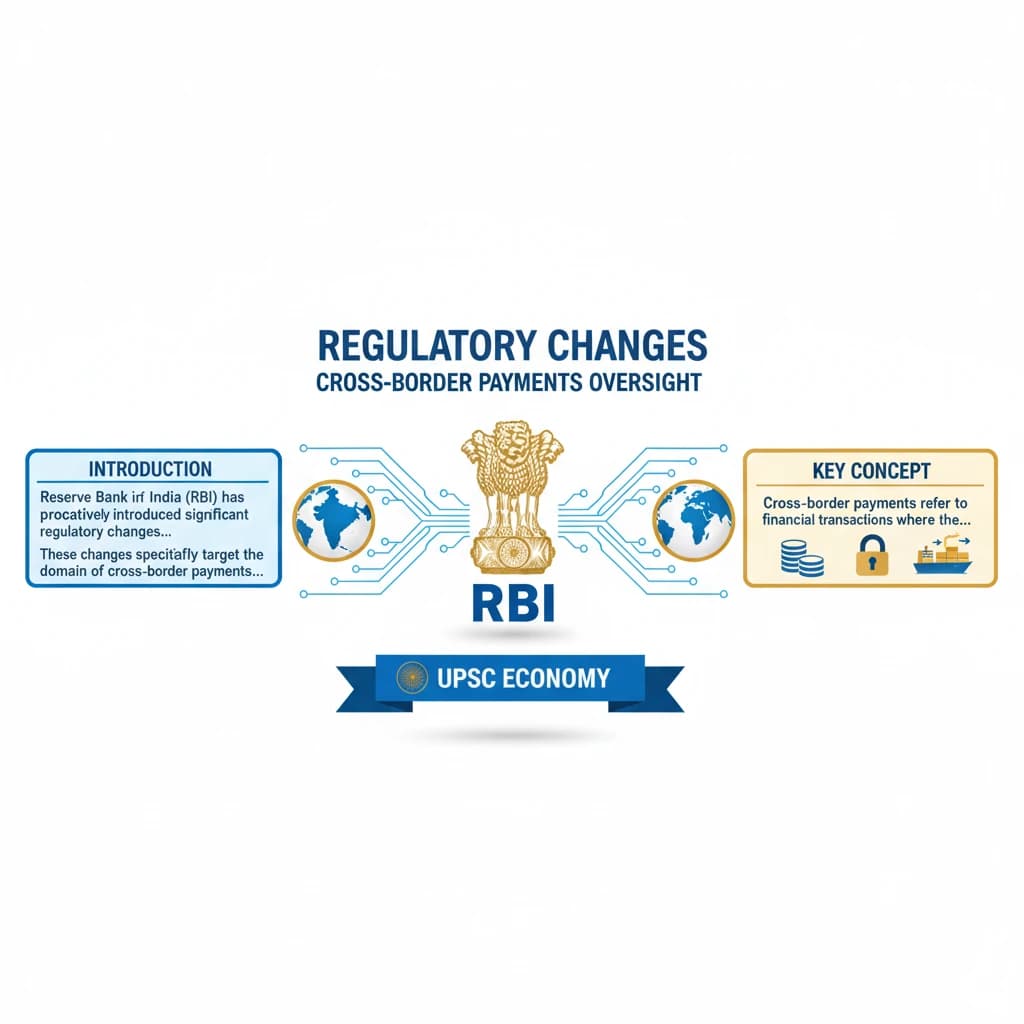
Introduction to Regulatory Changes in Cross-Border Payments
The Reserve Bank of India (RBI) has proactively introduced significant regulatory changes to enhance the oversight of international financial transactions. These changes specifically target the domain of cross-border payments, which are crucial for global trade and economic integration.
Cross-border payments refer to financial transactions where the payer and the recipient are located in different countries. These include both incoming (exports) and outgoing (imports) remittances.
The Payment Aggregators of Cross-Border Transactions (PA-CB) Regulation
A pivotal step in this regulatory evolution is the introduction of the Payment Aggregators of Cross-Border Transactions (PA-CB Regulation). This framework is designed to bring greater structure and accountability to the entities facilitating these complex transactions.
The primary objective of the PA-CB Regulation is to streamline and regulate the entire process of cross-border payments. This includes a comprehensive approach to managing both import and export transactions, ensuring smoother and more secure financial flows.
Replacement of Previous Guidelines
The new PA-CB framework does not operate in isolation; it explicitly replaces previous guidelines that governed cross-border payment facilitators. This indicates a move towards a more consolidated and robust regulatory regime, adapting to the evolving landscape of digital payments.
Direct RBI Oversight
One of the most critical aspects of the PA-CB Regulation is its provision for direct RBI oversight. Under this new framework, all entities involved in facilitating cross-border payments are now directly accountable to the central bank. This enhances regulatory control and mitigates risks associated with international financial flows.
UPSC Insight: Understanding the shift to direct RBI oversight is crucial. It signifies a move towards greater transparency, risk management, and prevention of illicit financial activities in cross-border transactions, a common theme in GS-III Economy questions.
💡 Key Takeaways
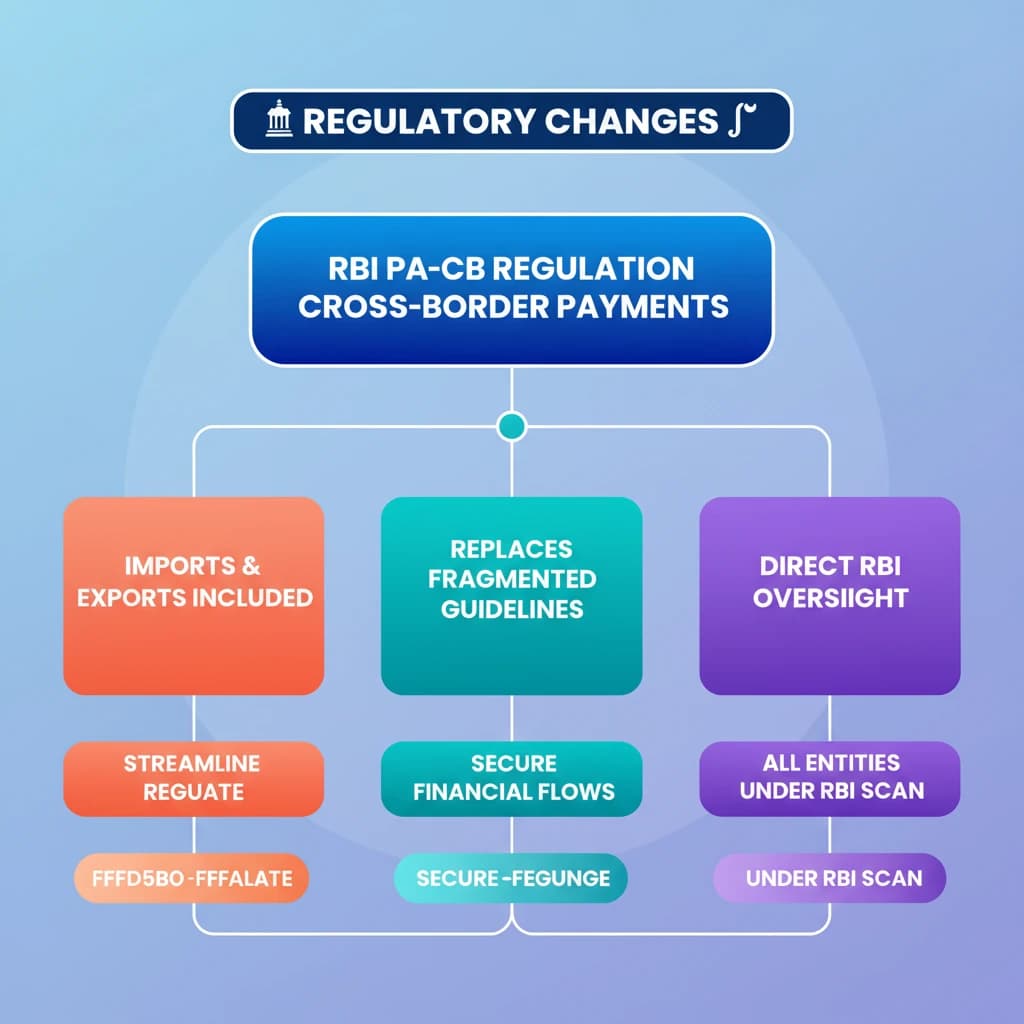
- •RBI introduced PA-CB Regulation for cross-border payments.
- •The regulation covers both import and export transactions.
- •It replaces previous, fragmented guidelines.
- •All entities involved now fall under direct RBI oversight.
- •Aims to streamline, regulate, and secure international financial flows.
- •Enhances financial stability and supports digital economy initiatives.
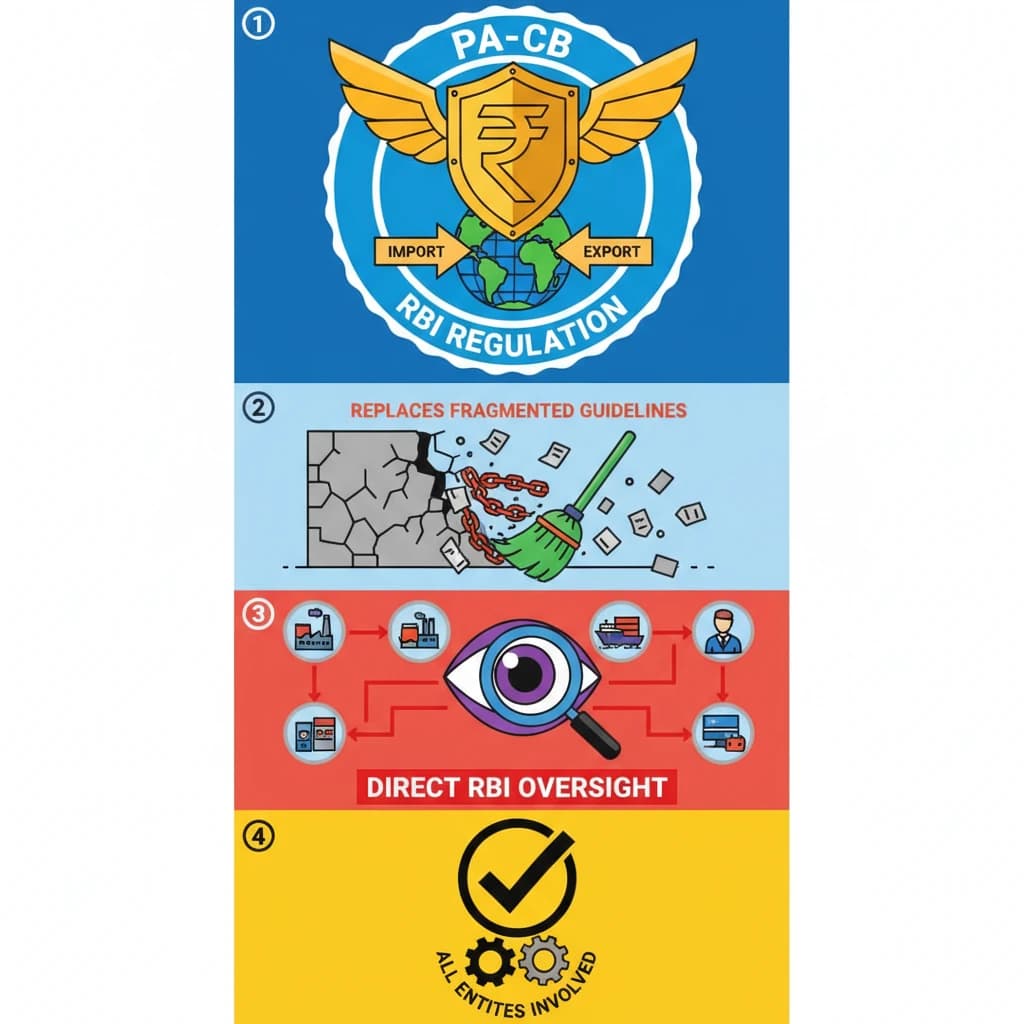
🧠 Memory Techniques
95% Verified Content
📚 Reference Sources
•Reserve Bank of India (RBI) official notifications and press releases regarding Payment Aggregators for Cross-Border Transactions