Loading page, please wait…
Significance of Hybrid EVs - UPSC Economy
What is Significance of Hybrid EVs in UPSC Economy?
Significance of Hybrid EVs is a key topic under Economy for UPSC Civil Services Examination. Key points include: Hybrid EVs are a practical, medium-term solution for India's transition to full electrification (5-10 years).. They do not require external charging infrastructure, addressing a key bottleneck.. Hybrids are cost-effective due to state government waivers (e.g., 100% registration fee waiver in UP, saving up to Rs 3.5 lakh).. Understanding this topic is essential for both UPSC Prelims and Mains preparation.
Why is Significance of Hybrid EVs important for UPSC exam?
Significance of Hybrid EVs is a Medium-level topic in UPSC Economy. It is tested in both Prelims (factual MCQs) and Mains (analytical answer writing). Previous year UPSC questions have frequently covered aspects of Significance of Hybrid EVs, making it essential for comprehensive IAS preparation.
How to prepare Significance of Hybrid EVs for UPSC?
To prepare Significance of Hybrid EVs for UPSC: (1) Study the comprehensive notes covering all key concepts on Vaidra. (2) Practice previous year questions on this topic. (3) Connect it with current affairs using daily updates. (4) Revise using key takeaways and mind maps available for Economy. (5) Write practice answers linking Significance of Hybrid EVs to related GS Paper topics.
Key takeaways of Significance of Hybrid EVs for UPSC
- Hybrid EVs are a practical, medium-term solution for India's transition to full electrification (5-10 years).
- They do not require external charging infrastructure, addressing a key bottleneck.
- Hybrids are cost-effective due to state government waivers (e.g., 100% registration fee waiver in UP, saving up to Rs 3.5 lakh).
- They offer better fuel economy than conventional cars, leading to long-term cost savings for drivers.
- Hybrid EVs contribute to energy security and climate change mitigation by reducing fuel consumption and emissions.
Significance of Hybrid EVs
Medium⏱️ 8 min read
economy
📖 Introduction
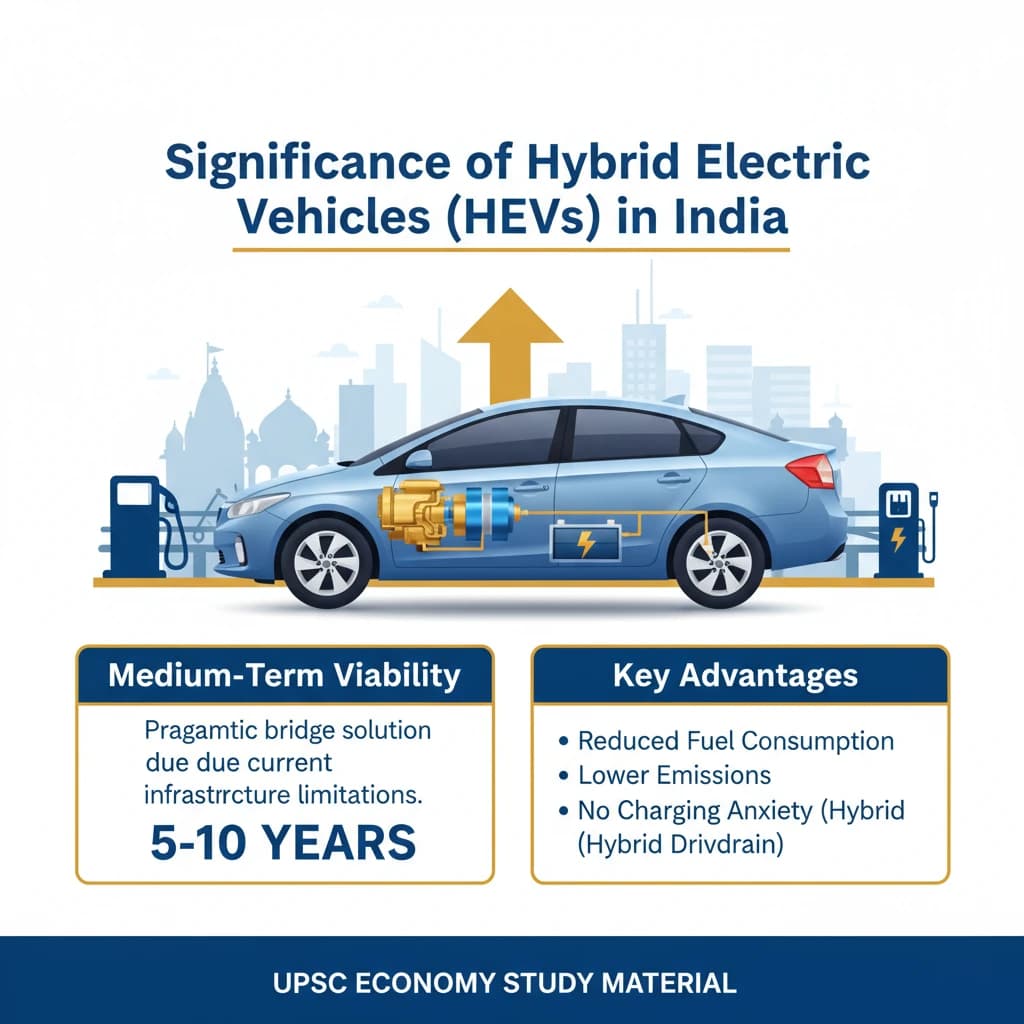
Significance of Hybrid Electric Vehicles (HEVs) in India
Hybrid Electric Vehicles (HEVs) are emerging as a crucial component in India's transition towards a fully electrified vehicle fleet. They offer a pragmatic bridge solution, especially for the medium term, given the current infrastructure limitations.
Medium-Term Viability (5-10 Years)
Hybrid EVs are considered a highly practical and viable option for the next 5-10 years in India. This is primarily because they do not necessitate an extensive external charging infrastructure.
The gradual move towards full electrification of India's vehicle fleet is a significant undertaking. Hybrids facilitate this transition by reducing immediate dependence on a widespread charging network.
Key Point: Hybrid EVs serve as an effective interim solution, bridging the gap between conventional internal combustion engine (ICE) vehicles and fully battery electric vehicles (BEVs).
Cost of Ownership Perspective
From a cost of ownership standpoint, hybrid vehicles are proving to be quite attractive. Various state governments are actively providing incentives to encourage their adoption.
These incentives often include waivers on significant charges such as registration fees and RTO fees, directly reducing the upfront cost for consumers.
Example: Uttar Pradesh Government Waiver
- The Uttar Pradesh government has announced a 100% waiver on registration fees for strong hybrids.
- This policy can potentially save buyers a substantial amount, estimated to be up to Rs 3.5 lakh.
Beyond initial purchase benefits, hybrid cars also offer superior fuel economy compared to conventional fuel cars. This translates into significant cost savings for drivers over the vehicle's lifespan, enhancing their overall economic viability.
UPSC Insight: When discussing India's energy transition, the significance of Hybrid EVs should be framed as a pragmatic, medium-term strategy. Emphasize their role in overcoming infrastructure challenges and providing economic benefits to consumers.
💡 Key Takeaways
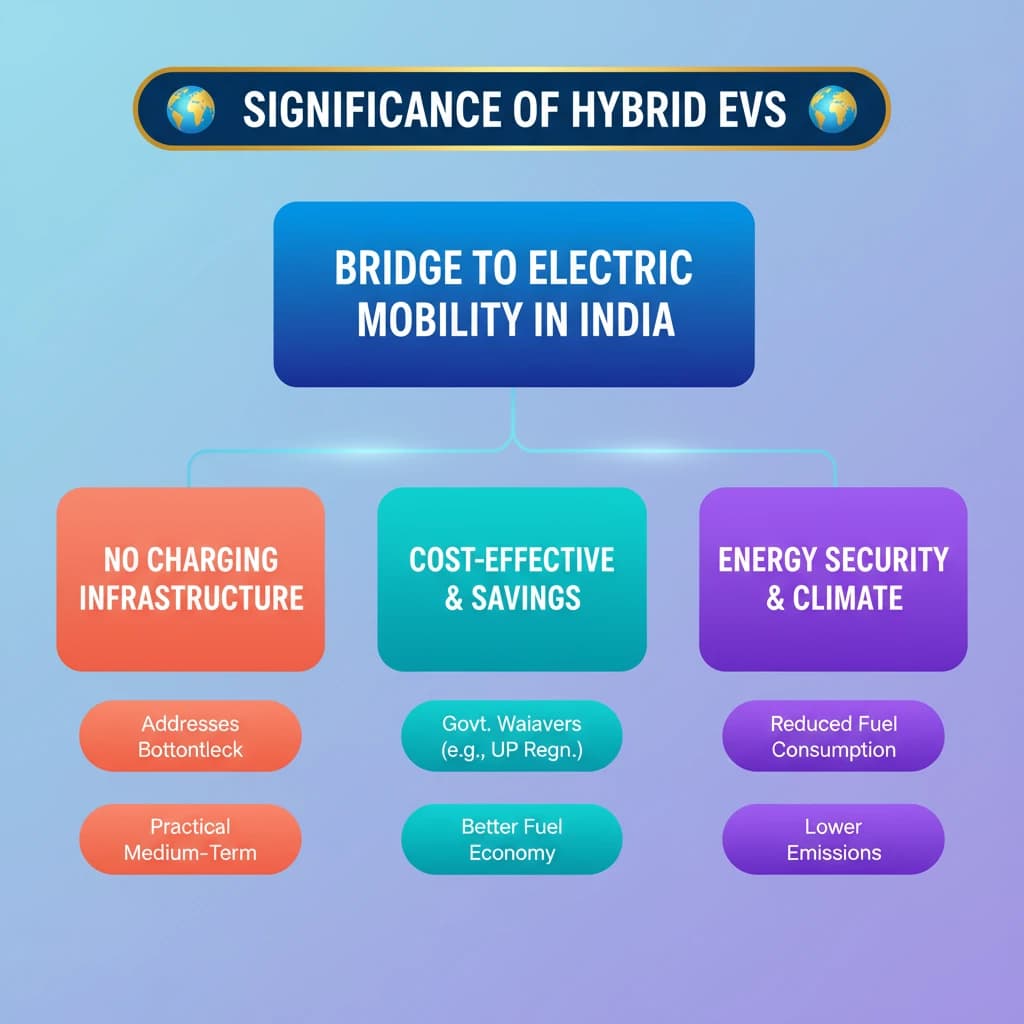
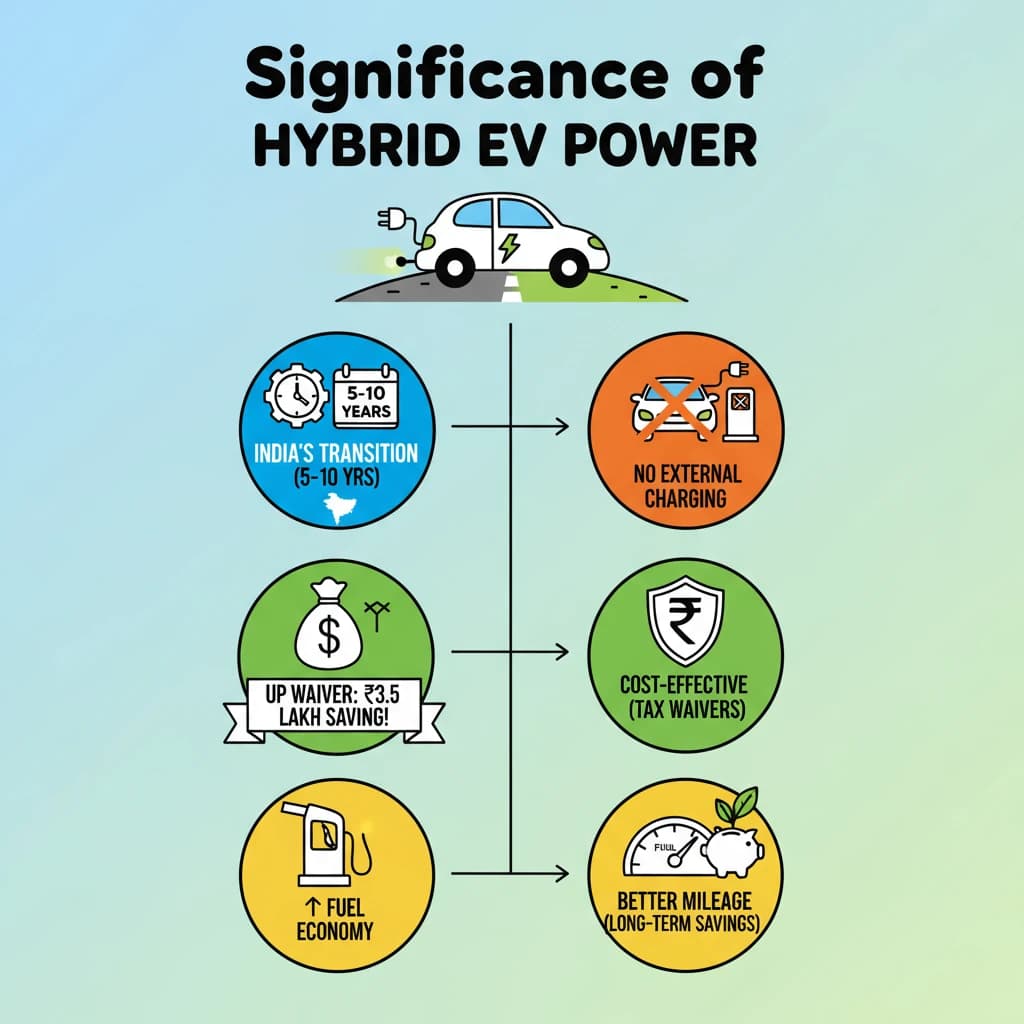
- •Hybrid EVs are a practical, medium-term solution for India's transition to full electrification (5-10 years).
- •They do not require external charging infrastructure, addressing a key bottleneck.
- •Hybrids are cost-effective due to state government waivers (e.g., 100% registration fee waiver in UP, saving up to Rs 3.5 lakh).
- •They offer better fuel economy than conventional cars, leading to long-term cost savings for drivers.
- •Hybrid EVs contribute to energy security and climate change mitigation by reducing fuel consumption and emissions.
🧠 Memory Techniques
95% Verified Content
📚 Reference Sources
•General knowledge on FAME India scheme and state EV policies (for contextualization)