Loading page, please wait…
Small-Scale LNG - UPSC Economy
What is Small-Scale LNG in UPSC Economy?
Small-Scale LNG is a key topic under Economy for UPSC Civil Services Examination. Key points include: Small-Scale LNG (SSLNG) involves liquefying and transporting natural gas in smaller volumes.. It caters to areas without pipeline connections, using specialized trucks and small vessels.. SSLNG can supply LNG directly as a liquid or regasified for traditional uses.. Understanding this topic is essential for both UPSC Prelims and Mains preparation.
Why is Small-Scale LNG important for UPSC exam?
Small-Scale LNG is a Medium-level topic in UPSC Economy. It is tested in both Prelims (factual MCQs) and Mains (analytical answer writing). Previous year UPSC questions have frequently covered aspects of Small-Scale LNG, making it essential for comprehensive IAS preparation.
How to prepare Small-Scale LNG for UPSC?
To prepare Small-Scale LNG for UPSC: (1) Study the comprehensive notes covering all key concepts on Vaidra. (2) Practice previous year questions on this topic. (3) Connect it with current affairs using daily updates. (4) Revise using key takeaways and mind maps available for Economy. (5) Write practice answers linking Small-Scale LNG to related GS Paper topics.
Key takeaways of Small-Scale LNG for UPSC
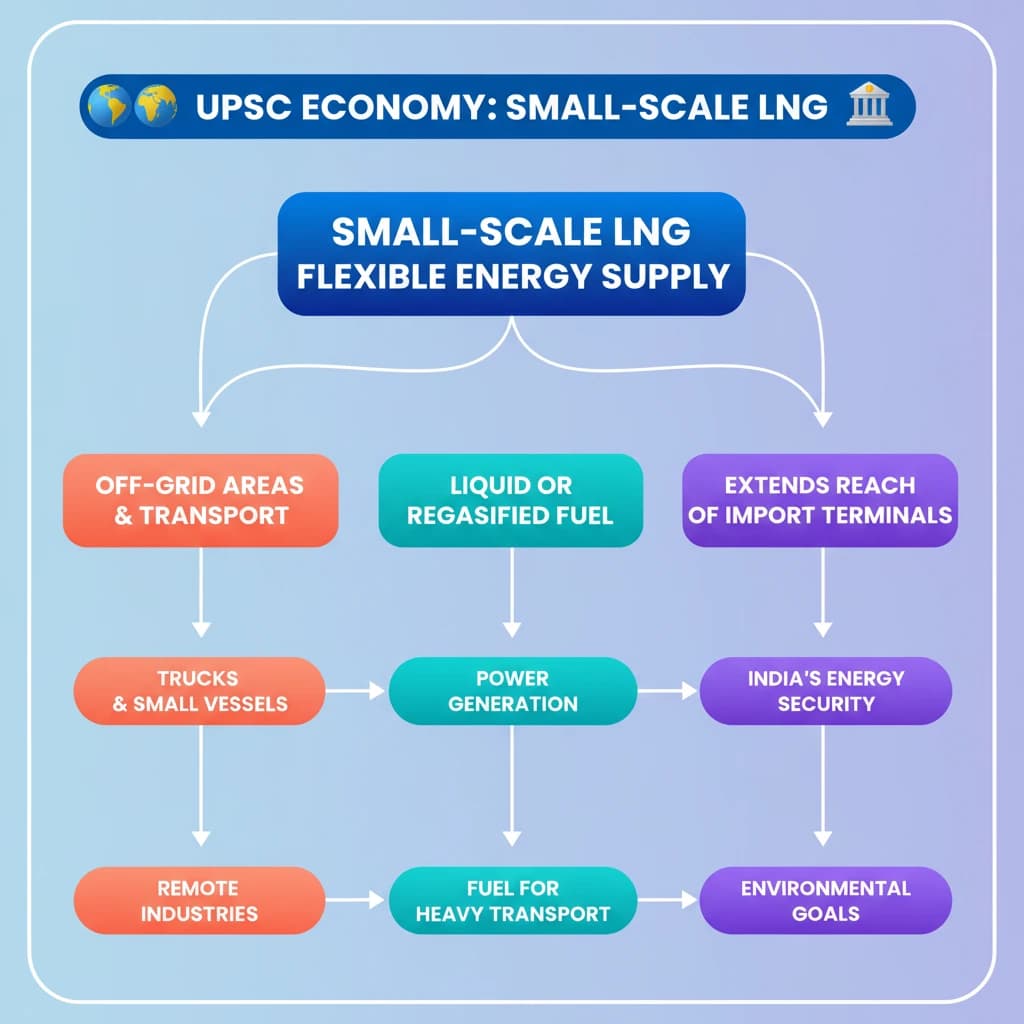
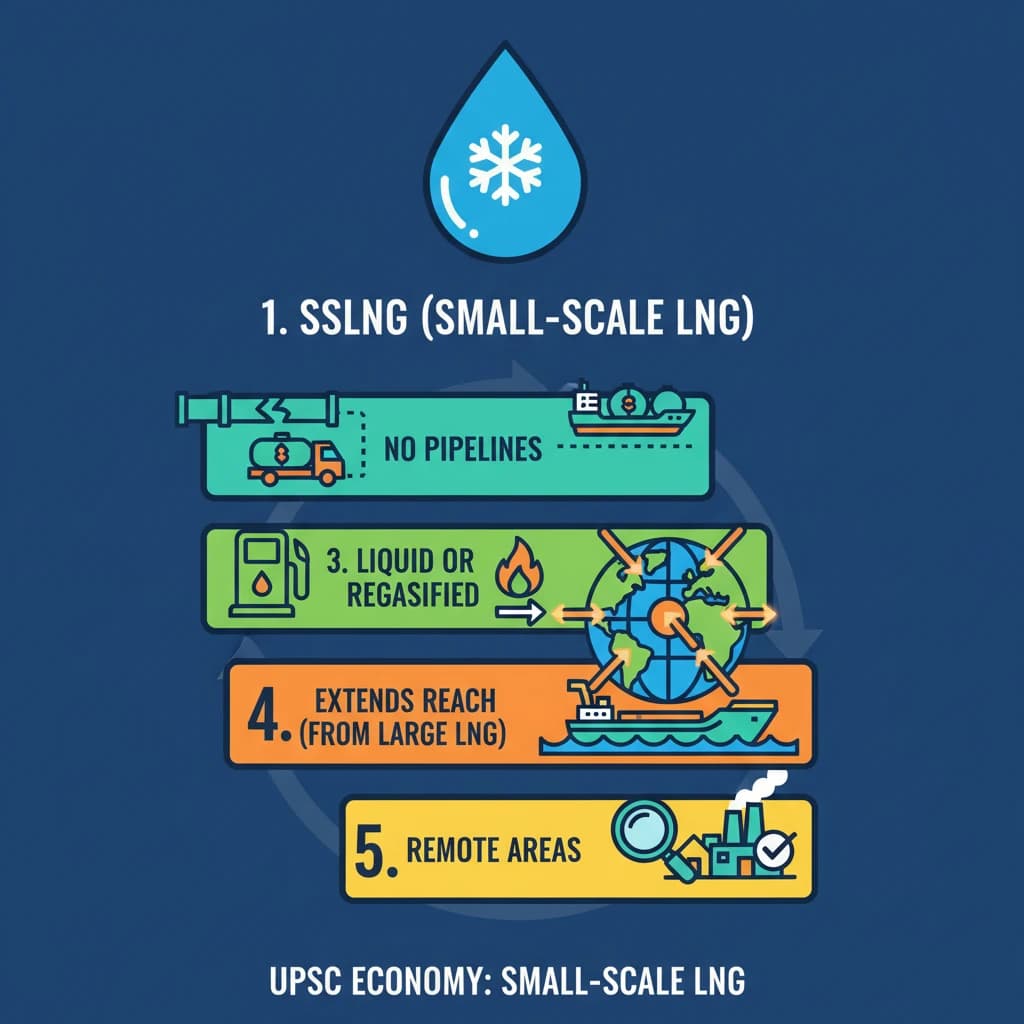
- Small-Scale LNG (SSLNG) involves liquefying and transporting natural gas in smaller volumes.
- It caters to areas without pipeline connections, using specialized trucks and small vessels.
- SSLNG can supply LNG directly as a liquid or regasified for traditional uses.
- It originates from large-scale LNG import terminals, extending their reach.
- Crucial for India's energy security, environmental goals, and industrial decentralization.
- Offers flexible and distributed energy solutions for remote and underserved markets.
Small-Scale LNG
Medium⏱️ 8 min read
economy
📖 Introduction
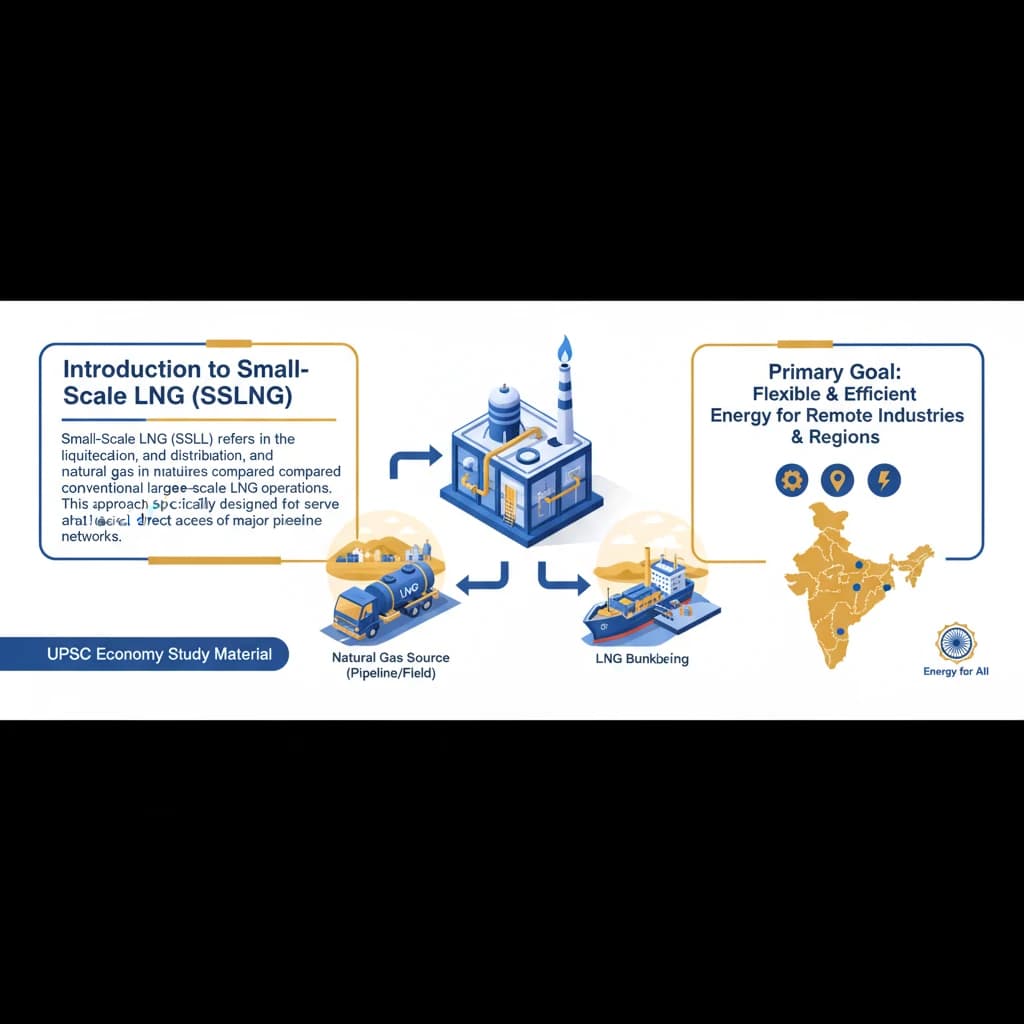
Introduction to Small-Scale LNG (SSLNG)
Small-Scale LNG (SSLNG) refers to the liquefaction, transportation, and distribution of natural gas in smaller volumes compared to conventional large-scale LNG operations. This approach is specifically designed to serve areas that lack direct access to major pipeline networks.
The primary goal of SSLNG is to provide a flexible and efficient energy solution for remote industries, communities, and specific transportation sectors. It bridges the gap where traditional pipeline infrastructure is not economically viable or physically feasible.
Key Characteristics of SSLNG:
- Smaller Volumes: Typically involves capacities ranging from 10,000 to 500,000 tonnes per annum (TPA).
- Distributed Supply: Caters to dispersed demand points rather than large centralized markets.
- Flexible Logistics: Utilizes diverse transport modes like trucks and small vessels.
Operational Flow of Small-Scale LNG
The supply chain for SSLNG often originates from existing large-scale LNG import terminals. At these terminals, a portion of the imported LNG is offloaded and then further distributed using specialized smaller logistics.
From these terminals, SSLNG can be supplied directly to various consumers. This involves transferring the liquefied natural gas into specialized transport carriers for onward delivery to end-users.
Transport and Delivery Methods:
- Cryogenic Road Tankers: Specialized trucks designed to maintain LNG at extremely low temperatures for road transport.
- Small Vessels: Smaller LNG carriers or barges used for coastal or inland waterway transport to islands or remote ports.
Upon reaching the consumer, the LNG can be utilized in two primary forms. It can be supplied directly as a liquid fuel for specific applications, such as marine bunkering or heavy-duty vehicles.
Alternatively, the LNG can be regasified at the consumption point. This process converts the liquid back into gaseous natural gas, making it suitable for traditional uses like power generation, industrial processes, or domestic consumption.
UPSC Insight: SSLNG is crucial for India's energy security and achieving a 'gas-based economy' by extending the reach of natural gas beyond the conventional pipeline grid. It's a vital component for distributed energy solutions and reducing reliance on polluting fuels in remote areas. Expect questions on its role in infrastructure development and environmental sustainability. ⚡
💡 Key Takeaways
- •Small-Scale LNG (SSLNG) involves liquefying and transporting natural gas in smaller volumes.
- •It caters to areas without pipeline connections, using specialized trucks and small vessels.
- •SSLNG can supply LNG directly as a liquid or regasified for traditional uses.
- •It originates from large-scale LNG import terminals, extending their reach.
- •Crucial for India's energy security, environmental goals, and industrial decentralization.
- •Offers flexible and distributed energy solutions for remote and underserved markets.
🧠 Memory Techniques
95% Verified Content
📚 Reference Sources
•Ministry of Petroleum and Natural Gas, Government of India reports
•Petroleum Planning & Analysis Cell (PPAC) data
•International Gas Union (IGU) reports on Small-Scale LNG
•Various industry publications and academic papers on LNG infrastructure