Loading page, please wait…
Steel Sector Decarbonization - UPSC Economy
What is Steel Sector Decarbonization in UPSC Economy?
Steel Sector Decarbonization is a key topic under Economy for UPSC Civil Services Examination. Key points include: Ministry of Steel is actively exploring funding for steel sector decarbonization.. Decarbonization is crucial due to environmental concerns and global push for sustainable industrial practices.. Steel industry is a major emitter; transition to cleaner production is vital for India's climate goals.. Understanding this topic is essential for both UPSC Prelims and Mains preparation.
Why is Steel Sector Decarbonization important for UPSC exam?
Steel Sector Decarbonization is a Medium-level topic in UPSC Economy. It is tested in both Prelims (factual MCQs) and Mains (analytical answer writing). Previous year UPSC questions have frequently covered aspects of Steel Sector Decarbonization, making it essential for comprehensive IAS preparation.
How to prepare Steel Sector Decarbonization for UPSC?
To prepare Steel Sector Decarbonization for UPSC: (1) Study the comprehensive notes covering all key concepts on Vaidra. (2) Practice previous year questions on this topic. (3) Connect it with current affairs using daily updates. (4) Revise using key takeaways and mind maps available for Economy. (5) Write practice answers linking Steel Sector Decarbonization to related GS Paper topics.
Key takeaways of Steel Sector Decarbonization for UPSC
- Ministry of Steel is actively exploring funding for steel sector decarbonization.
- Decarbonization is crucial due to environmental concerns and global push for sustainable industrial practices.
- Steel industry is a major emitter; transition to cleaner production is vital for India's climate goals.
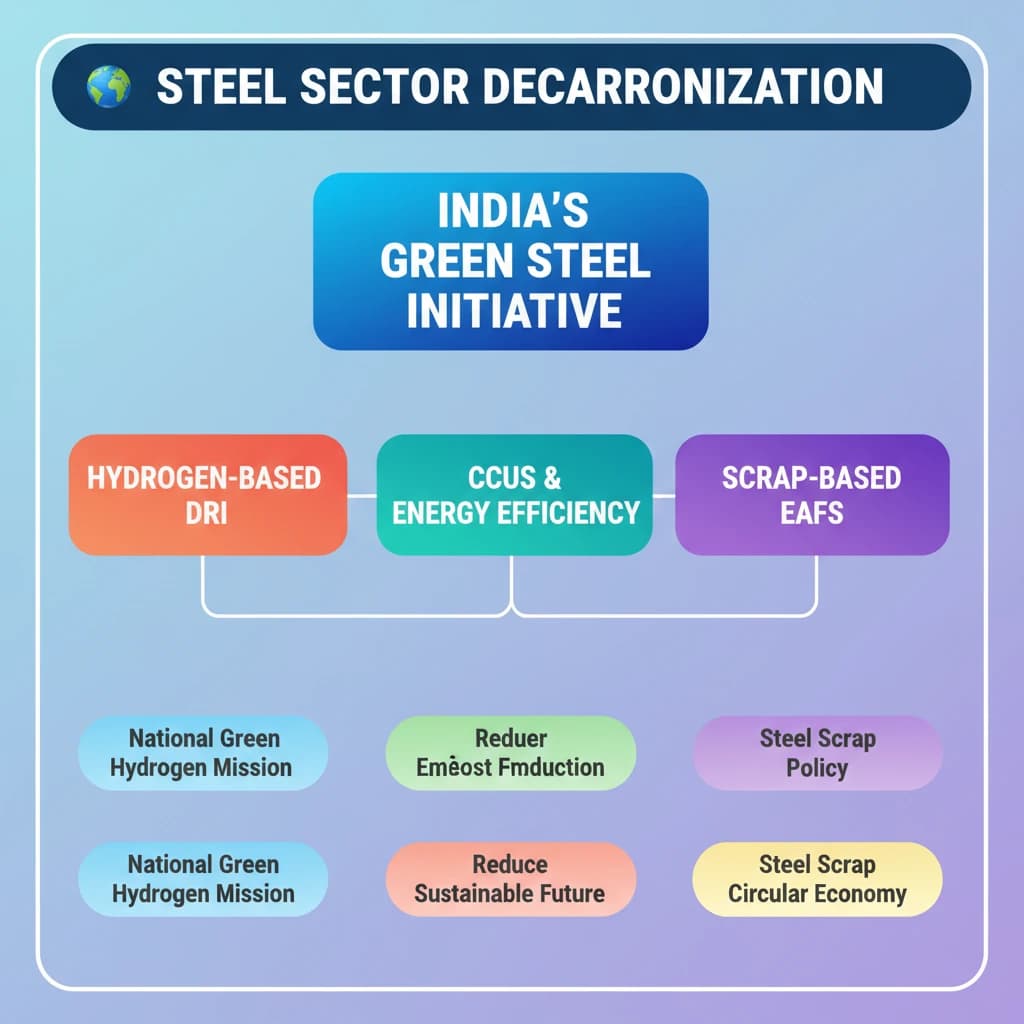
- Key technologies include hydrogen-based DRI, CCUS, and increased scrap-based EAFs.
- India's National Green Hydrogen Mission and National Steel Scrap Recycling Policy support decarbonization.
- Efforts enhance India's global competitiveness and energy security.
Steel Sector Decarbonization
Medium⏱️ 8 min read
economy
📖 Introduction
Introduction to Steel Sector Decarbonization
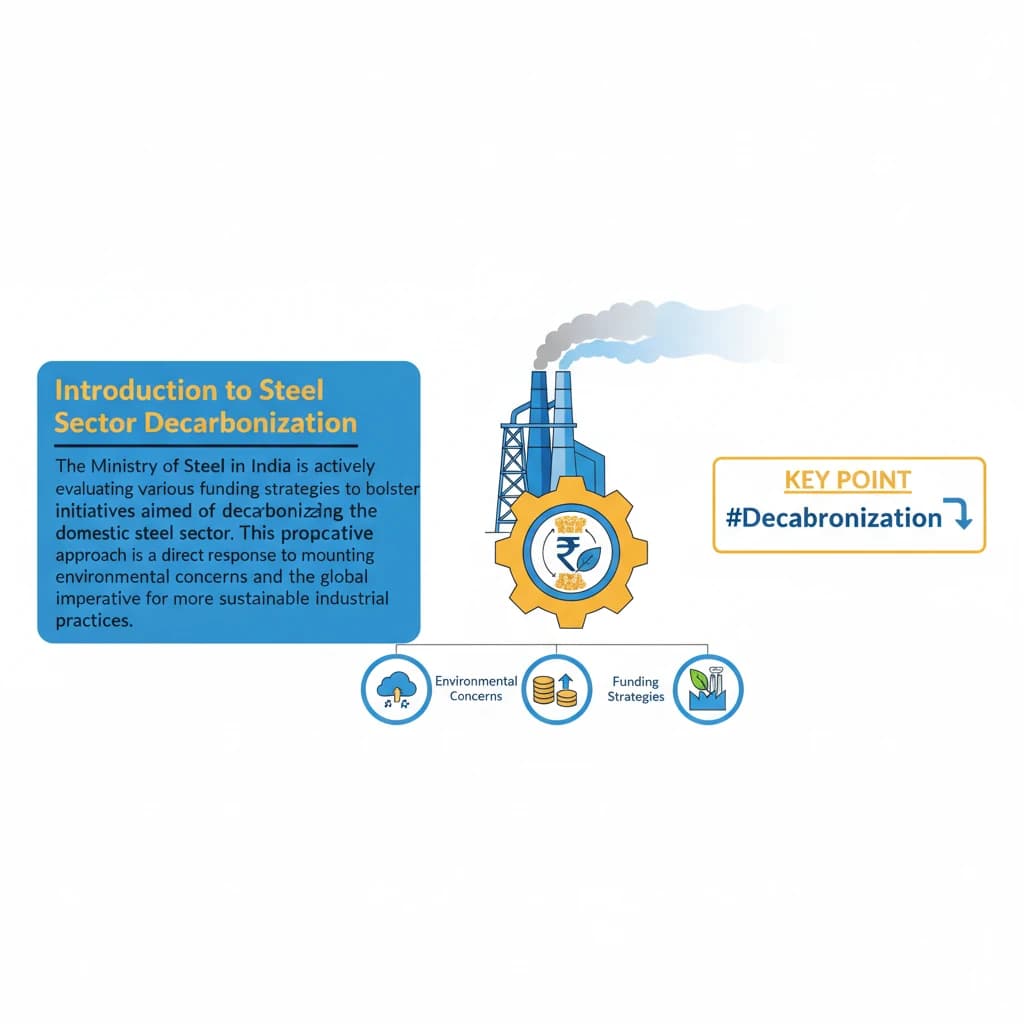
The Ministry of Steel in India is actively evaluating various funding strategies to bolster initiatives aimed at decarbonizing the domestic steel sector. This proactive approach is a direct response to mounting environmental concerns and the global imperative for more sustainable industrial practices.
Decarbonization refers to the process of reducing carbon emissions, particularly carbon dioxide (CO2), resulting from human economic activity. For the steel sector, this means significantly lowering the carbon footprint associated with steel production.
Why Decarbonize the Steel Sector?
The steel industry is one of the largest industrial emitters of greenhouse gases (GHGs) globally. Traditional steelmaking processes, primarily using blast furnaces and basic oxygen furnaces (BF-BOF), are highly energy-intensive and rely heavily on coking coal, leading to substantial CO2 emissions.
Addressing these emissions is crucial for India to meet its climate change commitments under international agreements like the Paris Agreement and to achieve its Net Zero targets by 2070.
Role of the Ministry of Steel
The Ministry of Steel plays a pivotal role in guiding the industry towards a greener future. Its consideration of funding mechanisms underscores the government's commitment to facilitating the transition to low-carbon steel production technologies.
UPSC Relevance: Understanding the government's role in industrial decarbonization is vital for GS Paper III (Economy and Environment). Questions may focus on policy interventions, technological shifts, and India's climate strategy.
Key Drivers for Sustainable Practices
- Environmental Regulations: Stricter national and international norms on emissions.
- Global Market Demand: Increasing preference for 'green steel' from consumers and industries.
- Technological Advancements: Development of new, cleaner steelmaking technologies.
- Energy Security: Reducing reliance on fossil fuels by exploring alternative energy sources.
💡 Key Takeaways
- •Ministry of Steel is actively exploring funding for steel sector decarbonization.
- •Decarbonization is crucial due to environmental concerns and global push for sustainable industrial practices.
- •Steel industry is a major emitter; transition to cleaner production is vital for India's climate goals.
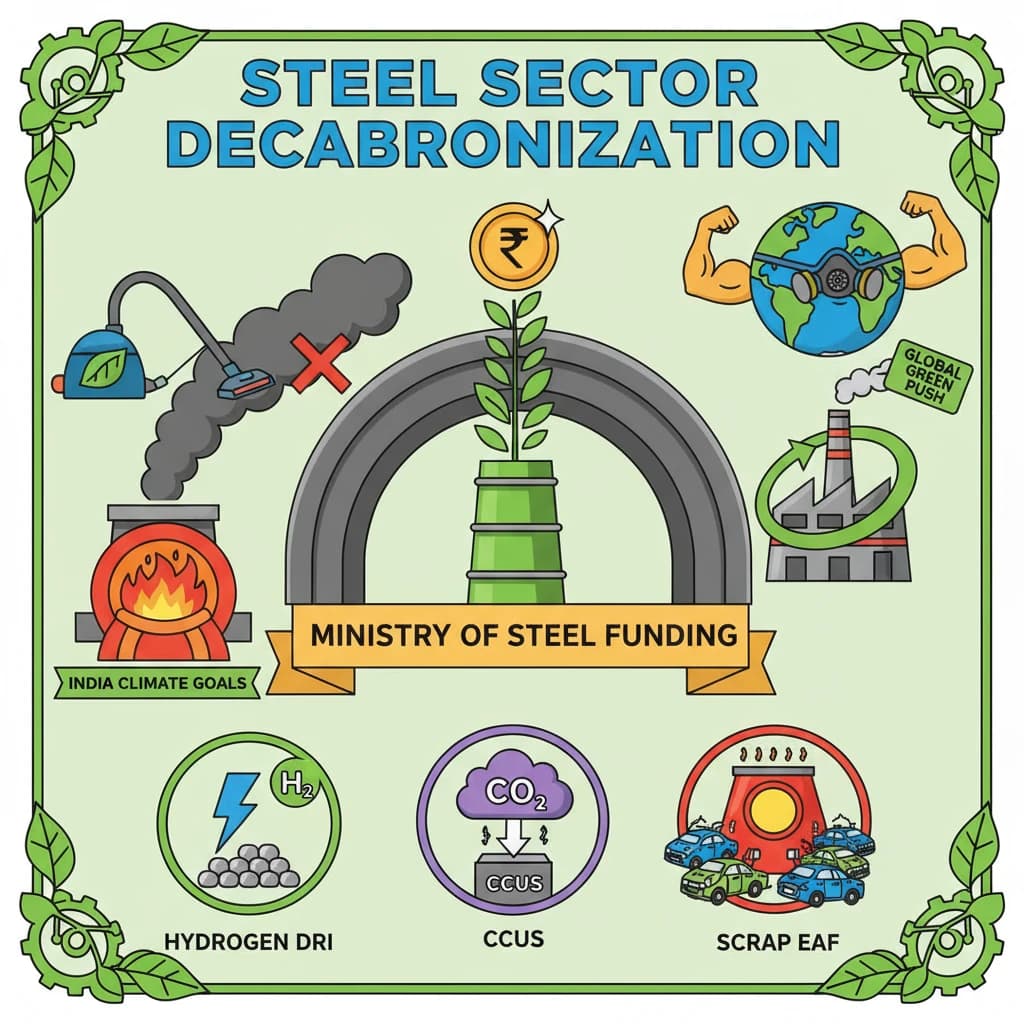
- •Key technologies include hydrogen-based DRI, CCUS, and increased scrap-based EAFs.
- •India's National Green Hydrogen Mission and National Steel Scrap Recycling Policy support decarbonization.
- •Efforts enhance India's global competitiveness and energy security.
🧠 Memory Techniques
95% Verified Content
📚 Reference Sources
•Ministry of Steel, Government of India Annual Reports
•NITI Aayog reports on Green Hydrogen and Decarbonization
•International Energy Agency (IEA) reports on Iron & Steel Technology Roadmaps
•UNFCCC reports on India's climate commitments