Loading page, please wait…
Strengthening of Rupee - UPSC Economy
What is Strengthening of Rupee in UPSC Economy?
Strengthening of Rupee is a key topic under Economy for UPSC Civil Services Examination. Key points include: Indian Rupee nominally depreciated against USD by ~27.6% over 10 years.. Despite nominal depreciation against USD, Rupee gained real value against major global currencies.. Real value accounts for inflation differentials, offering a better measure of purchasing power and competitiveness.. Understanding this topic is essential for both UPSC Prelims and Mains preparation.
Why is Strengthening of Rupee important for UPSC exam?
Strengthening of Rupee is a Medium-level topic in UPSC Economy. It is tested in both Prelims (factual MCQs) and Mains (analytical answer writing). Previous year UPSC questions have frequently covered aspects of Strengthening of Rupee, making it essential for comprehensive IAS preparation.
How to prepare Strengthening of Rupee for UPSC?
To prepare Strengthening of Rupee for UPSC: (1) Study the comprehensive notes covering all key concepts on Vaidra. (2) Practice previous year questions on this topic. (3) Connect it with current affairs using daily updates. (4) Revise using key takeaways and mind maps available for Economy. (5) Write practice answers linking Strengthening of Rupee to related GS Paper topics.
Key takeaways of Strengthening of Rupee for UPSC
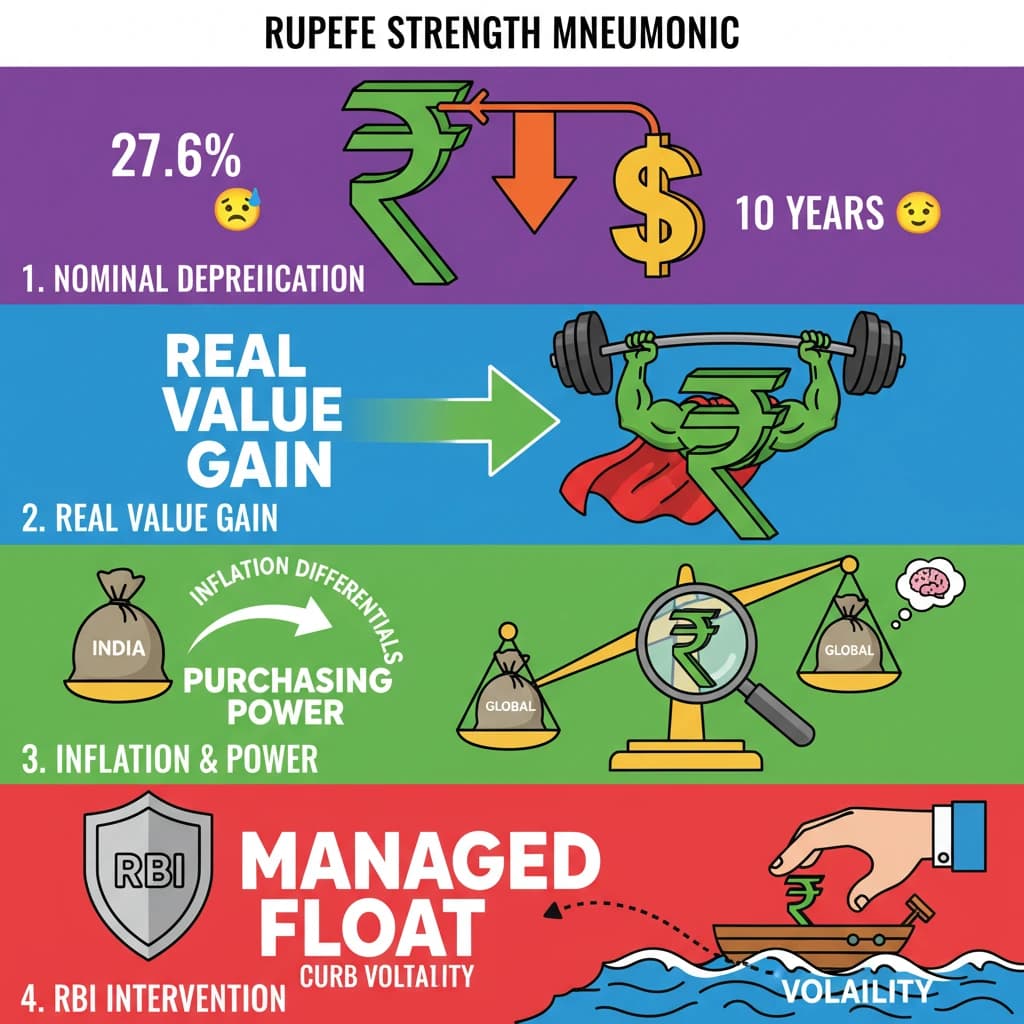
- Indian Rupee nominally depreciated against USD by ~27.6% over 10 years.
- Despite nominal depreciation against USD, Rupee gained real value against major global currencies.
- Real value accounts for inflation differentials, offering a better measure of purchasing power and competitiveness.
- India operates a managed float exchange rate system, with RBI intervening to curb volatility.
- Rupee's value impacts trade, inflation, foreign debt, and capital flows, making it a key macroeconomic indicator.
Strengthening of Rupee
Medium⏱️ 7 min read
economy
📖 Introduction
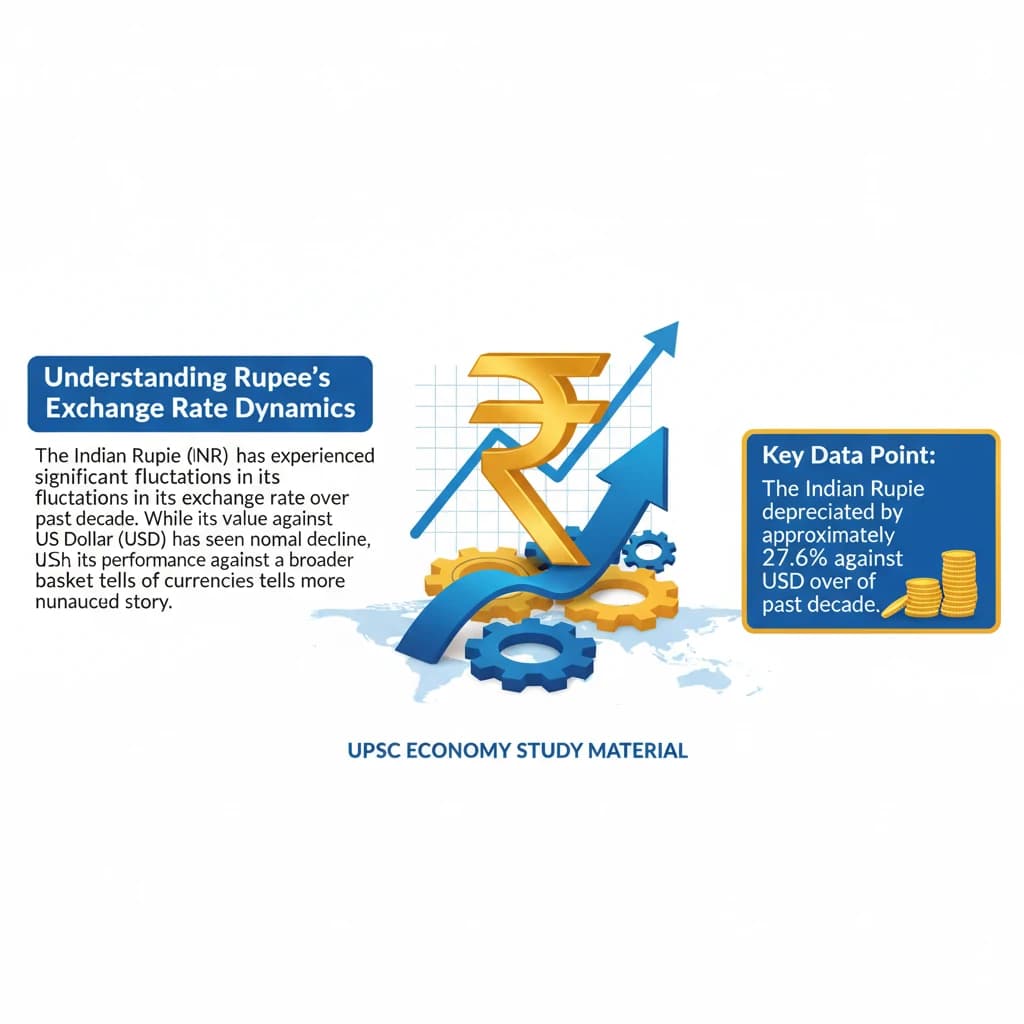
Understanding Rupee's Exchange Rate Dynamics
The Indian Rupee (INR) has experienced significant fluctuations in its exchange rate over the past decade. While its value against the US Dollar (USD) has seen a nominal decline, its performance against a broader basket of currencies tells a more nuanced story.
Key Data Point: The Indian Rupee depreciated by approximately 27.6% against the US Dollar over the last 10 years.
This depreciation against the USD is a nominal measure. It reflects how many rupees are needed to buy one dollar, indicating a weakening of the rupee in dollar terms.
Real Value vs. Nominal Value
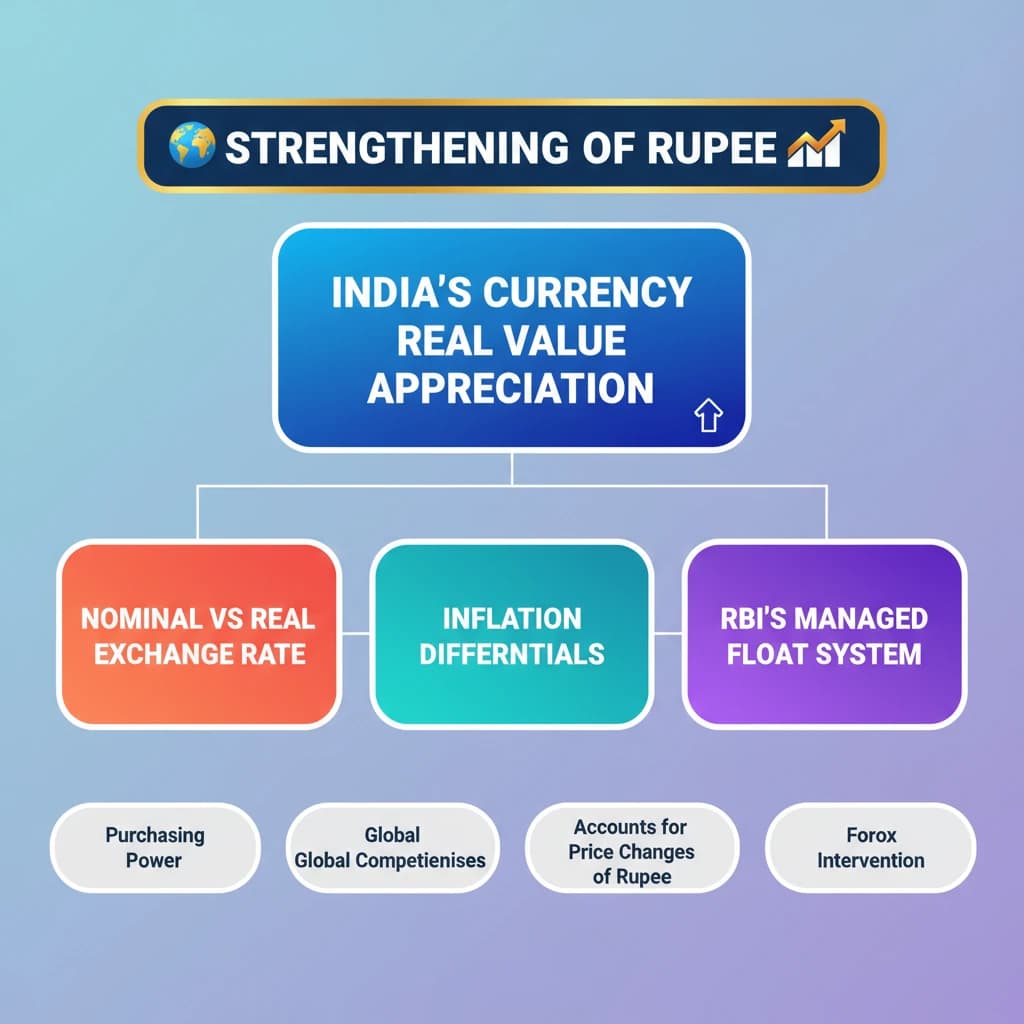
Despite the nominal depreciation against the US Dollar, the Indian Rupee has actually gained real value when its exchange rate is considered against a broader basket of major global currencies.
Important Concept: Real value of a currency accounts for inflation differentials between countries. It provides a more accurate picture of a currency's purchasing power and international competitiveness.
This means that while it takes more rupees to buy a dollar, the rupee's purchasing power relative to goods and services in other major economies has improved or remained stable.
Factors Influencing Rupee's Strength
Several factors contribute to the Rupee's exchange rate dynamics, including inflation differentials, interest rate differentials, capital flows (FDI, FPI), trade balance, and global economic conditions. The Reserve Bank of India (RBI) also plays a crucial role through its interventions in the foreign exchange market.
UPSC Insight: Understanding the distinction between nominal and real exchange rates is critical for analyzing India's economic competitiveness and balance of payments. Questions often test the impact of these dynamics on exports, imports, and inflation.
💡 Key Takeaways
- •Indian Rupee nominally depreciated against USD by ~27.6% over 10 years.
- •Despite nominal depreciation against USD, Rupee gained real value against major global currencies.
- •Real value accounts for inflation differentials, offering a better measure of purchasing power and competitiveness.
- •India operates a managed float exchange rate system, with RBI intervening to curb volatility.
- •Rupee's value impacts trade, inflation, foreign debt, and capital flows, making it a key macroeconomic indicator.
🧠 Memory Techniques
95% Verified Content
📚 Reference Sources
•Reserve Bank of India (RBI) publications on exchange rate management
•Economic Survey of India