Loading page, please wait…
What are Other Major Highlights of the Union Budget 2026-26? - UPSC Economy
What is What are Other Major Highlights of the Union Budget 2026-26? in UPSC Economy?
What are Other Major Highlights of the Union Budget 2026-26? is a key topic under Economy for UPSC Civil Services Examination. Key points include: Union Budget 2026-26 introduced significant Direct Tax reforms.. No Income Tax for annual incomes up to ₹12 lakh.. Salaried taxpayers with deductions get exemption up to ₹12.75 lakh.. Understanding this topic is essential for both UPSC Prelims and Mains preparation.
Why is What are Other Major Highlights of the Union Budget 2026-26? important for UPSC exam?
What are Other Major Highlights of the Union Budget 2026-26? is a Medium-level topic in UPSC Economy. It is tested in both Prelims (factual MCQs) and Mains (analytical answer writing). Previous year UPSC questions have frequently covered aspects of What are Other Major Highlights of the Union Budget 2026-26?, making it essential for comprehensive IAS preparation.
How to prepare What are Other Major Highlights of the Union Budget 2026-26? for UPSC?
To prepare What are Other Major Highlights of the Union Budget 2026-26? for UPSC: (1) Study the comprehensive notes covering all key concepts on Vaidra. (2) Practice previous year questions on this topic. (3) Connect it with current affairs using daily updates. (4) Revise using key takeaways and mind maps available for Economy. (5) Write practice answers linking What are Other Major Highlights of the Union Budget 2026-26? to related GS Paper topics.
Key takeaways of What are Other Major Highlights of the Union Budget 2026-26? for UPSC
- Union Budget 2026-26 introduced significant Direct Tax reforms.
- No Income Tax for annual incomes up to ₹12 lakh.
- Salaried taxpayers with deductions get exemption up to ₹12.75 lakh.
- Revised tax slabs aim for progressive taxation and economic stimulus.
- These changes impact disposable income, consumption, and government fiscal policy.
What are Other Major Highlights of the Union Budget 2026-26?
Medium⏱️ 6 min read
economy
📖 Introduction
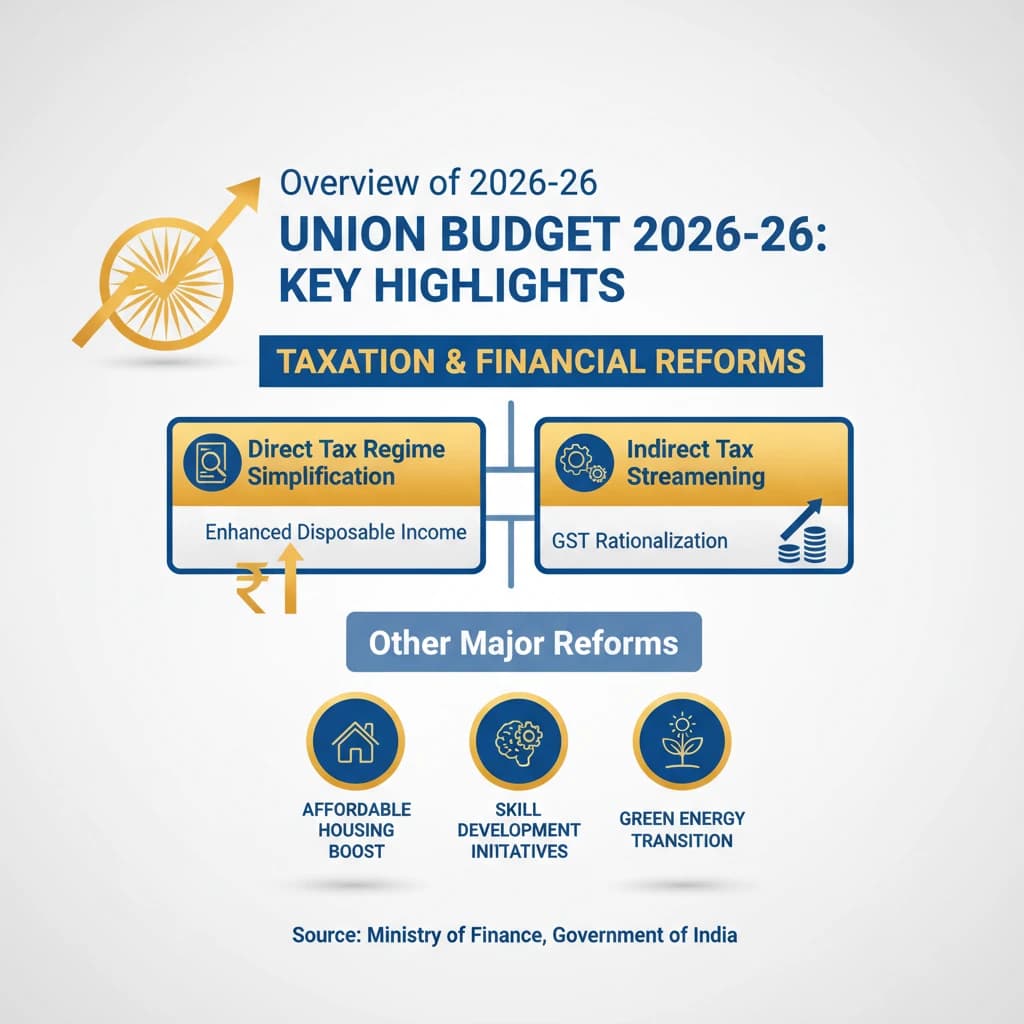
Overview of Union Budget 2026-26 Highlights
The Union Budget 2026-26 introduced several significant reforms, particularly in the realm of Taxation and Financial Reforms. These changes aim to streamline the tax structure and provide relief to various taxpayer categories.
A primary focus of the budget was to simplify the direct tax regime and enhance disposable income for a large segment of the population.
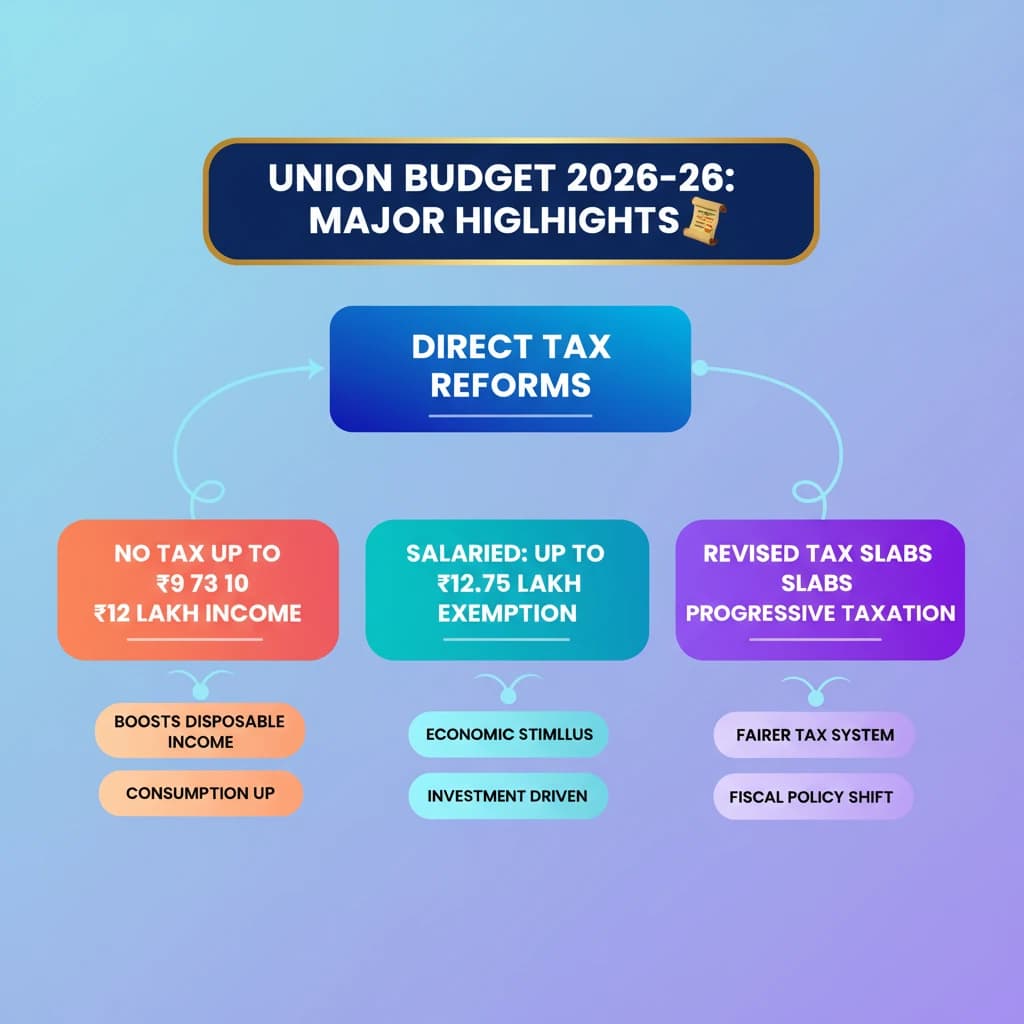
Direct Tax Reforms: Income Tax Slabs
A major highlight was the revision of Direct Taxes, specifically concerning Income Tax. The budget proposed significant changes to the tax slabs, offering considerable relief to individuals.
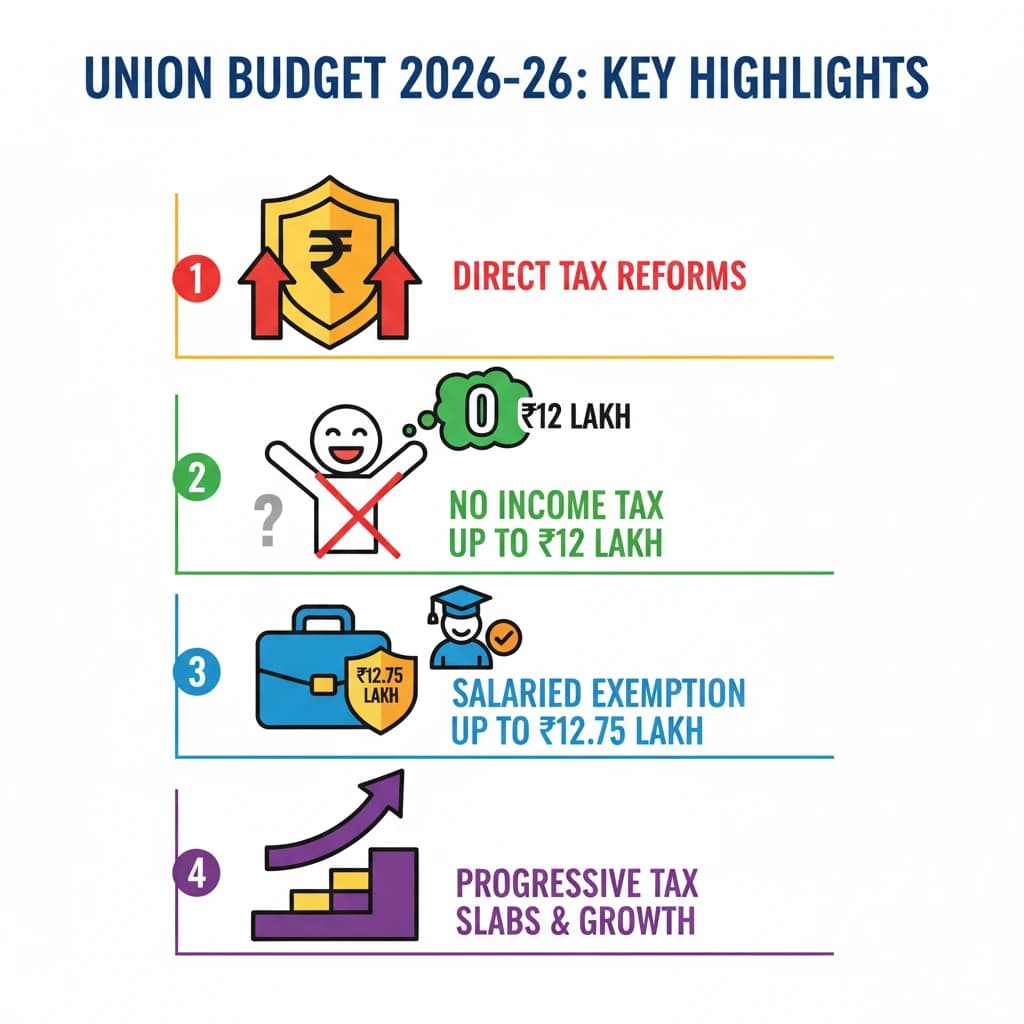
For annual incomes up to ₹12 lakh, individuals are now exempt from paying Income Tax. This move is designed to boost consumption and savings among the middle-income group.
Furthermore, for salaried taxpayers who are eligible for certain deductions, this exemption limit has been extended. They can enjoy no Income Tax for annual incomes up to ₹12.75 lakh.
UPSC Insight: Understanding the nuances between general taxpayers and salaried taxpayers with deductions is crucial for Mains answers, especially in GS Paper 3 (Economy).
Revised Income Tax Slabs (Union Budget 2026-26)
| Income (in ₹) | Tax Rate |
|---|---|
| ₹0 - ₹4 lakh | Nil |
| ₹4 - ₹8 lakh | 5% |
| ₹8 - ₹12 lakh | 10% |
| ₹12 - ₹16 lakh | 15% |
| ₹16 - ₹20 lakh | 20% |
| ₹20 - ₹24 lakh | 25% |
| Above ₹24 lakh | 30% |
These revised slabs indicate a progressive tax structure, with increasing rates for higher income brackets. The aim is to ensure equitable distribution of the tax burden while stimulating economic activity.
💡 Key Takeaways
- •Union Budget 2026-26 introduced significant Direct Tax reforms.
- •No Income Tax for annual incomes up to ₹12 lakh.
- •Salaried taxpayers with deductions get exemption up to ₹12.75 lakh.
- •Revised tax slabs aim for progressive taxation and economic stimulus.
- •These changes impact disposable income, consumption, and government fiscal policy.
🧠 Memory Techniques
95% Verified Content
📚 Reference Sources
•Press Information Bureau (PIB) releases on Budget Highlights
•Economic Survey (relevant sections on taxation and fiscal policy)