Loading page, please wait…
What are the Regional Rural Banks? - UPSC Economy
What is What are the Regional Rural Banks? in UPSC Economy?
What are the Regional Rural Banks? is a key topic under Economy for UPSC Civil Services Examination. Key points include: RRBs were established in 1975 based on the Narasimham Committee's recommendation.. Their primary goal is to develop the rural economy by providing credit to specific target groups.. Key beneficiaries include small/marginal farmers, agricultural laborers, artisans, and small entrepreneurs.. Understanding this topic is essential for both UPSC Prelims and Mains preparation.
Why is What are the Regional Rural Banks? important for UPSC exam?
What are the Regional Rural Banks? is a Easy-level topic in UPSC Economy. It is tested in both Prelims (factual MCQs) and Mains (analytical answer writing). Previous year UPSC questions have frequently covered aspects of What are the Regional Rural Banks?, making it essential for comprehensive IAS preparation.
How to prepare What are the Regional Rural Banks? for UPSC?
To prepare What are the Regional Rural Banks? for UPSC: (1) Study the comprehensive notes covering all key concepts on Vaidra. (2) Practice previous year questions on this topic. (3) Connect it with current affairs using daily updates. (4) Revise using key takeaways and mind maps available for Economy. (5) Write practice answers linking What are the Regional Rural Banks? to related GS Paper topics.
Key takeaways of What are the Regional Rural Banks? for UPSC
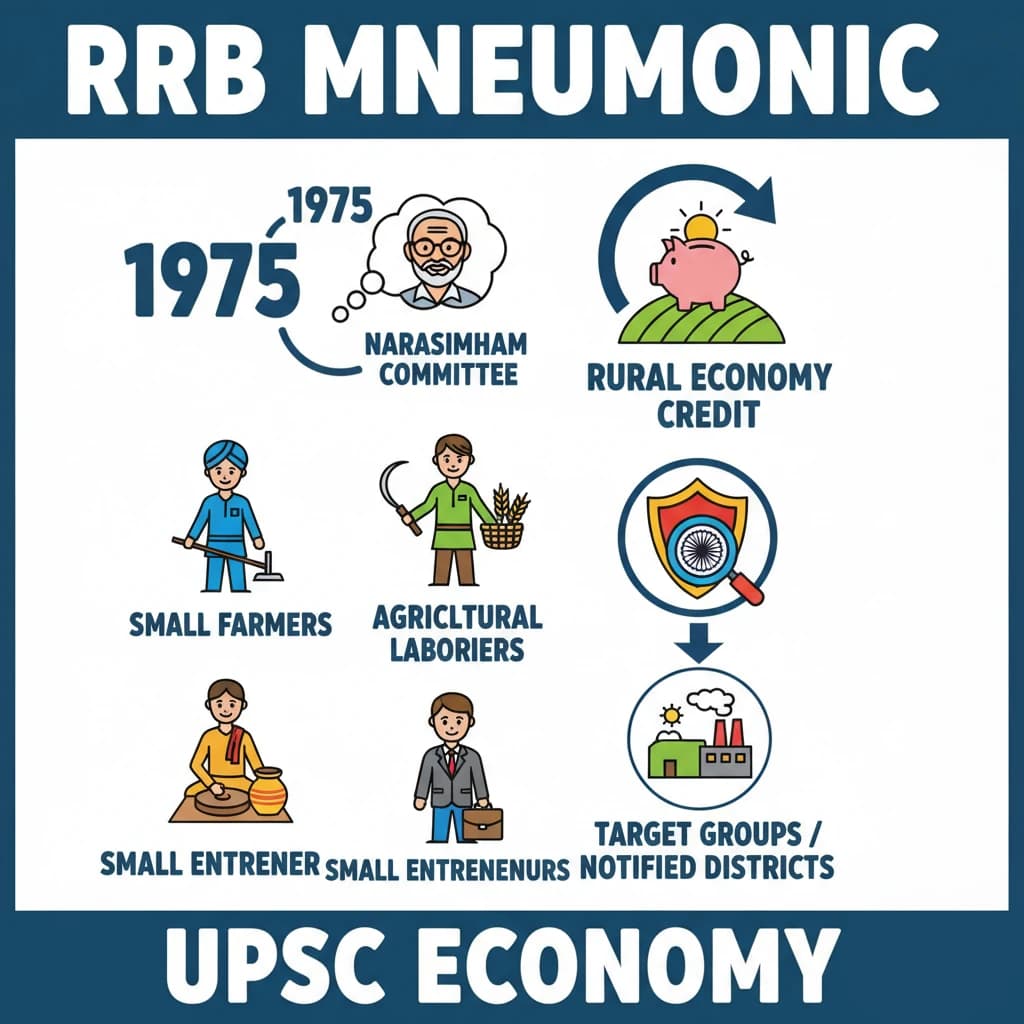
- RRBs were established in 1975 based on the Narasimham Committee's recommendation.
- Their primary goal is to develop the rural economy by providing credit to specific target groups.
- Key beneficiaries include small/marginal farmers, agricultural laborers, artisans, and small entrepreneurs.
- Operate in notified districts within a state, focusing on rural and semi-urban areas.
- Governed by the RRB Act, 1976, they are crucial for financial inclusion and rural development.
What are the Regional Rural Banks?
Easy⏱️ 6 min read
economy
📖 Introduction
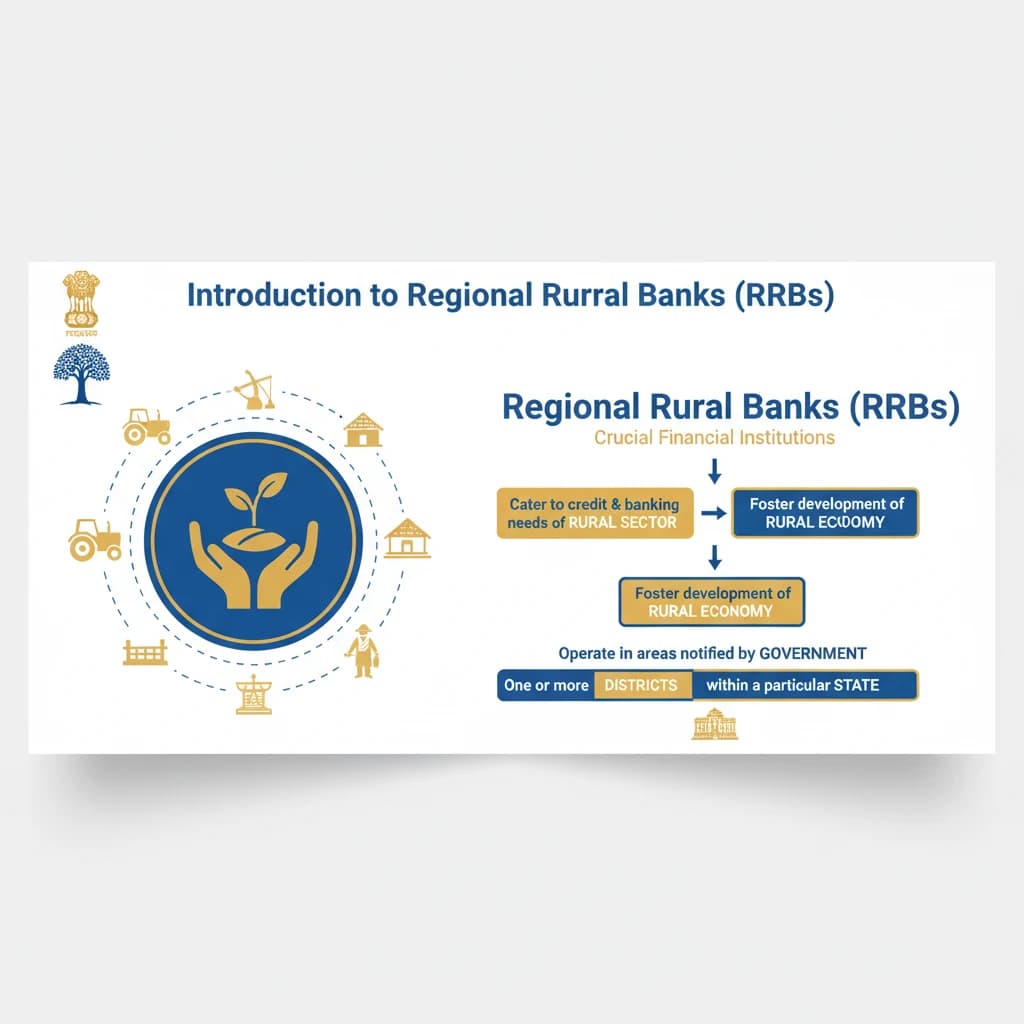
Introduction to Regional Rural Banks (RRBs)
Regional Rural Banks (RRBs) are crucial financial institutions established to cater to the credit and banking needs of the rural sector in India. Their primary objective is to foster the development of the rural economy.
These banks operate specifically in areas notified by the Government, typically covering one or more districts within a particular State.
Key Point: RRBs bridge the gap in financial services for underserved rural populations, promoting inclusive growth.
Genesis and Establishment
The establishment of Regional Rural Banks was a direct recommendation of the Narasimham Committee on rural credit in 1975. This committee played a pivotal role in shaping India's rural financial architecture.
Fact: RRBs were formally established in 1975 under the specific provisions of the Regional Rural Banks Act, 1976. This legislative framework provided the legal basis for their operations.
Core Objectives and Mandate
The fundamental aim of RRBs is to develop the rural economy by providing essential credit and other financial facilities. This support is directed towards various segments of the rural populace.
- Small and marginal farmers: Offering loans for agricultural activities and related needs.
- Agricultural laborers: Providing financial assistance for livelihood and consumption.
- Artisans: Supporting traditional crafts and small-scale production units.
- Small entrepreneurs: Facilitating the growth of micro-enterprises in rural and semi-urban areas.
By extending these facilities, RRBs actively support key sectors such as agriculture, trade, commerce, and industry within rural and semi-urban areas.
UPSC Insight: Understanding the genesis (Narasimham Committee) and the core beneficiaries of RRBs is vital for Mains answers on financial inclusion and rural development (GS Paper III).
Operational Scope
RRBs have a defined operational jurisdiction. They function in specific geographical areas that are officially notified by the Government.
Each RRB's operational reach is limited, typically encompassing one or more districts within a single State, ensuring focused and localized service delivery.
💡 Key Takeaways
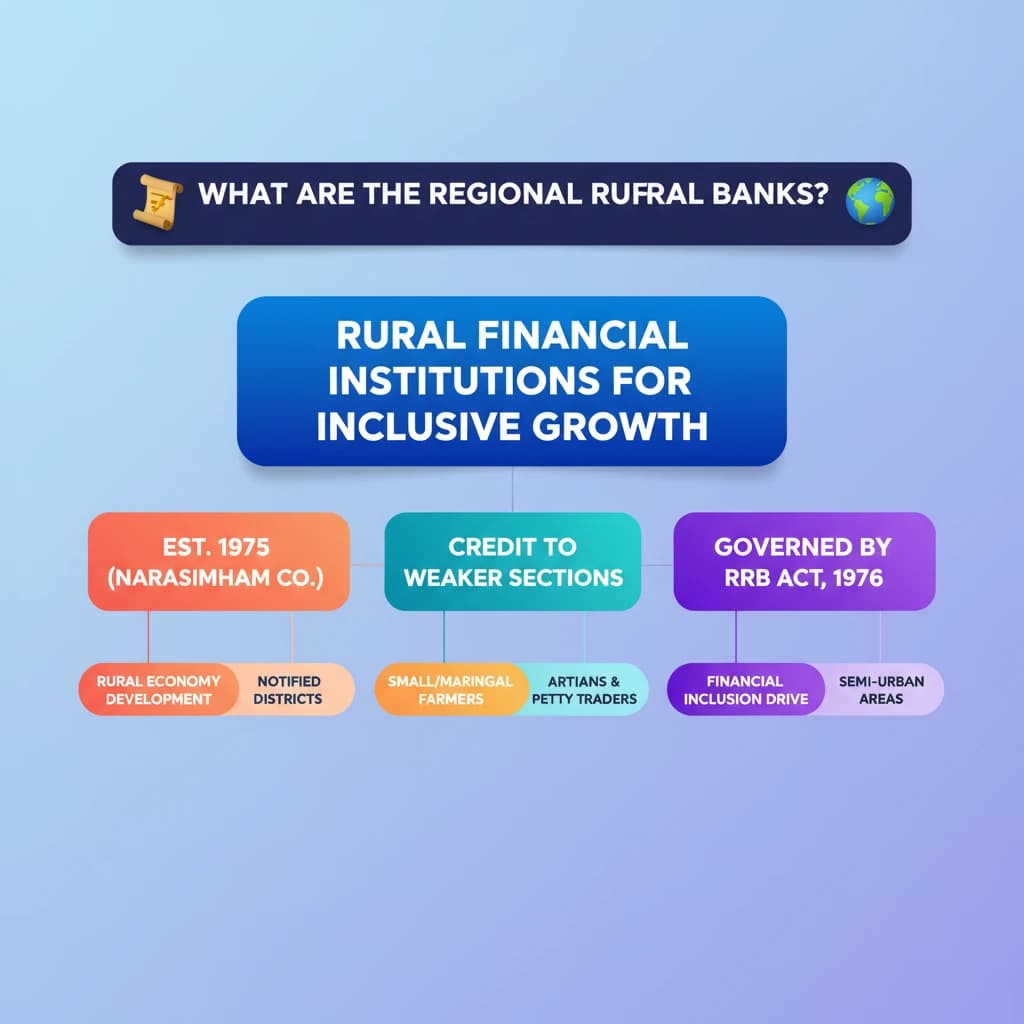
- •RRBs were established in 1975 based on the Narasimham Committee's recommendation.
- •Their primary goal is to develop the rural economy by providing credit to specific target groups.
- •Key beneficiaries include small/marginal farmers, agricultural laborers, artisans, and small entrepreneurs.
- •Operate in notified districts within a state, focusing on rural and semi-urban areas.
- •Governed by the RRB Act, 1976, they are crucial for financial inclusion and rural development.
🧠 Memory Techniques
95% Verified Content