Loading page, please wait…
What is Angel Tax? - UPSC Economy
What is What is Angel Tax? in UPSC Economy?
What is Angel Tax? is a key topic under Economy for UPSC Civil Services Examination. Key points include: Angel Tax was introduced in 2012 to tax unlisted company investments exceeding Fair Market Value (FMV).. Its primary purpose is to curb the use of unaccounted money through inflated share valuations.. The Finance Act, 2023, expanded its scope to include foreign investors.. Understanding this topic is essential for both UPSC Prelims and Mains preparation.
Why is What is Angel Tax? important for UPSC exam?
What is Angel Tax? is a Medium-level topic in UPSC Economy. It is tested in both Prelims (factual MCQs) and Mains (analytical answer writing). Previous year UPSC questions have frequently covered aspects of What is Angel Tax?, making it essential for comprehensive IAS preparation.
How to prepare What is Angel Tax? for UPSC?
To prepare What is Angel Tax? for UPSC: (1) Study the comprehensive notes covering all key concepts on Vaidra. (2) Practice previous year questions on this topic. (3) Connect it with current affairs using daily updates. (4) Revise using key takeaways and mind maps available for Economy. (5) Write practice answers linking What is Angel Tax? to related GS Paper topics.
Key takeaways of What is Angel Tax? for UPSC
- Angel Tax was introduced in 2012 to tax unlisted company investments exceeding Fair Market Value (FMV).
- Its primary purpose is to curb the use of unaccounted money through inflated share valuations.
- The Finance Act, 2023, expanded its scope to include foreign investors.
- DPIIT-recognized startups are generally exempt from Angel Tax.
- Following industry concerns, investors from 21 countries were later exempted from the tax for Indian startups.
- The tax reflects a balance between preventing tax evasion and fostering a conducive environment for startups and foreign investment.
What is Angel Tax?
Medium⏱️ 6 min read
economy
📖 Introduction
What is Angel Tax?
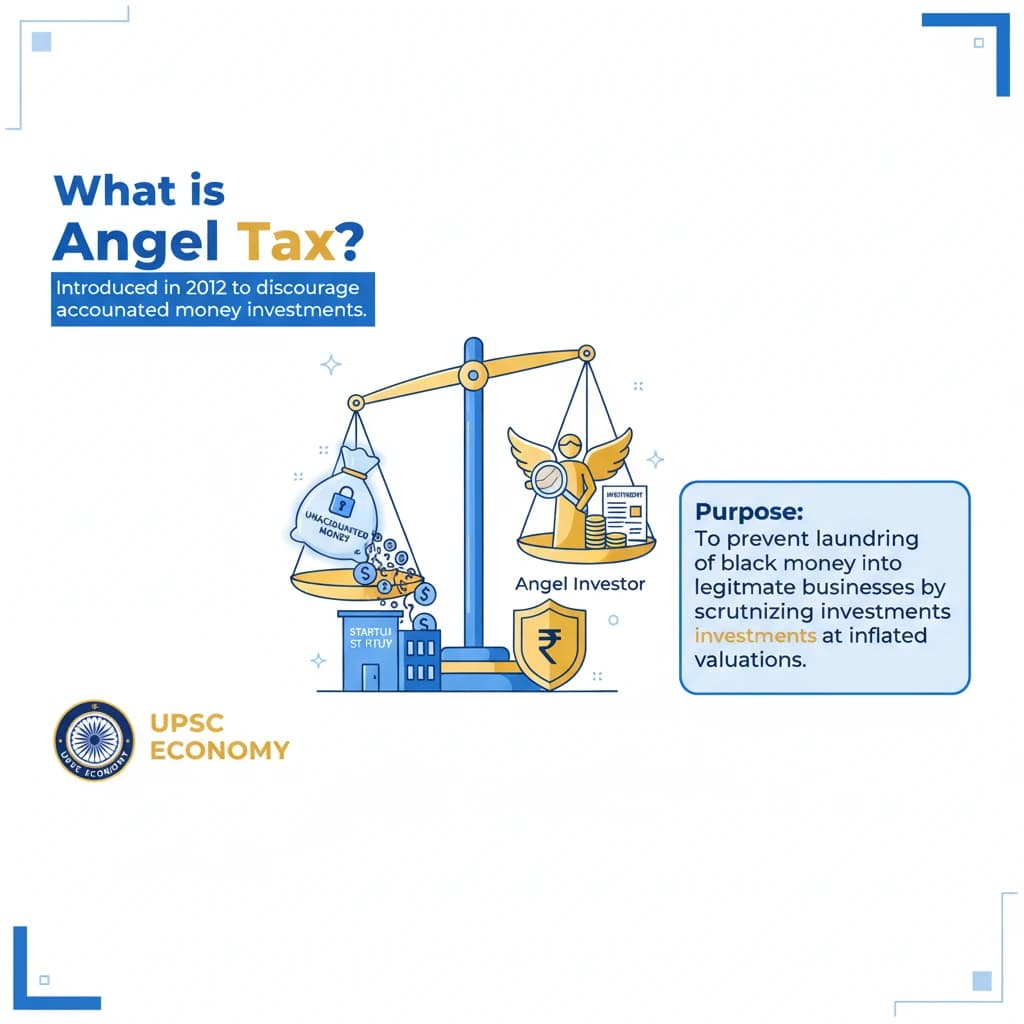
The term 'Angel tax' was initially introduced in 2012. Its primary objective was to discourage the generation and utilisation of unaccounted money through investments in closely held companies.
Purpose: The Angel Tax aims to prevent the laundering of black money into legitimate businesses by scrutinizing investments made at inflated valuations.
It is essentially a tax levied on funds raised by unlisted companies. This tax applies specifically when shares are issued in off-market transactions at a price that exceeds the company's Fair Market Value (FMV).
Definition of Angel Tax: A tax on capital received by an unlisted company from the issuance of shares, if the issue price is higher than the Fair Market Value (FMV) of the shares.
Definition of Fair Market Value (FMV): This is the theoretical price at which an asset would change hands between a willing buyer and a willing seller, both having reasonable knowledge of relevant facts and neither being under compulsion to buy or sell.
Expansion Under Finance Act, 2023
The scope of Angel Tax was significantly expanded through the Finance Act of 2023. A relevant section of the Income-tax Act was amended to bring foreign investors within the ambit of this provision.
Initially, startups recognized by the Department for Promotion of Industry and Internal Trade (DPIIT) were excluded from the purview of this provision. This provided a crucial relief to the burgeoning Indian startup ecosystem.
UPSC Insight: The expansion to include foreign investors under the Finance Act, 2023, initially raised concerns about its potential impact on foreign direct investment into Indian startups. This demonstrates the dynamic nature of tax policy.
Following considerable industry pushback and concerns regarding a potential decline in funding for startups, the Finance Ministry responded. They subsequently exempted investors from 21 countries, including major economies like the US, UK, and France, from the Angel Tax levy for investments in Indian startups.
💡 Key Takeaways
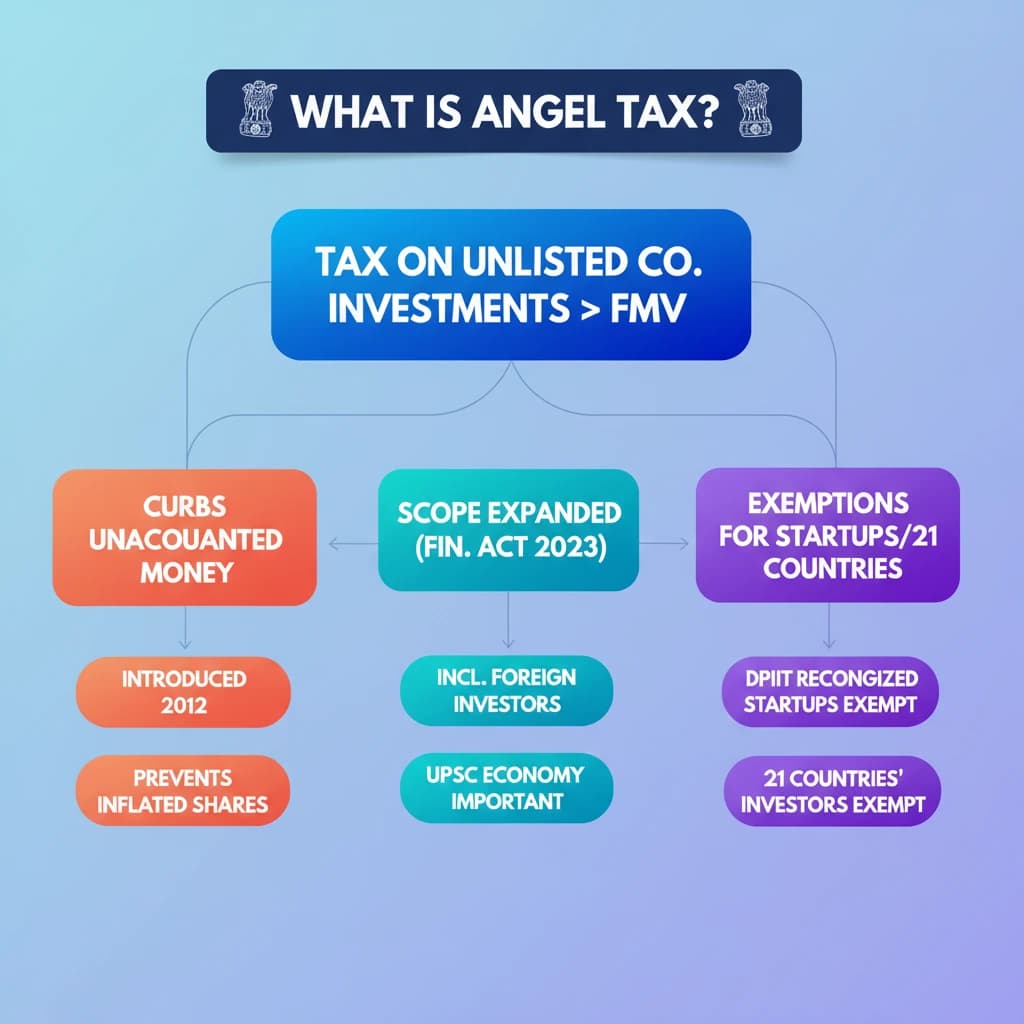
- •Angel Tax was introduced in 2012 to tax unlisted company investments exceeding Fair Market Value (FMV).
- •Its primary purpose is to curb the use of unaccounted money through inflated share valuations.
- •The Finance Act, 2023, expanded its scope to include foreign investors.
- •DPIIT-recognized startups are generally exempt from Angel Tax.
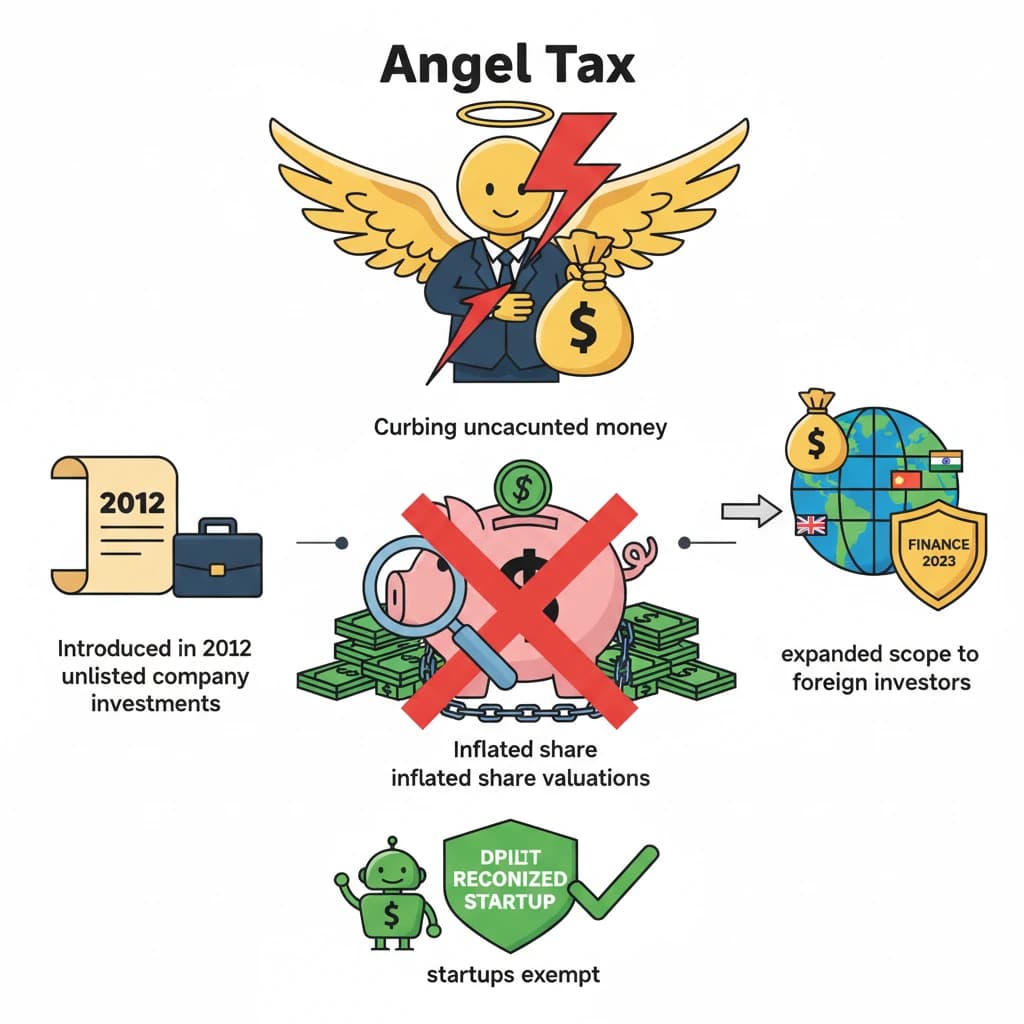
- •Following industry concerns, investors from 21 countries were later exempted from the tax for Indian startups.
- •The tax reflects a balance between preventing tax evasion and fostering a conducive environment for startups and foreign investment.
🧠 Memory Techniques
98% Verified Content
📚 Reference Sources
•The Income-tax Act, 1961 (Section 56(2)(viib))
•The Finance Act, 2023
•Press releases and notifications from the Ministry of Finance and DPIIT regarding Angel Tax exemptions