Loading page, please wait…
What is Capital Expenditure? - UPSC Economy
What is What is Capital Expenditure? in UPSC Economy?
What is Capital Expenditure? is a key topic under Economy for UPSC Civil Services Examination. Key points include: Capital Expenditure (Capex) creates long-term physical assets like infrastructure, buildings, and machinery.. It is crucial for a nation's long-term economic growth and enhances productive capacity.. Effective Capital Expenditure includes direct Capex plus grants to states for capital asset creation.. Understanding this topic is essential for both UPSC Prelims and Mains preparation.
Why is What is Capital Expenditure? important for UPSC exam?
What is Capital Expenditure? is a Medium-level topic in UPSC Economy. It is tested in both Prelims (factual MCQs) and Mains (analytical answer writing). Previous year UPSC questions have frequently covered aspects of What is Capital Expenditure?, making it essential for comprehensive IAS preparation.
How to prepare What is Capital Expenditure? for UPSC?
To prepare What is Capital Expenditure? for UPSC: (1) Study the comprehensive notes covering all key concepts on Vaidra. (2) Practice previous year questions on this topic. (3) Connect it with current affairs using daily updates. (4) Revise using key takeaways and mind maps available for Economy. (5) Write practice answers linking What is Capital Expenditure? to related GS Paper topics.
Key takeaways of What is Capital Expenditure? for UPSC
- Capital Expenditure (Capex) creates long-term physical assets like infrastructure, buildings, and machinery.
- It is crucial for a nation's long-term economic growth and enhances productive capacity.
- Effective Capital Expenditure includes direct Capex plus grants to states for capital asset creation.
- Grants-in-aid for asset creation are initially revenue expenditure but contribute to effective Capex.
- Higher Capex stimulates demand, creates jobs, and crowds in private investment, boosting overall economic activity.
What is Capital Expenditure?
Medium⏱️ 7 min read
economy
📖 Introduction
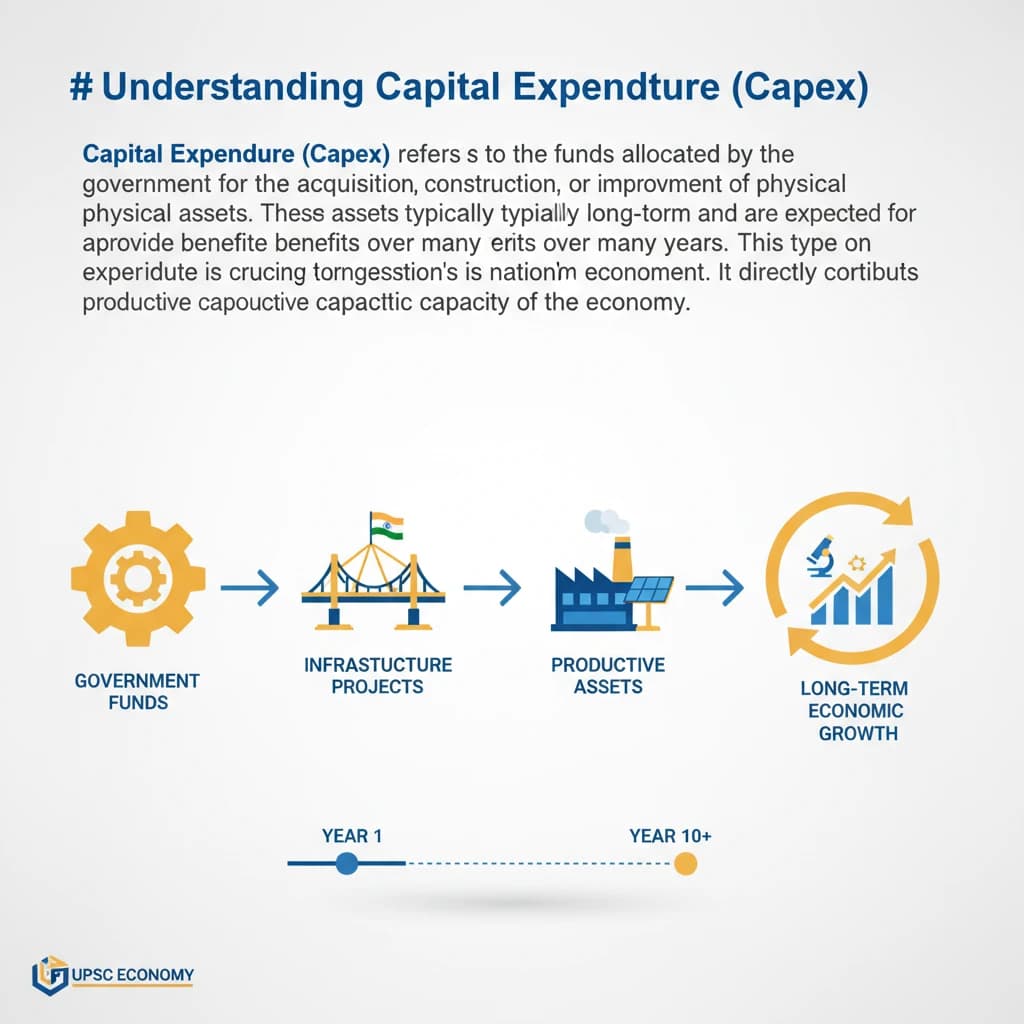
Understanding Capital Expenditure (Capex)
Capital Expenditure (Capex) refers to the funds allocated by the government for the acquisition, construction, or improvement of physical assets. These assets are typically long-term and are expected to provide benefits over many years.
This type of expenditure is crucial for a nation's long-term economic growth and development. It directly contributes to building the productive capacity of the economy.
Key Characteristics of Capital Expenditure:
- Creates or acquires assets (e.g., roads, bridges, hospitals, schools).
- Results in a reduction of liabilities (e.g., repayment of loans).
- Often involves a large, one-time investment.
- Benefits accrue over an extended period.
Components of Capital Expenditure
Capex primarily involves spending on tangible assets. These can range from large-scale infrastructure projects to essential machinery and equipment for government operations.
Examples include investments in infrastructure like highways and railways, construction of buildings such as government offices or public housing, and procurement of machinery and equipment for various public services.
Introducing Effective Capital Expenditure
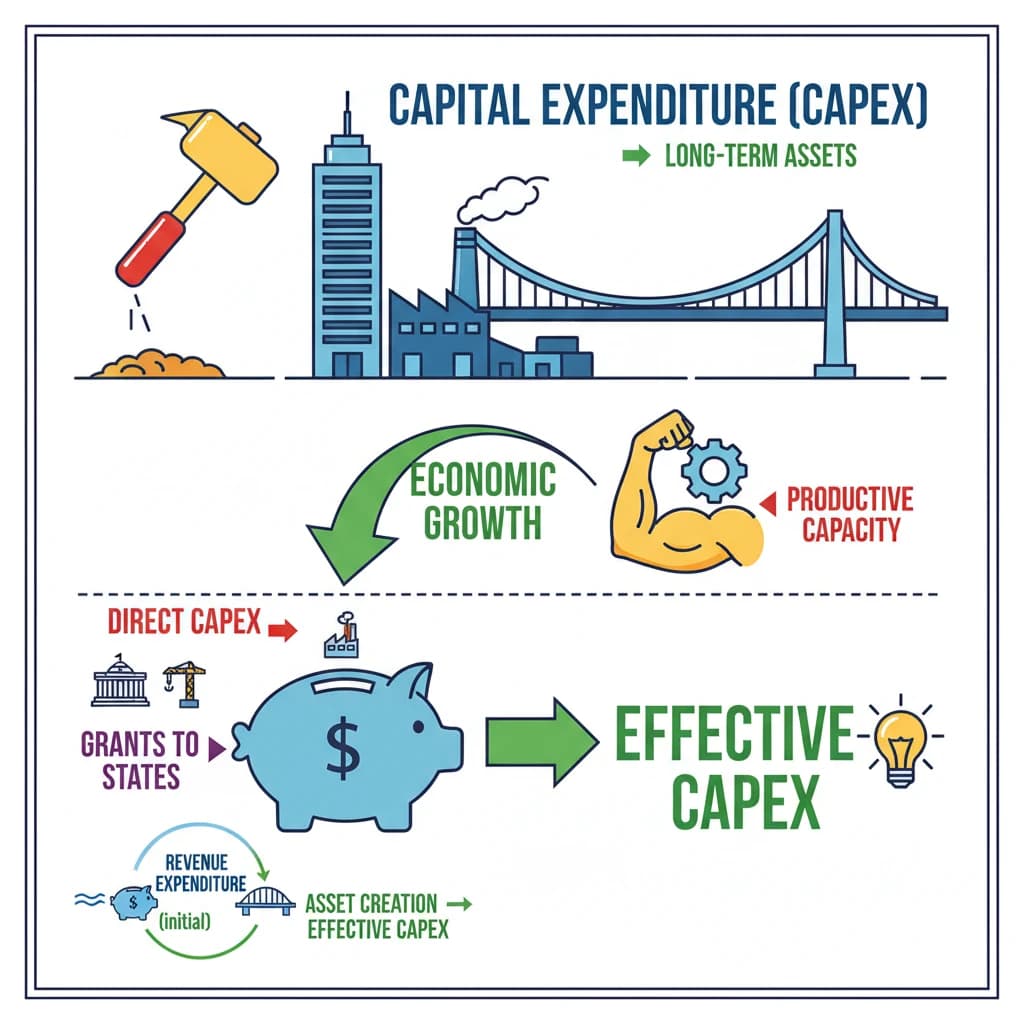
The concept of Effective Capital Expenditure was introduced to provide a more comprehensive picture of the government’s true public investment. It accounts for both direct and indirect capital formation.
While grants-in-aid for creating assets (like roads and schools) are initially classified as revenue expenditure in government accounts, they undeniably contribute to the creation of capital assets. This new concept captures that vital indirect investment.
This reclassification helps in better assessing the overall impact of government spending on asset creation, even when the funds are routed through states or other agencies.
Definition: Effective Capital Expenditure
Effective Capital Expenditure is defined as the sum of:
- Capital Expenditure (direct asset creation by the central government)
- Grants for Creation of Capital Assets (funds given to states/UTs/other bodies specifically for asset creation)
UPSC Insight: Understanding the distinction between Capital Expenditure and Effective Capital Expenditure is crucial for analyzing government budgets. Questions often test your ability to differentiate between various types of government spending and their implications for economic growth (GS Paper 3: Economy).
💡 Key Takeaways
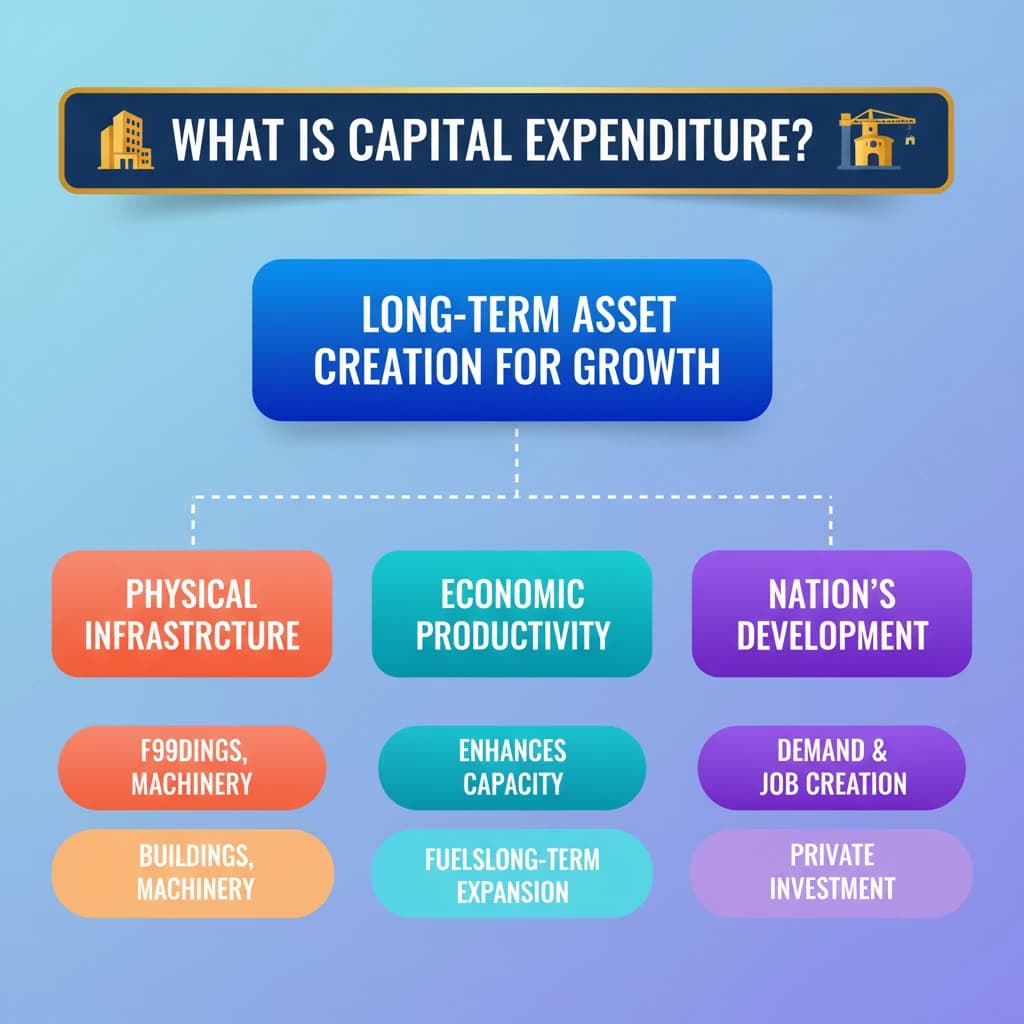
- •Capital Expenditure (Capex) creates long-term physical assets like infrastructure, buildings, and machinery.
- •It is crucial for a nation's long-term economic growth and enhances productive capacity.
- •Effective Capital Expenditure includes direct Capex plus grants to states for capital asset creation.
- •Grants-in-aid for asset creation are initially revenue expenditure but contribute to effective Capex.
- •Higher Capex stimulates demand, creates jobs, and crowds in private investment, boosting overall economic activity.
🧠 Memory Techniques
95% Verified Content
📚 Reference Sources
•Union Budget Documents (various years)
•Economic Survey of India (various years)
•Reserve Bank of India (RBI) Publications on Public Finance