Loading page, please wait…
What is Capital Gain Tax? - UPSC Economy
What is What is Capital Gain Tax? in UPSC Economy?
What is Capital Gain Tax? is a key topic under Economy for UPSC Civil Services Examination. Key points include: Capital Gain Tax is levied on profit from selling a capital asset.. It's classified as Short-Term (STCG) or Long-Term (LTCG) based on asset holding period.. General holding period for STCG is less than 36 months; for LTCG, it's over 36 months.. Understanding this topic is essential for both UPSC Prelims and Mains preparation.
Why is What is Capital Gain Tax? important for UPSC exam?
What is Capital Gain Tax? is a Easy-level topic in UPSC Economy. It is tested in both Prelims (factual MCQs) and Mains (analytical answer writing). Previous year UPSC questions have frequently covered aspects of What is Capital Gain Tax?, making it essential for comprehensive IAS preparation.
How to prepare What is Capital Gain Tax? for UPSC?
To prepare What is Capital Gain Tax? for UPSC: (1) Study the comprehensive notes covering all key concepts on Vaidra. (2) Practice previous year questions on this topic. (3) Connect it with current affairs using daily updates. (4) Revise using key takeaways and mind maps available for Economy. (5) Write practice answers linking What is Capital Gain Tax? to related GS Paper topics.
Key takeaways of What is Capital Gain Tax? for UPSC
- Capital Gain Tax is levied on profit from selling a capital asset.
- It's classified as Short-Term (STCG) or Long-Term (LTCG) based on asset holding period.
- General holding period for STCG is less than 36 months; for LTCG, it's over 36 months.
- For immovable property, STCG applies if held for less than 24 months.
- Capital losses can be offset against capital gains to reduce tax liability.
- Tax is triggered only when the asset is sold or 'realised'.
What is Capital Gain Tax?
Easy⏱️ 5 min read
economy
📖 Introduction
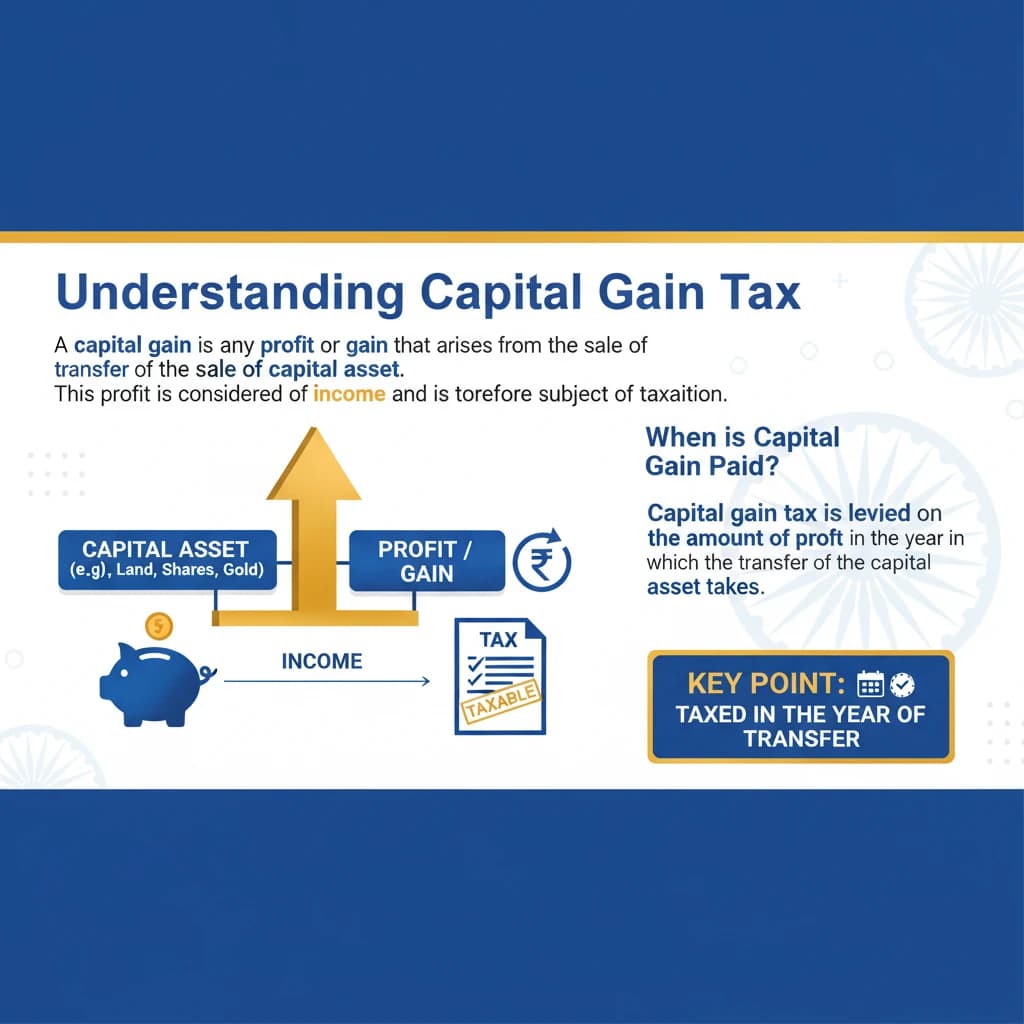
Understanding Capital Gain Tax
A capital gain is any profit or gain that arises from the sale or transfer of a capital asset.
This profit is considered a form of income and is therefore subject to taxation.
When is Capital Gain Tax Paid?
Capital gain tax is levied on the amount of profit in the year in which the transfer of the capital asset takes place.
Tax on capital gains is triggered only when an asset is sold, or "realised".
Types of Capital Gains
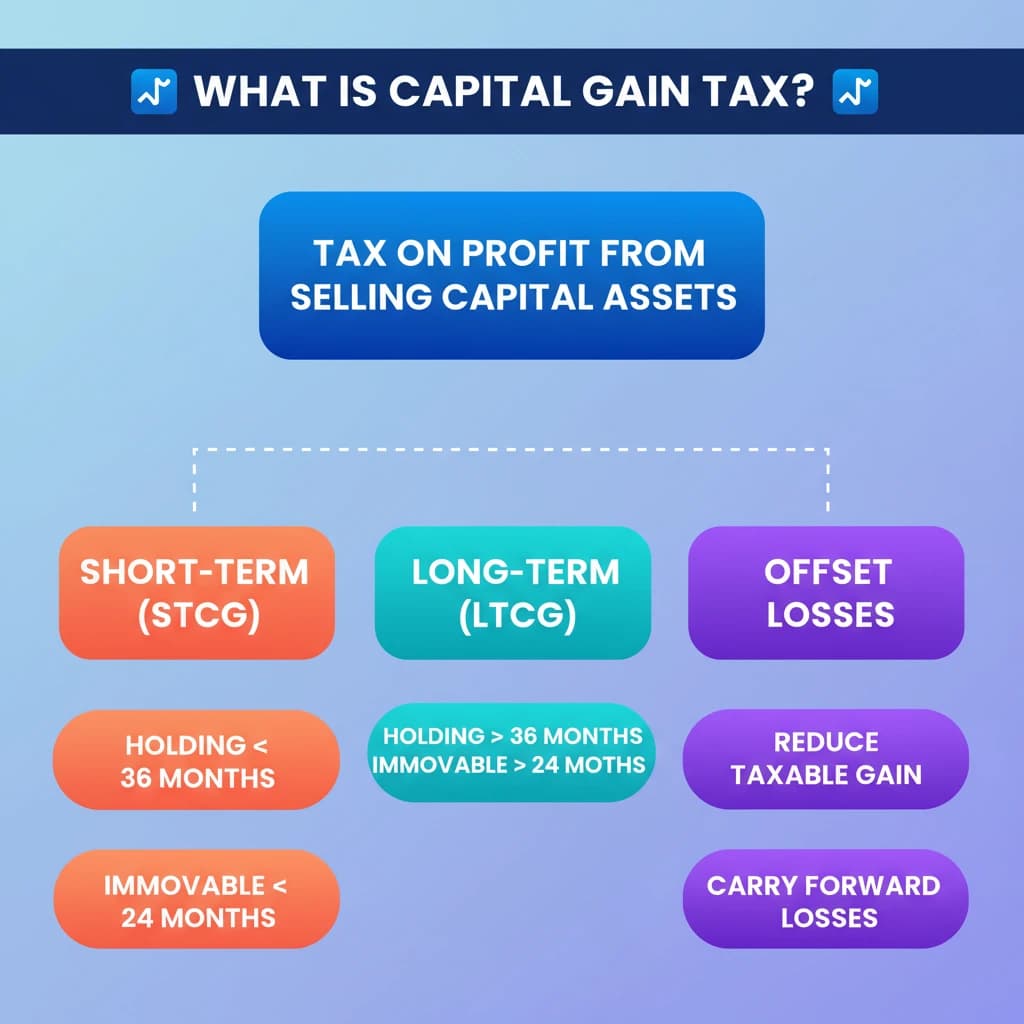
Capital gains are broadly classified into two categories based on the holding period of the asset:
- Long-Term Capital Gains (LTCG)
- Short-Term Capital Gains (STCG)
Long-Term Capital Gains (LTCG)
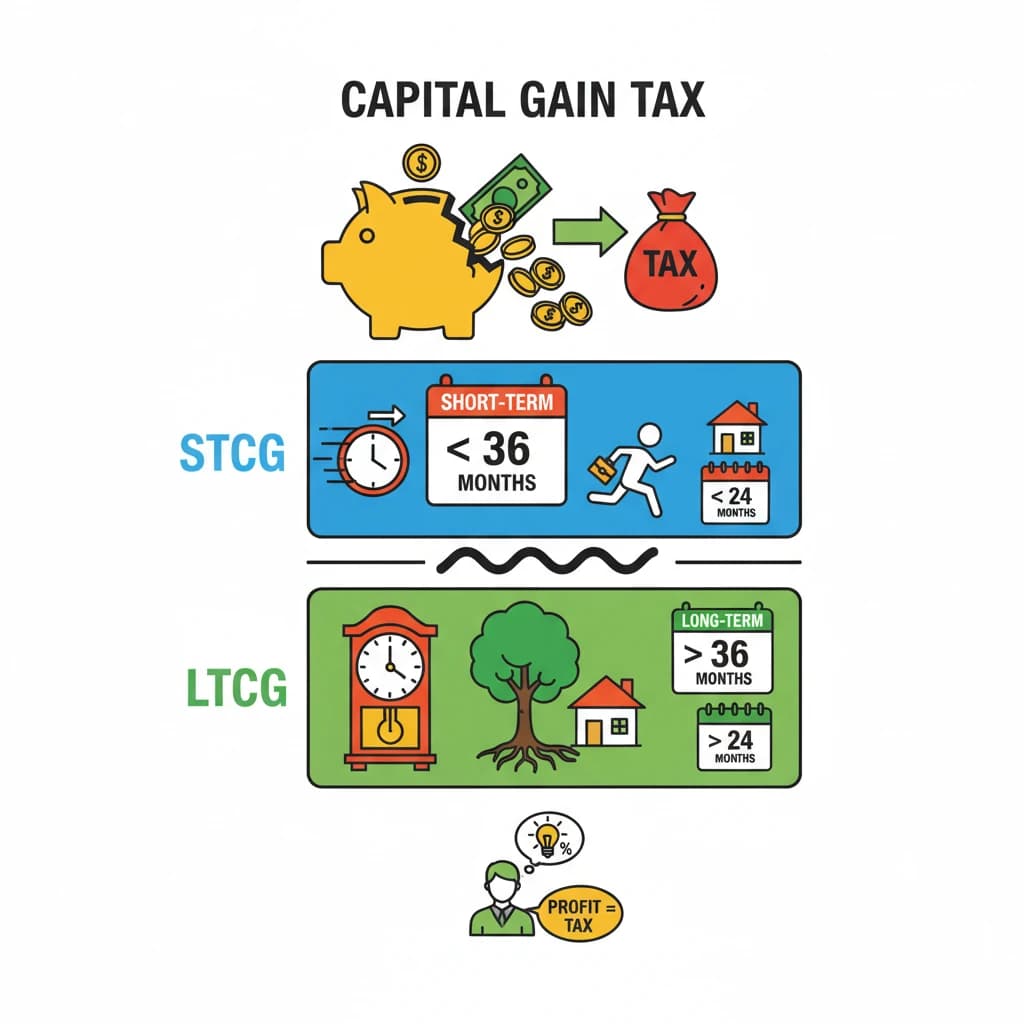
This applies to assets held for a specified period, which is generally over 36 months.
For most assets, if held for more than 36 months, the gains are classified as LTCG.
Short-Term Capital Gains (STCG)
Any asset held for less than 36 months is termed a short-term asset.
There is a specific duration for immovable properties that differs from the general rule.
In the case of immovable properties (e.g., land, building), the duration for it to be considered short-term is 24 months.
Reducing Capital Gains Tax Liability
The total amount of capital gains can be reduced by offsetting capital losses.
A capital loss occurs when a taxable asset is sold for less than its original purchase price.
The final taxable amount is known as the "net capital gains," which is calculated by deducting any capital losses from the total capital gains.
💡 Key Takeaways
- •Capital Gain Tax is levied on profit from selling a capital asset.
- •It's classified as Short-Term (STCG) or Long-Term (LTCG) based on asset holding period.
- •General holding period for STCG is less than 36 months; for LTCG, it's over 36 months.
- •For immovable property, STCG applies if held for less than 24 months.
- •Capital losses can be offset against capital gains to reduce tax liability.
- •Tax is triggered only when the asset is sold or 'realised'.
🧠 Memory Techniques
95% Verified Content
📚 Reference Sources
•The Income Tax Act, 1961 (relevant sections on Capital Gains)
•Ministry of Finance, Government of India publications