Loading page, please wait…
What is Digital India Land Records Modernization Programme (DILRMP)? - UPSC Economy
What is What is Digital India Land Records Modernization Programme (DILRMP)? in UPSC Economy?
What is Digital India Land Records Modernization Programme (DILRMP)? is a key topic under Economy for UPSC Civil Services Examination. Key points include: DILRMP is the Digital India Land Records Modernization Programme, revamped from NLRMP in 2016.. It is a central sector scheme, fully funded by the Central government.. Key initiatives include ULPIN (Bhu-Aadhar), NGDRS (e-Registration), and e-Court Integration.. Understanding this topic is essential for both UPSC Prelims and Mains preparation.
Why is What is Digital India Land Records Modernization Programme (DILRMP)? important for UPSC exam?
What is Digital India Land Records Modernization Programme (DILRMP)? is a Medium-level topic in UPSC Economy. It is tested in both Prelims (factual MCQs) and Mains (analytical answer writing). Previous year UPSC questions have frequently covered aspects of What is Digital India Land Records Modernization Programme (DILRMP)?, making it essential for comprehensive IAS preparation.
How to prepare What is Digital India Land Records Modernization Programme (DILRMP)? for UPSC?
To prepare What is Digital India Land Records Modernization Programme (DILRMP)? for UPSC: (1) Study the comprehensive notes covering all key concepts on Vaidra. (2) Practice previous year questions on this topic. (3) Connect it with current affairs using daily updates. (4) Revise using key takeaways and mind maps available for Economy. (5) Write practice answers linking What is Digital India Land Records Modernization Programme (DILRMP)? to related GS Paper topics.
Key takeaways of What is Digital India Land Records Modernization Programme (DILRMP)? for UPSC
- DILRMP is the Digital India Land Records Modernization Programme, revamped from NLRMP in 2016.
- It is a central sector scheme, fully funded by the Central government.
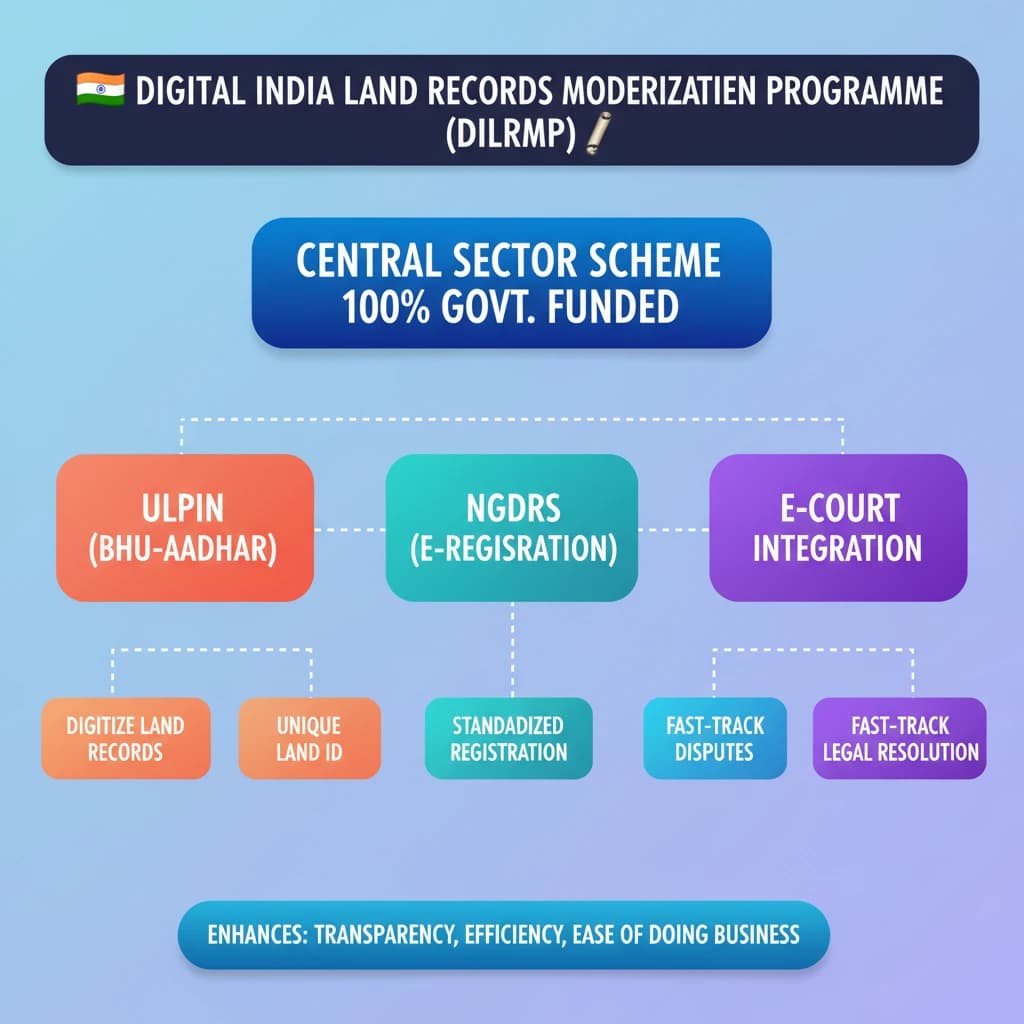
- Key initiatives include ULPIN (Bhu-Aadhar), NGDRS (e-Registration), and e-Court Integration.
- Aims to digitize land records, standardize registration, and reduce land disputes.
- Enhances transparency, efficiency, and ease of doing business in land administration.
What is Digital India Land Records Modernization Programme (DILRMP)?
Medium⏱️ 6 min read
economy
📖 Introduction
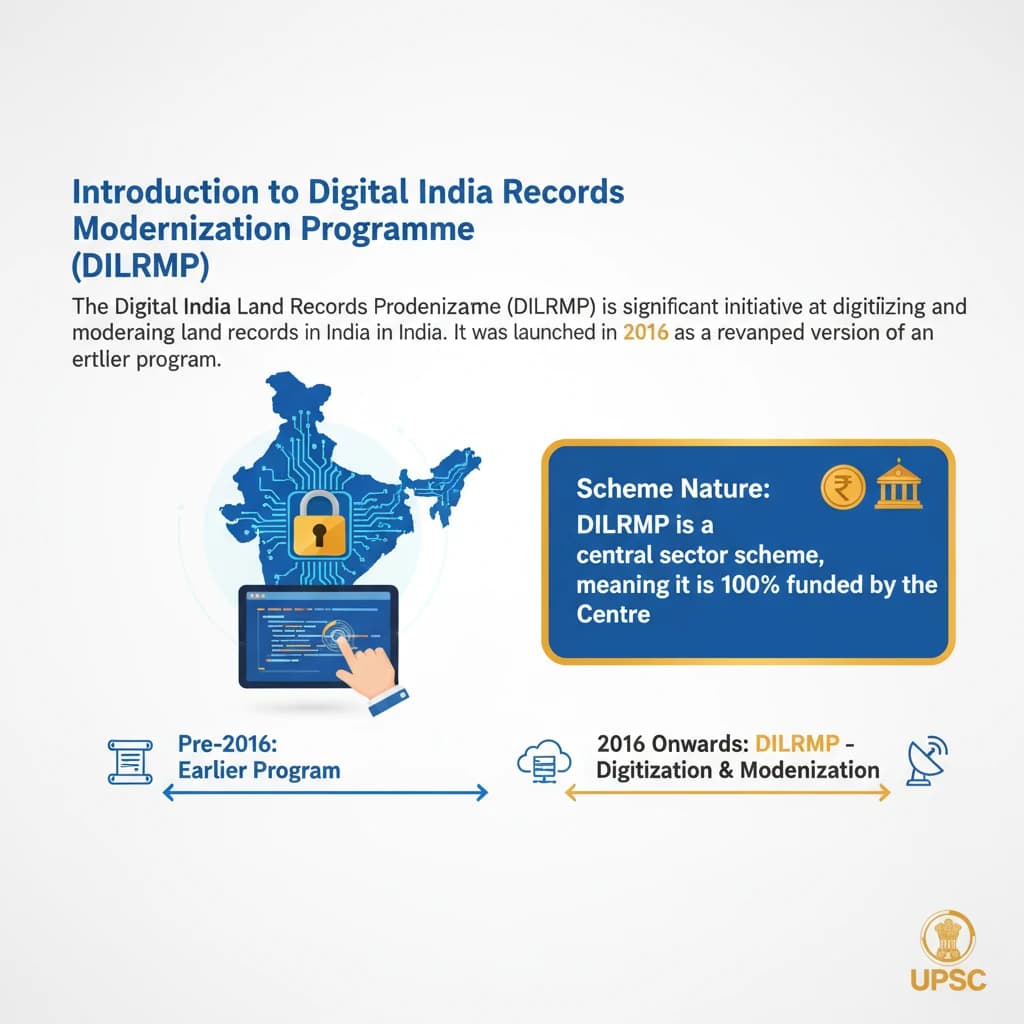
Introduction to Digital India Land Records Modernization Programme (DILRMP)
The Digital India Land Records Modernization Programme (DILRMP) is a significant initiative aimed at digitizing and modernizing land records in India. It was launched in 2016 as a revamped version of an earlier program.
Scheme Nature: DILRMP is a central sector scheme, meaning it is 100% funded by the Centre. This ensures uniform implementation and resource allocation across states and Union Territories.
Historical Predecessor: National Land Record Modernization Programme (NLRMP)
Before DILRMP, the government had launched the National Land Record Modernization Programme (NLRMP) in 2008. This was a centrally sponsored scheme, implying a cost-sharing arrangement between the Centre and states.
The experiences and learnings from NLRMP paved the way for the more comprehensive and digitally focused DILRMP.
Key Initiatives Under DILRMP
DILRMP encompasses several crucial initiatives designed to bring efficiency and transparency to land administration.
- Unique Land Parcel Identification Number (ULPIN): This initiative provides a unique digital identity to every land parcel.
- National Generic Document Registration System (NGDRS): NGDRS standardizes and digitizes the process of property registration across the country.
- e-Court Integration: This involves linking land records with the judicial system to expedite dispute resolution.
Understanding ULPIN: The 'Bhu-Aadhar'
The Unique Land Parcel Identification Number (ULPIN), also known as “Bhu-Aadhar”, is a 14-digit alphanumeric code assigned to each land parcel. This code is based on the geo-coordinates of the land, ensuring its uniqueness and precise identification.
ULPIN Details: A 14-digit alphanumeric code. Based on geo-coordinates. Aims to identify every surveyed parcel of land uniquely, preventing fraud and facilitating land transactions.
National Generic Document Registration System (NGDRS)
The National Generic Document Registration System (NGDRS), or e-Registration, aims to create a uniform and transparent process for deed and document registration. It allows citizens to complete various steps online.
NGDRS Features: Provides a uniform process for deed/document registration. Facilitates online entry, payments, appointments, and document searches across India.
e-Court Integration for Dispute Resolution
The integration of land records with e-Courts is a critical step towards reducing land-related litigation. By providing authentic land information directly to the judiciary, it aims to speed up case resolution.
This integration ensures that judges have access to verified land data, which is crucial for making informed decisions in property disputes.
e-Court Integration Status: The integration has been successfully cleared in 26 States/UTs, significantly contributing to faster resolution of land disputes.
UPSC Insight: DILRMP is a prime example of a Digital India initiative impacting governance and land reforms. Understanding its components is vital for questions on public administration, economy, and social justice.
💡 Key Takeaways
- •DILRMP is the Digital India Land Records Modernization Programme, revamped from NLRMP in 2016.
- •It is a central sector scheme, fully funded by the Central government.
- •Key initiatives include ULPIN (Bhu-Aadhar), NGDRS (e-Registration), and e-Court Integration.
- •Aims to digitize land records, standardize registration, and reduce land disputes.
- •Enhances transparency, efficiency, and ease of doing business in land administration.
🧠 Memory Techniques

95% Verified Content
📚 Reference Sources
•Ministry of Rural Development (DILRMP official website)
•Press Information Bureau (PIB) releases on DILRMP