Loading page, please wait…
What is the Current State of India’s Financial Services Industry? - UPSC Economy
What is What is the Current State of India’s Financial Services Industry? in UPSC Economy?
What is the Current State of India’s Financial Services Industry? is a key topic under Economy for UPSC Civil Services Examination. Key points include: India's financial services industry is rapidly expanding and diversifying, encompassing banks, NBFCs, insurance, and more.. Commercial banks remain dominant, holding over 64% of total assets.. Recent developments include new entities like payment banks and significant growth in digital payments.. Understanding this topic is essential for both UPSC Prelims and Mains preparation.
Why is What is the Current State of India’s Financial Services Industry? important for UPSC exam?
What is the Current State of India’s Financial Services Industry? is a Medium-level topic in UPSC Economy. It is tested in both Prelims (factual MCQs) and Mains (analytical answer writing). Previous year UPSC questions have frequently covered aspects of What is the Current State of India’s Financial Services Industry?, making it essential for comprehensive IAS preparation.
How to prepare What is the Current State of India’s Financial Services Industry? for UPSC?
To prepare What is the Current State of India’s Financial Services Industry? for UPSC: (1) Study the comprehensive notes covering all key concepts on Vaidra. (2) Practice previous year questions on this topic. (3) Connect it with current affairs using daily updates. (4) Revise using key takeaways and mind maps available for Economy. (5) Write practice answers linking What is the Current State of India’s Financial Services Industry? to related GS Paper topics.
Key takeaways of What is the Current State of India’s Financial Services Industry? for UPSC
- India's financial services industry is rapidly expanding and diversifying, encompassing banks, NBFCs, insurance, and more.
- Commercial banks remain dominant, holding over 64% of total assets.
- Recent developments include new entities like payment banks and significant growth in digital payments.
- UPI is a major success, recording 12.10 billion transactions worth Rs 18.28 lakh crore in February 2024.
- The sector is crucial for financial inclusion, economic growth, and India's digital transformation agenda.
What is the Current State of India’s Financial Services Industry?
Medium⏱️ 8 min read
economy
📖 Introduction
Introduction to India's Financial Services Industry
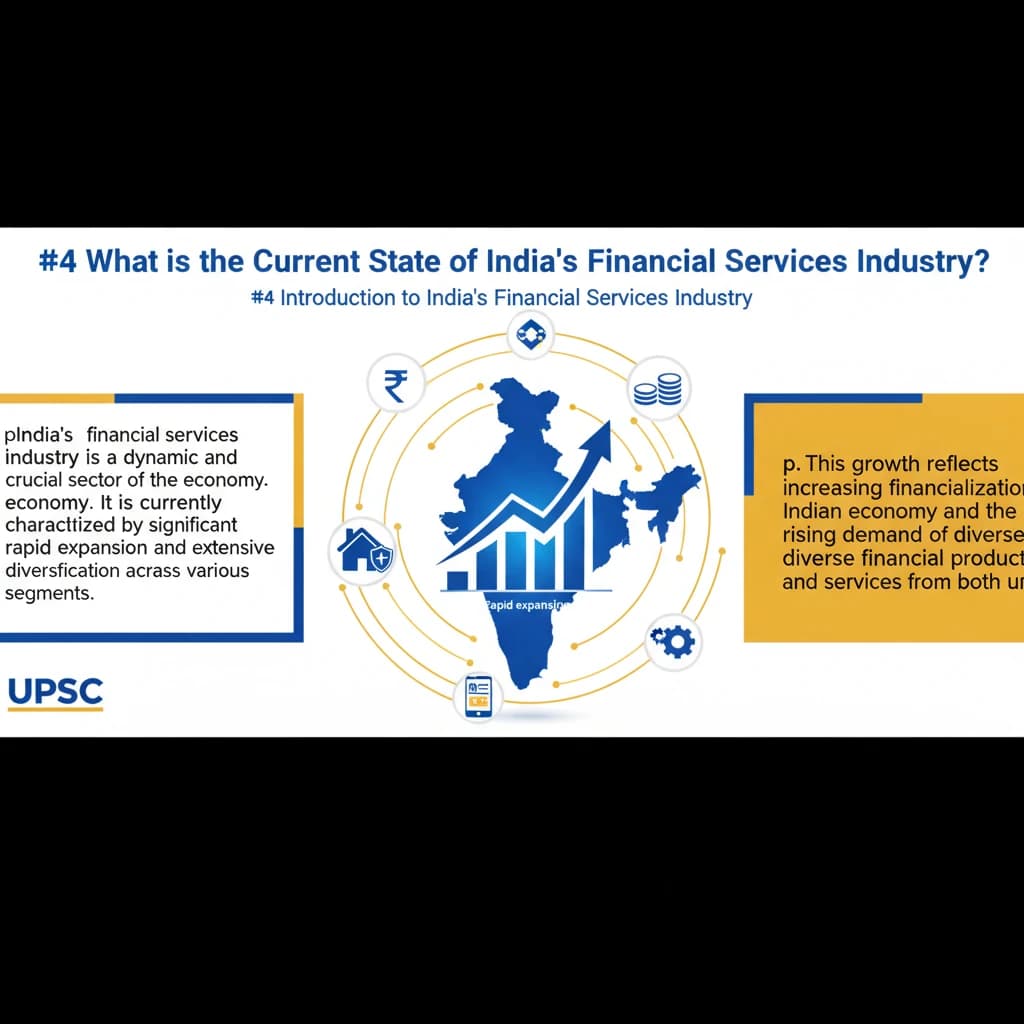
India's financial services industry is a dynamic and crucial sector of the economy. It is currently characterized by significant rapid expansion and extensive diversification across various segments.
This growth reflects the increasing financialization of the Indian economy and the rising demand for diverse financial products and services from both urban and rural populations.
Key Components of the Financial Services Sector
The sector encompasses a broad spectrum of institutions that facilitate financial transactions and provide various financial services. These entities cater to different needs, from basic banking to complex investment and insurance solutions.
- Commercial Banks: These are the largest players, offering a wide range of services including deposits, loans, and payment solutions.
- Insurance Companies: Provide risk coverage for life, health, and general assets.
- Non-Banking Financial Companies (NBFCs): Offer specialized financial services like credit, asset financing, and investment.
- Cooperatives: Focus on financial inclusion, particularly in rural and semi-urban areas.
- Pension Funds: Manage retirement savings for individuals.
- Mutual Funds: Pool money from investors to invest in securities like stocks and bonds.
- Smaller Financial Entities: Include microfinance institutions and other niche service providers.
Dominance of Commercial Banks
Despite the diversification and emergence of new players, commercial banks continue to hold a commanding position within the industry. Their extensive network and broad service offerings make them central to India's financial system.
Commercial banks currently account for over 64% of the total assets held within India's financial services industry, underscoring their systemic importance.
Recent Developments and New Entities
The industry has witnessed significant innovations and the introduction of new financial entities aimed at enhancing financial inclusion and digital payments. These developments are reshaping the landscape of financial service delivery.
- Introduction of Payment Banks: These entities focus on small savings accounts and payments/remittance services, expanding access to basic banking.
- Emergence of FinTech companies: Driving innovation in various financial services through technology.
The Rise of Unified Payments Interface (UPI)
One of the most transformative developments has been the widespread adoption and success of the Unified Payments Interface (UPI). It has revolutionized digital payments in India, making transactions instant, seamless, and interoperable.
In February 2024, UPI recorded an impressive 12.10 billion transactions, amounting to a total value of Rs 18.28 lakh crore. This highlights its immense popularity and critical role in the digital economy.
For UPSC Mains (GS Paper 3), understanding the structure and recent developments in the financial services industry, especially digital payment systems like UPI, is crucial for questions on economic growth, financial inclusion, and digital India initiatives.
💡 Key Takeaways
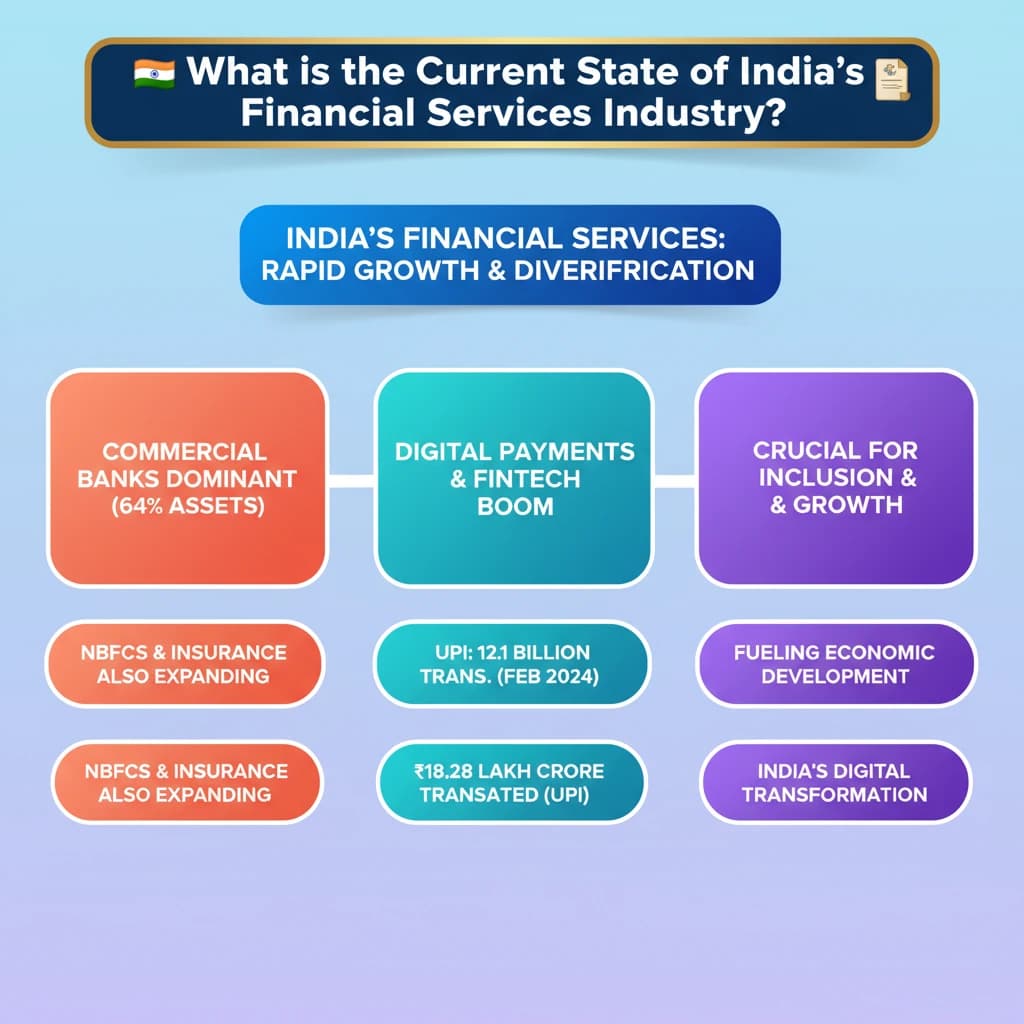
- •India's financial services industry is rapidly expanding and diversifying, encompassing banks, NBFCs, insurance, and more.
- •Commercial banks remain dominant, holding over 64% of total assets.
- •Recent developments include new entities like payment banks and significant growth in digital payments.
- •UPI is a major success, recording 12.10 billion transactions worth Rs 18.28 lakh crore in February 2024.
- •The sector is crucial for financial inclusion, economic growth, and India's digital transformation agenda.
🧠 Memory Techniques

95% Verified Content
📚 Reference Sources
•Reserve Bank of India (RBI) Annual Reports
•National Payments Corporation of India (NPCI) official data
•Ministry of Finance reports