Loading page, please wait…
What is the Impact of Rising Unsecured Loans on India’s Economy? - UPSC Economy
What is What is the Impact of Rising Unsecured Loans on India’s Economy? in UPSC Economy?
What is the Impact of Rising Unsecured Loans on India’s Economy? is a key topic under Economy for UPSC Civil Services Examination. Key points include: Rising unsecured loans increase default risks and Non-Performing Assets (NPAs) for banks and NBFCs.. Higher defaults lead to financial strain on lenders, potentially restricting future credit flow.. Increased interest rates, often a response to higher risk, reduce disposable income and discretionary spending.. Understanding this topic is essential for both UPSC Prelims and Mains preparation.
Why is What is the Impact of Rising Unsecured Loans on India’s Economy? important for UPSC exam?
What is the Impact of Rising Unsecured Loans on India’s Economy? is a Medium-level topic in UPSC Economy. It is tested in both Prelims (factual MCQs) and Mains (analytical answer writing). Previous year UPSC questions have frequently covered aspects of What is the Impact of Rising Unsecured Loans on India’s Economy?, making it essential for comprehensive IAS preparation.
How to prepare What is the Impact of Rising Unsecured Loans on India’s Economy? for UPSC?
To prepare What is the Impact of Rising Unsecured Loans on India’s Economy? for UPSC: (1) Study the comprehensive notes covering all key concepts on Vaidra. (2) Practice previous year questions on this topic. (3) Connect it with current affairs using daily updates. (4) Revise using key takeaways and mind maps available for Economy. (5) Write practice answers linking What is the Impact of Rising Unsecured Loans on India’s Economy? to related GS Paper topics.
Key takeaways of What is the Impact of Rising Unsecured Loans on India’s Economy? for UPSC
- Rising unsecured loans increase default risks and Non-Performing Assets (NPAs) for banks and NBFCs.
- Higher defaults lead to financial strain on lenders, potentially restricting future credit flow.
- Increased interest rates, often a response to higher risk, reduce disposable income and discretionary spending.
- This can create inflationary pressure and ultimately slow down overall economic growth.
- RBI has implemented measures like increased risk weights to moderate the growth of unsecured lending and ensure financial stability.
What is the Impact of Rising Unsecured Loans on India’s Economy?
Medium⏱️ 8 min read
economy
📖 Introduction
Understanding Unsecured Loans and Their Economic Impact
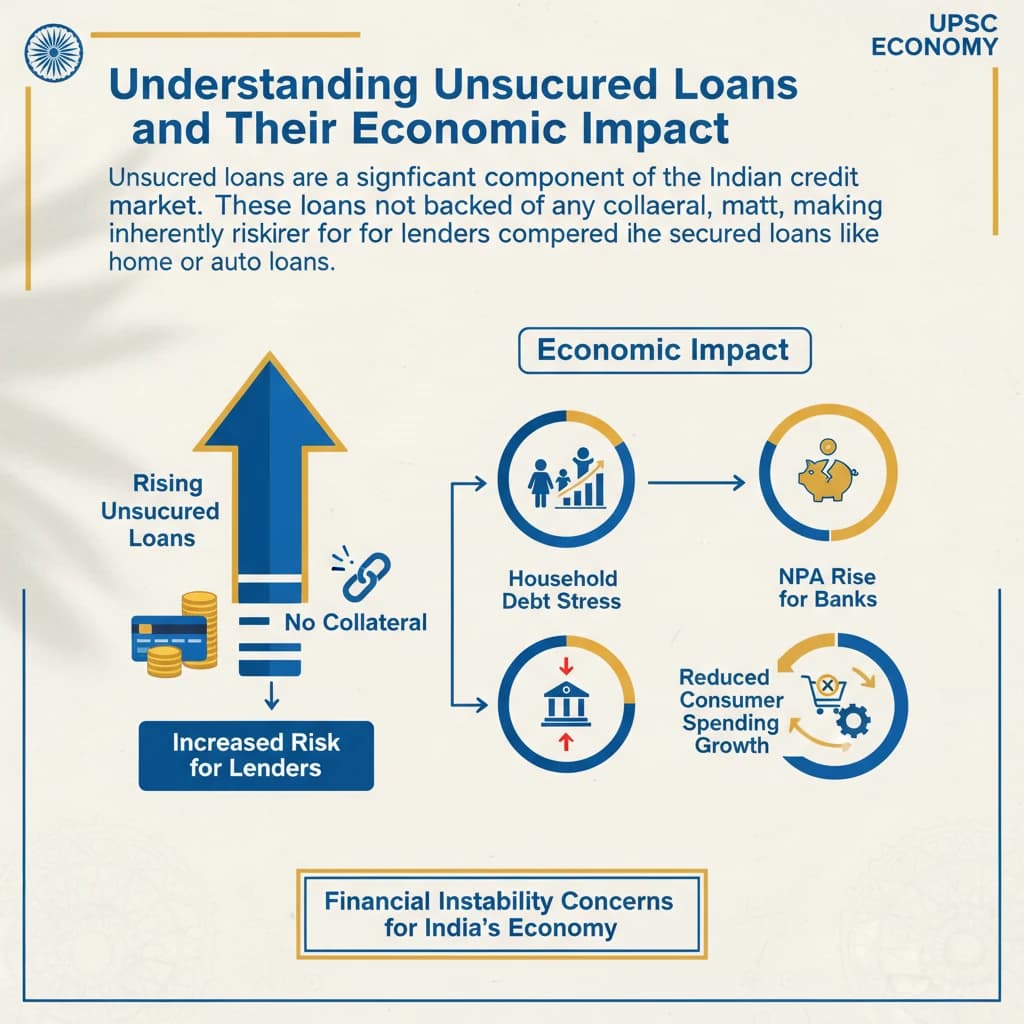
Unsecured loans are a significant component of the Indian credit market. These loans are not backed by any collateral, making them inherently riskier for lenders compared to secured loans like home or auto loans.
The recent surge in such loans has drawn attention from regulators and economists due to potential implications for the nation's financial stability and broader economic health.
What are Unsecured Loans?
- Loans granted without requiring collateral.
- Examples include personal loans, credit card debt, and some types of micro-loans.
- Lenders assess risk based on the borrower's creditworthiness and income.
Higher Default Rates and Financial Stress
A primary concern with rising unsecured loans is the elevated risk of defaults. When borrowers fail to repay these loans, it directly impacts the lenders' asset quality.
Increased defaults lead to a rise in Non-Performing Assets (NPAs) for financial institutions. NPAs are loans where the principal or interest payment has been overdue for a specified period, typically 90 days.
Impact on Financial Institutions:
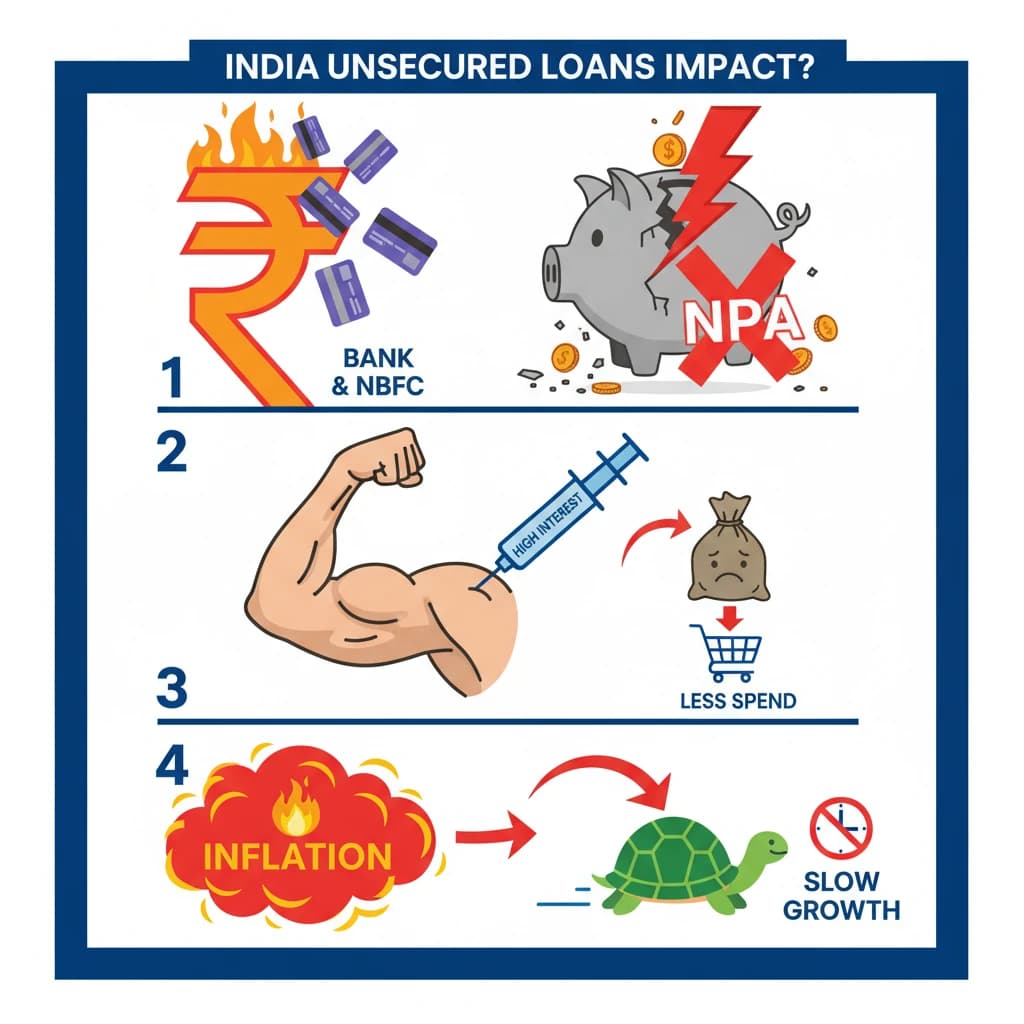
- Banks and Non-Banking Financial Companies (NBFCs) face significant financial strain.
- Higher NPAs erode profitability and capital adequacy.
- This can restrict their ability to lend further, impacting overall credit growth in the economy.
Inflationary Pressure and Economic Slowdown
The consequences of rising unsecured loan defaults extend beyond the financial sector. They can contribute to broader macroeconomic challenges, including inflationary pressure and a slowdown in economic growth.
When defaults rise, financial institutions often respond by increasing interest rates on new loans to compensate for the higher risk. This makes borrowing more expensive for both consumers and businesses.
Higher interest rates and reduced access to credit can lead to a decrease in disposable income for households and curb discretionary spending. Businesses might also defer investment plans.
Macroeconomic Chain Reaction:
- Reduced demand due to lower spending.
- Paradoxically, rising defaults can lead to cost-push inflation if businesses pass on higher borrowing costs.
- A combination of reduced spending and higher costs can ultimately lead to a slowdown in economic growth.
UPSC Insight: This topic is crucial for GS Paper 3 (Economy). Questions can cover financial stability, banking sector issues, inflation, and monetary policy. Understanding the interconnectedness of these factors is key.
💡 Key Takeaways
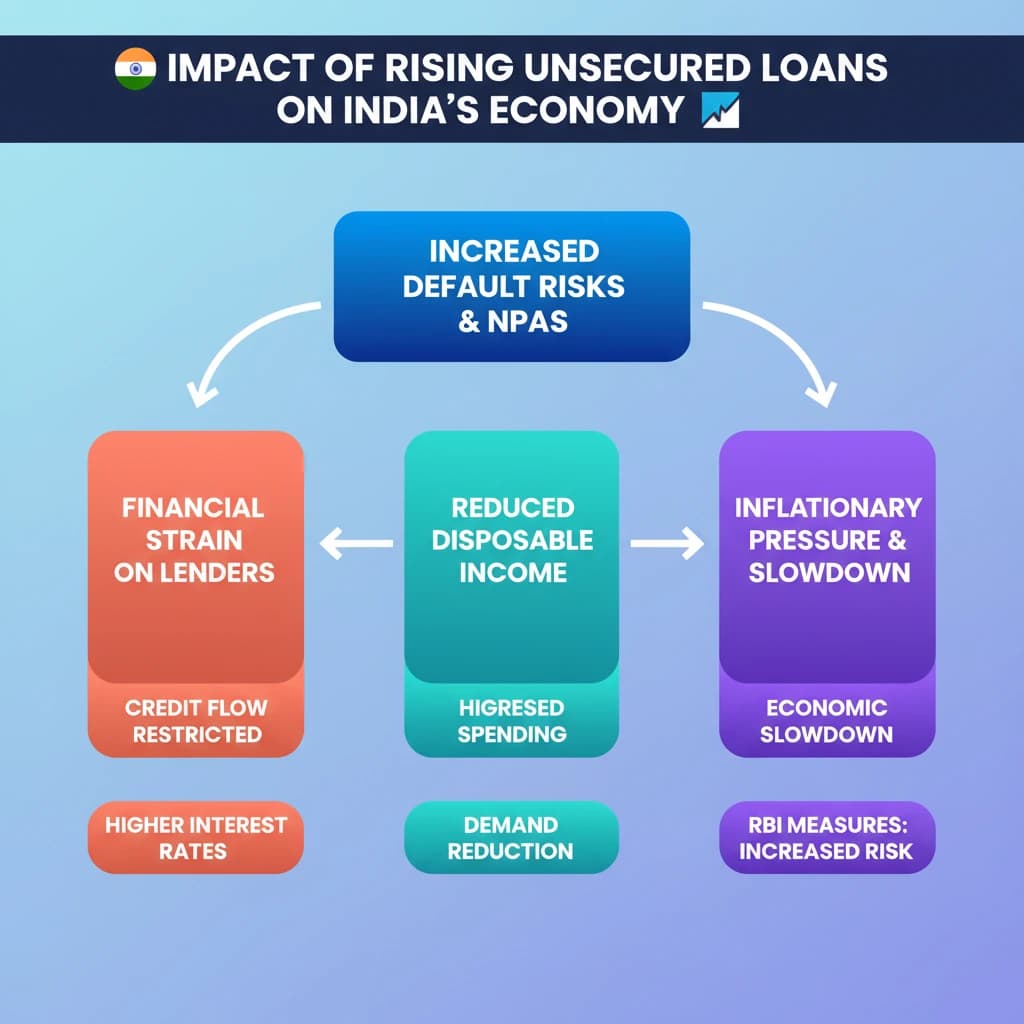
- •Rising unsecured loans increase default risks and Non-Performing Assets (NPAs) for banks and NBFCs.
- •Higher defaults lead to financial strain on lenders, potentially restricting future credit flow.
- •Increased interest rates, often a response to higher risk, reduce disposable income and discretionary spending.
- •This can create inflationary pressure and ultimately slow down overall economic growth.
- •RBI has implemented measures like increased risk weights to moderate the growth of unsecured lending and ensure financial stability.
🧠 Memory Techniques
95% Verified Content
📚 Reference Sources
•RBI Annual Reports and Monetary Policy Statements
•Economic Survey of India (various editions)
•Reports from leading financial dailies (e.g., The Economic Times, Business Standard)
•NITI Aayog policy documents on financial sector