Loading page, please wait…
What is the Legality of Online Gaming and Gambling in India? - UPSC Economy
What is What is the Legality of Online Gaming and Gambling in India? in UPSC Economy?
What is the Legality of Online Gaming and Gambling in India? is a key topic under Economy for UPSC Civil Services Examination. Key points include: States hold exclusive power over 'Gaming, Betting and Gambling' via Entry 34, List II of the Seventh Schedule.. Indian law distinguishes between 'games of skill' (generally legal) and 'games of chance' (generally prohibited as gambling).. This distinction is crucial for determining the legality of online gaming platforms.. Understanding this topic is essential for both UPSC Prelims and Mains preparation.
Why is What is the Legality of Online Gaming and Gambling in India? important for UPSC exam?
What is the Legality of Online Gaming and Gambling in India? is a Medium-level topic in UPSC Economy. It is tested in both Prelims (factual MCQs) and Mains (analytical answer writing). Previous year UPSC questions have frequently covered aspects of What is the Legality of Online Gaming and Gambling in India?, making it essential for comprehensive IAS preparation.
How to prepare What is the Legality of Online Gaming and Gambling in India? for UPSC?
To prepare What is the Legality of Online Gaming and Gambling in India? for UPSC: (1) Study the comprehensive notes covering all key concepts on Vaidra. (2) Practice previous year questions on this topic. (3) Connect it with current affairs using daily updates. (4) Revise using key takeaways and mind maps available for Economy. (5) Write practice answers linking What is the Legality of Online Gaming and Gambling in India? to related GS Paper topics.
Key takeaways of What is the Legality of Online Gaming and Gambling in India? for UPSC
- States hold exclusive power over 'Gaming, Betting and Gambling' via Entry 34, List II of the Seventh Schedule.
- Indian law distinguishes between 'games of skill' (generally legal) and 'games of chance' (generally prohibited as gambling).
- This distinction is crucial for determining the legality of online gaming platforms.
- Judicial pronouncements have consistently upheld the legality of 'games of skill'.
- Lack of uniform national regulation creates a complex and varied legal landscape across states.
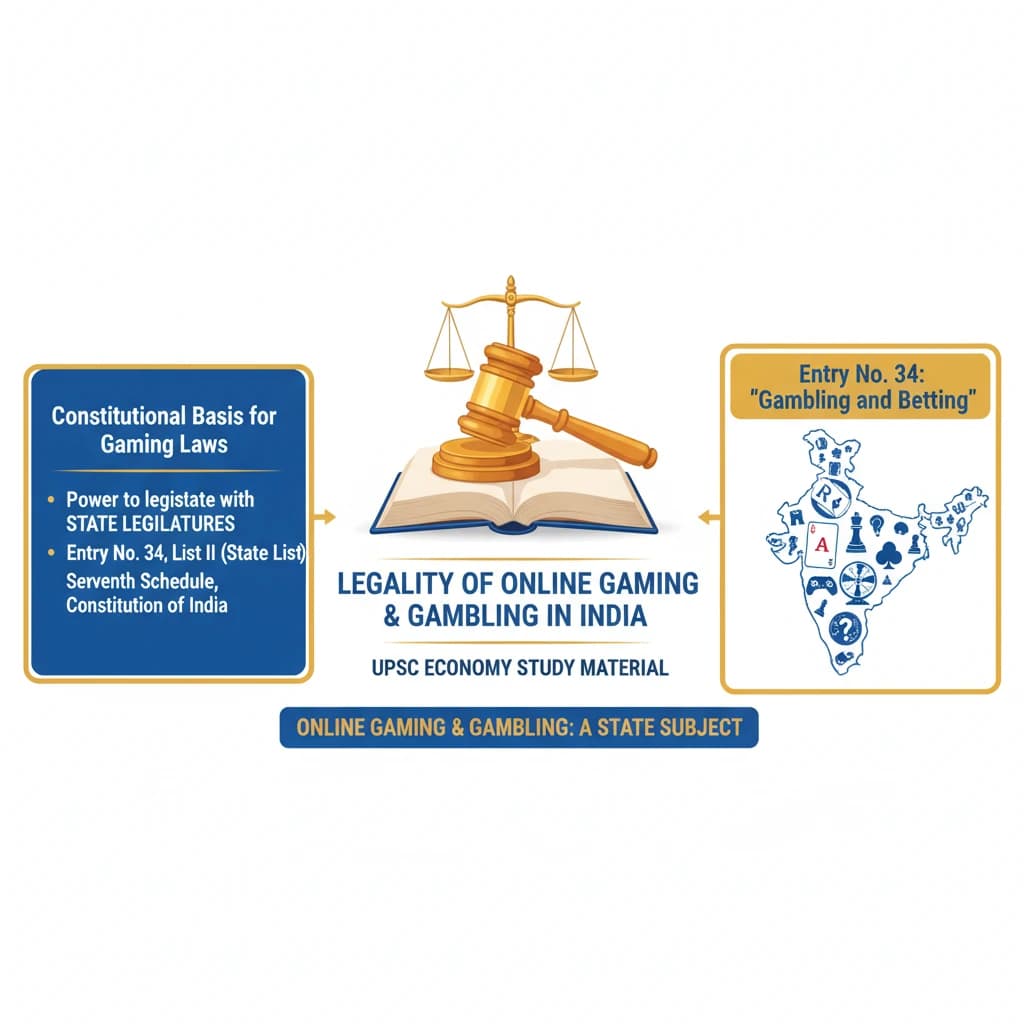
What is the Legality of Online Gaming and Gambling in India?
Medium⏱️ 6 min read
economy
📖 Introduction
Constitutional Basis for Gaming Laws
In India, the power to legislate on matters related to Gaming, Betting and Gambling is exclusively vested with the state legislatures. This constitutional allocation of power is clearly defined under Entry No. 34 of List II (State List), which is part of the Seventh Schedule of the Constitution of India.
Entry No. 34, List II (State List): Grants state legislatures the exclusive authority to enact laws concerning betting and gambling.
Distinction: Games of Skill vs. Games of Chance
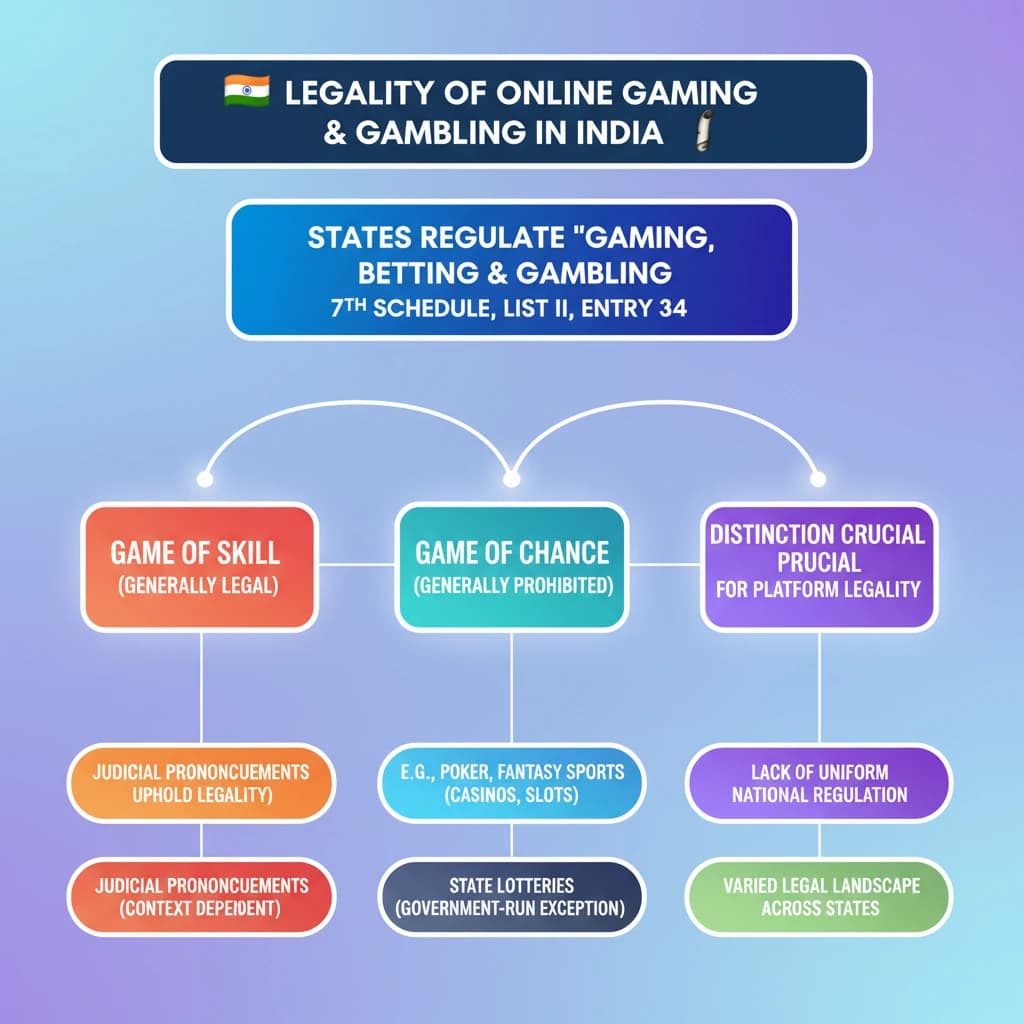
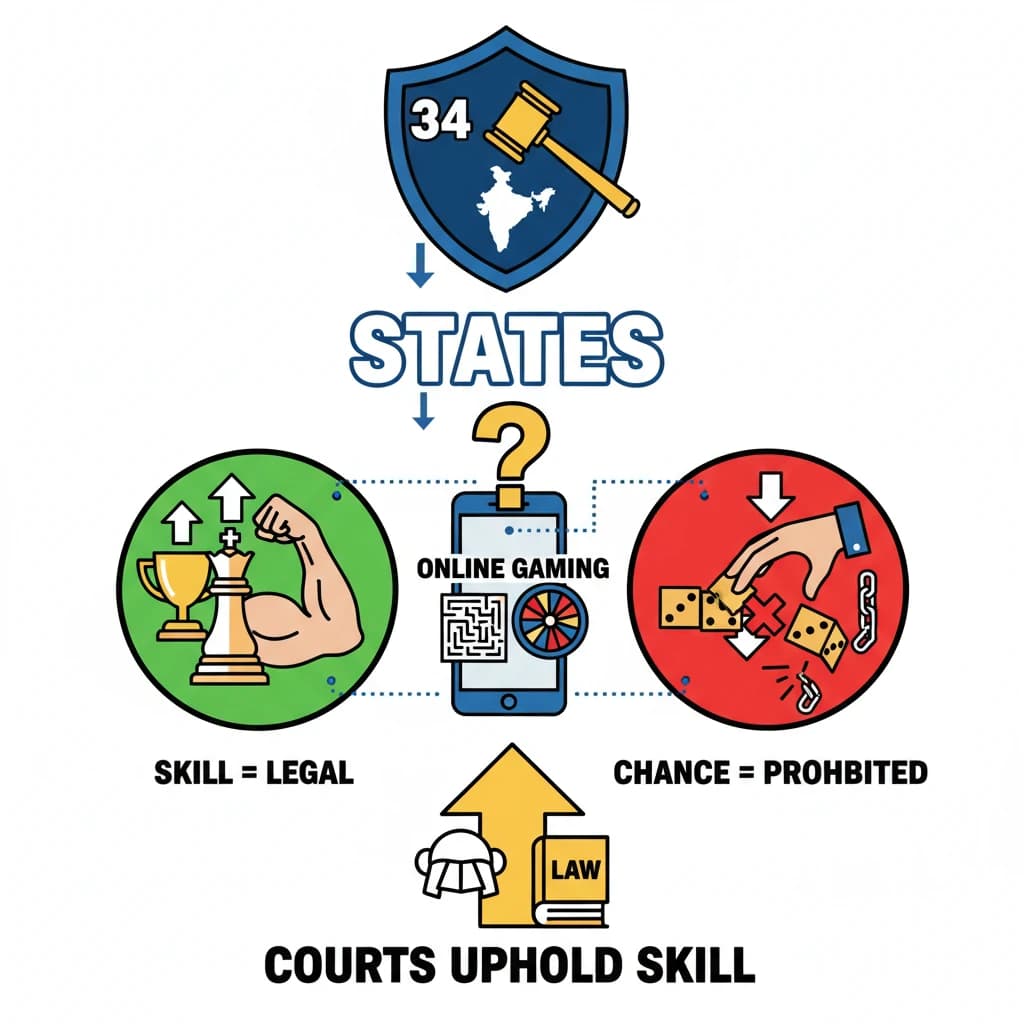
A fundamental principle guiding the regulation of gaming across most Indian states is the legal distinction between ‘games of skill’ and ‘games of chance’.
This distinction is crucial because games of skill are generally considered legal and protected under the fundamental right to carry on a trade or profession, while games of chance are typically prohibited as gambling.
States formulate their gaming laws based on this differentiation, determining which activities fall under regulated or prohibited categories.
UPSC aspirants should note that understanding the Seventh Schedule and the concept of federalism is key to grasping the legal framework of online gaming in India. Questions may arise on the powers of states versus the Centre in this domain. (GS Paper II: Polity & Governance)
💡 Key Takeaways
- •States hold exclusive power over 'Gaming, Betting and Gambling' via Entry 34, List II of the Seventh Schedule.
- •Indian law distinguishes between 'games of skill' (generally legal) and 'games of chance' (generally prohibited as gambling).
- •This distinction is crucial for determining the legality of online gaming platforms.
- •Judicial pronouncements have consistently upheld the legality of 'games of skill'.
- •Lack of uniform national regulation creates a complex and varied legal landscape across states.
🧠 Memory Techniques
95% Verified Content
📚 Reference Sources
•The Constitution of India (Seventh Schedule, List II, Entry 34)
•Public Gambling Act, 1867
•Madras High Court judgment on Tamil Nadu Gaming and Police Laws (Amendment) Act, 2021
•Karnataka High Court judgment on Karnataka Police (Amendment) Act, 2021