Loading page, please wait…
What is the Status of India’s Toy Industry? - UPSC Economy
What is What is the Status of India’s Toy Industry? in UPSC Economy?
What is the Status of India’s Toy Industry? is a key topic under Economy for UPSC Civil Services Examination. Key points include: India's toy industry has transitioned from 'permit license raj' to 'Make in India' focus.. Trade balance for toys turned positive from 2020-21, reversing a negative trend.. Key drivers for positive trade balance include increased import duty (20% to 60%) and Non-Tariff Barriers (QCO).. Understanding this topic is essential for both UPSC Prelims and Mains preparation.
Why is What is the Status of India’s Toy Industry? important for UPSC exam?
What is the Status of India’s Toy Industry? is a Medium-level topic in UPSC Economy. It is tested in both Prelims (factual MCQs) and Mains (analytical answer writing). Previous year UPSC questions have frequently covered aspects of What is the Status of India’s Toy Industry?, making it essential for comprehensive IAS preparation.
How to prepare What is the Status of India’s Toy Industry? for UPSC?
To prepare What is the Status of India’s Toy Industry? for UPSC: (1) Study the comprehensive notes covering all key concepts on Vaidra. (2) Practice previous year questions on this topic. (3) Connect it with current affairs using daily updates. (4) Revise using key takeaways and mind maps available for Economy. (5) Write practice answers linking What is the Status of India’s Toy Industry? to related GS Paper topics.
Key takeaways of What is the Status of India’s Toy Industry? for UPSC
- India's toy industry has transitioned from 'permit license raj' to 'Make in India' focus.
- Trade balance for toys turned positive from 2020-21, reversing a negative trend.
- Key drivers for positive trade balance include increased import duty (20% to 60%) and Non-Tariff Barriers (QCO).
- Despite protective measures, net exports of toys declined in 2022-23 (from Rs. 1,614 cr to Rs. 1,319 cr).
- The decline in net exports highlights persistent challenges in export competitiveness despite domestic growth.
What is the Status of India’s Toy Industry?
Medium⏱️ 6 min read
economy
📖 Introduction
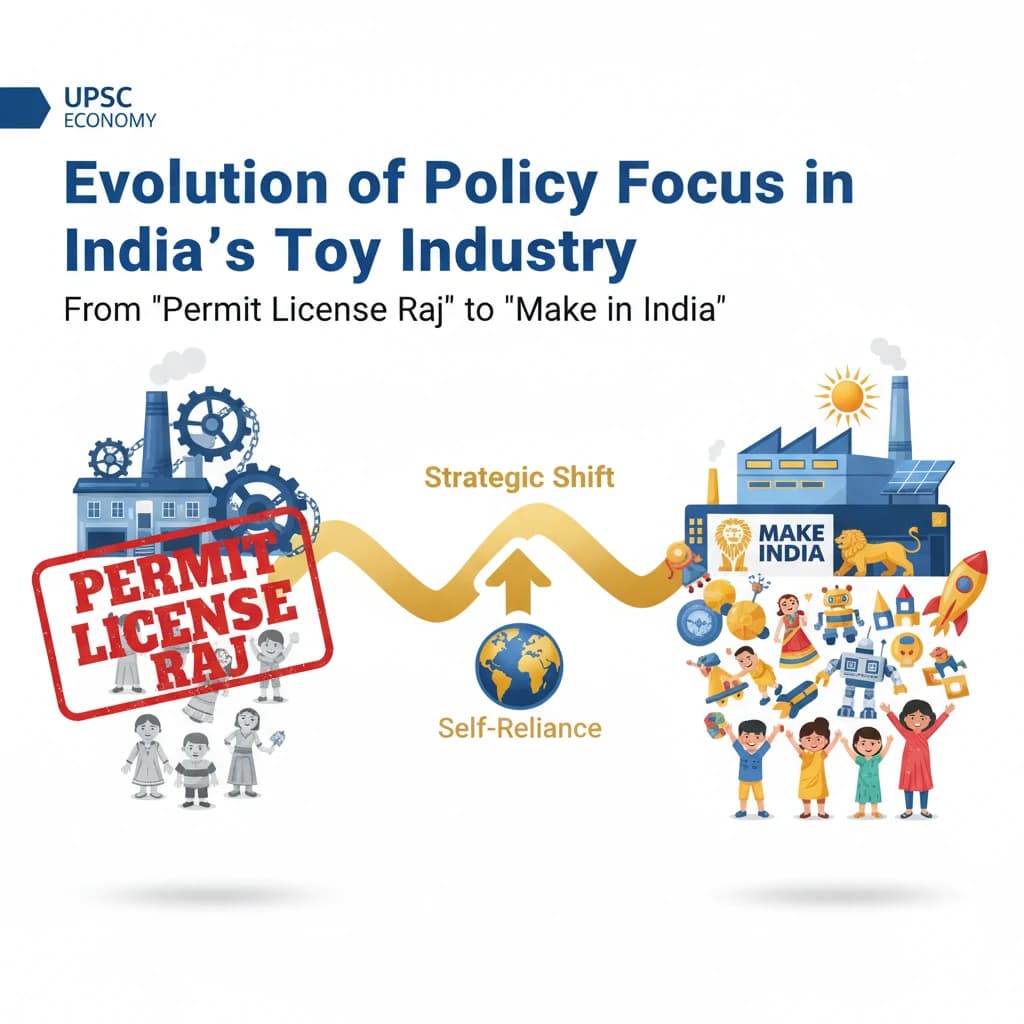
Evolution of Policy Focus in India's Toy Industry
India's policy discussions regarding the toy industry have undergone a significant transformation. Historically, the sector operated under the restrictive 'permit license raj' era, characterized by stringent regulations and controls.
Currently, the focus has shifted dramatically towards promoting domestic manufacturing and self-reliance through initiatives like 'Make in India'. This strategic pivot aims to boost local production and reduce dependence on imports.
UPSC Insight: Understanding the transition from 'permit license raj' to 'Make in India' provides crucial context for questions on industrial policy evolution and economic reforms.
Impact of 'Make in India' Initiative
A recent study highlights the positive impact of 'Make in India' initiatives on the toy industry. These policies have been instrumental in fostering a more conducive environment for domestic manufacturers.
The success of the industry in recent years is directly attributed to the strategic interventions and support provided under the 'Make in India' framework.
Positive Shift in Trade Balance
A remarkable change has been observed in India's toy industry trade balance. In 2014-15, the sector recorded a negative trade balance of Rs. 1,500 crore, indicating higher imports than exports.
However, from 2020-21 onwards, the trade balance turned positive, signifying a reversal of this trend. This shift demonstrates growing domestic production and reduced reliance on foreign toys.
Trade Balance Evolution:
- 2014-15: Negative Rs. 1,500 crore
- 2020-21 onwards: Positive Trade Balance
Factors Driving Positive Trade Balance
Several key measures contributed to this positive shift in the trade balance:
- Increased Import Duty: In February 2020, the import duty on toys was significantly raised from 20% to 60%, making imported toys more expensive and less competitive.
- Non-Tariff Barriers: Implementation of non-tariff barriers, such as the Quality Control Order (QCO) and mandatory sample testing, ensured that imported toys met specific quality and safety standards.
- COVID-19 Disruptions: Global supply chain disruptions caused by the COVID-19 pandemic also impacted toy imports worldwide, indirectly benefiting domestic production.
Decline in Net Exports (2022-23)
Despite the protective measures like high import duty, India's net exports of toys witnessed a decline in 2022-23. The net exports fell from Rs. 1,614 crore to Rs. 1,319 crore.
This reduction was more pronounced for specific categories of toys, showing a 31% decline, compared to an 18% decline for all toys collectively. This indicates persistent challenges in boosting export competitiveness.
Net Exports Decline (2022-23):
- Previous Net Exports: Rs. 1,614 crore
- Current Net Exports: Rs. 1,319 crore
- Decline for Specific Toys: 31%
- Decline for All Toys: 18%
💡 Key Takeaways
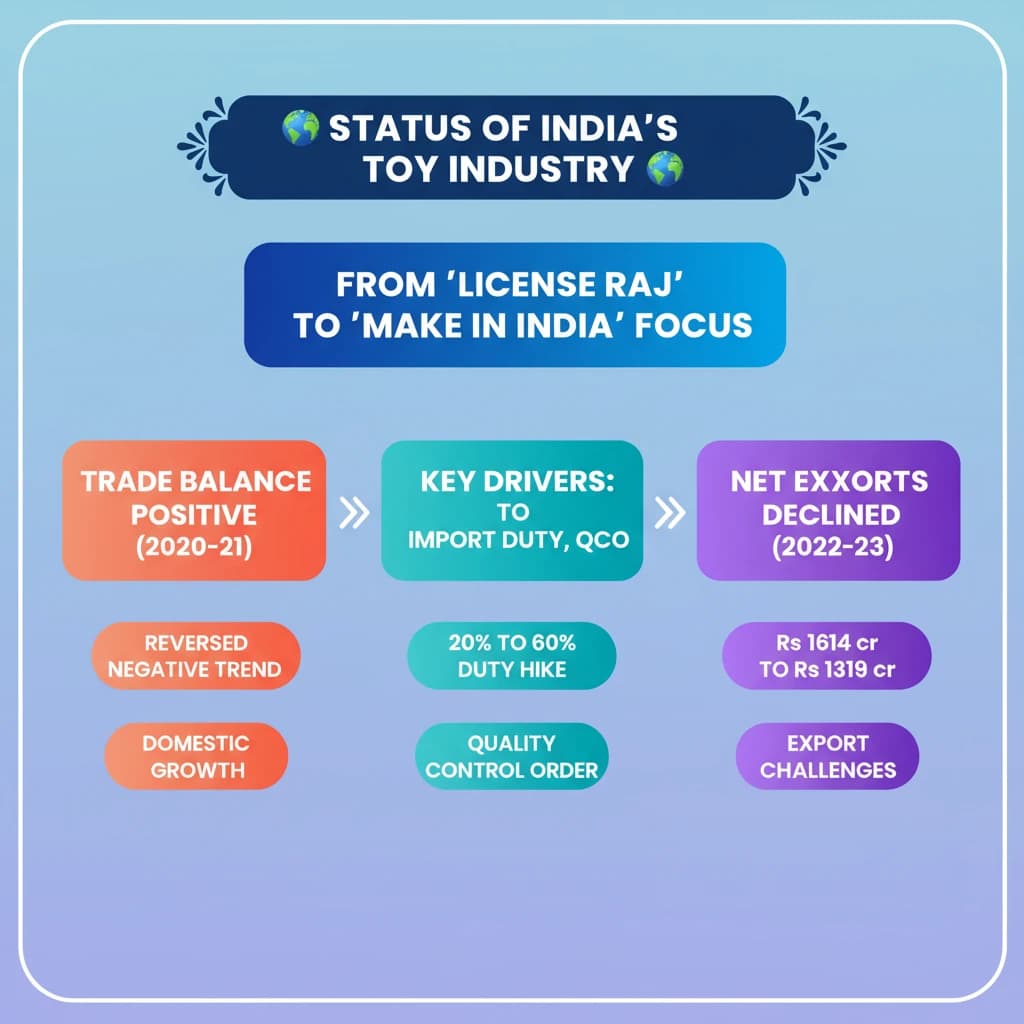
- •India's toy industry has transitioned from 'permit license raj' to 'Make in India' focus.
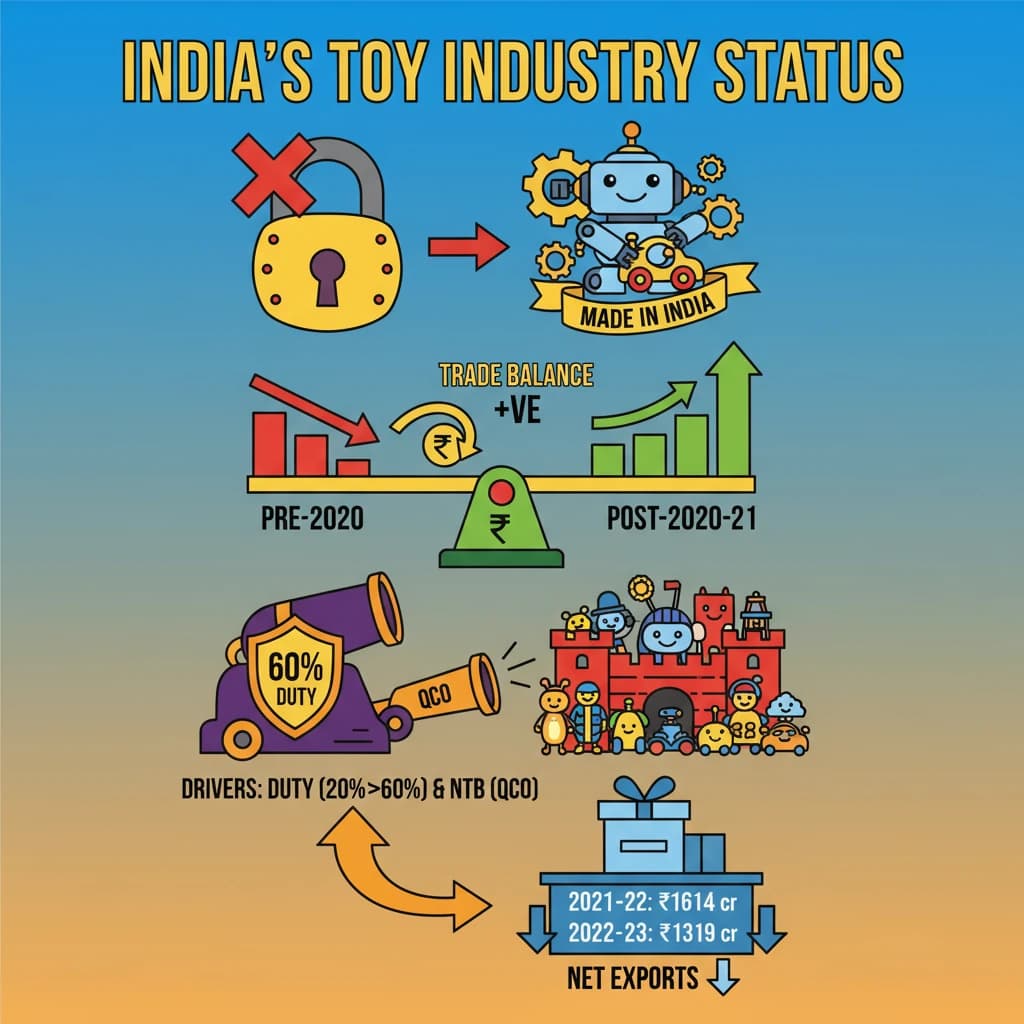
- •Trade balance for toys turned positive from 2020-21, reversing a negative trend.
- •Key drivers for positive trade balance include increased import duty (20% to 60%) and Non-Tariff Barriers (QCO).
- •Despite protective measures, net exports of toys declined in 2022-23 (from Rs. 1,614 cr to Rs. 1,319 cr).
- •The decline in net exports highlights persistent challenges in export competitiveness despite domestic growth.
🧠 Memory Techniques
98% Verified Content