Loading page, please wait…
What is Unified Lending Interface (ULI)? - UPSC Economy
What is What is Unified Lending Interface (ULI)? in UPSC Economy?
What is Unified Lending Interface (ULI)? is a key topic under Economy for UPSC Civil Services Examination. Key points include: ULI is a digital platform aimed at simplifying and accelerating the lending process.. It promotes seamless data exchange among financial entities with borrower consent.. ULI leverages India's digital public infrastructure like Aadhaar and Account Aggregator.. Understanding this topic is essential for both UPSC Prelims and Mains preparation.
Why is What is Unified Lending Interface (ULI)? important for UPSC exam?
What is Unified Lending Interface (ULI)? is a Medium-level topic in UPSC Economy. It is tested in both Prelims (factual MCQs) and Mains (analytical answer writing). Previous year UPSC questions have frequently covered aspects of What is Unified Lending Interface (ULI)?, making it essential for comprehensive IAS preparation.
How to prepare What is Unified Lending Interface (ULI)? for UPSC?
To prepare What is Unified Lending Interface (ULI)? for UPSC: (1) Study the comprehensive notes covering all key concepts on Vaidra. (2) Practice previous year questions on this topic. (3) Connect it with current affairs using daily updates. (4) Revise using key takeaways and mind maps available for Economy. (5) Write practice answers linking What is Unified Lending Interface (ULI)? to related GS Paper topics.
Key takeaways of What is Unified Lending Interface (ULI)? for UPSC
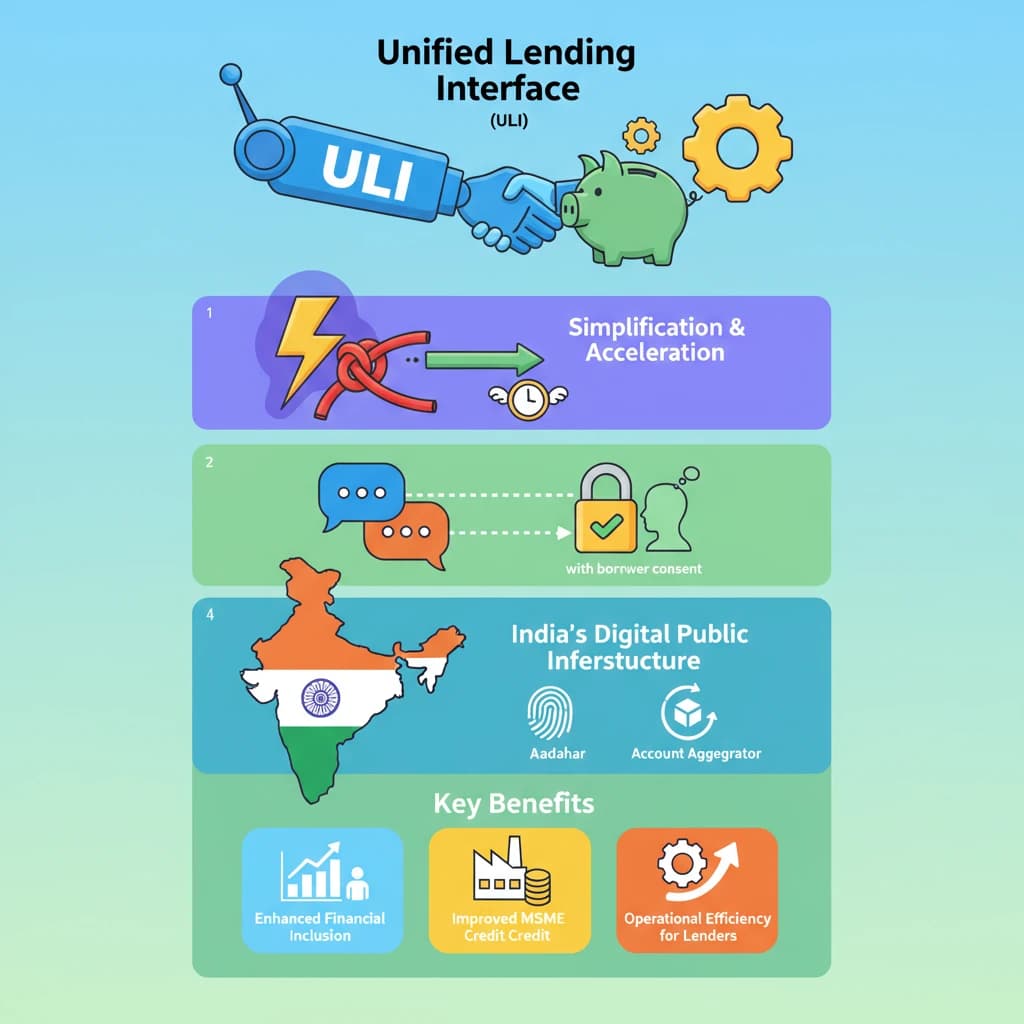
- ULI is a digital platform aimed at simplifying and accelerating the lending process.
- It promotes seamless data exchange among financial entities with borrower consent.
- ULI leverages India's digital public infrastructure like Aadhaar and Account Aggregator.
- Key benefits include enhanced financial inclusion, improved MSME credit, and operational efficiency for lenders.
- It aligns with RBI's initiatives for frictionless credit and the broader Digital India vision.
What is Unified Lending Interface (ULI)?
Medium⏱️ 6 min read
economy
📖 Introduction
Introduction to Unified Lending Interface (ULI)
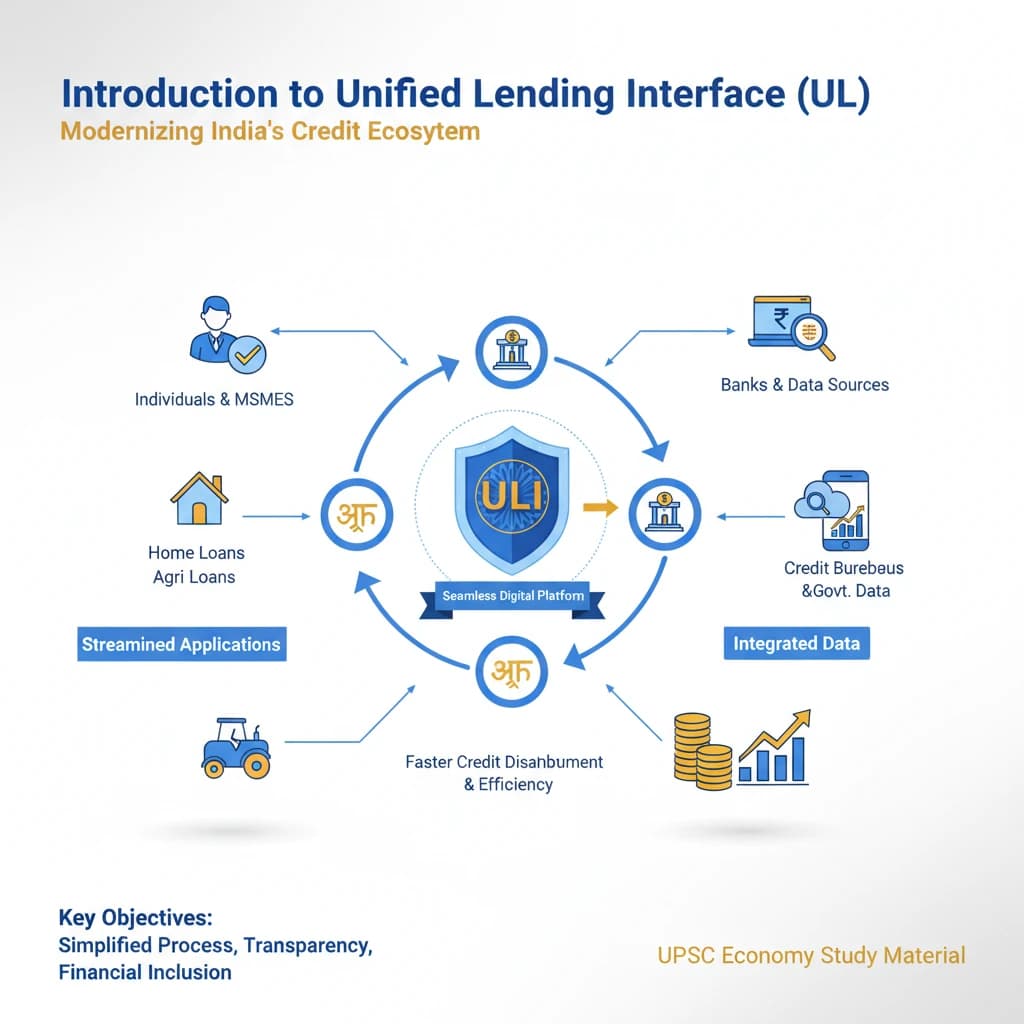
The Unified Lending Interface (ULI) represents a significant step towards modernizing India's credit ecosystem. It is envisioned as a digital platform designed to streamline and simplify the entire lending process for both borrowers and lenders.
The primary objective of ULI is to create a seamless and efficient mechanism for credit disbursement. By integrating various stakeholders and data sources, it aims to reduce friction and accelerate the loan application and approval journey.
Key Concept: ULI is not just a single app but a foundational framework. It aims to unify diverse digital lending initiatives and data points under one interoperable umbrella.
Core Functionality of ULI
ULI is expected to facilitate the easy exchange of information among financial institutions, government bodies, and data providers. This interoperability is crucial for enabling faster and more informed lending decisions.
It leverages advanced digital infrastructure to ensure that borrowers can access credit more readily. This includes features like digital KYC, consent-based data sharing, and automated credit assessment.
Benefits for Borrowers and Lenders
For borrowers, ULI promises enhanced convenience and quicker access to credit. It aims to reduce the paperwork and multiple visits typically associated with loan applications, making the process significantly less cumbersome.
Lenders stand to benefit from improved operational efficiency and reduced costs. The platform provides access to verified data, enabling more accurate risk assessment and potentially expanding their reach to underserved segments.
ULI's Promise: The platform is expected to make the lending process easy, fostering greater financial inclusion and supporting economic growth by ensuring timely credit availability.
ULI and Digital Public Infrastructure
ULI is a crucial component of India's broader Digital Public Infrastructure (DPI) strategy. It aligns with initiatives like the Account Aggregator (AA) framework and the Public Tech Platform for Frictionless Credit, creating a robust digital financial ecosystem.
UPSC Insight: Understand ULI in the context of India's digital transformation. Questions may link it to financial inclusion, MSME credit, or the role of technology in governance (GS-II, GS-III).
💡 Key Takeaways
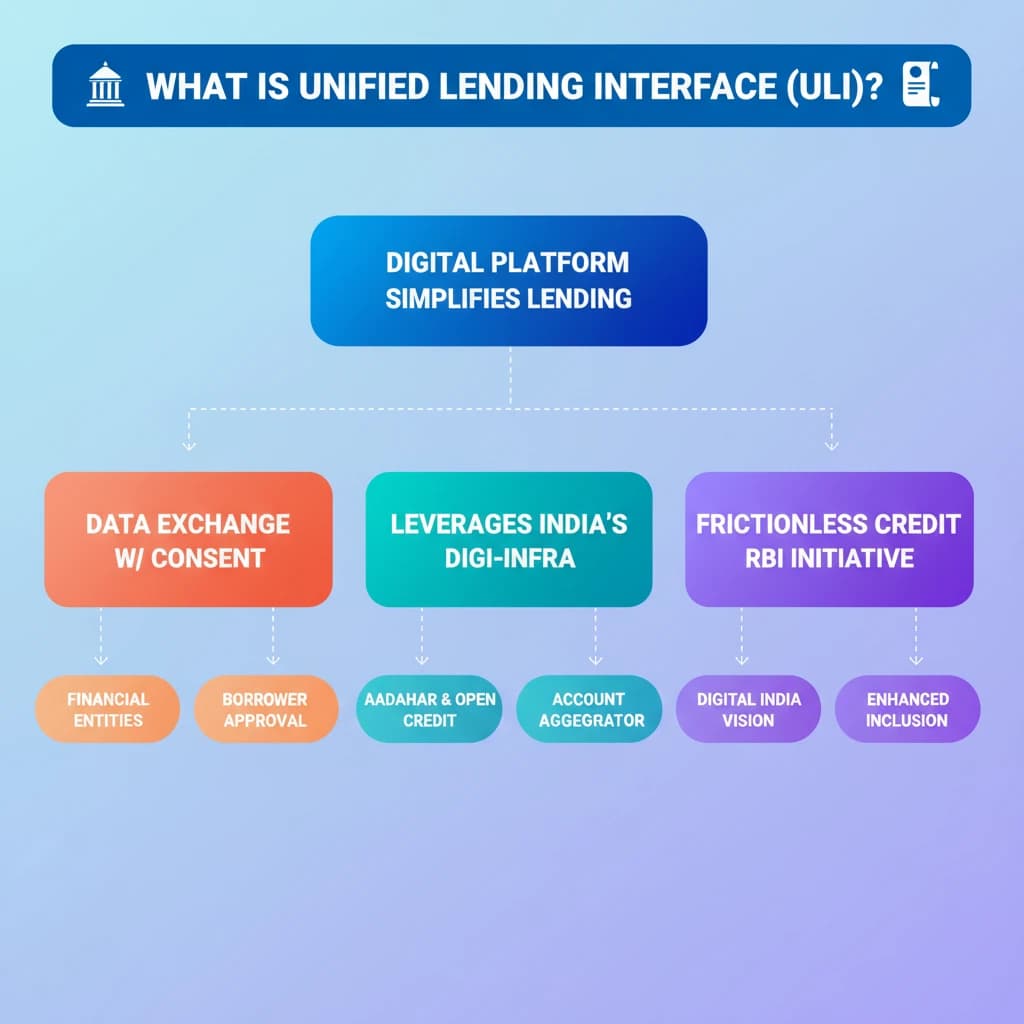
- •ULI is a digital platform aimed at simplifying and accelerating the lending process.
- •It promotes seamless data exchange among financial entities with borrower consent.
- •ULI leverages India's digital public infrastructure like Aadhaar and Account Aggregator.
- •Key benefits include enhanced financial inclusion, improved MSME credit, and operational efficiency for lenders.
- •It aligns with RBI's initiatives for frictionless credit and the broader Digital India vision.
🧠 Memory Techniques
95% Verified Content
📚 Reference Sources
•NITI Aayog reports on Digital Public Infrastructure and financial inclusion
•Economic Survey of India (various years) on financial sector reforms
•News articles from reputable financial media (e.g., Livemint, Economic Times) discussing ULI and related initiatives.