Loading page, please wait…
Why is the Income Tax Act Being Reviewed? - UPSC Economy
What is Why is the Income Tax Act Being Reviewed? in UPSC Economy?
Why is the Income Tax Act Being Reviewed? is a key topic under Economy for UPSC Civil Services Examination. Key points include: The Income Tax Act, 1961, is being reviewed due to historical complexity and outdated provisions.. Previous efforts, like the 1958 Law Commission, also emphasized the need for structural overhaul.. Modernization aims to align the law with current economic realities and global best practices.. Understanding this topic is essential for both UPSC Prelims and Mains preparation.
Why is Why is the Income Tax Act Being Reviewed? important for UPSC exam?
Why is the Income Tax Act Being Reviewed? is a Medium-level topic in UPSC Economy. It is tested in both Prelims (factual MCQs) and Mains (analytical answer writing). Previous year UPSC questions have frequently covered aspects of Why is the Income Tax Act Being Reviewed?, making it essential for comprehensive IAS preparation.
How to prepare Why is the Income Tax Act Being Reviewed? for UPSC?
To prepare Why is the Income Tax Act Being Reviewed? for UPSC: (1) Study the comprehensive notes covering all key concepts on Vaidra. (2) Practice previous year questions on this topic. (3) Connect it with current affairs using daily updates. (4) Revise using key takeaways and mind maps available for Economy. (5) Write practice answers linking Why is the Income Tax Act Being Reviewed? to related GS Paper topics.
Key takeaways of Why is the Income Tax Act Being Reviewed? for UPSC
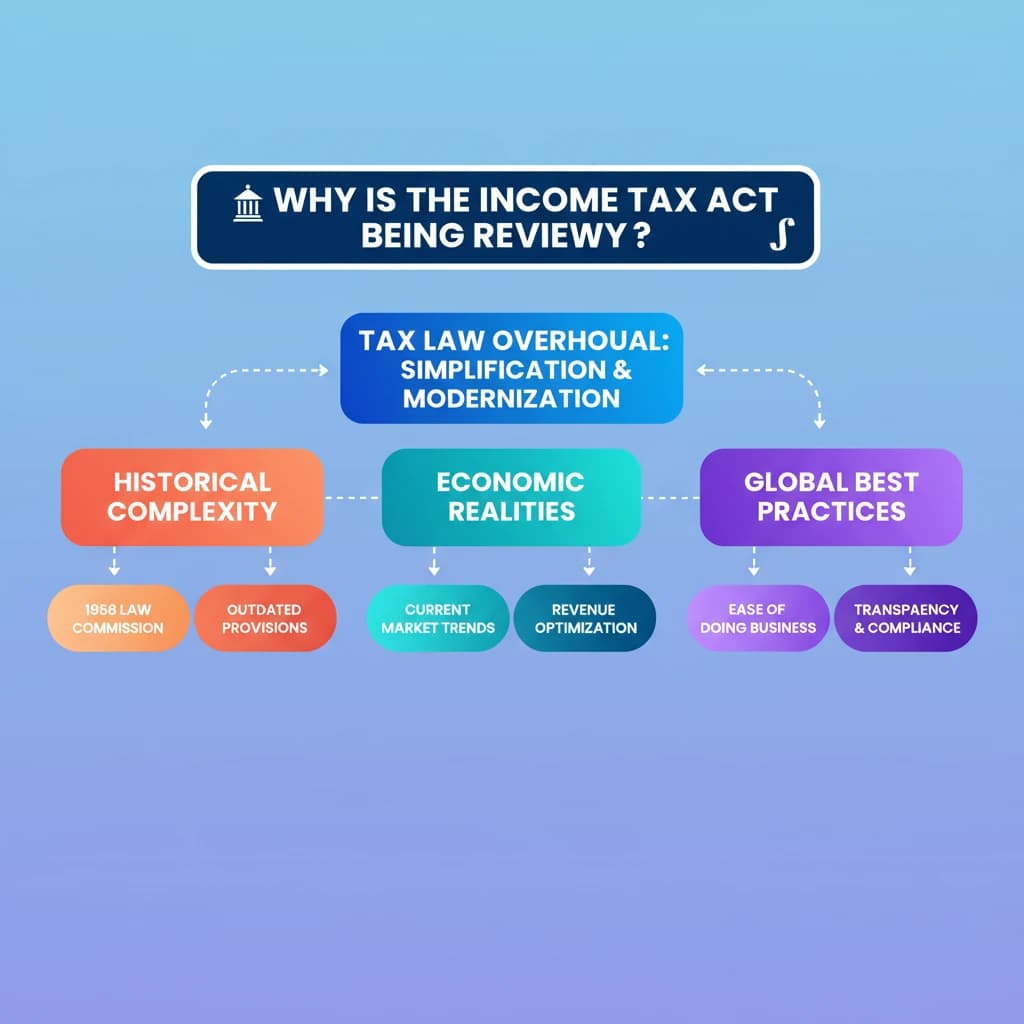
- The Income Tax Act, 1961, is being reviewed due to historical complexity and outdated provisions.
- Previous efforts, like the 1958 Law Commission, also emphasized the need for structural overhaul.
- Modernization aims to align the law with current economic realities and global best practices.
- Simplification is expected to improve taxpayer compliance by reducing ambiguities.
- The review is part of a broader strategy to make India's tax system more efficient and transparent.
Why is the Income Tax Act Being Reviewed?
Medium⏱️ 8 min read
economy
📖 Introduction
Introduction to the Income Tax Act Review
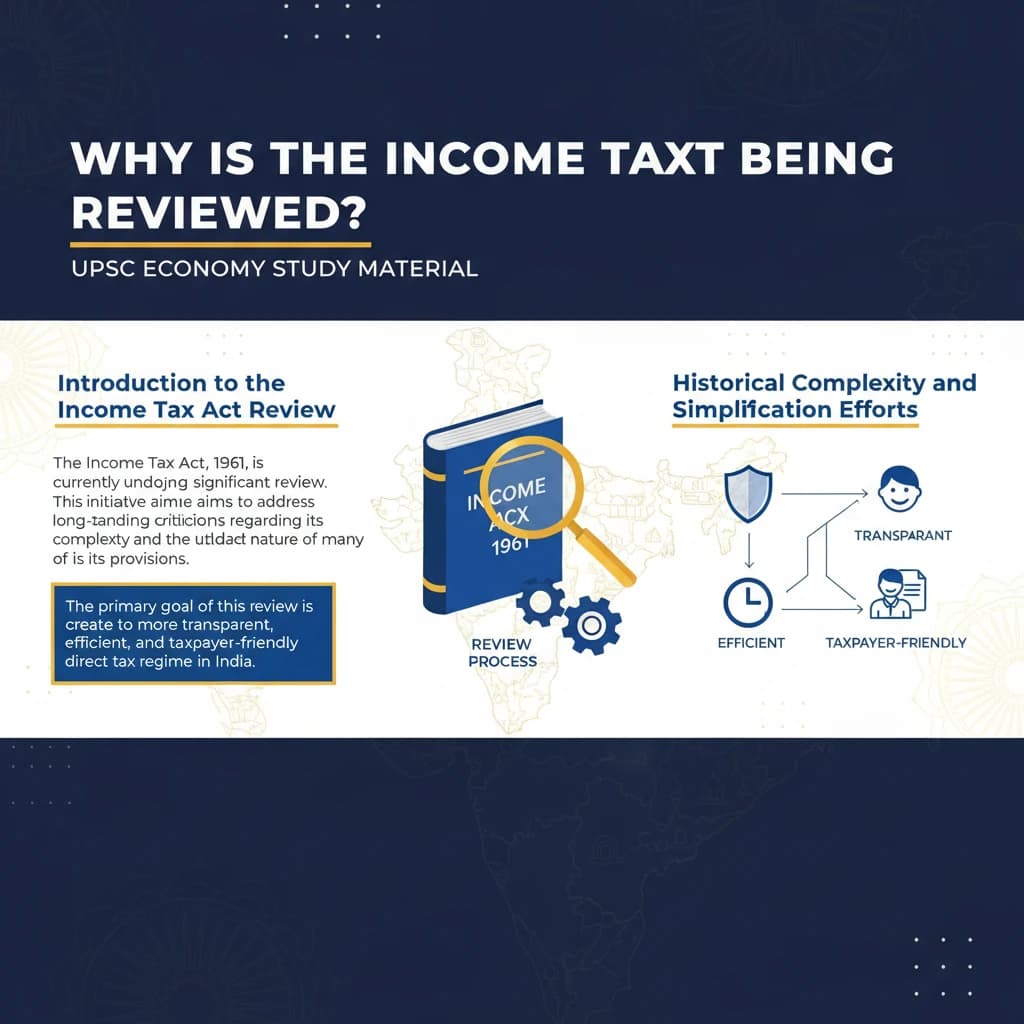
The Income Tax Act, 1961, is currently undergoing a significant review. This initiative aims to address long-standing criticisms regarding its complexity and the outdated nature of many of its provisions.
The primary goal of this review is to create a more transparent, efficient, and taxpayer-friendly direct tax regime in India.
Historical Complexity and Simplification Efforts
A major point of contention has been the historical complexity embedded within the Income Tax Act, 1961. This complexity has often led to confusion and numerous disputes among taxpayers and authorities alike.
Previous efforts to simplify the tax code date back to the 1958 Law Commission's work. This commission had highlighted the need for a fundamental overhaul of the entire tax structure, rather than mere superficial changes, when reviewing the erstwhile Income Tax Act, 1922.
These past observations underscore that true simplification requires a comprehensive restructuring of the tax framework itself, addressing its foundational elements.
Need for Modernization
The existing Act's intricate provisions often fail to align with contemporary economic realities. This discrepancy necessitates a modernization drive to ensure the law remains relevant and effective in a rapidly evolving global economy.
The review seeks to incorporate global best practices in taxation. This will help make the Indian tax system more competitive and aligned with international standards, reducing friction for global businesses.
A key objective is to enhance the transparency and ease of navigation within the tax law, making it more accessible for all stakeholders.
Improving Taxpayer Compliance
Simplifying the tax law is directly linked to improving taxpayer compliance. When rules are clear and straightforward, taxpayers are more likely to understand and adhere to them.
The current ambiguities in the law often lead to unintentional errors and disputes. A clearer framework is expected to reduce these issues, making the filing process significantly more straightforward for individuals and businesses.
This review is part of a broader government strategy to foster a more efficient and globally benchmarked tax system, crucial for India's economic growth and ease of doing business.
💡 Key Takeaways
- •The Income Tax Act, 1961, is being reviewed due to historical complexity and outdated provisions.
- •Previous efforts, like the 1958 Law Commission, also emphasized the need for structural overhaul.
- •Modernization aims to align the law with current economic realities and global best practices.
- •Simplification is expected to improve taxpayer compliance by reducing ambiguities.
- •The review is part of a broader strategy to make India's tax system more efficient and transparent.
🧠 Memory Techniques

95% Verified Content