Loading page, please wait…
Vaidra Logo
Vaidra

Top 4 items + smart groups

UPSC GPT
New
Current Affairs
Daily Solutions
Daily Puzzle
Mains Evaluator

Version 2.0.0 • Built with ❤️ for UPSC aspirants

Loading...
Loading...
Loading...
Loading...
Loading...
Loading...
Loading...
Loading...
Loading...
Loading...
Loading...
Loading...
Loading...
Back
All Subjects

Topics

0 topics • 0 completed

Loading topics...
Loading...
Loading...
Loading...
Loading...
Loading...
Overall Progress0%

Rapid Expansion of Himalayan Glacial Lakes - UPSC Geography

What is Rapid Expansion of Himalayan Glacial Lakes in UPSC Geography?

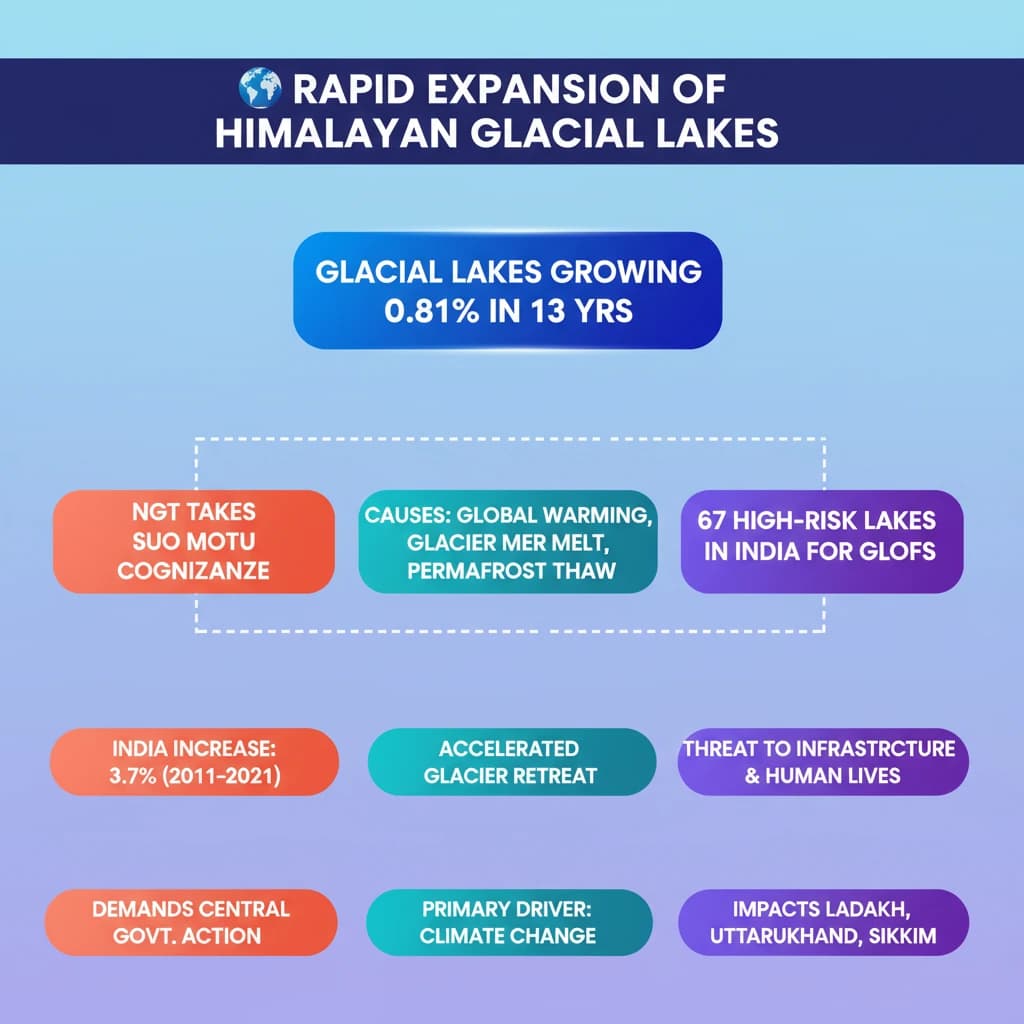
Rapid Expansion of Himalayan Glacial Lakes is a key topic under Geography for UPSC Civil Services Examination. Key points include: Himalayan glacial lakes expanded by ~0.81% in 13 years due to rising temperatures.. NGT took suo motu cognizance, issuing notice to the central government.. Glacial lakes form from meltwater filling depressions carved by retreating glaciers.. Understanding this topic is essential for both UPSC Prelims and Mains preparation.

Why is Rapid Expansion of Himalayan Glacial Lakes important for UPSC exam?

Rapid Expansion of Himalayan Glacial Lakes is a Medium-level topic in UPSC Geography. It is tested in both Prelims (factual MCQs) and Mains (analytical answer writing). Previous year UPSC questions have frequently covered aspects of Rapid Expansion of Himalayan Glacial Lakes, making it essential for comprehensive IAS preparation.

How to prepare Rapid Expansion of Himalayan Glacial Lakes for UPSC?

To prepare Rapid Expansion of Himalayan Glacial Lakes for UPSC: (1) Study the comprehensive notes covering all key concepts on Vaidra. (2) Practice previous year questions on this topic. (3) Connect it with current affairs using daily updates. (4) Revise using key takeaways and mind maps available for Geography. (5) Write practice answers linking Rapid Expansion of Himalayan Glacial Lakes to related GS Paper topics.

Key takeaways of Rapid Expansion of Himalayan Glacial Lakes for UPSC

  • Himalayan glacial lakes expanded by ~0.81% in 13 years due to rising temperatures.
  • NGT took suo motu cognizance, issuing notice to the central government.
  • Glacial lakes form from meltwater filling depressions carved by retreating glaciers.
  • Rapid expansion increases risk of Glacial Lake Outburst Floods (GLOFs).
  • This phenomenon is a critical indicator of climate change impacts in the Himalayas.
Rapid Expansion of Himalayan Glacial Lakes

Rapid Expansion of Himalayan Glacial Lakes

Medium⏱️ 5 min read✓ 95% Verified
geography

📖 Introduction

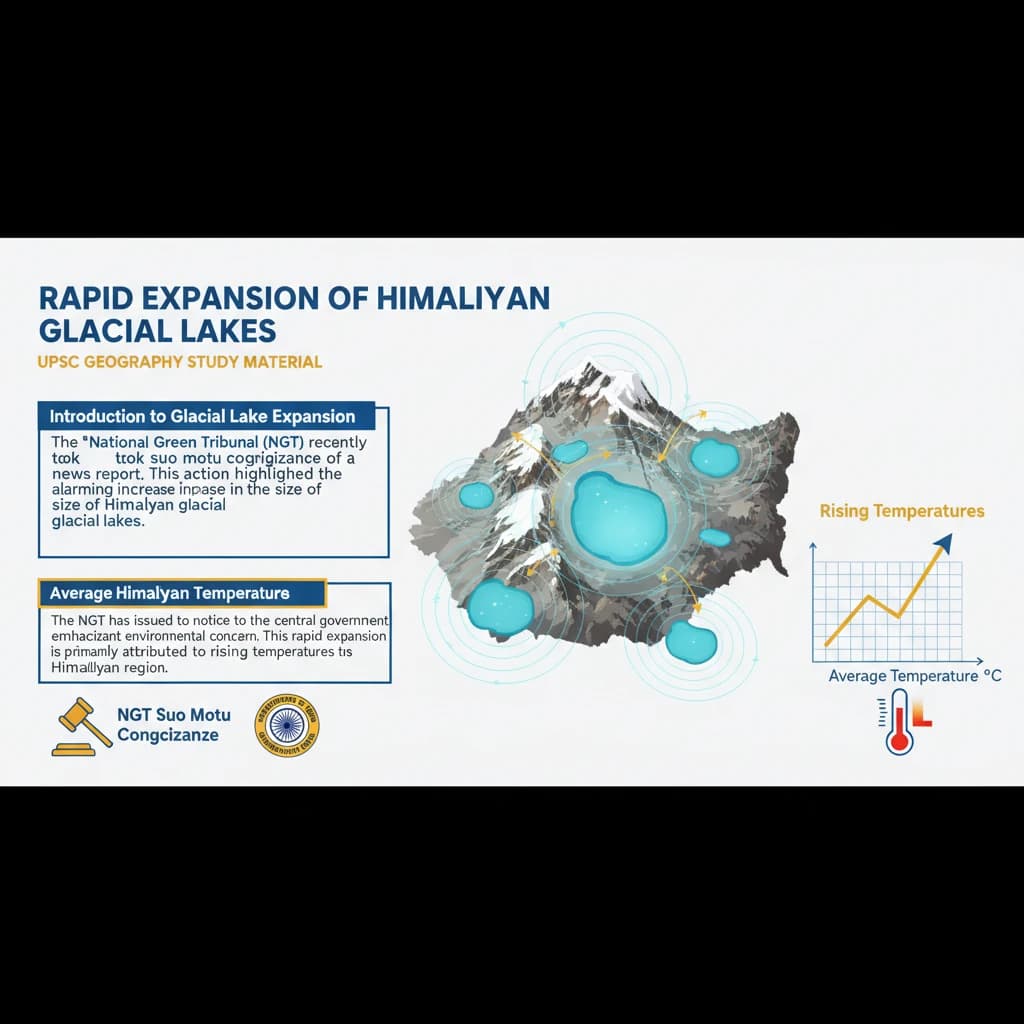
<h4>Context and Recent Developments</h4><p>The <strong>National Green Tribunal (NGT)</strong> has recently taken <strong>suo motu cognizance</strong> of a news report. This action highlights the critical issue of the alarming increase in <strong>Himalayan glacial lakes</strong>.</p><p>The NGT has issued a notice to the central government, seeking clarification and action on this environmental concern. This move underscores the urgency of addressing climate change impacts in the Himalayan region.</p><div class='info-box'><p><strong>Key Statistic:</strong> Himalayan glacial lakes have expanded by approximately <strong>0.81%</strong> over the past <strong>13 years</strong>. This expansion is directly attributed to rising global temperatures.</p></div><h4>Understanding Glacial Lakes</h4><p>A <strong>glacial lake</strong> is essentially a body of water that forms in connection with a glacier. These lakes are a direct result of glacial activity and meltwater.</p><div class='info-box'><p><strong>Definition:</strong> A <strong>glacial lake</strong> is a water body formed from a <strong>glacier</strong>. It is typically located at the base of the glacier but can also develop on, within, or beneath the ice mass.</p></div><h4>Formation Process of Glacial Lakes</h4><p>The formation of these lakes is a geological process driven by the movement and retreat of glaciers. As glaciers move, they exert immense pressure on the land.</p><p>This erosion creates natural depressions in the landscape. When the <strong>glacier retreats</strong> due to warming temperatures, these depressions fill with <strong>meltwater</strong>, leading to the formation of a glacial lake.</p><div class='key-point-box'><p><strong>Key Concept:</strong> The rapid expansion of these lakes is a significant indicator of <strong>climate change</strong> and poses risks such as <strong>Glacial Lake Outburst Floods (GLOFs)</strong>.</p></div>
Concept Diagram

💡 Key Takeaways

  • •Himalayan glacial lakes expanded by ~0.81% in 13 years due to rising temperatures.
  • •NGT took suo motu cognizance, issuing notice to the central government.
  • •Glacial lakes form from meltwater filling depressions carved by retreating glaciers.
  • •Rapid expansion increases risk of Glacial Lake Outburst Floods (GLOFs).
  • •This phenomenon is a critical indicator of climate change impacts in the Himalayas.

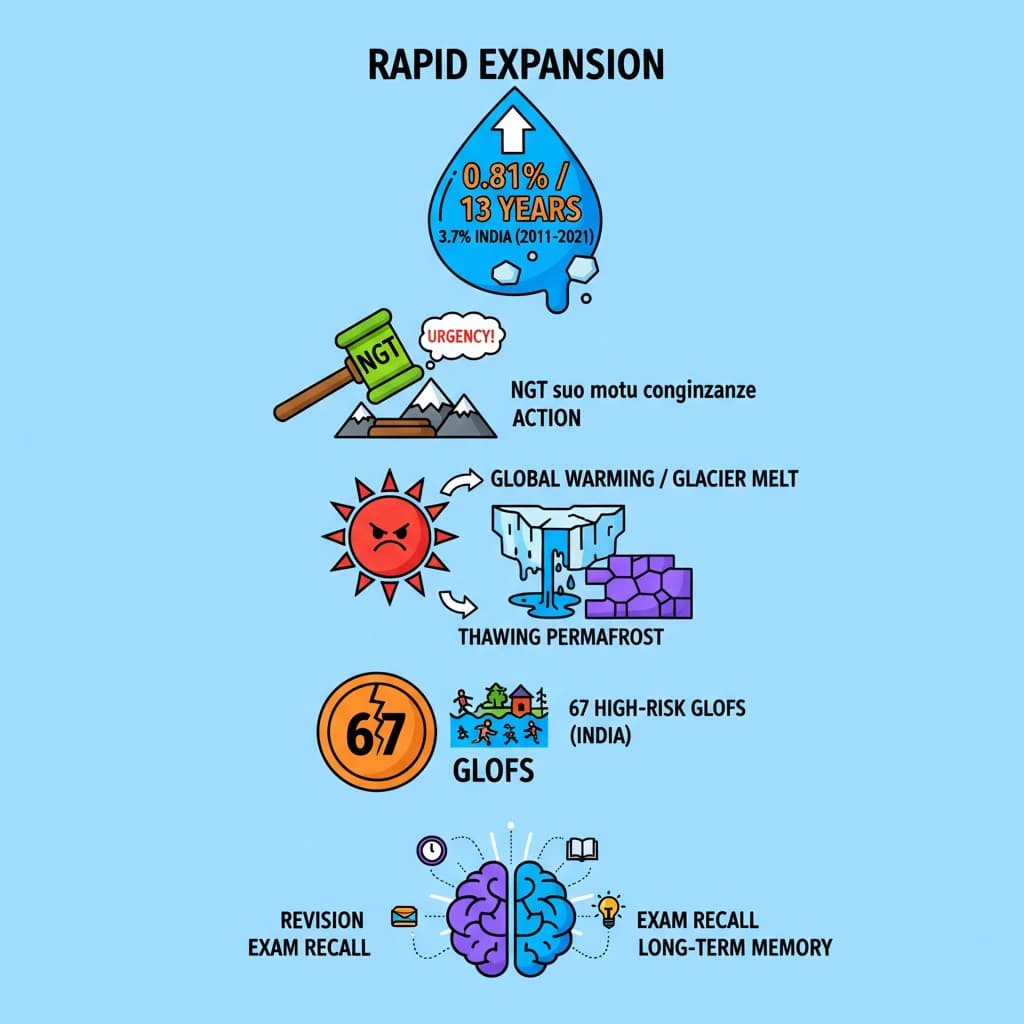
🧠 Memory Techniques
Memory Aid
95% Verified Content

📚 Reference Sources

•National Green Tribunal (NGT) official website (for general NGT functions)
•Scientific reports on Himalayan glacial lake monitoring (general knowledge background)

Related Topics

Loading related topics...
Explore:Geography Topics·All Subjects·Daily Current Affairs·Editorial Analysis·Previous Year Questions·UPSC GPT
Rapid Expansion of Himalayan Glacial Lakes - UPSC Geography