📖 Introduction
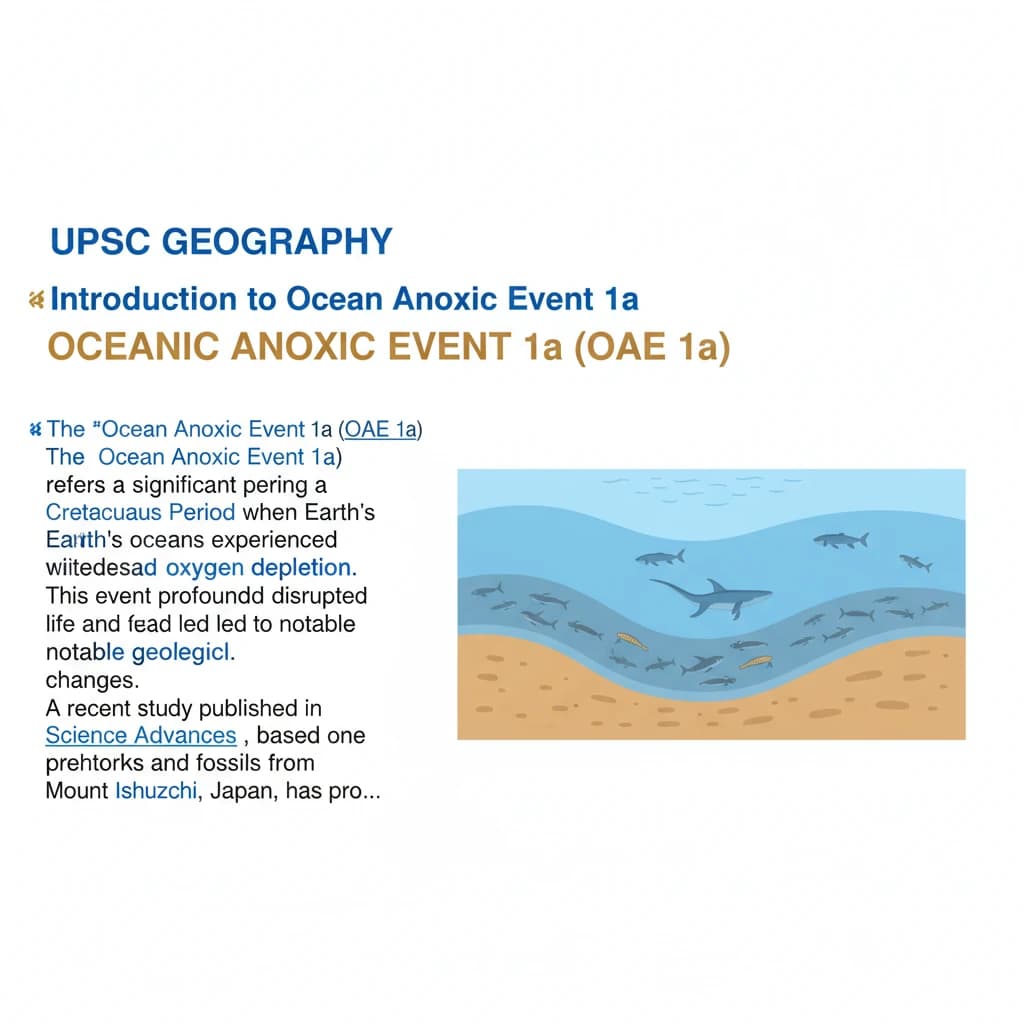
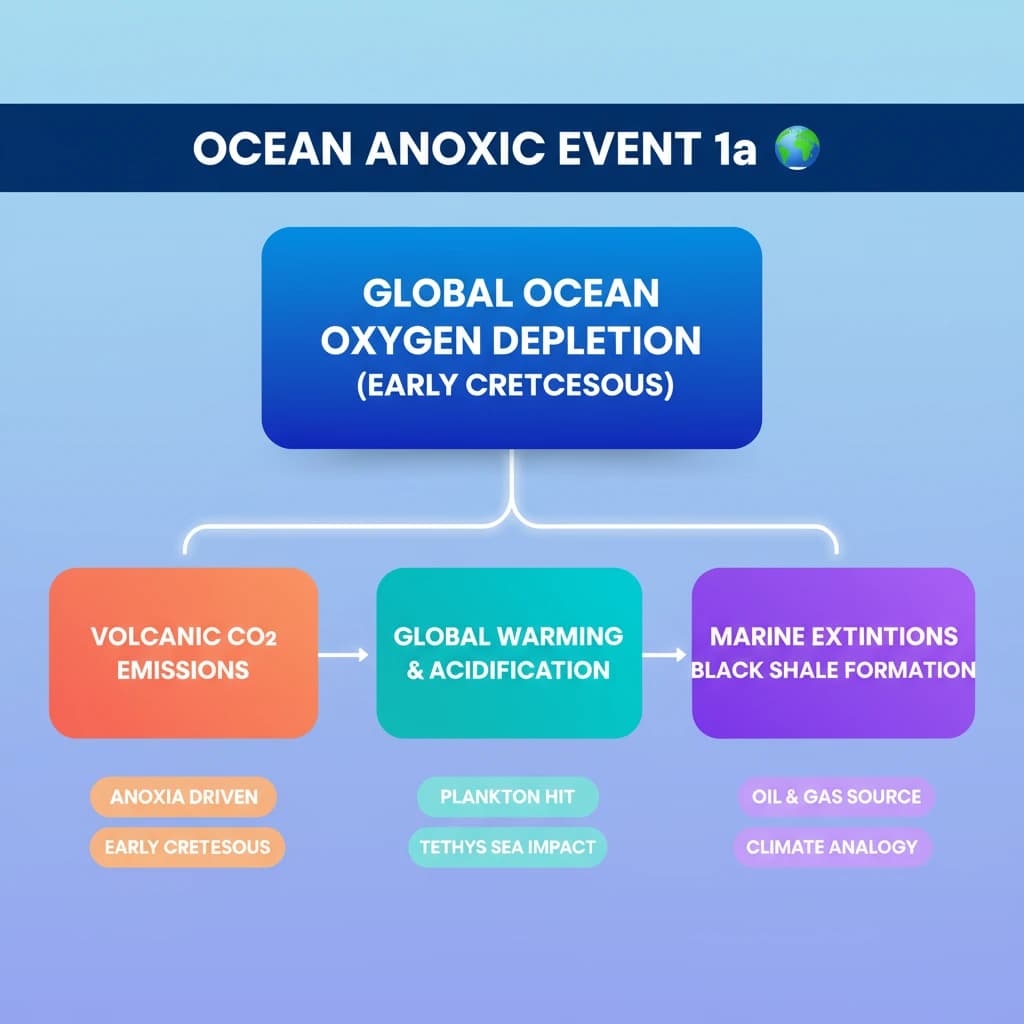
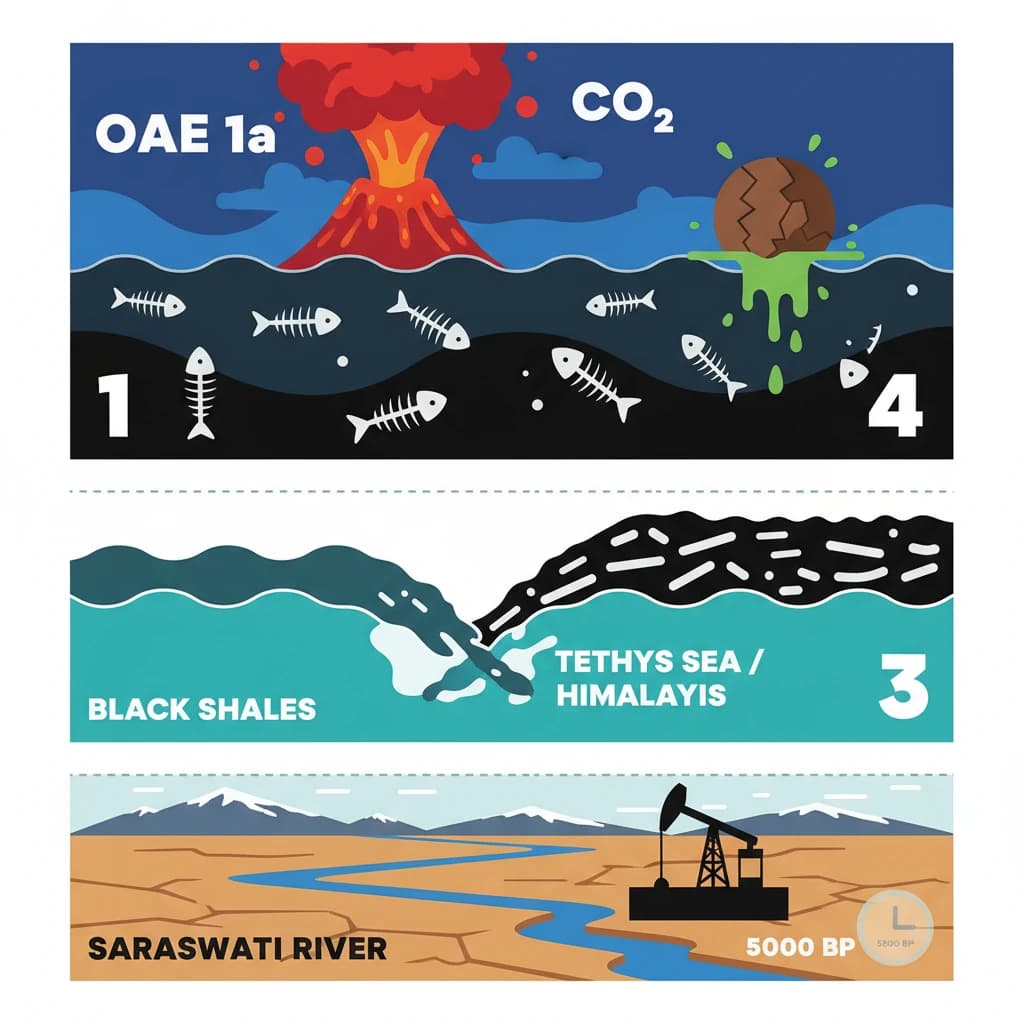
<h4>Introduction to Ocean Anoxic Event 1a</h4><p>The <strong>Ocean Anoxic Event 1a (OAE 1a)</strong> refers to a significant period during the <strong>Cretaceous Period</strong> when Earth's oceans experienced widespread <strong>oxygen depletion</strong>. This event profoundly disrupted marine life and led to notable geological changes.</p><p>A recent study published in <strong>Science Advances</strong>, based on prehistoric rocks and fossils from <strong>Mount Ishizuchi, Japan</strong>, has provided new insights into the timing and duration of <strong>OAE 1a</strong>.</p><div class='info-box'><p><strong>Definition:</strong> <strong>OAE 1a</strong> was a period within the <strong>Cretaceous Period</strong> (approximately <strong>145 to 66 million years ago</strong>) characterized by severe oxygen depletion in global oceans.</p></div><h4>Causes of Ocean Anoxic Event 1a</h4><p>The primary trigger for <strong>OAE 1a</strong> is believed to be massive <strong>volcanic eruptions</strong>. These eruptions released substantial amounts of <strong>carbon dioxide (CO2)</strong> into the atmosphere.</p><p>The increased <strong>CO2</strong> led to significant <strong>global warming</strong>. This warming, in turn, reduced the solubility of oxygen in seawater and altered ocean circulation patterns, causing widespread <strong>oxygen depletion</strong>.</p><div class='key-point-box'><p><strong>Mechanism:</strong> Elevated atmospheric <strong>CO2</strong> caused global warming, which decreased oceanic oxygen solubility and disrupted circulation, creating <strong>anoxic marine basins</strong>.</p></div><h4>Impacts of Ocean Anoxic Event 1a</h4><p>The influx of <strong>CO2</strong> into seawater led to the formation of <strong>carbonic acid</strong>, which increased ocean acidity. This acidity dissolved the shells and skeletons of many marine creatures, especially those made of calcium carbonate.</p><p>The severe <strong>oxygen depletion</strong> had devastating consequences for marine ecosystems, leading to the extinction of many species, particularly various forms of <strong>plankton</strong>. This event is also associated with the formation of extensive <strong>organic carbon-rich layers</strong>, known as <strong>black shales</strong>, preserved in the geological record.</p><h4>The Tethys Sea: A Precursor Context</h4><p>The <strong>Tethys Sea</strong> was an ancient ocean that existed for millions of years, extending across what are now parts of <strong>Europe, Asia, Africa, and the Middle East</strong>. It served as a vital connection between the <strong>Pacific Ocean</strong> in the east and the <strong>Atlantic Ocean</strong> in the west.</p><p>By the <strong>Late Cretaceous</strong> (around <strong>66 million years ago</strong>), the <strong>Tethys Sea</strong> began its gradual closure due to the continuous shifting of <strong>tectonic plates</strong>.</p><div class='info-box'><p><strong>Remnants:</strong> Modern seas such as the <strong>Mediterranean Sea, Caspian Sea, and Black Sea</strong> are considered remnants of the ancient <strong>Tethys Sea</strong>.</p></div><p>The closure of the <strong>Tethys Sea</strong> had profound <strong>tectonic significance</strong>. It led to the creation of new landmasses and mountain ranges, notably the collision of the <strong>Indian subcontinent</strong> with the <strong>Asian plate</strong>, which resulted in the uplift of the <strong>Himalayan mountain range</strong> and the <strong>Tibetan Plateau</strong>.</p><p>The <strong>Tethys Sea</strong> was also renowned for its rich diversity of marine life. Fossil evidence indicates it was home to early forms of <strong>sharks, ammonites</strong>, and marine reptiles like <strong>ichthyosaurs</strong> and <strong>mosasaurs</strong>.</p><div class='exam-tip-box'><p><strong>UPSC Relevance:</strong> Understanding the <strong>Tethys Sea's evolution</strong> is crucial for comprehending the geological formation of <strong>petroleum basins</strong> in regions like <strong>North Africa</strong> and the <strong>Middle East</strong>, where organic material accumulated and matured into hydrocarbons.</p></div><h4>The Saraswati River: An Ancient Indian Enigma</h4><p>The <strong>Saraswati River</strong> is a revered river mentioned extensively in ancient Indian texts, primarily the <strong>Vedas</strong>. It is considered the holiest and mightiest river of the <strong>Vedic Period</strong>, dating back approximately <strong>8000–5000 years Before Present (BP)</strong>.</p><p>According to ancient descriptions, the <strong>Saraswati River</strong> originated in the <strong>Himalayas</strong>. Its course flowed through the regions of <strong>Punjab, Haryana, Western Rajasthan, and Gujarat</strong>.</p><p>It is believed to have joined the <strong>Indus River</strong> in the west and the <strong>Ganges River</strong> in the east, eventually draining into the <strong>Gulf of Kachchh</strong> in the <strong>Arabian Sea</strong>.</p><div class='info-box'><p><strong>Disappearance:</strong> The <strong>Saraswati River</strong> is believed to have disappeared around <strong>5000 BP</strong>, primarily due to a combination of <strong>climatic and tectonic changes</strong>. It is theorized that the river still flows underground beneath the <strong>Thar Desert</strong>, maintaining its Himalayan connectivity.</p></div><p>The <strong>Saraswati River</strong> is frequently mentioned in various ancient Indian literary works, highlighting its cultural and geographical importance.</p><ul><li><strong>Vedas:</strong> The <strong>Rigveda</strong> hails <strong>Saraswati</strong> as the “<strong>Best of Mothers, Rivers, and Goddesses</strong>.” The <strong>Yajurveda</strong> mentions its tributaries.</li><li><strong>Manusmriti:</strong> The sacred region between the <strong>Saraswati</strong> and <strong>Drishadvati River</strong> (a seasonal river in Haryana) is referred to as <strong>Brahmavarta</strong>, a divine creation.</li><li><strong>Mahabharata:</strong> This epic describes numerous pilgrimages along the river and its disappearance into desert sands at <strong>Vinasana</strong>, attributed to low water discharge.</li><li><strong>Puranas:</strong> The <strong>Markandeya Purana</strong> narrates the <strong>Saraswati</strong> rising from the <strong>Plaksha tree (Pipal tree)</strong>, with a sage worshipping its emergence.</li></ul>