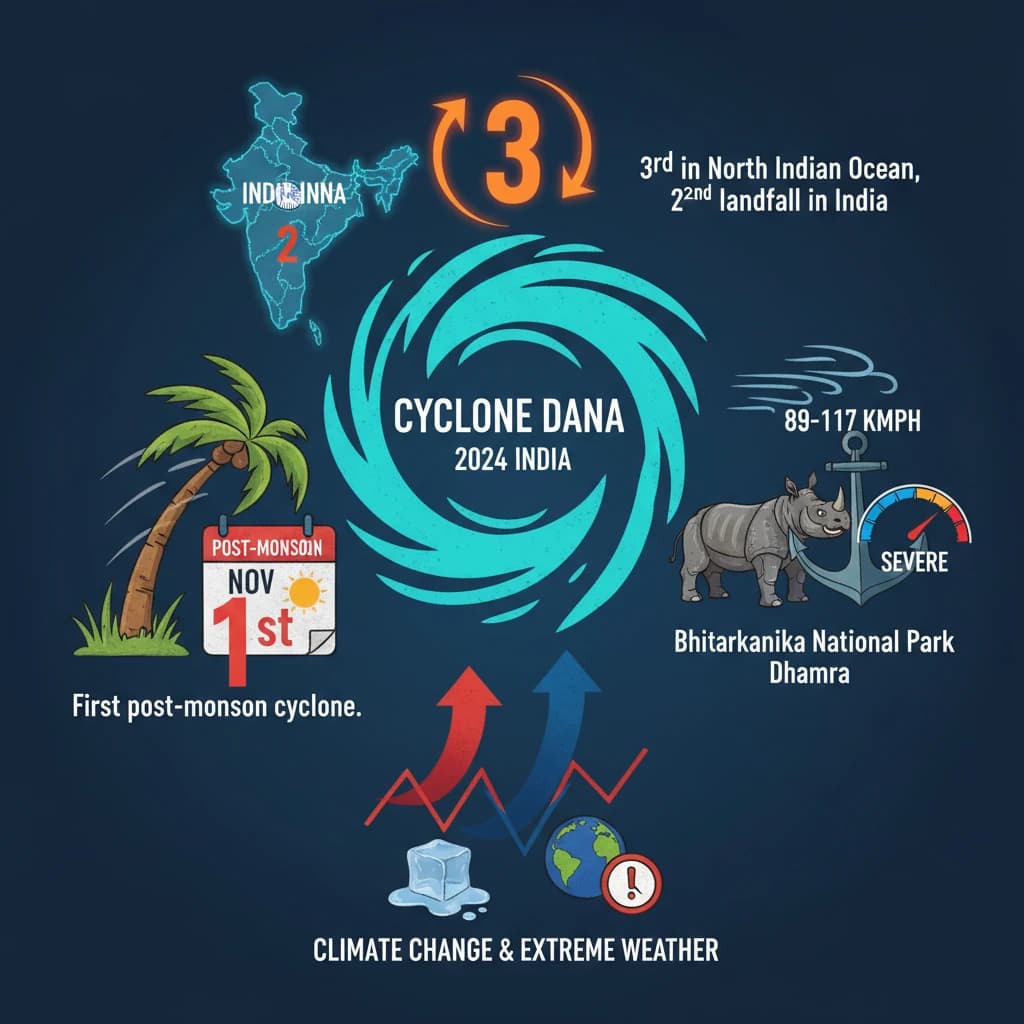
Cyclone Dana: Formation, Impact, and Significance for India - UPSC Geography
What is Cyclone Dana: Formation, Impact, and Significance for India in UPSC Geography?
Cyclone Dana: Formation, Impact, and Significance for India is a key topic under Geography for UPSC Civil Services Examination. Key points include: Cyclone Dana was the third cyclone in the North Indian Ocean in 2024, and the first of the post-monsoon season, named by Qatar.. It was predicted to be a severe cyclone making landfall on the Odisha coast, near Bhitarkanika National Park and Dhamra Port.. Intense convection, warm moist air influx, and a conducive Madden-Julian Oscillation (MJO) phase were key reasons for its heavy rainfall potential.. Understanding this topic is essential for both UPSC Prelims and Mains preparation.
Why is Cyclone Dana: Formation, Impact, and Significance for India important for UPSC exam?
Cyclone Dana: Formation, Impact, and Significance for India is a Medium-level topic in UPSC Geography. It is tested in both Prelims (factual MCQs) and Mains (analytical answer writing). Previous year UPSC questions have frequently covered aspects of Cyclone Dana: Formation, Impact, and Significance for India, making it essential for comprehensive IAS preparation.
How to prepare Cyclone Dana: Formation, Impact, and Significance for India for UPSC?
To prepare Cyclone Dana: Formation, Impact, and Significance for India for UPSC: (1) Study the comprehensive notes covering all key concepts on Vaidra. (2) Practice previous year questions on this topic. (3) Connect it with current affairs using daily updates. (4) Revise using key takeaways and mind maps available for Geography. (5) Write practice answers linking Cyclone Dana: Formation, Impact, and Significance for India to related GS Paper topics.
Key takeaways of Cyclone Dana: Formation, Impact, and Significance for India for UPSC
- Cyclone Dana was the third cyclone in the North Indian Ocean in 2024, and the first of the post-monsoon season, named by Qatar.
- It was predicted to be a severe cyclone making landfall on the Odisha coast, near Bhitarkanika National Park and Dhamra Port.
- Intense convection, warm moist air influx, and a conducive Madden-Julian Oscillation (MJO) phase were key reasons for its heavy rainfall potential.
- Landfall refers specifically to the eye of the cyclone crossing the coast, distinct from a direct hit by the eyewall.
- India's cyclone management has evolved significantly, leveraging advanced technology and institutional frameworks like NDMA to reduce casualties.
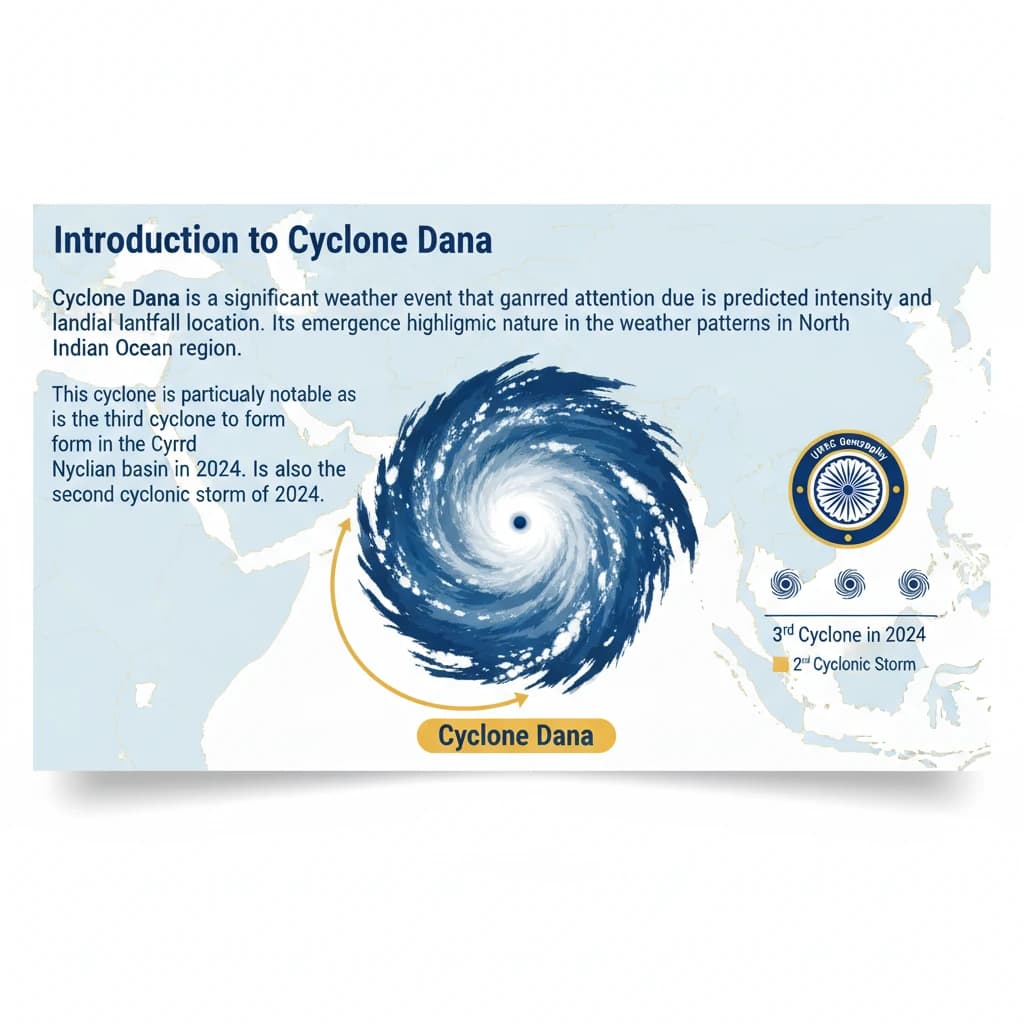
Cyclone Dana: Formation, Impact, and Significance for India
📖 Introduction
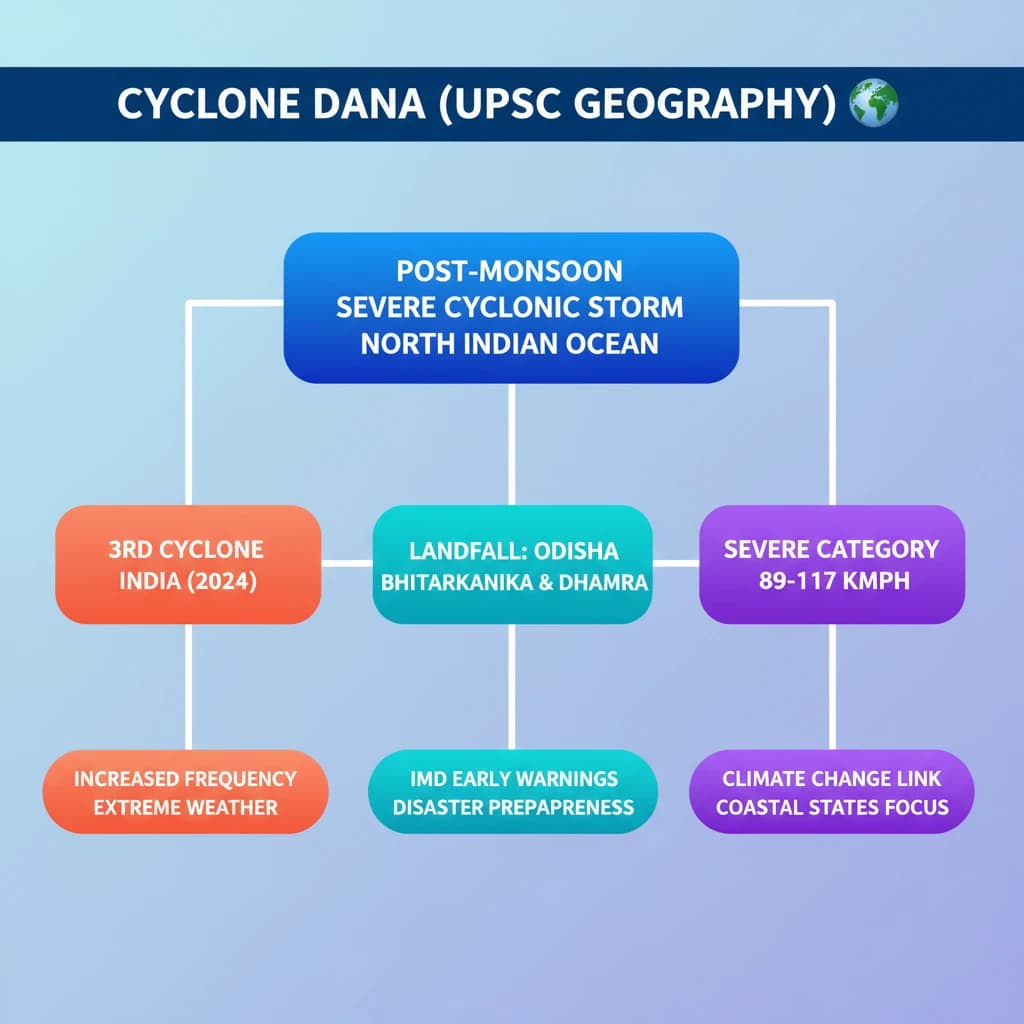
💡 Key Takeaways
- •Cyclone Dana was the third cyclone in the North Indian Ocean in 2024, and the first of the post-monsoon season, named by Qatar.
- •It was predicted to be a severe cyclone making landfall on the Odisha coast, near Bhitarkanika National Park and Dhamra Port.
- •Intense convection, warm moist air influx, and a conducive Madden-Julian Oscillation (MJO) phase were key reasons for its heavy rainfall potential.
- •Landfall refers specifically to the eye of the cyclone crossing the coast, distinct from a direct hit by the eyewall.
- •India's cyclone management has evolved significantly, leveraging advanced technology and institutional frameworks like NDMA to reduce casualties.
🧠 Memory Techniques