Loading page, please wait…
Vaidra Logo
Vaidra

Top 4 items + smart groups

UPSC GPT
New
Current Affairs
Daily Solutions
Daily Puzzle
Mains Evaluator

Version 2.0.0 • Built with ❤️ for UPSC aspirants

Loading...
Loading...
Loading...
Loading...
Loading...
Loading...
Loading...
Loading...
Loading...
Loading...
Loading...
Loading...
Loading...
Taiwan Earthquake and Pacific Ring of Fire - UPSC Geography
Back
All Subjects

Topics

0 topics • 0 completed

Loading topics...
Loading...
Loading...
Loading...
Loading...
Loading...
Overall Progress0%

Taiwan Earthquake and Pacific Ring of Fire - UPSC Geography

What is Taiwan Earthquake and Pacific Ring of Fire in UPSC Geography?

Taiwan Earthquake and Pacific Ring of Fire is a key topic under Geography for UPSC Civil Services Examination. Key points include: A 7.4 magnitude earthquake struck Taiwan, one of the largest in 25 years.. Taiwan is located within the highly active Pacific Ring of Fire, a zone of intense seismic and volcanic activity.. Japan issued a tsunami alert for the Ryukyu chain of islands, including Okinawa, following the quake.. Understanding this topic is essential for both UPSC Prelims and Mains preparation.

Why is Taiwan Earthquake and Pacific Ring of Fire important for UPSC exam?

Taiwan Earthquake and Pacific Ring of Fire is a Medium-level topic in UPSC Geography. It is tested in both Prelims (factual MCQs) and Mains (analytical answer writing). Previous year UPSC questions have frequently covered aspects of Taiwan Earthquake and Pacific Ring of Fire, making it essential for comprehensive IAS preparation.

How to prepare Taiwan Earthquake and Pacific Ring of Fire for UPSC?

To prepare Taiwan Earthquake and Pacific Ring of Fire for UPSC: (1) Study the comprehensive notes covering all key concepts on Vaidra. (2) Practice previous year questions on this topic. (3) Connect it with current affairs using daily updates. (4) Revise using key takeaways and mind maps available for Geography. (5) Write practice answers linking Taiwan Earthquake and Pacific Ring of Fire to related GS Paper topics.

Key takeaways of Taiwan Earthquake and Pacific Ring of Fire for UPSC

  • A 7.4 magnitude earthquake struck Taiwan, one of the largest in 25 years.
  • Taiwan is located within the highly active Pacific Ring of Fire, a zone of intense seismic and volcanic activity.
  • Japan issued a tsunami alert for the Ryukyu chain of islands, including Okinawa, following the quake.
  • Okinawa hosts significant US military bases, highlighting the geopolitical importance of the Ryukyu chain.
  • The event underscores the critical need for advanced disaster preparedness and early warning systems.
Taiwan Earthquake and Pacific Ring of Fire

Taiwan Earthquake and Pacific Ring of Fire

Medium⏱️ 8 min read✓ 95% Verified
geography

📖 Introduction

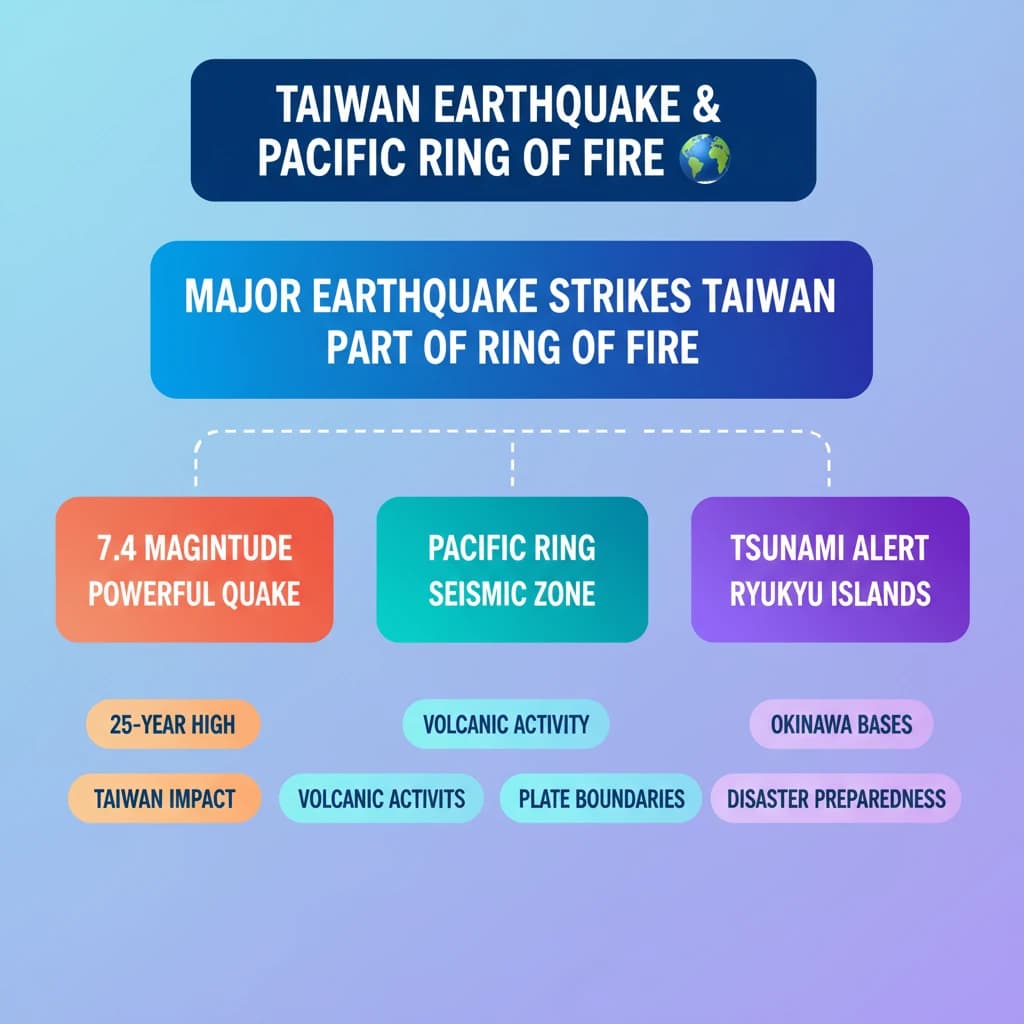
<h4>Recent Seismic Event: Taiwan Earthquake</h4><p>A powerful <strong>earthquake</strong>, registering <strong>7.4 on the Richter Scale</strong>, recently struck <strong>Taiwan</strong>. This significant seismic event marks one of the largest earthquakes to impact the island in at least <strong>25 years</strong>.</p><div class='info-box'><p>The earthquake's epicenter was located off the eastern coast of <strong>Taiwan</strong>, a region known for its high seismic activity due to its position on major tectonic plate boundaries.</p></div><h4>Geographical Context: Pacific Ring of Fire</h4><p><strong>Taiwan's</strong> vulnerability to such powerful earthquakes is directly linked to its location within the highly active <strong>Pacific Ring of Fire</strong>. This horseshoe-shaped zone is characterized by frequent seismic and volcanic activity.</p><div class='key-point-box'><p>The <strong>Pacific Ring of Fire</strong> is a direct consequence of the movement and collision of several major <strong>tectonic plates</strong>, including the Pacific Plate, Philippine Sea Plate, and Eurasian Plate.</p></div><h4>Tsunami Alert and Regional Impact</h4><p>Following the earthquake, <strong>Japan</strong> promptly issued a <strong>tsunami alert</strong>. This alert specifically targeted the <strong>Ryukyu chain of islands</strong>, which stretches from <strong>Taiwan</strong> northwards towards <strong>Japan's main island of Kyushu</strong>.</p><ul><li>The <strong>Ryukyu chain</strong> includes the strategically important island of <strong>Okinawa</strong>.</li><li><strong>Okinawa</strong> has historically been home to large <strong>US military bases</strong> since <strong>World War II</strong> and the subsequent <strong>Cold War era</strong>, highlighting the geopolitical significance of the region.</li></ul><div class='exam-tip-box'><p>For <strong>UPSC Mains GS Paper I (Geography)</strong>, understanding the geological reasons for earthquakes and their regional impacts is vital. For <strong>GS Paper III (Disaster Management)</strong>, the role of early warning systems like <strong>tsunami alerts</strong> and preparedness measures are key.</p></div>
Concept Diagram

💡 Key Takeaways

  • •A 7.4 magnitude earthquake struck Taiwan, one of the largest in 25 years.
  • •Taiwan is located within the highly active Pacific Ring of Fire, a zone of intense seismic and volcanic activity.
  • •Japan issued a tsunami alert for the Ryukyu chain of islands, including Okinawa, following the quake.
  • •Okinawa hosts significant US military bases, highlighting the geopolitical importance of the Ryukyu chain.
  • •The event underscores the critical need for advanced disaster preparedness and early warning systems.

🧠 Memory Techniques
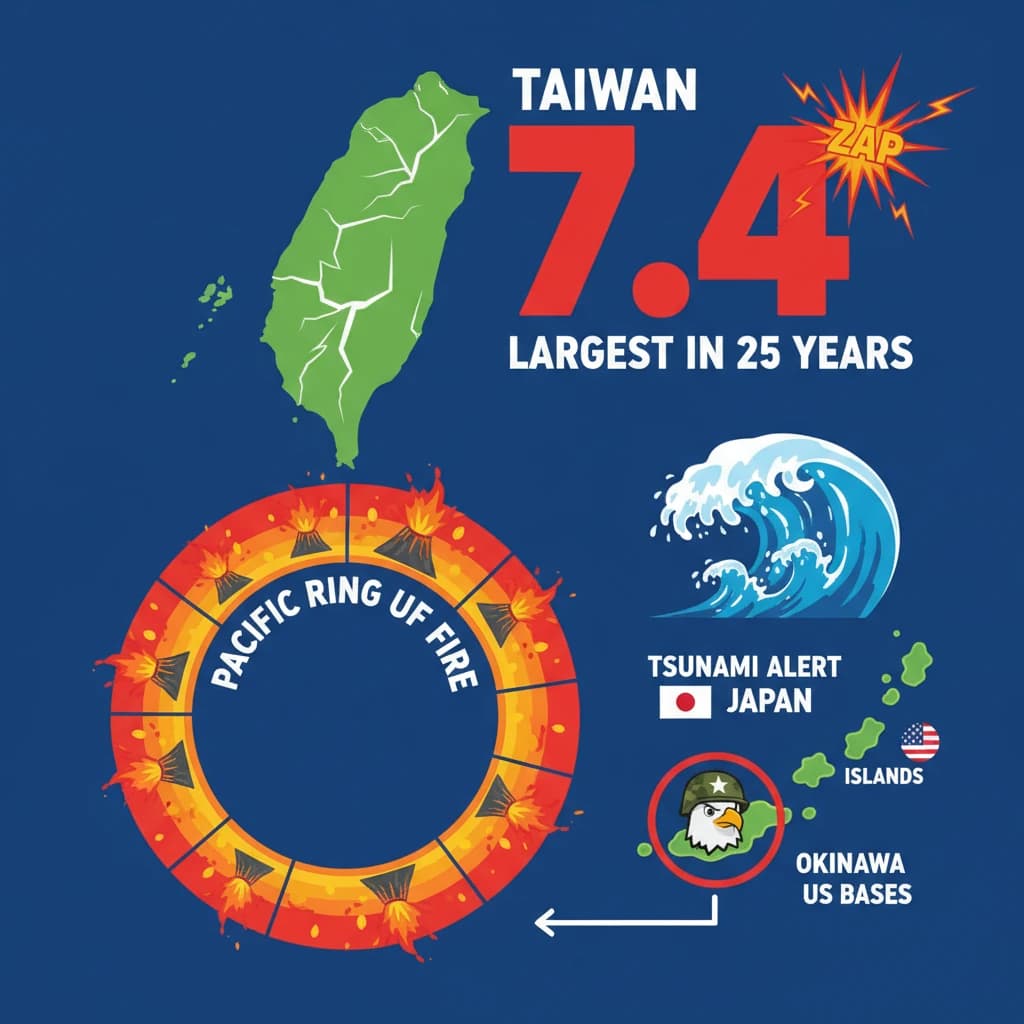
Memory Aid
95% Verified Content

📚 Reference Sources

•General knowledge on plate tectonics and global seismicity

Related Topics

Loading related topics...
Explore:Geography Topics·All Subjects·Daily Current Affairs·Editorial Analysis·Previous Year Questions·UPSC GPT