Loading page, please wait…
Vaidra Logo
Vaidra

Top 4 items + smart groups

UPSC GPT
New
Current Affairs
Daily Solutions
Daily Puzzle
Mains Evaluator

Version 2.0.0 • Built with ❤️ for UPSC aspirants

Loading...
Loading...
Loading...
Loading...
Loading...
Loading...
Loading...
Loading...
Loading...
Loading...
Loading...
Loading...
Loading...
Ground Subsidence: Causes & Contributing Factors - UPSC Geography
Back
All Subjects

Topics

0 topics • 0 completed

Loading topics...
Loading...
Loading...
Loading...
Loading...
Loading...
Overall Progress0%

Ground Subsidence: Causes & Contributing Factors - UPSC Geography

What is Ground Subsidence: Causes & Contributing Factors in UPSC Geography?

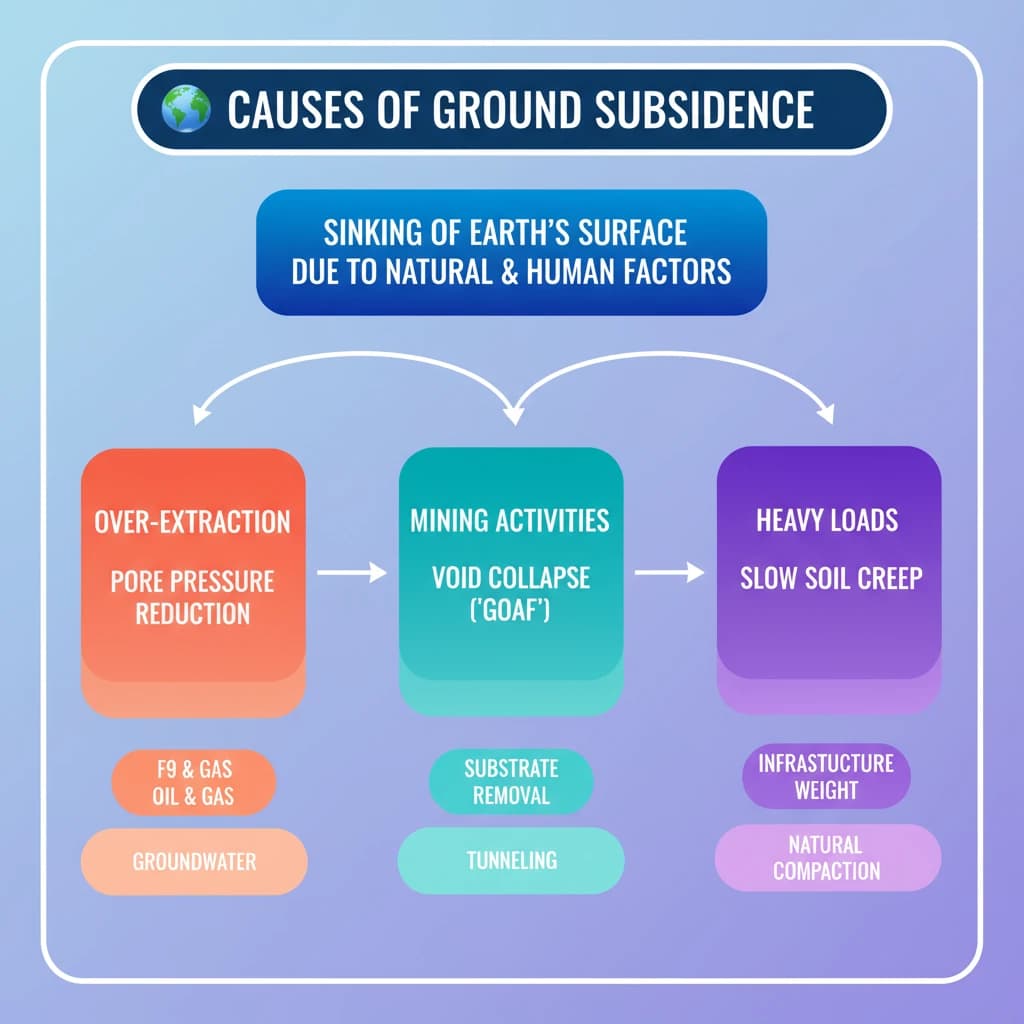
Ground Subsidence: Causes & Contributing Factors is a key topic under Geography for UPSC Civil Services Examination. Key points include: Ground subsidence is the sinking of Earth's surface, driven by both natural and human factors.. Over-extraction of groundwater, oil, and gas reduces pore pressure, leading to soil compaction.. Mining activities create 'goaf' voids, which can collapse and cause surface sinking.. Understanding this topic is essential for both UPSC Prelims and Mains preparation.

Why is Ground Subsidence: Causes & Contributing Factors important for UPSC exam?

Ground Subsidence: Causes & Contributing Factors is a Medium-level topic in UPSC Geography. It is tested in both Prelims (factual MCQs) and Mains (analytical answer writing). Previous year UPSC questions have frequently covered aspects of Ground Subsidence: Causes & Contributing Factors, making it essential for comprehensive IAS preparation.

How to prepare Ground Subsidence: Causes & Contributing Factors for UPSC?

To prepare Ground Subsidence: Causes & Contributing Factors for UPSC: (1) Study the comprehensive notes covering all key concepts on Vaidra. (2) Practice previous year questions on this topic. (3) Connect it with current affairs using daily updates. (4) Revise using key takeaways and mind maps available for Geography. (5) Write practice answers linking Ground Subsidence: Causes & Contributing Factors to related GS Paper topics.

Key takeaways of Ground Subsidence: Causes & Contributing Factors for UPSC

  • Ground subsidence is the sinking of Earth's surface, driven by both natural and human factors.
  • Over-extraction of groundwater, oil, and gas reduces pore pressure, leading to soil compaction.
  • Mining activities create 'goaf' voids, which can collapse and cause surface sinking.
  • Heavy loads from infrastructure and slow soil creep also contribute to ground deformation.
  • Subsidence has significant impacts on infrastructure, urban areas, and coastal vulnerability, often exacerbated by climate change.
  • Sustainable resource management and careful urban planning are crucial for mitigation.
Ground Subsidence: Causes & Contributing Factors

Ground Subsidence: Causes & Contributing Factors

Medium⏱️ 8 min read✓ 95% Verified
geography

📖 Introduction

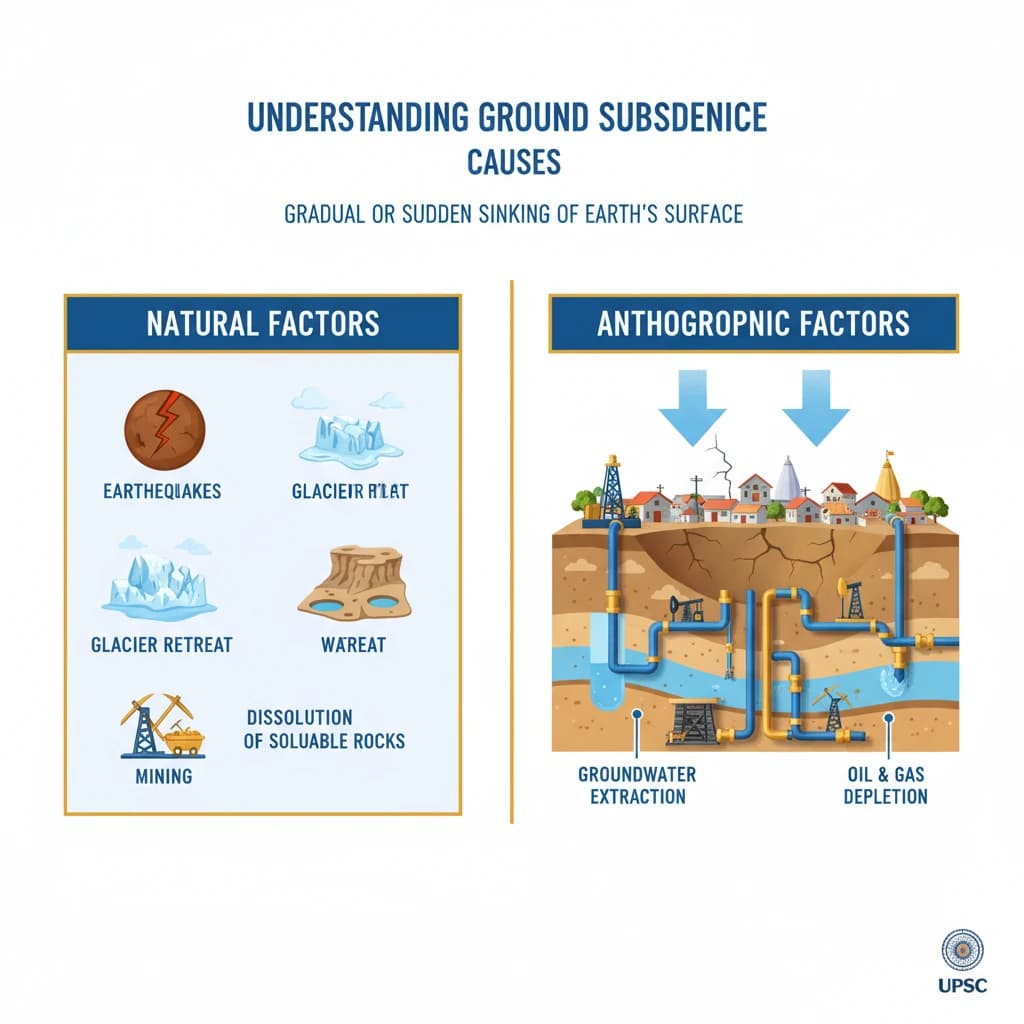
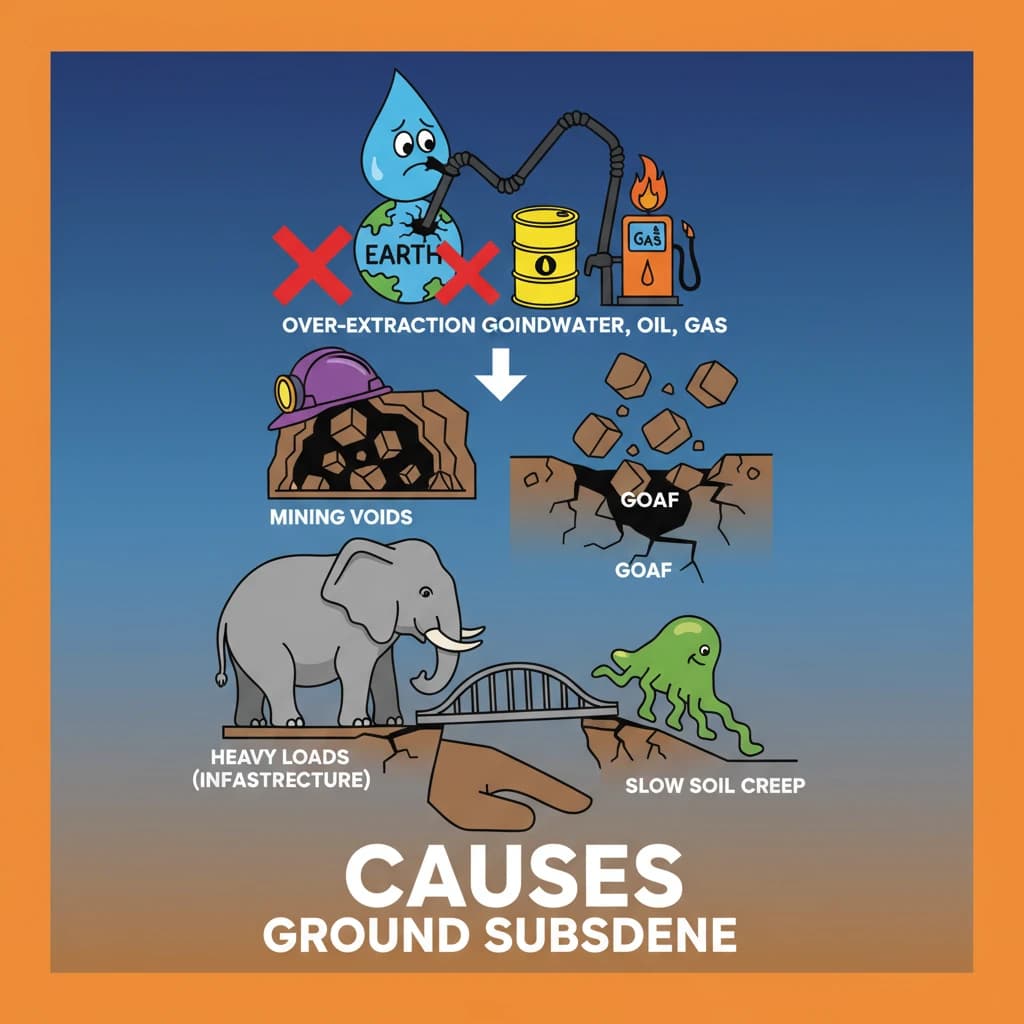
<h4>Understanding Ground Subsidence</h4><p><strong>Ground subsidence</strong> refers to the gradual or sudden sinking of the Earth's surface due to various natural and anthropogenic factors. It is a significant geological hazard with widespread environmental and economic impacts.</p><h4>Overexploitation of Underground Resources</h4><p>One of the primary drivers of <strong>ground subsidence</strong> is the excessive extraction of subsurface resources. This includes vital elements such as <strong>water</strong>, <strong>natural gas</strong>, and <strong>oil</strong>.</p><p>When these resources are removed, it leads to a decrease in <strong>pore pressure</strong> within the underlying rock and soil layers. This reduction in pressure, in turn, increases the <strong>effective stress</strong> on the soil particles, causing them to compact and the ground surface to settle.</p><div class='info-box'><p><strong>Key Statistic:</strong> Over <strong>80%</strong> of the world’s extracted water is utilized for <strong>irrigation</strong> and agricultural purposes. This extensive groundwater withdrawal is a major contributor to regional ground subsidence globally.</p></div><h4>Extraction of Solid Minerals</h4><p>The exploitation of <strong>underground solid mineral resources</strong> also significantly contributes to subsidence. Activities like <strong>mining</strong> create large empty spaces beneath the surface.</p><div class='info-box'><p>These excavated voids are often referred to as <strong>goaf</strong> areas. When the supporting structures or pillars within these goaf areas fail, or when the overlying strata cannot bear the load, the ground above can sink or subside.</p></div><p><strong>Coal mining</strong>, in particular, is a common cause of such subsidence, as vast quantities of coal are extracted, leaving behind extensive goaf regions prone to collapse.</p><h4>Load Exerted on Ground Surface</h4><p>The sheer weight of human-made structures can also induce <strong>ground subsidence</strong>. The construction of <strong>tall buildings</strong> and other <strong>heavy infrastructure</strong> exerts substantial pressure on the underlying soil and geological formations.</p><p>Over extended periods, this continuous load can lead to the <strong>deformation of soil</strong> particles and gradual compaction, resulting in the sinking of the ground surface beneath these structures.</p><h4>Role of Soil Creep</h4><p><strong>Soil creep</strong> is a slow but persistent geomorphological process that can contribute to <strong>ground subsidence</strong>, especially on slopes. It involves the gradual, downhill movement of soil and rock particles.</p><div class='key-point-box'><p>This phenomenon occurs due to the combined effects of <strong>gravity</strong> and continuous, low-level stresses on the soil. Over time, this slow deformation can compromise the stability of foundations and contribute to the overall subsidence of an area.</p></div>
Concept Diagram

💡 Key Takeaways

  • •Ground subsidence is the sinking of Earth's surface, driven by both natural and human factors.
  • •Over-extraction of groundwater, oil, and gas reduces pore pressure, leading to soil compaction.
  • •Mining activities create 'goaf' voids, which can collapse and cause surface sinking.
  • •Heavy loads from infrastructure and slow soil creep also contribute to ground deformation.
  • •Subsidence has significant impacts on infrastructure, urban areas, and coastal vulnerability, often exacerbated by climate change.
  • •Sustainable resource management and careful urban planning are crucial for mitigation.

🧠 Memory Techniques
Memory Aid
95% Verified Content

📚 Reference Sources

•National Water Policy (India)
•Geological Survey of India (GSI) reports on mining areas
•Academic articles on groundwater depletion and subsidence (general knowledge)

Related Topics

Loading related topics...
Explore:Geography Topics·All Subjects·Daily Current Affairs·Editorial Analysis·Previous Year Questions·UPSC GPT