Sahel Region: Geography, Significance, and Impact on African Hydroclimate - UPSC Geography
What is Sahel Region: Geography, Significance, and Impact on African Hydroclimate in UPSC Geography?
Sahel Region: Geography, Significance, and Impact on African Hydroclimate is a key topic under Geography for UPSC Civil Services Examination. Key points include: The Sahel is a semiarid transition zone between the Sahara Desert and humid savannas in West and North-Central Africa.. African Easterly Waves (AEWs) are crucial for Sahelian rainfall and are precursors to Atlantic hurricanes.. Ten UN-defined countries form the Sahel, with the Niger River as a major water source.. Understanding this topic is essential for both UPSC Prelims and Mains preparation.
Why is Sahel Region: Geography, Significance, and Impact on African Hydroclimate important for UPSC exam?
Sahel Region: Geography, Significance, and Impact on African Hydroclimate is a Medium-level topic in UPSC Geography. It is tested in both Prelims (factual MCQs) and Mains (analytical answer writing). Previous year UPSC questions have frequently covered aspects of Sahel Region: Geography, Significance, and Impact on African Hydroclimate, making it essential for comprehensive IAS preparation.
How to prepare Sahel Region: Geography, Significance, and Impact on African Hydroclimate for UPSC?
To prepare Sahel Region: Geography, Significance, and Impact on African Hydroclimate for UPSC: (1) Study the comprehensive notes covering all key concepts on Vaidra. (2) Practice previous year questions on this topic. (3) Connect it with current affairs using daily updates. (4) Revise using key takeaways and mind maps available for Geography. (5) Write practice answers linking Sahel Region: Geography, Significance, and Impact on African Hydroclimate to related GS Paper topics.
Key takeaways of Sahel Region: Geography, Significance, and Impact on African Hydroclimate for UPSC
- The Sahel is a semiarid transition zone between the Sahara Desert and humid savannas in West and North-Central Africa.
- African Easterly Waves (AEWs) are crucial for Sahelian rainfall and are precursors to Atlantic hurricanes.
- Ten UN-defined countries form the Sahel, with the Niger River as a major water source.
- The region faces severe challenges from climate change (desertification, droughts) and insecurity (extremist groups).
- Initiatives like the Great Green Wall are vital for combating environmental degradation and promoting sustainable development.
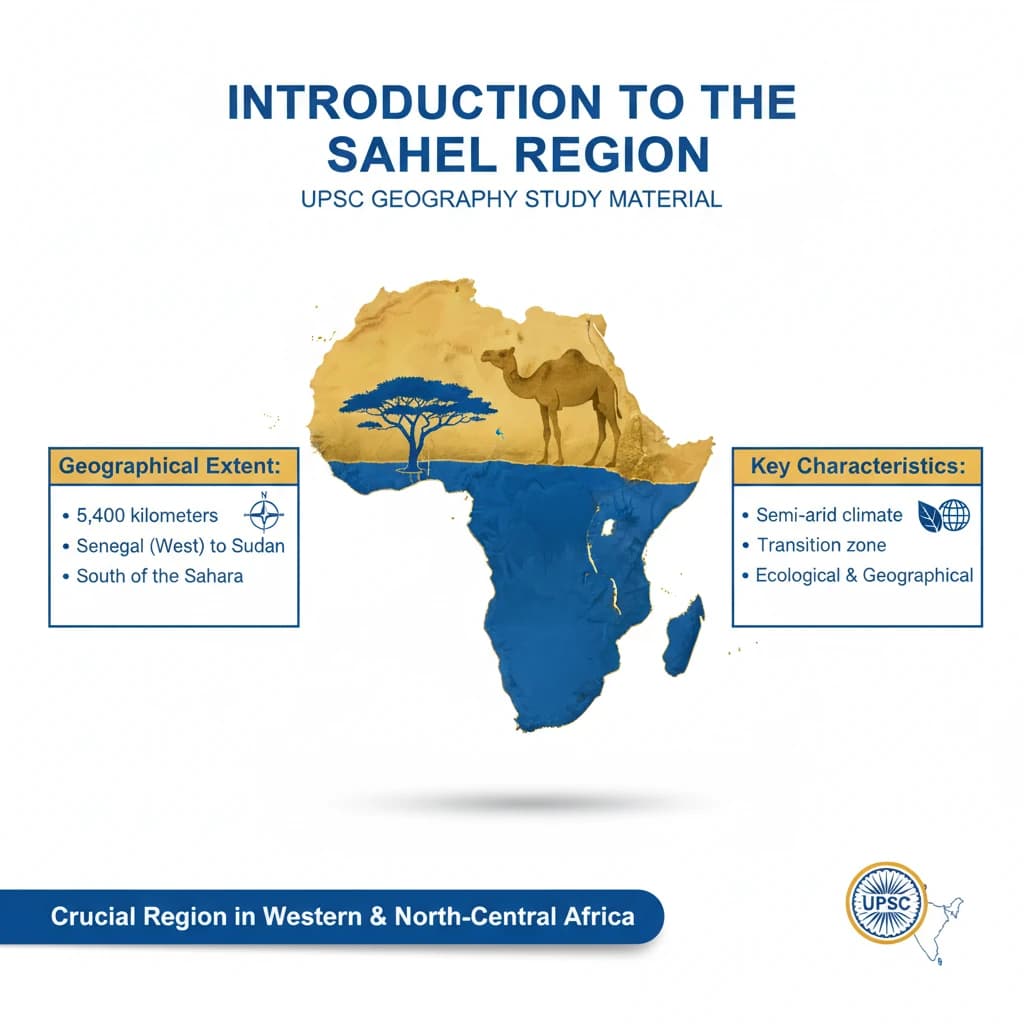
Sahel Region: Geography, Significance, and Impact on African Hydroclimate
📖 Introduction
💡 Key Takeaways
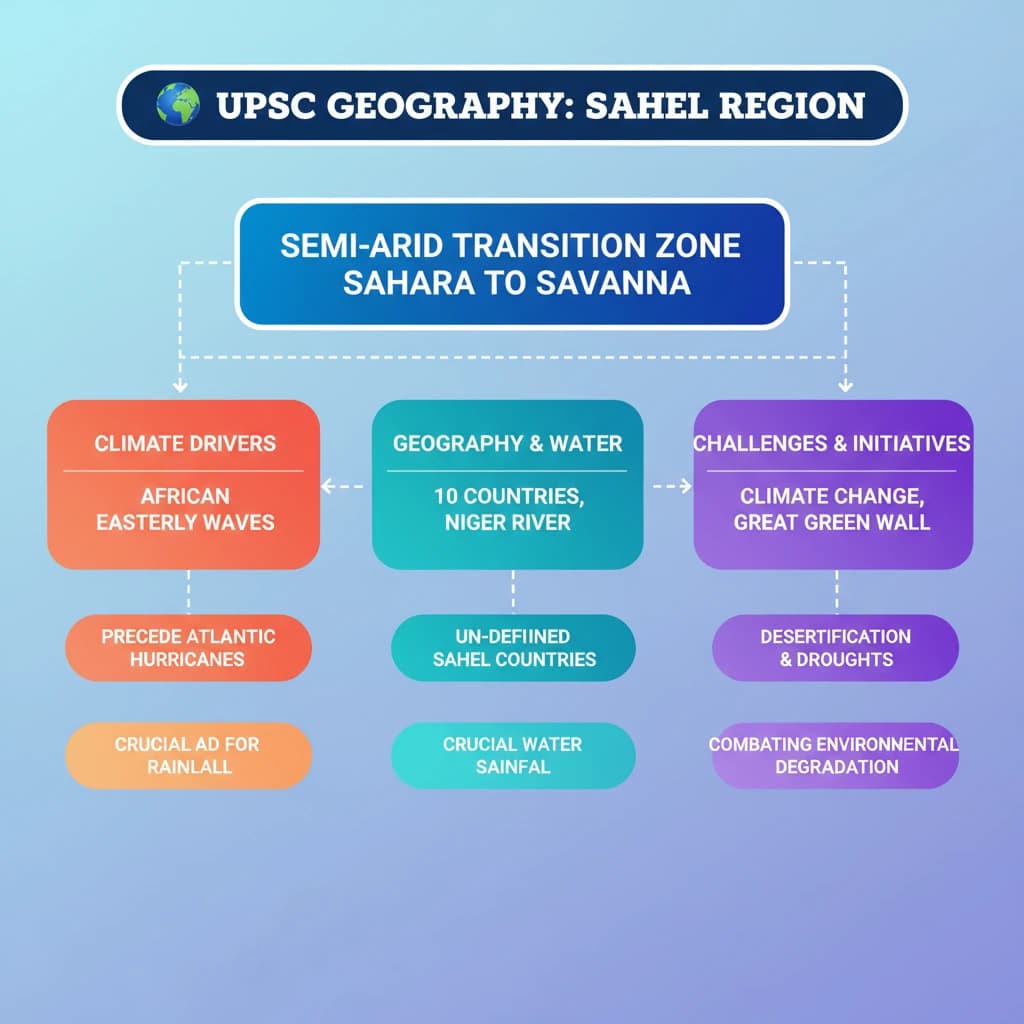
- •The Sahel is a semiarid transition zone between the Sahara Desert and humid savannas in West and North-Central Africa.
- •African Easterly Waves (AEWs) are crucial for Sahelian rainfall and are precursors to Atlantic hurricanes.
- •Ten UN-defined countries form the Sahel, with the Niger River as a major water source.
- •The region faces severe challenges from climate change (desertification, droughts) and insecurity (extremist groups).
- •Initiatives like the Great Green Wall are vital for combating environmental degradation and promoting sustainable development.
🧠 Memory Techniques