Loading page, please wait…
Africa’s Afar Triangle: Birthplace of a Potential New Ocean - UPSC Geography
What is Africa’s Afar Triangle: Birthplace of a Potential New Ocean in UPSC Geography?
Africa’s Afar Triangle: Birthplace of a Potential New Ocean is a key topic under Geography for UPSC Civil Services Examination. Key points include: The Afar Triangle is a geological depression in the Horn of Africa, where three tectonic plates converge.. It is part of the East African Rift system and is considered the birthplace of a potential new ocean.. The rifting is driven by a massive mantle plume causing the crust to stretch and fracture.. Understanding this topic is essential for both UPSC Prelims and Mains preparation.
Why is Africa’s Afar Triangle: Birthplace of a Potential New Ocean important for UPSC exam?
Africa’s Afar Triangle: Birthplace of a Potential New Ocean is a Medium-level topic in UPSC Geography. It is tested in both Prelims (factual MCQs) and Mains (analytical answer writing). Previous year UPSC questions have frequently covered aspects of Africa’s Afar Triangle: Birthplace of a Potential New Ocean, making it essential for comprehensive IAS preparation.
How to prepare Africa’s Afar Triangle: Birthplace of a Potential New Ocean for UPSC?
To prepare Africa’s Afar Triangle: Birthplace of a Potential New Ocean for UPSC: (1) Study the comprehensive notes covering all key concepts on Vaidra. (2) Practice previous year questions on this topic. (3) Connect it with current affairs using daily updates. (4) Revise using key takeaways and mind maps available for Geography. (5) Write practice answers linking Africa’s Afar Triangle: Birthplace of a Potential New Ocean to related GS Paper topics.
Key takeaways of Africa’s Afar Triangle: Birthplace of a Potential New Ocean for UPSC
- The Afar Triangle is a geological depression in the Horn of Africa, where three tectonic plates converge.
- It is part of the East African Rift system and is considered the birthplace of a potential new ocean.
- The rifting is driven by a massive mantle plume causing the crust to stretch and fracture.
- A significant rift opened in the Ethiopian desert in 2005, demonstrating active continental separation.
- The region is also rich in paleontological history, with fossils of early hominins.
- It serves as a natural laboratory for studying plate tectonics and continental breakup processes.
Africa’s Afar Triangle: Birthplace of a Potential New Ocean
Medium⏱️ 8 min read
geography
📖 Introduction
Introduction to the Afar Triangle
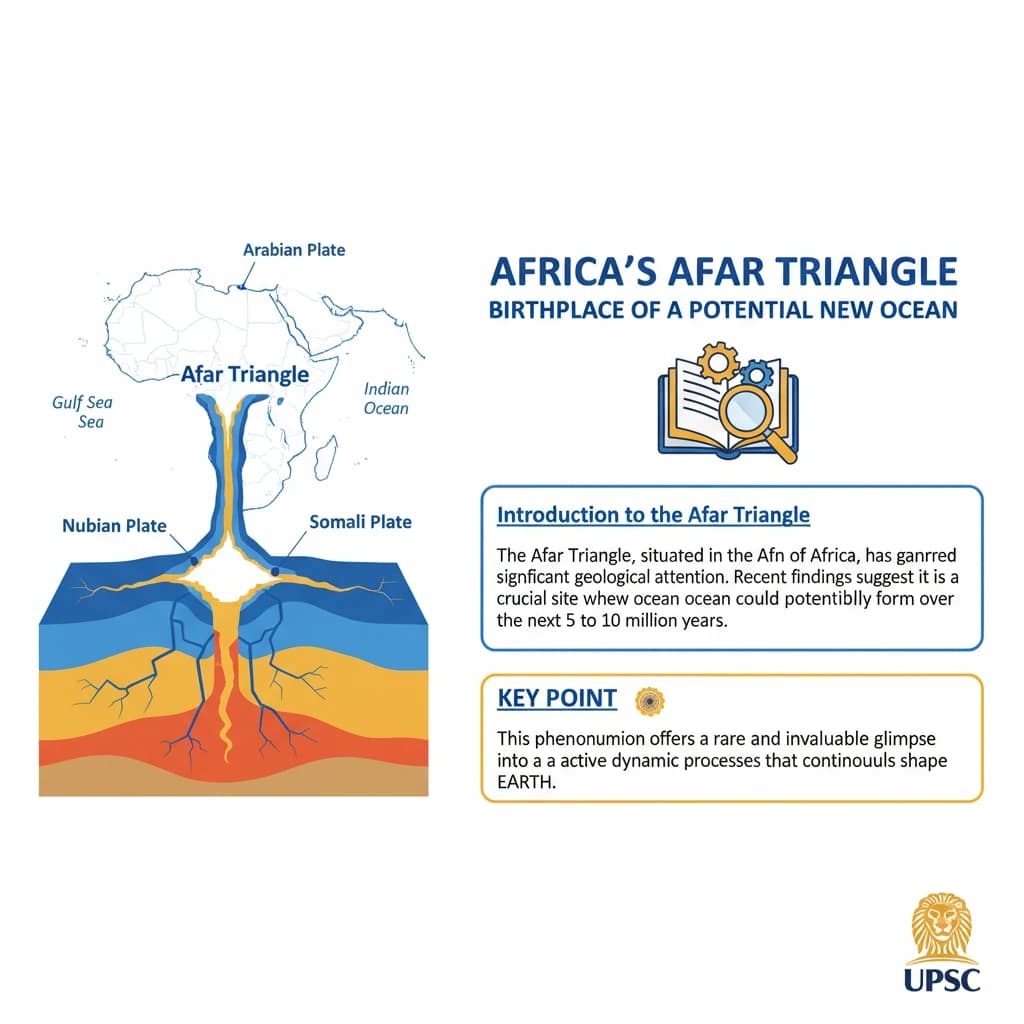
The Afar Triangle, situated in the Horn of Africa, has garnered significant geological attention. Recent findings suggest it is a crucial site where a new ocean could potentially form over the next 5 to 10 million years.
This phenomenon offers a rare and invaluable glimpse into the active dynamic processes that continuously shape Earth’s geography, highlighting the planet's ever-changing nature.
Geographical and Tectonic Setting
The Afar Triangle is a distinctive geological depression. It is the convergence point of three major tectonic plates: the Nubian Plate, the Somali Plate, and the Arabian Plate.
It forms an integral part of the larger East African Rift system. This extensive rift stretches from the Afar region in the north, extending southward through much of eastern Africa.
Paleontological Significance
Beyond its active geological processes, the Afar Triangle holds immense paleontological significance. The region has yielded numerous fossil specimens.
These discoveries include some of the earliest hominins, providing critical insights into human evolution and our ancient ancestors.
Ongoing Tectonic Movement and Rift Expansion
The Afar region has been subjected to continuous and gradual tectonic movements for millions of years. This prolonged activity underscores the persistent forces at play beneath the Earth's surface.
A notable event highlighting this expansion occurred in 2005. A significant rift opened up in the Ethiopian desert, serving as a dramatic indicator of the ongoing continental separation at a tectonic level.
Factors Driving Rift Expansion
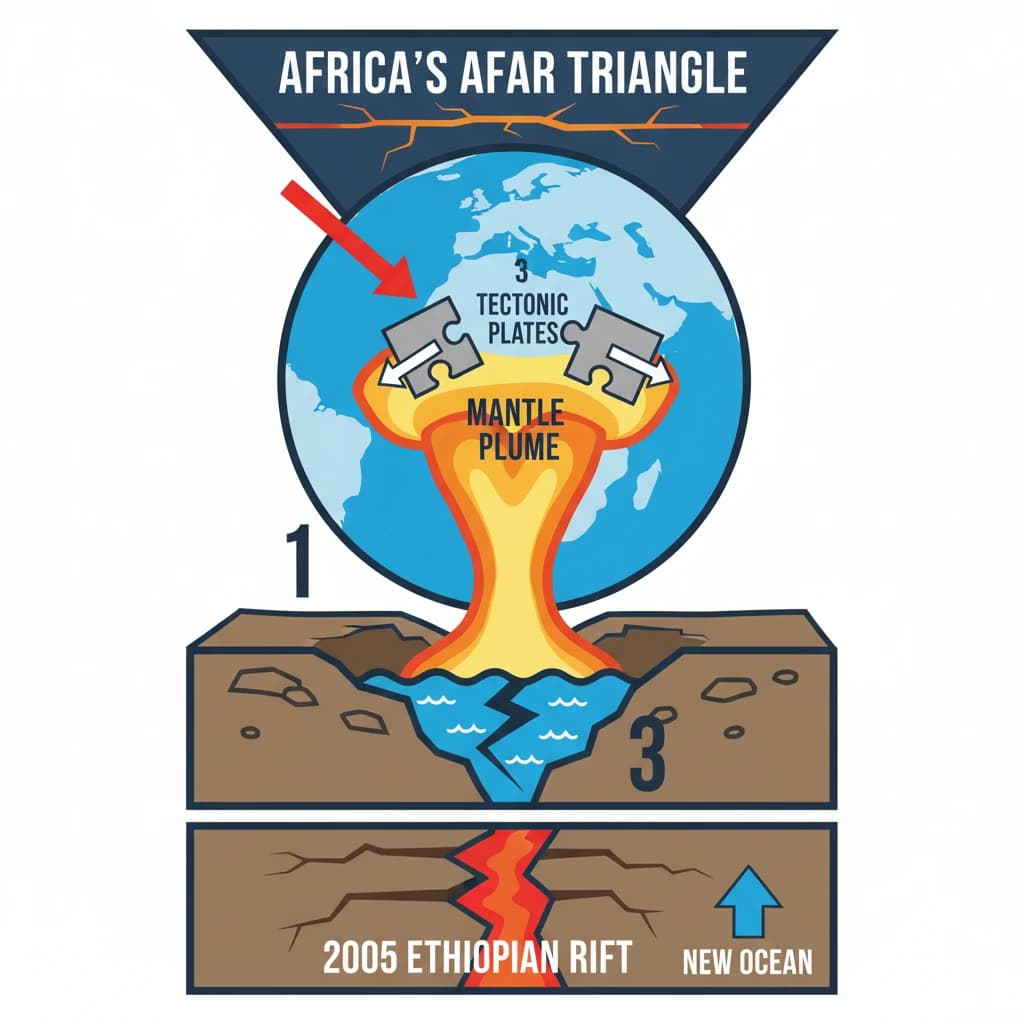
The primary driver behind the ongoing rifting process in the Afar Triangle is believed to be a massive plume of superheated rocks. This plume originates deep within the mantle beneath East Africa.
This rising plume exerts considerable pressure on the overlying crust. This pressure causes the crust to stretch, thin, and ultimately fracture, leading to the formation and expansion of the rift valley.
💡 Key Takeaways
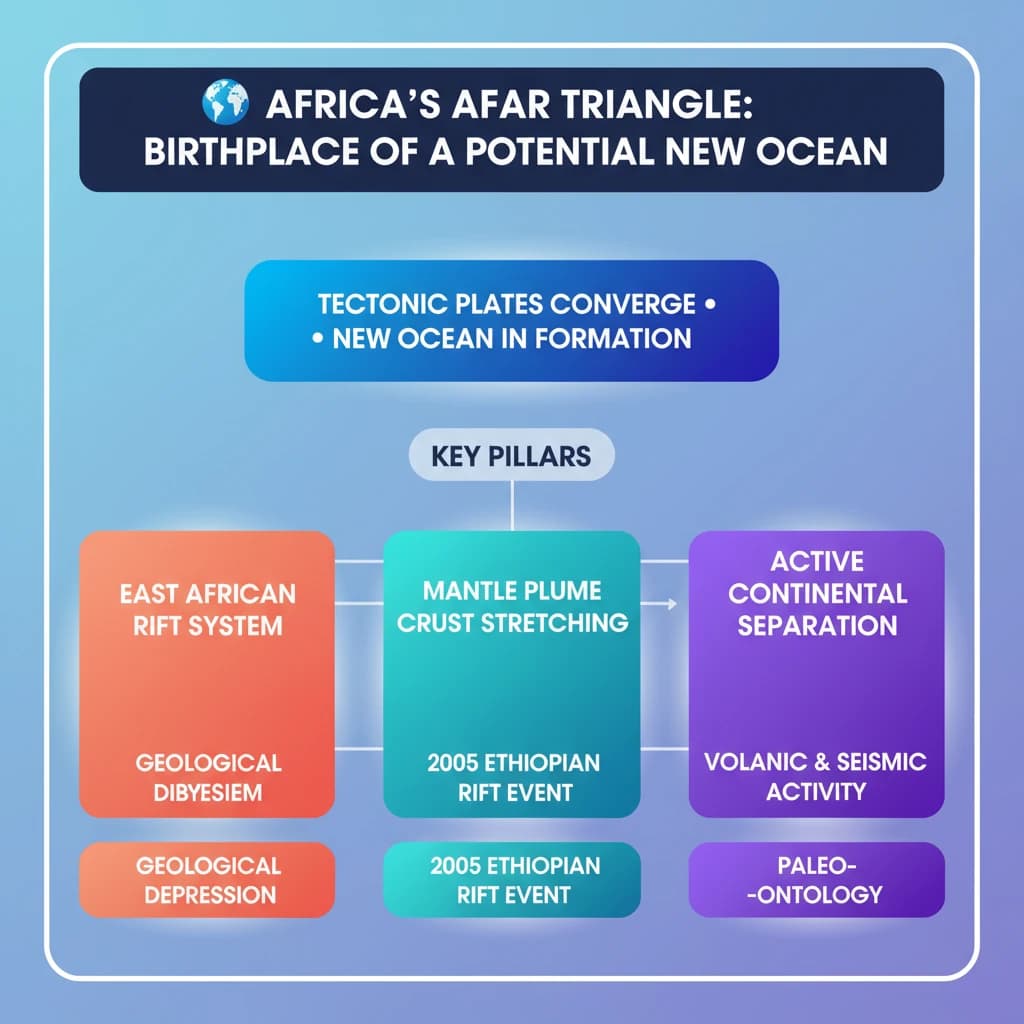
- •The Afar Triangle is a geological depression in the Horn of Africa, where three tectonic plates converge.
- •It is part of the East African Rift system and is considered the birthplace of a potential new ocean.
- •The rifting is driven by a massive mantle plume causing the crust to stretch and fracture.
- •A significant rift opened in the Ethiopian desert in 2005, demonstrating active continental separation.
- •The region is also rich in paleontological history, with fossils of early hominins.
- •It serves as a natural laboratory for studying plate tectonics and continental breakup processes.
🧠 Memory Techniques
95% Verified Content
📚 Reference Sources
•Geological surveys and scientific journals (e.g., Nature, Science)
•University research papers on East African Rift System