Loading page, please wait…
Arctic Ocean: Geography, Resources, and Climate Change Impacts - UPSC Geography
What is Arctic Ocean: Geography, Resources, and Climate Change Impacts in UPSC Geography?
Arctic Ocean: Geography, Resources, and Climate Change Impacts is a key topic under Geography for UPSC Civil Services Examination. Key points include: The Arctic Ocean is the smallest ocean, centered on the North Pole, bordered by 8 countries.. Key seas include Barents, Kara, Laptev, East Siberian, and Beaufort Seas.. Rapid climate change is causing significant sea ice melt, opening new shipping routes like the Northern Sea Route.. Understanding this topic is essential for both UPSC Prelims and Mains preparation.
Why is Arctic Ocean: Geography, Resources, and Climate Change Impacts important for UPSC exam?
Arctic Ocean: Geography, Resources, and Climate Change Impacts is a Medium-level topic in UPSC Geography. It is tested in both Prelims (factual MCQs) and Mains (analytical answer writing). Previous year UPSC questions have frequently covered aspects of Arctic Ocean: Geography, Resources, and Climate Change Impacts, making it essential for comprehensive IAS preparation.
How to prepare Arctic Ocean: Geography, Resources, and Climate Change Impacts for UPSC?
To prepare Arctic Ocean: Geography, Resources, and Climate Change Impacts for UPSC: (1) Study the comprehensive notes covering all key concepts on Vaidra. (2) Practice previous year questions on this topic. (3) Connect it with current affairs using daily updates. (4) Revise using key takeaways and mind maps available for Geography. (5) Write practice answers linking Arctic Ocean: Geography, Resources, and Climate Change Impacts to related GS Paper topics.
Key takeaways of Arctic Ocean: Geography, Resources, and Climate Change Impacts for UPSC
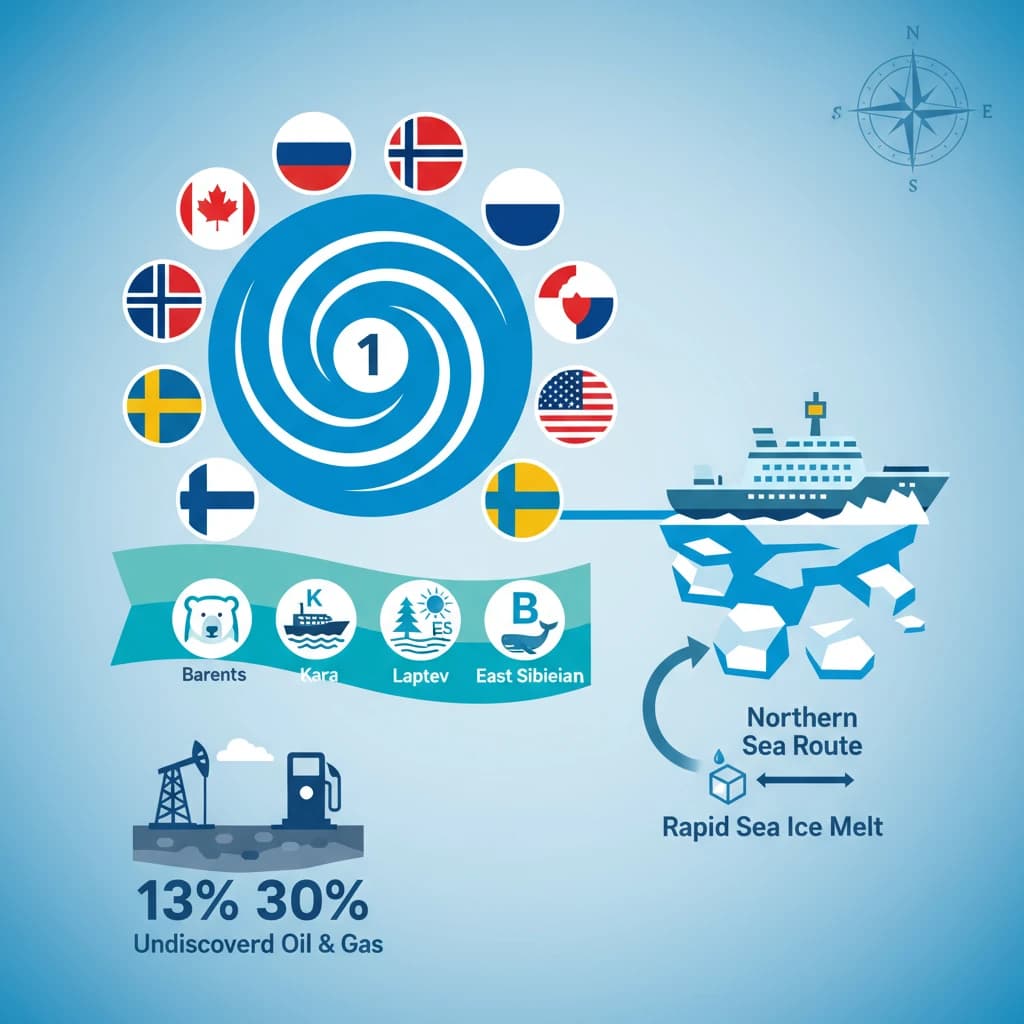
- The Arctic Ocean is the smallest ocean, centered on the North Pole, bordered by 8 countries.
- Key seas include Barents, Kara, Laptev, East Siberian, and Beaufort Seas.
- Rapid climate change is causing significant sea ice melt, opening new shipping routes like the Northern Sea Route.
- The region holds an estimated 13% of undiscovered oil and 30% of natural gas reserves.
- Its transformation creates both economic opportunities (shipping, resources) and environmental/geopolitical challenges.
Arctic Ocean: Geography, Resources, and Climate Change Impacts
Medium⏱️ 8 min read
geography
📖 Introduction
Geographical Overview of the Arctic Ocean
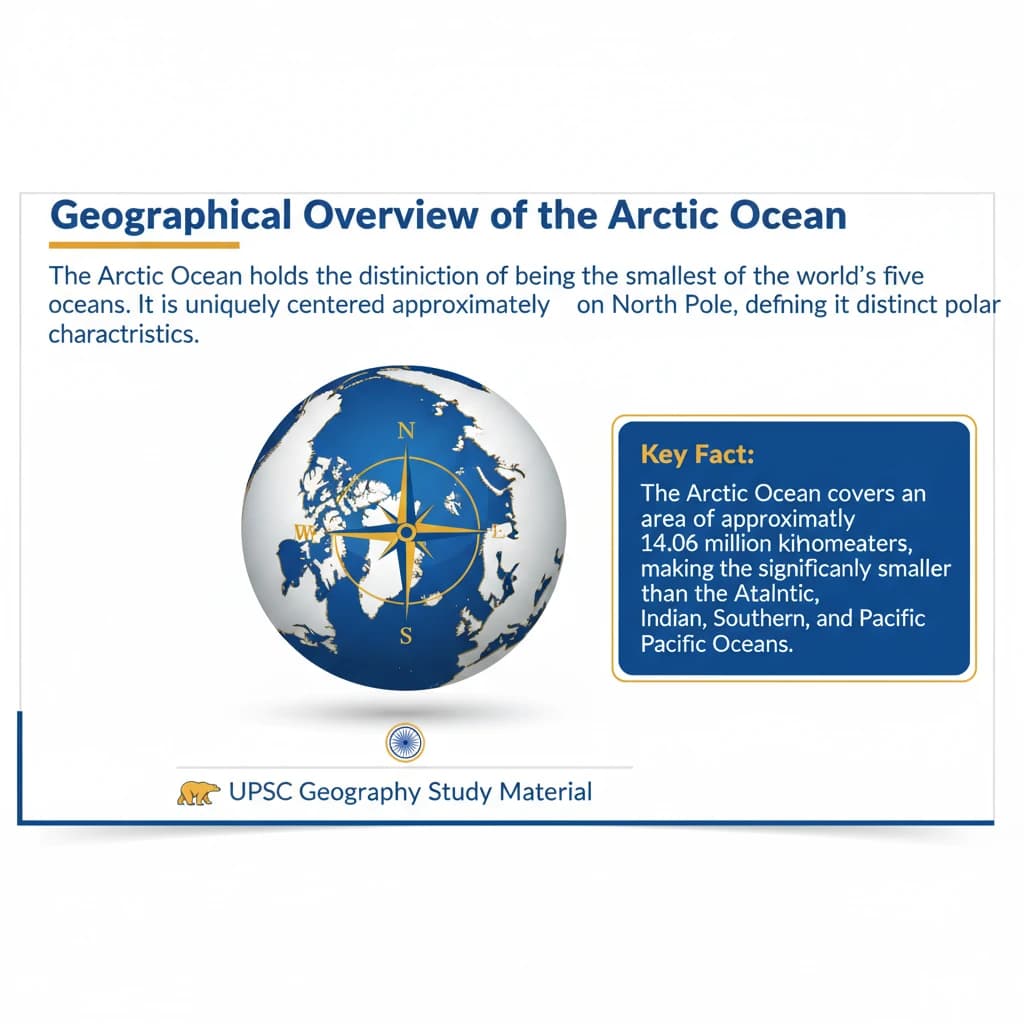
The Arctic Ocean holds the distinction of being the smallest of the world’s five oceans. It is uniquely centered approximately on the North Pole, defining its distinct polar characteristics.
Key Fact: The Arctic Ocean covers an area of approximately 14.06 million square kilometers, making it significantly smaller than the Atlantic, Indian, Southern, and Pacific Oceans.
Bordering Countries and Key Seas
The Arctic Ocean is encircled by several nations, giving it immense geopolitical significance. These countries have direct access and interests in the region.
- Canada
- Greenland (a constituent country of Denmark)
- Iceland
- Norway
- Sweden
- Finland
- Russia
- United States (via Alaska)
Within its expanse, the Arctic Ocean encompasses several important marginal seas, each with unique characteristics and strategic value.
- Barents Sea
- Kara Sea
- Laptev Sea
- East Siberian Sea
- Beaufort Sea
Ice Coverage and Environmental Dynamics
Historically, the Arctic Ocean has been predominantly covered by a thick layer of sea ice. This ice cover exhibits distinct patterns of seasonal melting and freezing, influencing regional climate and ecosystems.
Critical Environmental Change: The Arctic is experiencing rapid warming, leading to a significant diminution of its permanent ice cover. This phenomenon is a direct consequence of global climate change.
Emerging Shipping Routes and Economic Opportunities
The shrinking ice cover has profound implications, particularly for global trade and navigation. It is opening up previously inaccessible maritime pathways.
- One prominent example is the Northern Sea Route (NSR), which offers a shorter shipping passage between Europe and Asia compared to traditional routes via the Suez Canal.
This development has sparked increased interest in the Arctic for its vast, untapped natural resources.
Strategic Resources of the Arctic
The Arctic region is believed to hold substantial reserves of critical energy resources, making it a focal point for future resource exploration.
Resource Estimates: The Arctic is estimated to contain approximately 13% of the world’s undiscovered oil and 30% of its natural gas reserves. These figures highlight the region's immense economic potential.
For UPSC Mains (GS-I Geography & GS-III Environment), understanding the physical geography, geopolitical significance, and environmental vulnerabilities of the Arctic Ocean is crucial. Focus on the impact of climate change and the implications of new shipping routes and resource exploitation.
💡 Key Takeaways
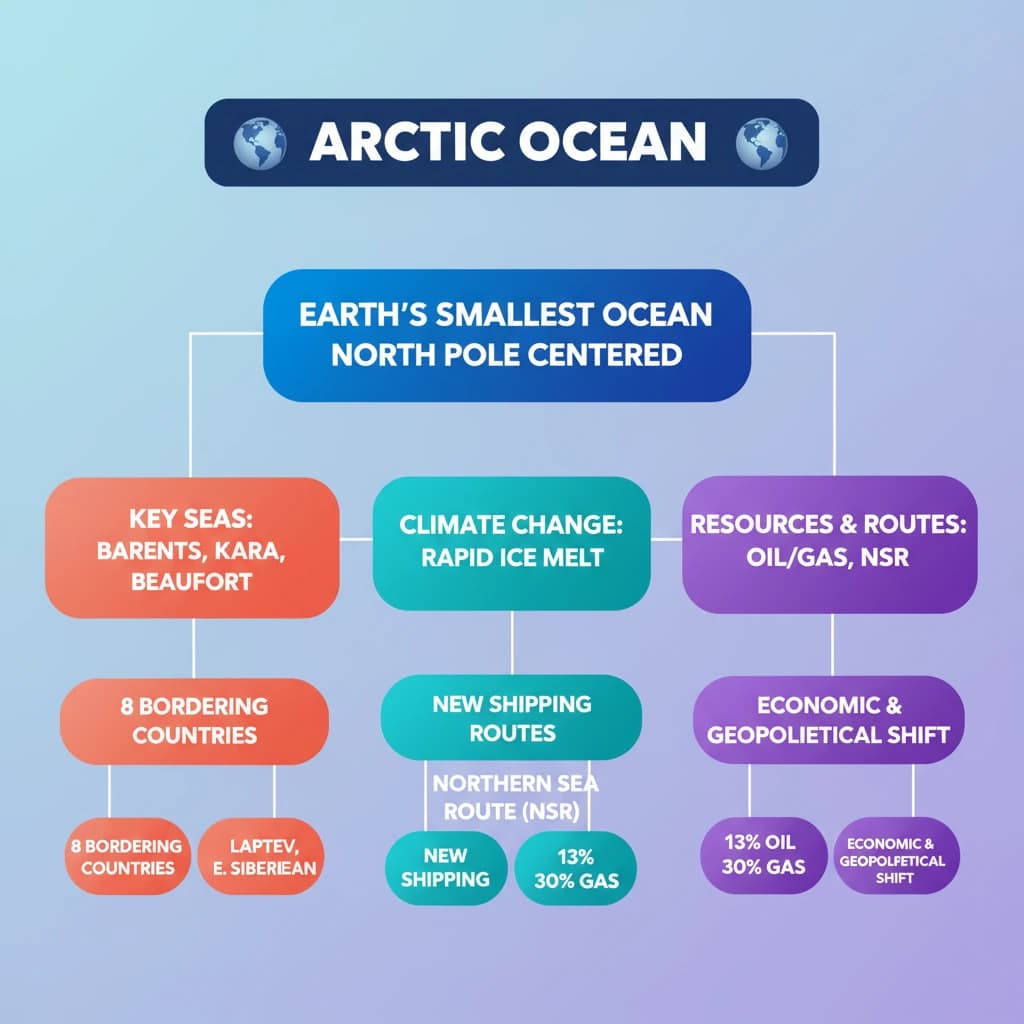
- •The Arctic Ocean is the smallest ocean, centered on the North Pole, bordered by 8 countries.
- •Key seas include Barents, Kara, Laptev, East Siberian, and Beaufort Seas.
- •Rapid climate change is causing significant sea ice melt, opening new shipping routes like the Northern Sea Route.
- •The region holds an estimated 13% of undiscovered oil and 30% of natural gas reserves.
- •Its transformation creates both economic opportunities (shipping, resources) and environmental/geopolitical challenges.
🧠 Memory Techniques
98% Verified Content
📚 Reference Sources
•National Geographic (for geographical facts)
•U.S. Geological Survey (for resource estimates)
•Arctic Council (for governance and environmental aspects)