Loading page, please wait…
Vaidra Logo
Vaidra

Top 4 items + smart groups

UPSC GPT
New
Current Affairs
Daily Solutions
Daily Puzzle
Mains Evaluator

Version 2.0.0 • Built with ❤️ for UPSC aspirants

Loading...
Loading...
Loading...
Loading...
Loading...
Loading...
Loading...
Loading...
Loading...
Loading...
Loading...
Loading...
Loading...
Back
All Subjects

Topics

0 topics • 0 completed

Loading topics...
Loading...
Loading...
Loading...
Loading...
Loading...
Overall Progress0%

What are the Key Findings of the Study? - UPSC Geography

What is What are the Key Findings of the Study? in UPSC Geography?

What are the Key Findings of the Study? is a key topic under Geography for UPSC Civil Services Examination. Key points include: Deccan Volcanism caused mass extinction of dinosaurs and gymnosperms.. It simultaneously supported hyper-diverse tropical angiosperm flora.. Warm, humid climate and Indian Plate's equatorial movement aided floral diversity.. Understanding this topic is essential for both UPSC Prelims and Mains preparation.

Why is What are the Key Findings of the Study? important for UPSC exam?

What are the Key Findings of the Study? is a Medium-level topic in UPSC Geography. It is tested in both Prelims (factual MCQs) and Mains (analytical answer writing). Previous year UPSC questions have frequently covered aspects of What are the Key Findings of the Study?, making it essential for comprehensive IAS preparation.

How to prepare What are the Key Findings of the Study? for UPSC?

To prepare What are the Key Findings of the Study? for UPSC: (1) Study the comprehensive notes covering all key concepts on Vaidra. (2) Practice previous year questions on this topic. (3) Connect it with current affairs using daily updates. (4) Revise using key takeaways and mind maps available for Geography. (5) Write practice answers linking What are the Key Findings of the Study? to related GS Paper topics.

Key takeaways of What are the Key Findings of the Study? for UPSC

  • Deccan Volcanism caused mass extinction of dinosaurs and gymnosperms.
  • It simultaneously supported hyper-diverse tropical angiosperm flora.
  • Warm, humid climate and Indian Plate's equatorial movement aided floral diversity.
  • Deccan Volcanism contributed to the global K-Pg mass extinction (66 mya) of ammonoids and dinosaurs.
  • Tropical rainforests on the Indian Plate showed high resilience to climatic stresses.
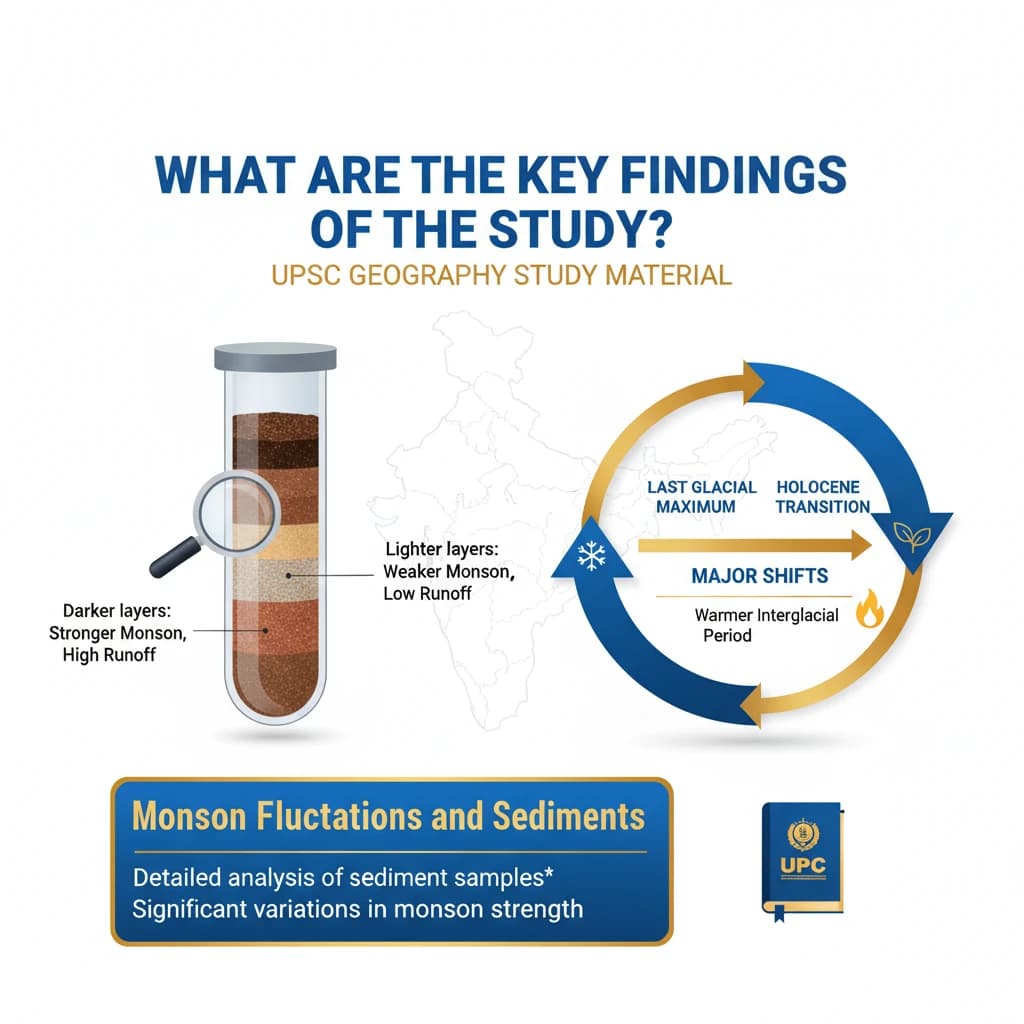
What are the Key Findings of the Study?

What are the Key Findings of the Study?

Medium⏱️ 6 min read✓ 95% Verified
geography

📖 Introduction

<h4>Impact on Fauna and Gymnosperms</h4><p>The <strong>Deccan Volcanism</strong>, a period of intense volcanic activity, significantly contributed to a <strong>mass extinction</strong> event. This catastrophic period led to the demise of various animal species, most notably the <strong>dinosaurs</strong>.</p><p>Beyond the faunal impact, the volcanism also caused a widespread extinction among certain plant groups, specifically <strong>gymnosperms</strong>. Their populations were severely affected, indicating a broad ecological disturbance.</p><h4>Support for Angiosperms and Tropical Flora</h4><p>Interestingly, despite the widespread destruction, the <strong>Deccan Volcanism</strong> did not lead to a general floral extinction. Instead, it played a crucial role in supporting a <strong>hyper-diverse tropical flora</strong>.</p><div class='key-point-box'><p>This volcanic activity created <strong>fertile, undisturbed habitats</strong>. These new environments proved highly beneficial for the proliferation and diversification of <strong>angiosperms</strong>, which are flowering plants.</p></div><h4>Climatic Factors for Floral Diversity</h4><p>Several environmental conditions during this period fostered the thriving of tropical flora. A prevailing <strong>warm, humid climate</strong> during the volcanic activity was a key factor.</p><p>Furthermore, the geological movement of the <strong>Indian Plate</strong> through the <strong>equator</strong> provided ideal conditions. This equatorial passage ensured consistent warmth and moisture, contributing significantly to floral diversity.</p><h4>Global and Regional Implications of K-Pg Extinction</h4><p>The <strong>Deccan Volcanism</strong> is recognized as a major contributing factor to the <strong>Cretaceous-Paleogene (K-Pg) mass extinction</strong>, which occurred approximately <strong>66 million years ago</strong>. This event had profound global consequences.</p><div class='info-box'><p>Globally, the <strong>K-Pg mass extinction</strong> culminated in the widespread disappearance of groups like <strong>ammonoids</strong> (invertebrate cephalopods) and <strong>dinosaurs</strong>, reshaping the planet's biodiversity.</p></div><p>However, a distinct regional pattern emerged. The <strong>tropical rainforests</strong> situated on the <strong>Indian Plate</strong> demonstrated remarkable resilience. They successfully adapted to the climatic stresses and continued to thrive.</p><div class='exam-tip-box'><p>This finding highlights the <strong>higher resilience of tropical flora</strong> to significant climatic disturbances, a crucial insight for understanding ecosystem stability and recovery in UPSC environment questions (<strong>GS Paper 3</strong>).</p></div>
Concept Diagram

💡 Key Takeaways

  • •Deccan Volcanism caused mass extinction of dinosaurs and gymnosperms.
  • •It simultaneously supported hyper-diverse tropical angiosperm flora.
  • •Warm, humid climate and Indian Plate's equatorial movement aided floral diversity.
  • •Deccan Volcanism contributed to the global K-Pg mass extinction (66 mya) of ammonoids and dinosaurs.
  • •Tropical rainforests on the Indian Plate showed high resilience to climatic stresses.

🧠 Memory Techniques
Memory Aid
95% Verified Content

Related Topics

Loading related topics...
Explore:Geography Topics·All Subjects·Daily Current Affairs·Editorial Analysis·Previous Year Questions·UPSC GPT
What are the Key Findings of the Study? - UPSC Geography