Loading page, please wait…
Vaidra Logo
Vaidra

Top 4 items + smart groups

UPSC GPT
New
Current Affairs
Daily Solutions
Daily Puzzle
Mains Evaluator

Version 2.0.0 • Built with ❤️ for UPSC aspirants

Loading...
Loading...
Loading...
Loading...
Loading...
Loading...
Loading...
Loading...
Loading...
Loading...
Loading...
Loading...
Loading...
What are Magento Fossils? - UPSC Geography
Back
All Subjects

Topics

0 topics • 0 completed

Loading topics...
Loading...
Loading...
Loading...
Loading...
Loading...
Overall Progress0%

What are Magento Fossils? - UPSC Geography

What is What are Magento Fossils? in UPSC Geography?

What are Magento Fossils? is a key topic under Geography for UPSC Civil Services Examination. Key points include: Magneto Fossils are fossilized magnetic minerals from magnetotactic bacteria.. Magnetotactic bacteria use Earth's magnetic field (magnetotaxis) for navigation.. They produce magnetite or greigite crystals in chain configurations.. Understanding this topic is essential for both UPSC Prelims and Mains preparation.

Why is What are Magento Fossils? important for UPSC exam?

What are Magento Fossils? is a Medium-level topic in UPSC Geography. It is tested in both Prelims (factual MCQs) and Mains (analytical answer writing). Previous year UPSC questions have frequently covered aspects of What are Magento Fossils?, making it essential for comprehensive IAS preparation.

How to prepare What are Magento Fossils? for UPSC?

To prepare What are Magento Fossils? for UPSC: (1) Study the comprehensive notes covering all key concepts on Vaidra. (2) Practice previous year questions on this topic. (3) Connect it with current affairs using daily updates. (4) Revise using key takeaways and mind maps available for Geography. (5) Write practice answers linking What are Magento Fossils? to related GS Paper topics.

Key takeaways of What are Magento Fossils? for UPSC

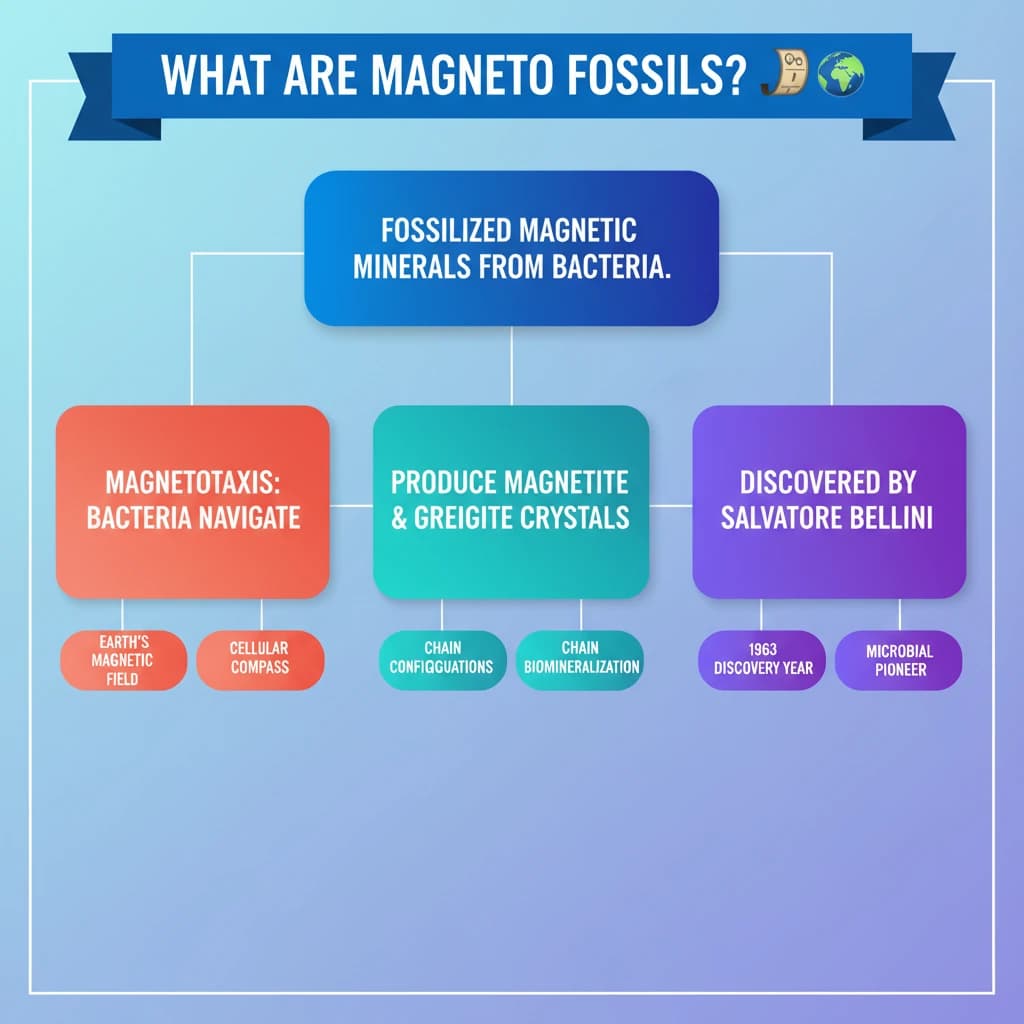
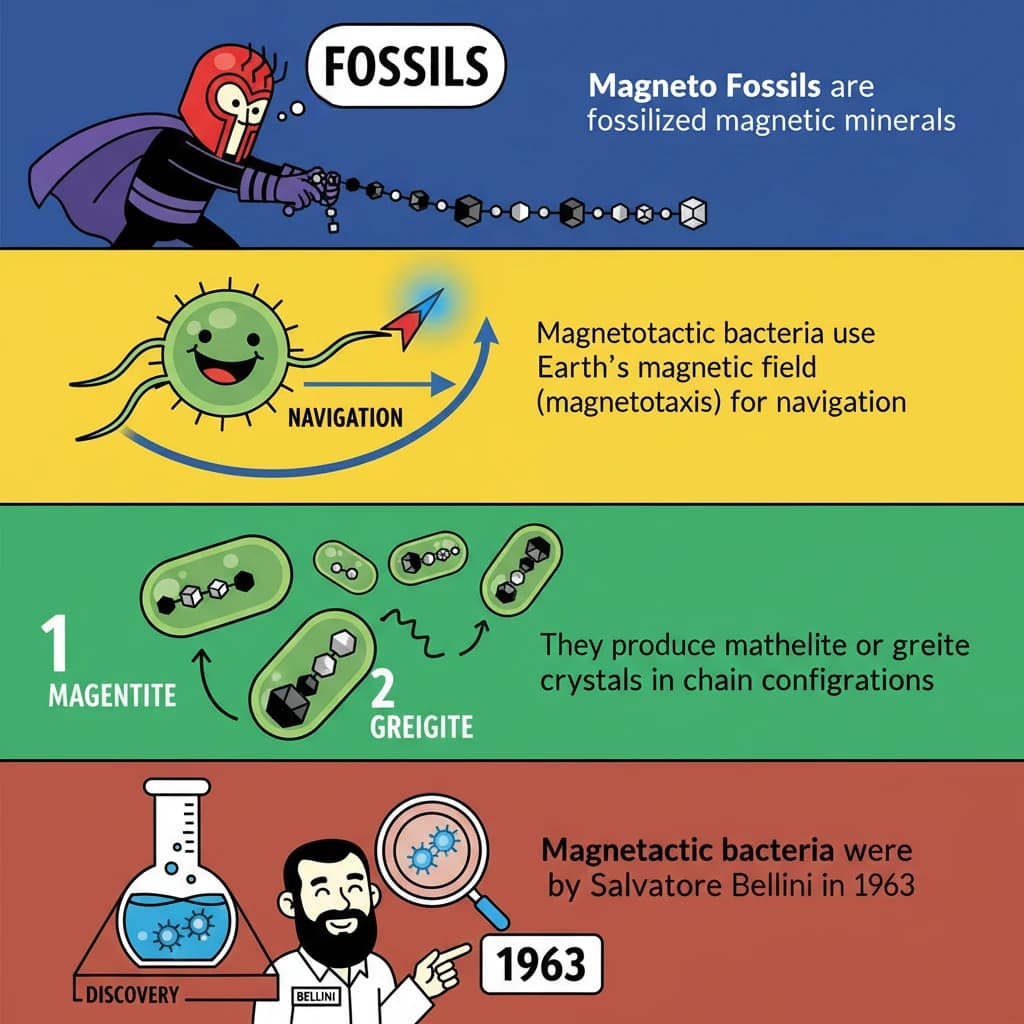
  • Magneto Fossils are fossilized magnetic minerals from magnetotactic bacteria.
  • Magnetotactic bacteria use Earth's magnetic field (magnetotaxis) for navigation.
  • They produce magnetite or greigite crystals in chain configurations.
  • Magnetotactic bacteria were discovered by Salvatore Bellini in 1963.
  • Magneto fossils are crucial for paleomagnetic studies, paleoclimate reconstruction, and astrobiology.
  • Rare giant magneto fossils are likely produced by eukaryotes.
What are Magento Fossils?

What are Magento Fossils?

Medium⏱️ 6 min read✓ 95% Verified
geography

📖 Introduction

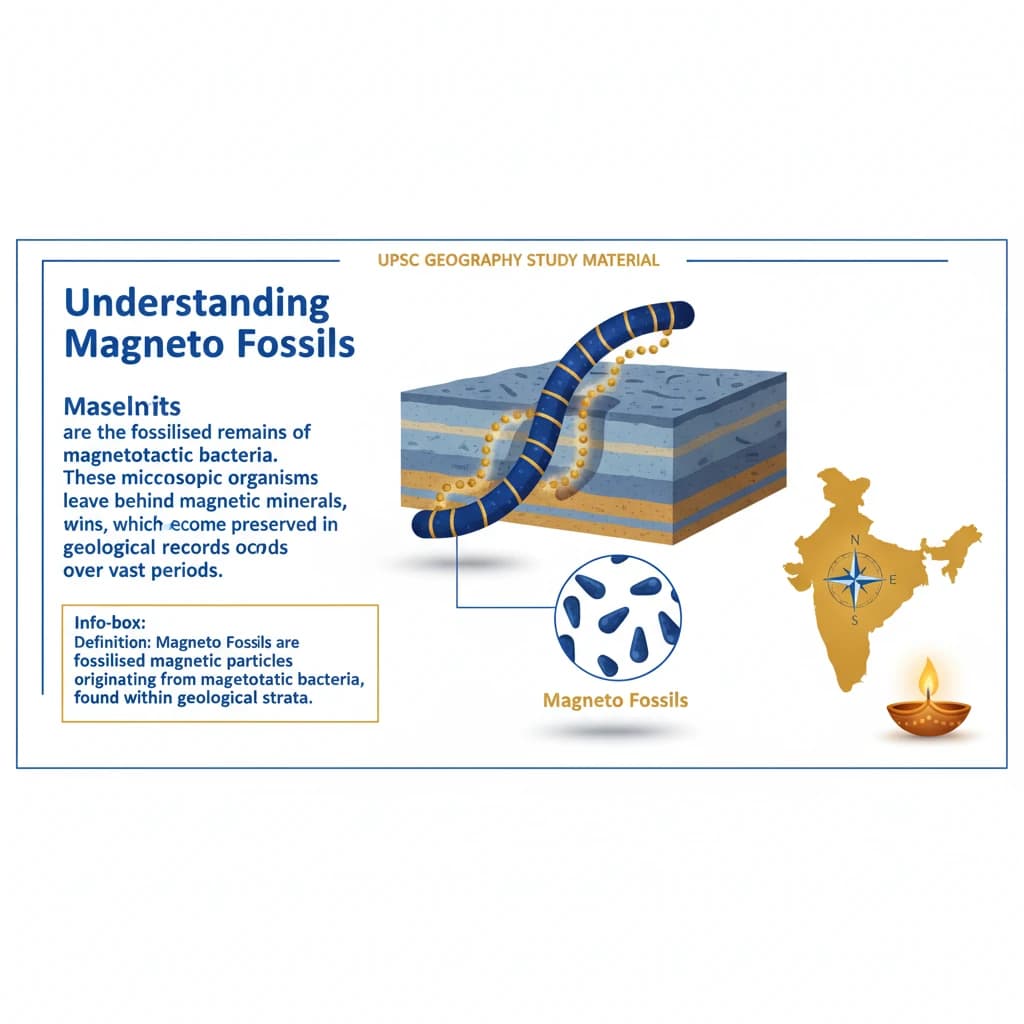
<h4>Understanding Magneto Fossils</h4><p><strong>Magneto Fossils</strong> are the fossilised remains of <strong>magnetotactic bacteria</strong>. These microscopic organisms leave behind magnetic minerals, which become preserved in geological records over vast periods.</p><div class='info-box'><p><strong>Definition:</strong> <strong>Magneto Fossils</strong> are fossilised magnetic particles originating from <strong>magnetotactic bacteria</strong>, found within geological strata.</p></div><h4>Magnetotactic Bacteria: The Originators</h4><p><strong>Magnetotactic bacteria</strong> are primarily <strong>prokaryotic organisms</strong>. A defining characteristic is their ability to align themselves along the <strong>Earth's magnetic field</strong>.</p><p>This fascinating ability was first observed by <strong>Salvatore Bellini</strong> in <strong>1963</strong>, marking a significant discovery in microbiology and geomicrobiology.</p><h4>Navigation and Mineral Formation</h4><p>These bacteria utilize the Earth's magnetic field for navigation, a process known as <strong>magnetotaxis</strong>. This helps them locate environments with optimal <strong>oxygen concentration</strong>, crucial for their survival.</p><p>Their navigation is facilitated by the presence of <strong>iron-rich crystals</strong> located within their cellular structure. These internal magnets act as biological compasses.</p><div class='key-point-box'><p><strong>Key Function:</strong> <strong>Magnetotactic bacteria</strong> create tiny crystals of <strong>magnetite</strong> (Fe₃O₄) or <strong>greigite</strong> (Fe₃S₄) within their cells. These crystals enable them to navigate varying <strong>oxygen levels</strong> and <strong>sediment saturation</strong> in aquatic environments.</p></div><h4>Crystal Arrangement and Types</h4><p>The magnetic crystals within <strong>magnetotactic bacteria</strong> are typically arranged in a unique <strong>chain configuration</strong>. This specific alignment enhances their magnetic moment and navigational efficiency.</p><p>While most <strong>magneto fossils</strong> are produced by bacteria, there are also <strong>rare giant magneto fossils</strong>. These larger forms are believed to be produced by <strong>eukaryotes</strong>, rather than the more common prokaryotic bacteria.</p><div class='exam-tip-box'><p>For <strong>UPSC Prelims</strong>, remember the key terms: <strong>Magnetotactic bacteria</strong>, <strong>magnetite/greigite</strong>, <strong>Salvatore Bellini</strong>, and their role in <strong>paleomagnetism</strong>. Understanding the distinction between bacterial and eukaryotic origins for different sizes of fossils is also important.</p></div>
Concept Diagram

💡 Key Takeaways

  • •Magneto Fossils are fossilized magnetic minerals from magnetotactic bacteria.
  • •Magnetotactic bacteria use Earth's magnetic field (magnetotaxis) for navigation.
  • •They produce magnetite or greigite crystals in chain configurations.
  • •Magnetotactic bacteria were discovered by Salvatore Bellini in 1963.
  • •Magneto fossils are crucial for paleomagnetic studies, paleoclimate reconstruction, and astrobiology.
  • •Rare giant magneto fossils are likely produced by eukaryotes.

🧠 Memory Techniques
Memory Aid
95% Verified Content

📚 Reference Sources

•General scientific literature on magnetotactic bacteria and magnetofossils

Related Topics

Loading related topics...
Explore:Geography Topics·All Subjects·Daily Current Affairs·Editorial Analysis·Previous Year Questions·UPSC GPT