What is a Tsunami? - UPSC Geography
What is What is a Tsunami? in UPSC Geography?
What is a Tsunami? is a key topic under Geography for UPSC Civil Services Examination. Key points include: Tsunamis are 'harbour waves', a series of powerful ocean waves (wave train), not a single wave.. Primarily caused by underwater earthquakes (80%), but also by volcanic eruptions, landslides, and meteorites.. They travel at high speeds (up to 800 km/h) with long wavelengths, losing minimal energy across oceans.. Understanding this topic is essential for both UPSC Prelims and Mains preparation.
Why is What is a Tsunami? important for UPSC exam?
What is a Tsunami? is a Medium-level topic in UPSC Geography. It is tested in both Prelims (factual MCQs) and Mains (analytical answer writing). Previous year UPSC questions have frequently covered aspects of What is a Tsunami?, making it essential for comprehensive IAS preparation.
How to prepare What is a Tsunami? for UPSC?
To prepare What is a Tsunami? for UPSC: (1) Study the comprehensive notes covering all key concepts on Vaidra. (2) Practice previous year questions on this topic. (3) Connect it with current affairs using daily updates. (4) Revise using key takeaways and mind maps available for Geography. (5) Write practice answers linking What is a Tsunami? to related GS Paper topics.
Key takeaways of What is a Tsunami? for UPSC
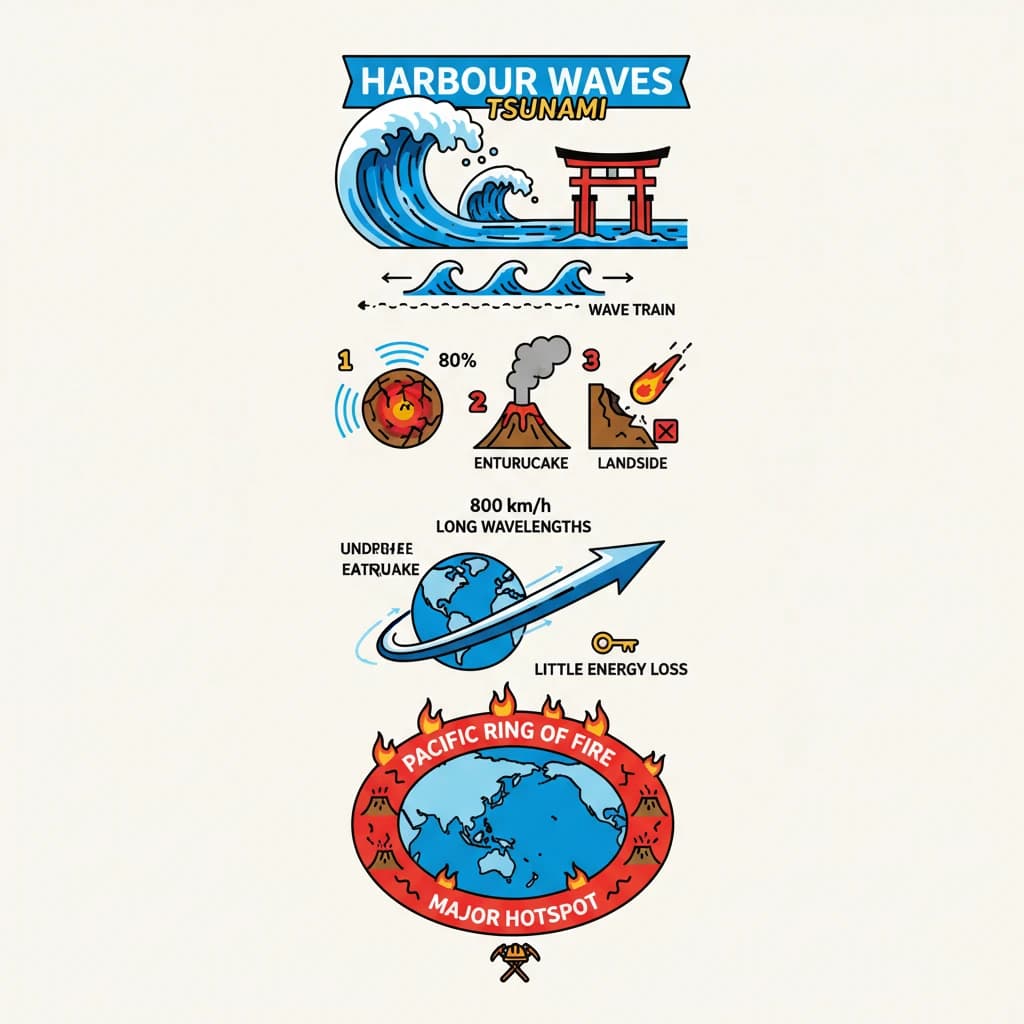
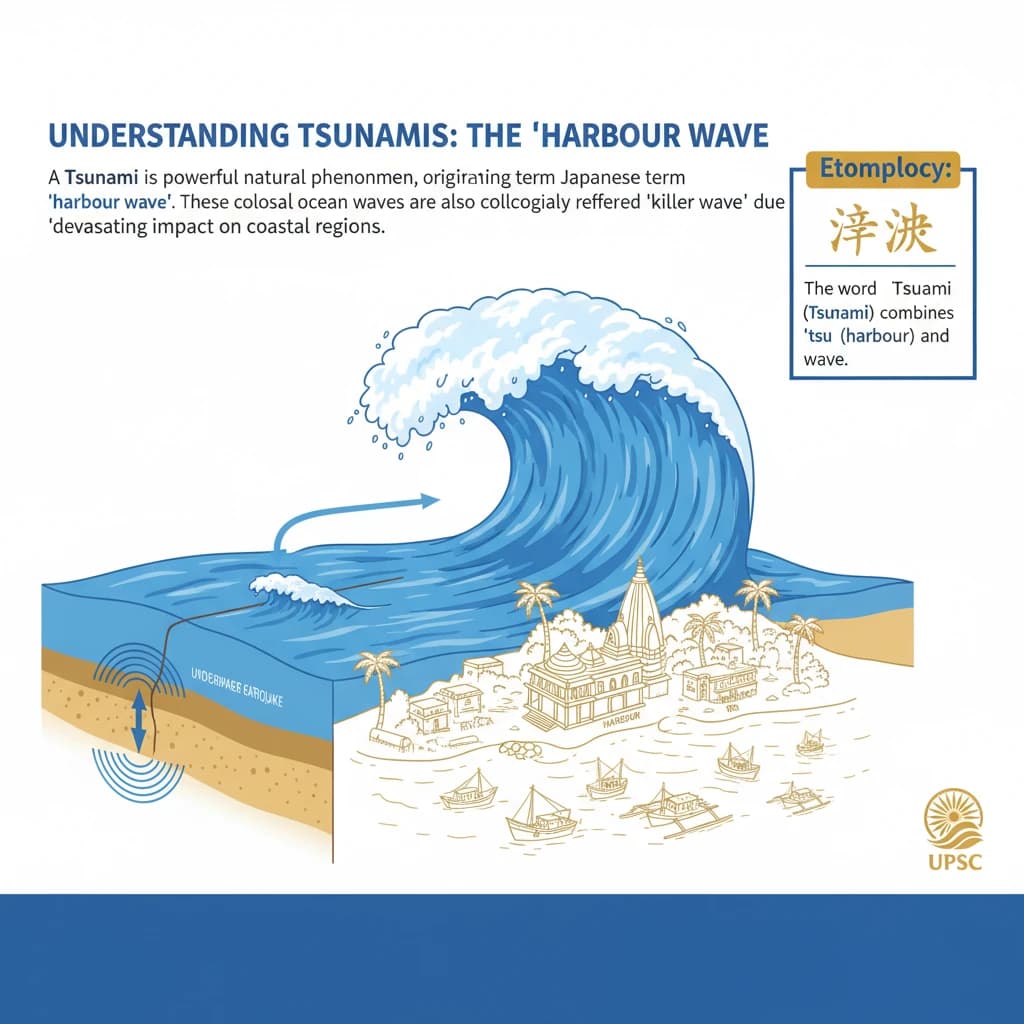
- Tsunamis are 'harbour waves', a series of powerful ocean waves (wave train), not a single wave.
- Primarily caused by underwater earthquakes (80%), but also by volcanic eruptions, landslides, and meteorites.
- They travel at high speeds (up to 800 km/h) with long wavelengths, losing minimal energy across oceans.
- The 'Pacific Ring of Fire' is a major hotspot for tsunami generation due to intense tectonic activity.
- November 5th is designated as World Tsunami Awareness Day by the UN General Assembly since 2015.
- Effective Early Warning Systems and community preparedness are crucial for mitigating tsunami impacts.
What is a Tsunami?
📖 Introduction
💡 Key Takeaways
- •Tsunamis are 'harbour waves', a series of powerful ocean waves (wave train), not a single wave.
- •Primarily caused by underwater earthquakes (80%), but also by volcanic eruptions, landslides, and meteorites.
- •They travel at high speeds (up to 800 km/h) with long wavelengths, losing minimal energy across oceans.
- •The 'Pacific Ring of Fire' is a major hotspot for tsunami generation due to intense tectonic activity.
- •November 5th is designated as World Tsunami Awareness Day by the UN General Assembly since 2015.
- •Effective Early Warning Systems and community preparedness are crucial for mitigating tsunami impacts.
🧠 Memory Techniques