Loading page, please wait…
Vaidra Logo
Vaidra

Top 4 items + smart groups

UPSC GPT
New
Current Affairs
Daily Solutions
Daily Puzzle
Mains Evaluator

Version 2.0.0 • Built with ❤️ for UPSC aspirants

Loading...
Loading...
Loading...
Loading...
Loading...
Loading...
Loading...
Loading...
Loading...
Loading...
Loading...
Loading...
Loading...
Back
All Subjects

Topics

0 topics • 0 completed

Loading topics...
Loading...
Loading...
Loading...
Loading...
Loading...
Overall Progress0%

India Winter Monsoon Rainfall - UPSC Geography

What is India Winter Monsoon Rainfall in UPSC Geography?

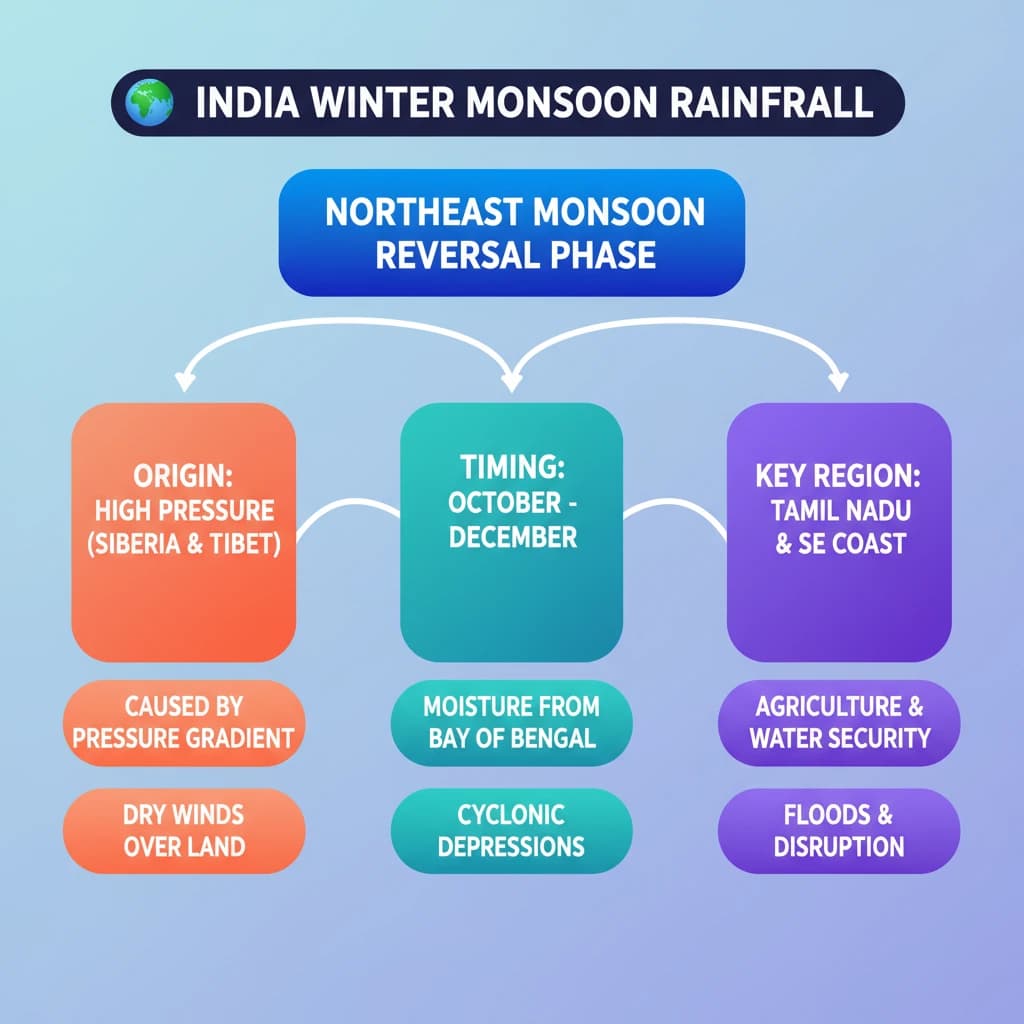
India Winter Monsoon Rainfall is a key topic under Geography for UPSC Civil Services Examination. Key points include: India's Winter Monsoon Rainfall is primarily due to the Northeast Monsoon.. It is a reversal phase caused by high-pressure cells over Siberian and Tibetan plateaus.. Occurs from October to December.. Understanding this topic is essential for both UPSC Prelims and Mains preparation.

Why is India Winter Monsoon Rainfall important for UPSC exam?

India Winter Monsoon Rainfall is a Medium-level topic in UPSC Geography. It is tested in both Prelims (factual MCQs) and Mains (analytical answer writing). Previous year UPSC questions have frequently covered aspects of India Winter Monsoon Rainfall, making it essential for comprehensive IAS preparation.

How to prepare India Winter Monsoon Rainfall for UPSC?

To prepare India Winter Monsoon Rainfall for UPSC: (1) Study the comprehensive notes covering all key concepts on Vaidra. (2) Practice previous year questions on this topic. (3) Connect it with current affairs using daily updates. (4) Revise using key takeaways and mind maps available for Geography. (5) Write practice answers linking India Winter Monsoon Rainfall to related GS Paper topics.

Key takeaways of India Winter Monsoon Rainfall for UPSC

  • India's Winter Monsoon Rainfall is primarily due to the Northeast Monsoon.
  • It is a reversal phase caused by high-pressure cells over Siberian and Tibetan plateaus.
  • Occurs from October to December.
  • Key region receiving rainfall is the Southeast coast of India, especially Tamil Nadu.
  • Crucial for agriculture and water security in affected regions, but can also cause floods.
India Winter Monsoon Rainfall

India Winter Monsoon Rainfall

Medium⏱️ 6 min read✓ 95% Verified
geography

📖 Introduction

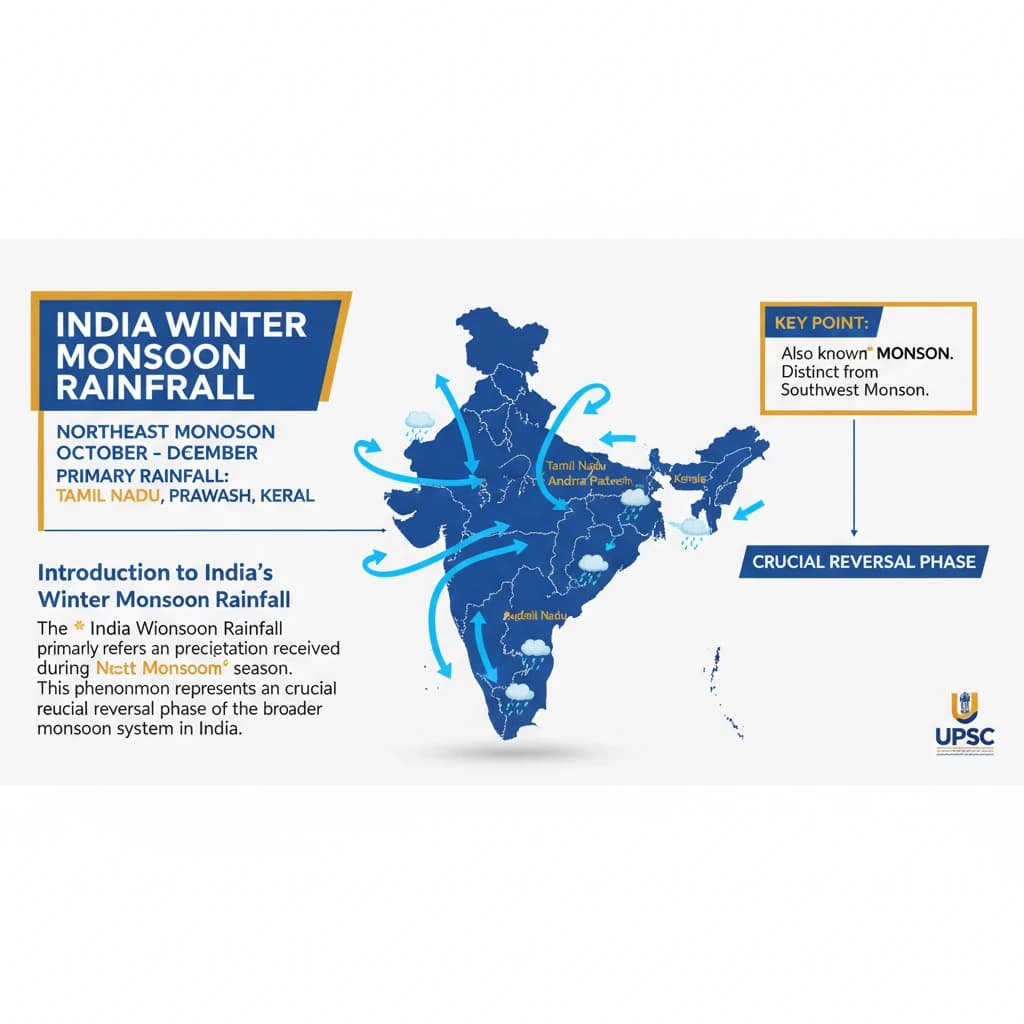
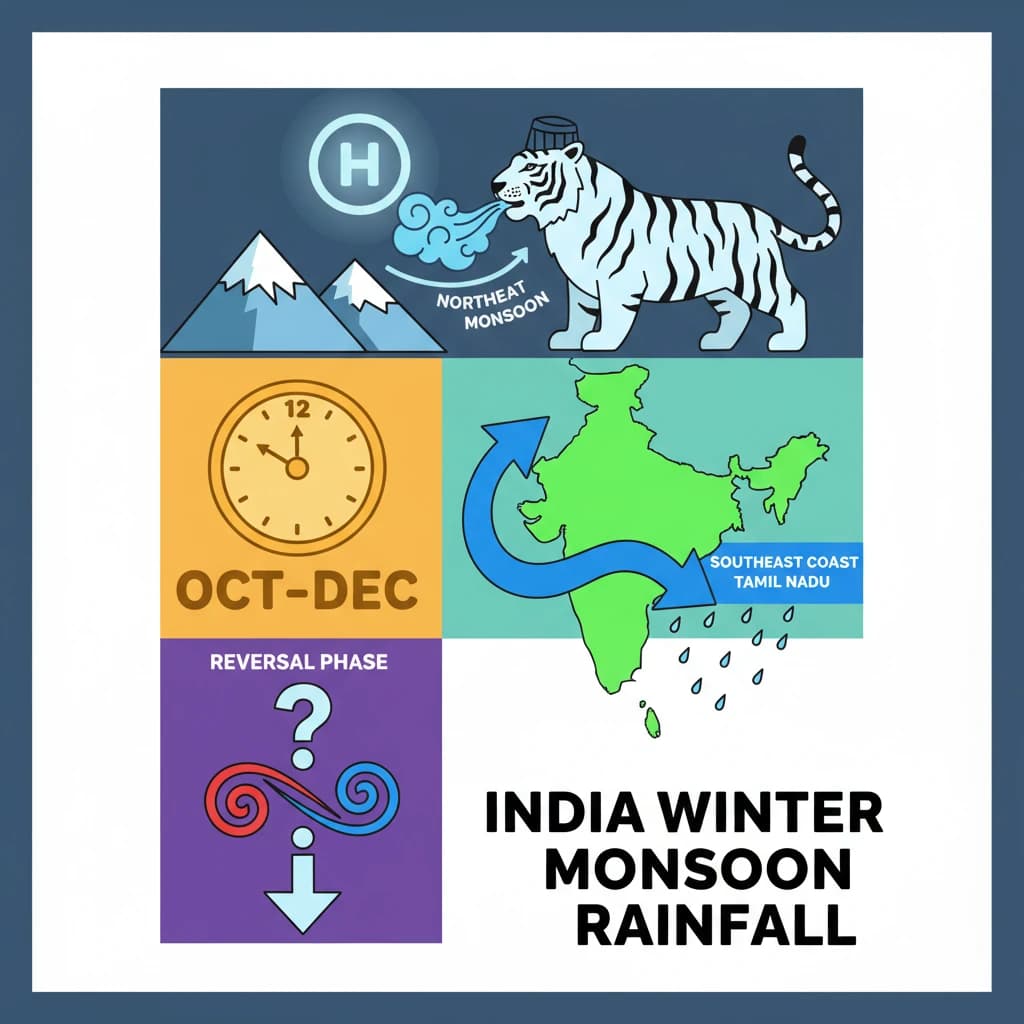
<h4>Introduction to India's Winter Monsoon Rainfall</h4><p>The <strong>India Winter Monsoon Rainfall</strong> primarily refers to the precipitation received during the <strong>Northeast Monsoon</strong> season. This phenomenon represents a crucial reversal phase of the broader monsoon system in India.</p><div class='info-box'><p>The <strong>Northeast Monsoon</strong> is also commonly known as the <strong>Winter Monsoon</strong> in India, distinct from the more widespread Southwest Monsoon.</p></div><h4>Mechanism: The Reversal Phase</h4><p>This monsoon phase is driven by the development of <strong>high-pressure cells</strong> over the vast landmasses of the <strong>Siberian</strong> and <strong>Tibetan plateaus</strong> during the winter months. These high-pressure systems cause winds to blow from land towards the sea.</p><div class='key-point-box'><p>The core mechanism involves the <strong>seasonal reversal of winds</strong>. While the Southwest Monsoon brings moisture-laden winds from the sea, the Northeast Monsoon brings relatively dry winds from the land.</p></div><h4>Timing and Duration</h4><p>The <strong>Northeast Monsoon</strong> typically occurs during the months of <strong>October to December</strong>. This period marks the transition from the retreating Southwest Monsoon to the establishment of winter conditions across the subcontinent.</p><div class='info-box'><p>The rainfall associated with this monsoon is concentrated in specific regions of India, making it vital for their annual water budget.</p></div><h4>Rainfall Distribution and Impact</h4><p>As the dry winds from the landmass blow over the <strong>Bay of Bengal</strong>, they pick up moisture. When these moisture-laden winds hit the eastern coast of <strong>South India</strong>, particularly <strong>Tamil Nadu</strong>, they cause significant rainfall.</p><p>States like <strong>Tamil Nadu</strong>, parts of <strong>Andhra Pradesh</strong>, <strong>Kerala</strong>, and the union territory of <strong>Puducherry</strong> receive a substantial portion of their annual rainfall from the <strong>Northeast Monsoon</strong>.</p><div class='exam-tip-box'><p>For <strong>UPSC Prelims</strong>, remember the key period (<strong>October-December</strong>) and the primary affected region (<strong>Tamil Nadu coast</strong>). For <strong>Mains</strong>, understand the underlying pressure systems and wind patterns.</p></div>
Concept Diagram

💡 Key Takeaways

  • •India's Winter Monsoon Rainfall is primarily due to the Northeast Monsoon.
  • •It is a reversal phase caused by high-pressure cells over Siberian and Tibetan plateaus.
  • •Occurs from October to December.
  • •Key region receiving rainfall is the Southeast coast of India, especially Tamil Nadu.
  • •Crucial for agriculture and water security in affected regions, but can also cause floods.

🧠 Memory Techniques
Memory Aid
95% Verified Content

📚 Reference Sources

•NCERT Geography Textbooks (Class XI - Fundamentals of Physical Geography, India: Physical Environment)
•India Meteorological Department (IMD) publications and data
•Standard Indian Geography reference books (e.g., D.R. Khullar, Majid Husain)

Related Topics

Loading related topics...
Explore:Geography Topics·All Subjects·Daily Current Affairs·Editorial Analysis·Previous Year Questions·UPSC GPT
India Winter Monsoon Rainfall - UPSC Geography