Volcanic Eruption and Ionospheric Disturbances - UPSC Geography
What is Volcanic Eruption and Ionospheric Disturbances in UPSC Geography?
Volcanic Eruption and Ionospheric Disturbances is a key topic under Geography for UPSC Civil Services Examination. Key points include: The <strong>Hunga Tonga-Hunga Ha'apai eruption</strong> was linked to <strong>Equatorial Plasma Bubbles (EPBs)</strong> over India, showing global atmospheric coupling.. Volcanoes emit harmful gases (ash, CO2, SO2, H2S) causing respiratory issues, acid rain, and global warming, but also provide valuable resources and fertile soil.. Historical eruptions like <strong>Krakatoa (1883)</strong> and the <strong>1815 Indonesian eruption</strong> demonstrate immense destructive power and widespread effects.. Understanding this topic is essential for both UPSC Prelims and Mains preparation.
Why is Volcanic Eruption and Ionospheric Disturbances important for UPSC exam?
Volcanic Eruption and Ionospheric Disturbances is a Medium-level topic in UPSC Geography. It is tested in both Prelims (factual MCQs) and Mains (analytical answer writing). Previous year UPSC questions have frequently covered aspects of Volcanic Eruption and Ionospheric Disturbances, making it essential for comprehensive IAS preparation.
How to prepare Volcanic Eruption and Ionospheric Disturbances for UPSC?
To prepare Volcanic Eruption and Ionospheric Disturbances for UPSC: (1) Study the comprehensive notes covering all key concepts on Vaidra. (2) Practice previous year questions on this topic. (3) Connect it with current affairs using daily updates. (4) Revise using key takeaways and mind maps available for Geography. (5) Write practice answers linking Volcanic Eruption and Ionospheric Disturbances to related GS Paper topics.
Key takeaways of Volcanic Eruption and Ionospheric Disturbances for UPSC
- The <strong>Hunga Tonga-Hunga Ha'apai eruption</strong> was linked to <strong>Equatorial Plasma Bubbles (EPBs)</strong> over India, showing global atmospheric coupling.
- Volcanoes emit harmful gases (ash, CO2, SO2, H2S) causing respiratory issues, acid rain, and global warming, but also provide valuable resources and fertile soil.
- Historical eruptions like <strong>Krakatoa (1883)</strong> and the <strong>1815 Indonesian eruption</strong> demonstrate immense destructive power and widespread effects.
- The <strong>Deccan Traps</strong> are a significant example of ancient, massive volcanic activity in India, influencing its geography.
- Understanding volcanic-ionospheric links is crucial for <strong>space weather forecasting</strong> and refining <strong>climate models</strong>.
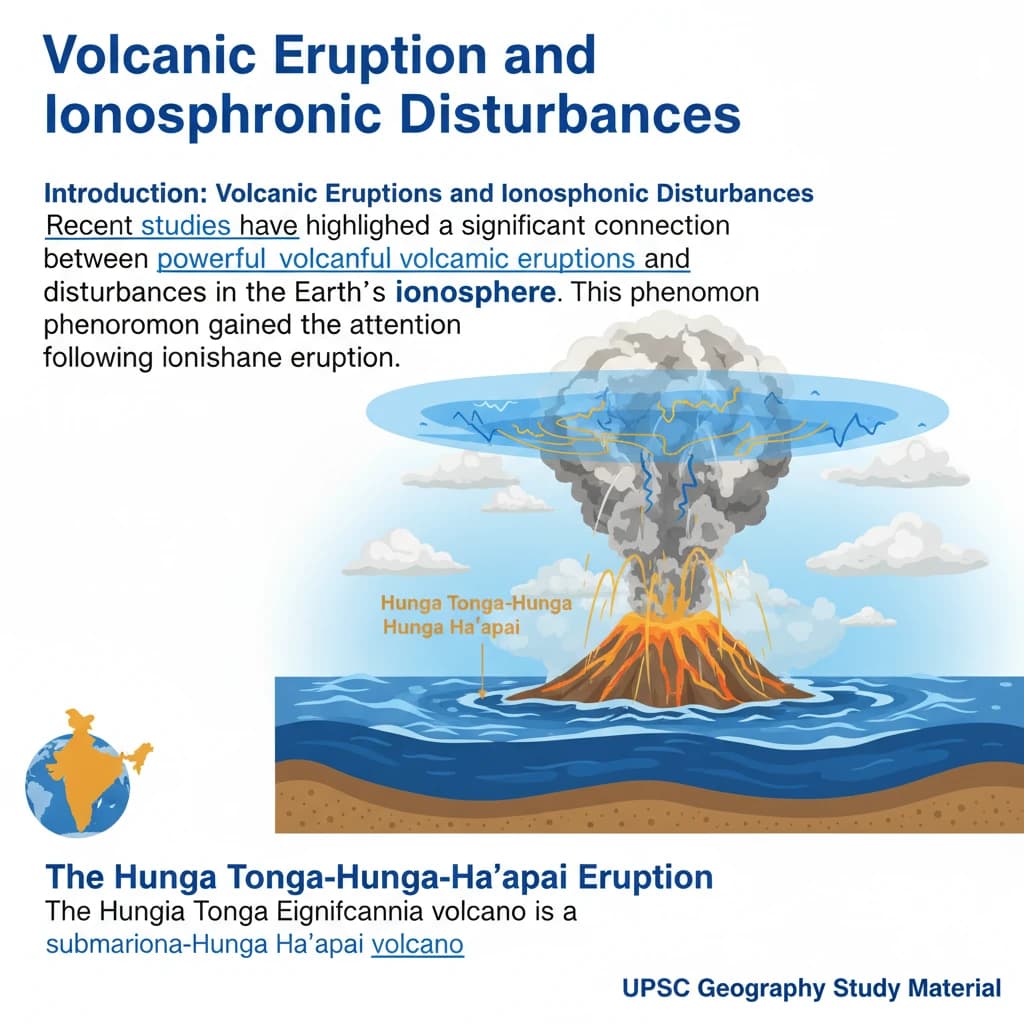
Volcanic Eruption and Ionospheric Disturbances
📖 Introduction

💡 Key Takeaways
- •The <strong>Hunga Tonga-Hunga Ha'apai eruption</strong> was linked to <strong>Equatorial Plasma Bubbles (EPBs)</strong> over India, showing global atmospheric coupling.
- •Volcanoes emit harmful gases (ash, CO2, SO2, H2S) causing respiratory issues, acid rain, and global warming, but also provide valuable resources and fertile soil.
- •Historical eruptions like <strong>Krakatoa (1883)</strong> and the <strong>1815 Indonesian eruption</strong> demonstrate immense destructive power and widespread effects.
- •The <strong>Deccan Traps</strong> are a significant example of ancient, massive volcanic activity in India, influencing its geography.
- •Understanding volcanic-ionospheric links is crucial for <strong>space weather forecasting</strong> and refining <strong>climate models</strong>.
🧠 Memory Techniques
