Loading page, please wait…
Dinosaurs and UNESCO Global Geoparks Tag - UPSC Geography
What is Dinosaurs and UNESCO Global Geoparks Tag in UPSC Geography?
Dinosaurs and UNESCO Global Geoparks Tag is a key topic under Geography for UPSC Civil Services Examination. Key points include: Raiyoli, Gujarat, is home to a significant Dinosaur Fossil Park and Museum.. The site contains bones of Rajasaurus Narmadensis and Rahiolisaurus Gujratensis from the Late Cretaceous period.. It ranks third globally as a dinosaur egg hatchery, attracting international palaeontologists.. Understanding this topic is essential for both UPSC Prelims and Mains preparation.
Why is Dinosaurs and UNESCO Global Geoparks Tag important for UPSC exam?
Dinosaurs and UNESCO Global Geoparks Tag is a Medium-level topic in UPSC Geography. It is tested in both Prelims (factual MCQs) and Mains (analytical answer writing). Previous year UPSC questions have frequently covered aspects of Dinosaurs and UNESCO Global Geoparks Tag, making it essential for comprehensive IAS preparation.
How to prepare Dinosaurs and UNESCO Global Geoparks Tag for UPSC?
To prepare Dinosaurs and UNESCO Global Geoparks Tag for UPSC: (1) Study the comprehensive notes covering all key concepts on Vaidra. (2) Practice previous year questions on this topic. (3) Connect it with current affairs using daily updates. (4) Revise using key takeaways and mind maps available for Geography. (5) Write practice answers linking Dinosaurs and UNESCO Global Geoparks Tag to related GS Paper topics.
Key takeaways of Dinosaurs and UNESCO Global Geoparks Tag for UPSC
- Raiyoli, Gujarat, is home to a significant Dinosaur Fossil Park and Museum.
- The site contains bones of Rajasaurus Narmadensis and Rahiolisaurus Gujratensis from the Late Cretaceous period.
- It ranks third globally as a dinosaur egg hatchery, attracting international palaeontologists.
- The Geological Survey of India is seeking a UNESCO Global Geoparks tag for Raiyoli.
- UNESCO Global Geoparks promote geological heritage conservation, education, and sustainable local development.
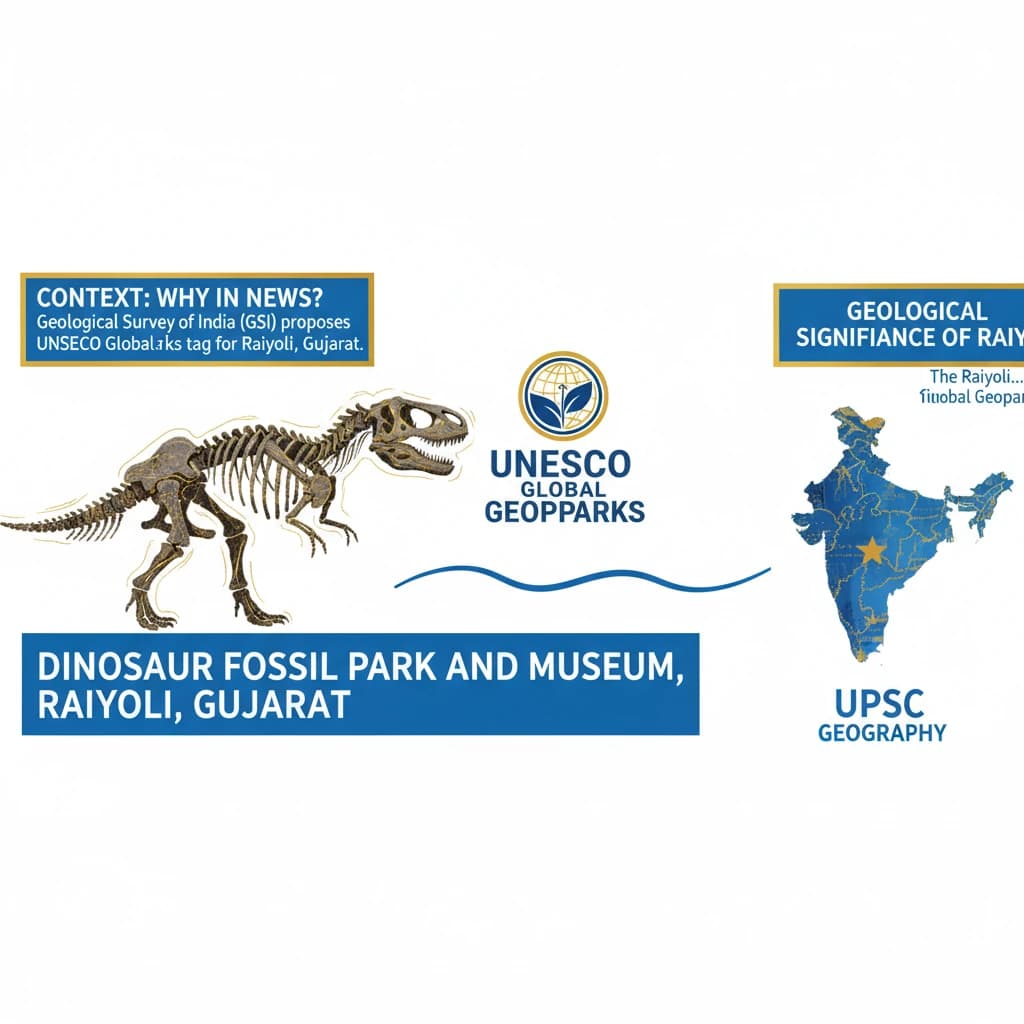
Dinosaurs and UNESCO Global Geoparks Tag
Medium⏱️ 7 min read
geography
📖 Introduction
Context: Why in News?
The Geological Survey of India (GSI) has proposed that the Dinosaur Fossil Park and Museum located in Raiyoli village, Gujarat, be granted a prestigious UNESCO Global Geoparks tag.
This initiative aims to recognize and preserve the site's unique geological and palaeontological heritage on a global scale.
Geological Significance of Raiyoli
The Raiyoli site holds immense geological importance, particularly for its dinosaur fossil discoveries. In the early 1980s, geologists made significant finds here.
Key Discoveries:
- Large dinosaur bones
- Numerous fossilised eggs
The bones primarily belong to two carnivorous dinosaur species from the Late Cretaceous period (approximately 67 million years ago):
- Rajasaurus Narmadensis
- Rahiolisaurus Gujratensis
Global Standing of Raiyoli
The Raiyoli Dinosaur Fossil Park is not just nationally significant but also holds a prominent position globally. It is recognized as one of the largest dinosaur egg hatcheries in the world.
Global Ranking:
The site ranks third globally for dinosaur egg hatcheries, following two other renowned locations:
- Aix-en-Provence (France)
- The Mongolian Gobi Desert
International Recognition and Research
The exceptional nature of the Raiyoli site garnered considerable international attention in the 1990s. This led to a significant influx of scientific interest.
A team of 50 palaeontologists from various countries visited the site specifically to conduct extensive studies on the dinosaur eggs discovered there.
UPSC Insight: Questions on geological heritage sites, palaeontology, and UNESCO designations are common in GS Paper I (Geography/Culture) and GS Paper III (Environment/Science & Tech). Understanding the significance of such sites is crucial.
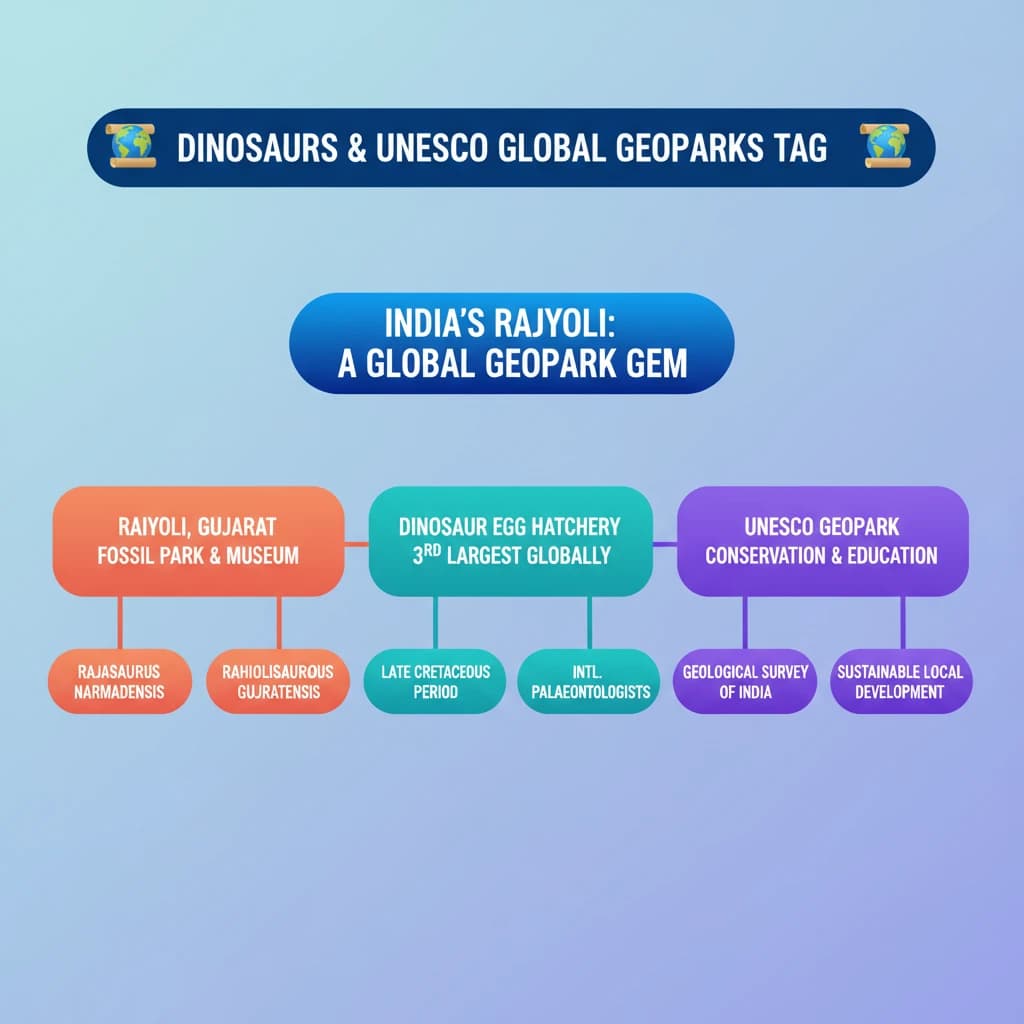
💡 Key Takeaways
- •Raiyoli, Gujarat, is home to a significant Dinosaur Fossil Park and Museum.
- •The site contains bones of Rajasaurus Narmadensis and Rahiolisaurus Gujratensis from the Late Cretaceous period.
- •It ranks third globally as a dinosaur egg hatchery, attracting international palaeontologists.
- •The Geological Survey of India is seeking a UNESCO Global Geoparks tag for Raiyoli.
- •UNESCO Global Geoparks promote geological heritage conservation, education, and sustainable local development.
🧠 Memory Techniques
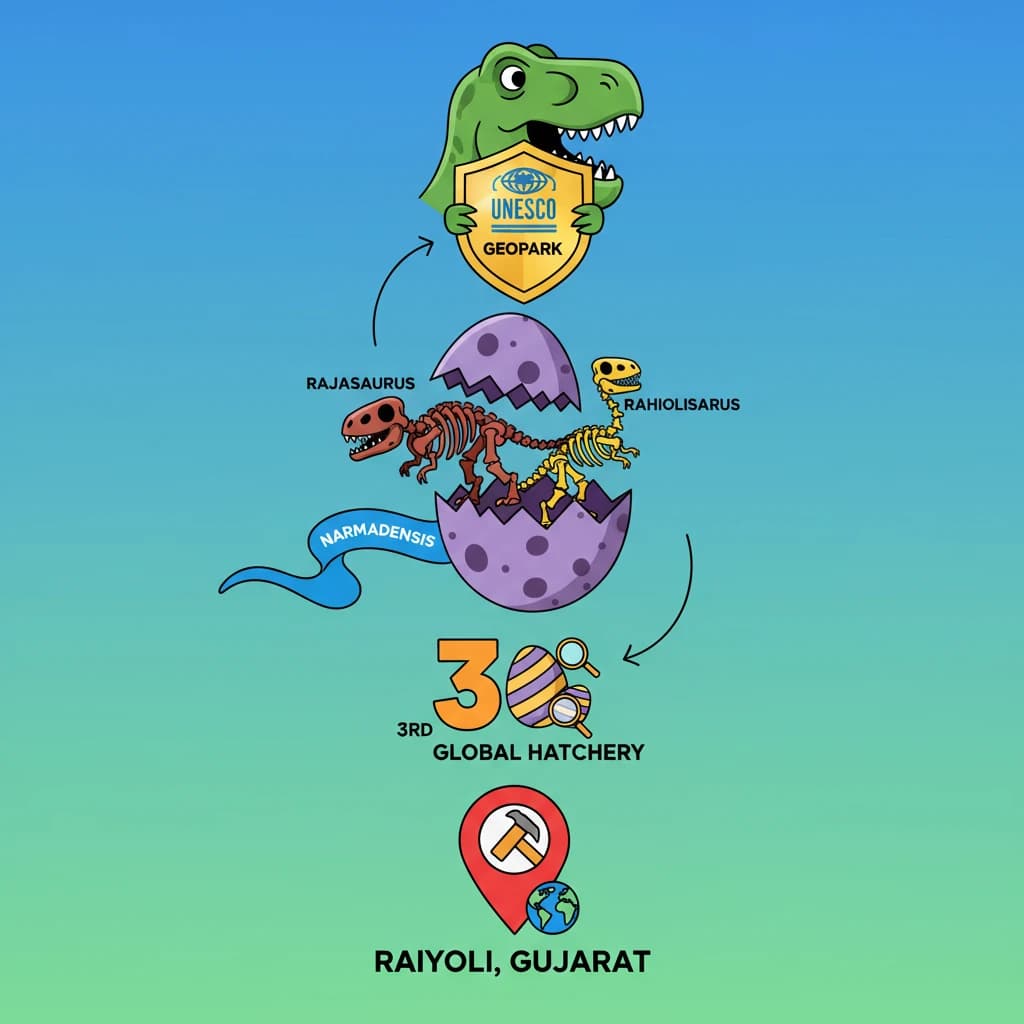
95% Verified Content
📚 Reference Sources
•Geological Survey of India (GSI) official communications (implied)
•UNESCO Global Geoparks official website (implied)
•General knowledge on Indian fossil parks