Arctic Sea Ice Impact on Indian Monsoon - UPSC Geography
What is Arctic Sea Ice Impact on Indian Monsoon in UPSC Geography?
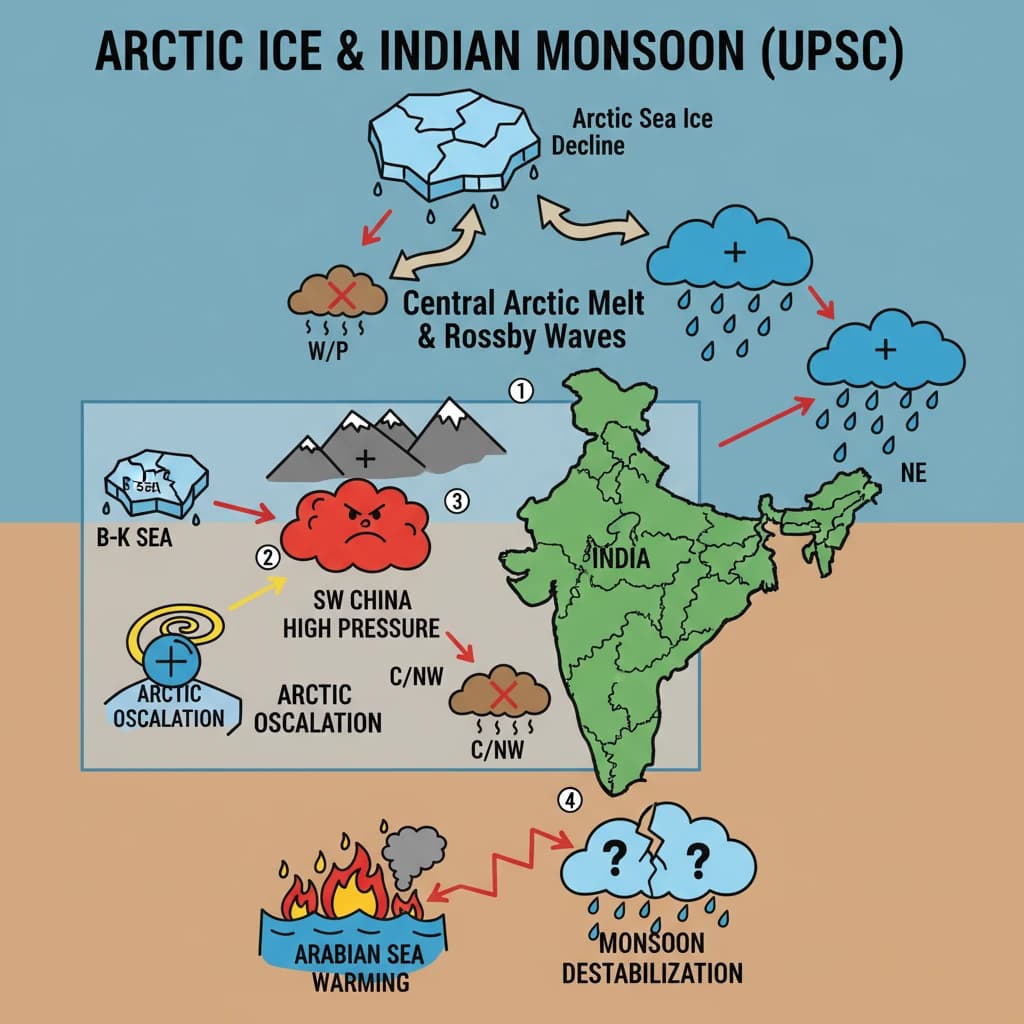
Arctic Sea Ice Impact on Indian Monsoon is a key topic under Geography for UPSC Civil Services Examination. Key points include: Arctic sea ice decline increases Indian Monsoon variability and unpredictability.. Central Arctic melt affects western/peninsular (reduced rain) and central/northern India (increased rain) via strengthened Rossby waves.. Barents-Kara Sea melt leads to high pressure over SW China and a positive Arctic Oscillation, impacting NE India (high rain) and central/NW India (less rain).. Understanding this topic is essential for both UPSC Prelims and Mains preparation.
Why is Arctic Sea Ice Impact on Indian Monsoon important for UPSC exam?
Arctic Sea Ice Impact on Indian Monsoon is a Medium-level topic in UPSC Geography. It is tested in both Prelims (factual MCQs) and Mains (analytical answer writing). Previous year UPSC questions have frequently covered aspects of Arctic Sea Ice Impact on Indian Monsoon, making it essential for comprehensive IAS preparation.
How to prepare Arctic Sea Ice Impact on Indian Monsoon for UPSC?
To prepare Arctic Sea Ice Impact on Indian Monsoon for UPSC: (1) Study the comprehensive notes covering all key concepts on Vaidra. (2) Practice previous year questions on this topic. (3) Connect it with current affairs using daily updates. (4) Revise using key takeaways and mind maps available for Geography. (5) Write practice answers linking Arctic Sea Ice Impact on Indian Monsoon to related GS Paper topics.
Key takeaways of Arctic Sea Ice Impact on Indian Monsoon for UPSC
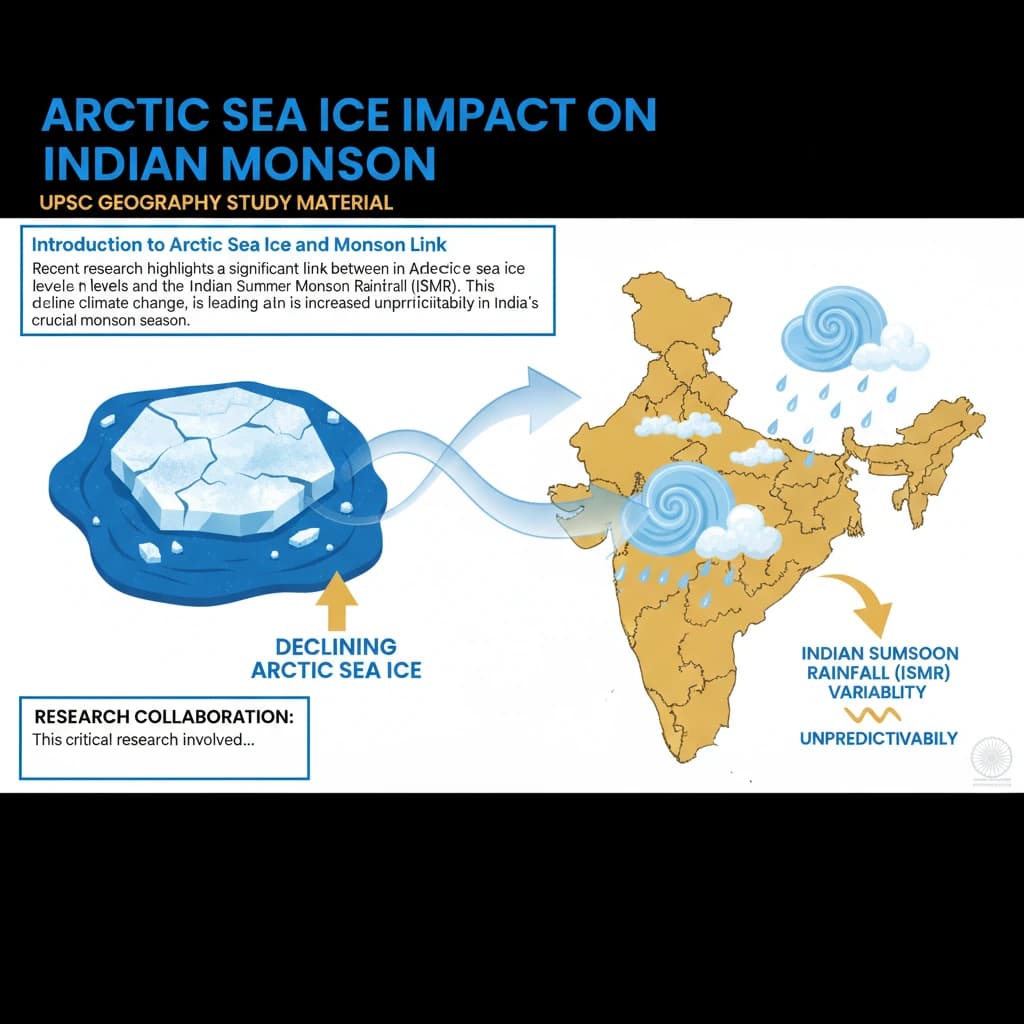
- Arctic sea ice decline increases Indian Monsoon variability and unpredictability.
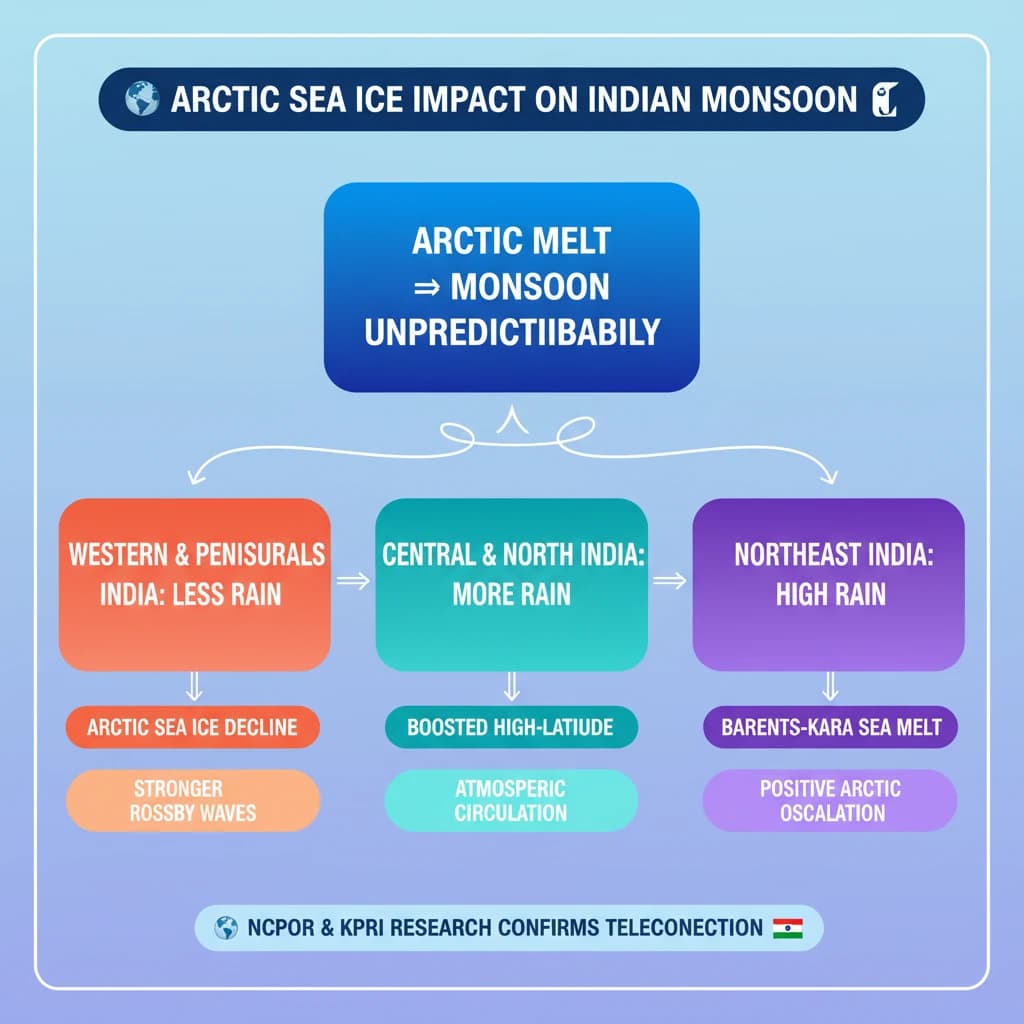
- Central Arctic melt affects western/peninsular (reduced rain) and central/northern India (increased rain) via strengthened Rossby waves.
- Barents-Kara Sea melt leads to high pressure over SW China and a positive Arctic Oscillation, impacting NE India (high rain) and central/NW India (less rain).
- Climate change, including a warming Arabian Sea, further exacerbates monsoon destabilization.
- Research by India's NCPOR and South Korea's KPRI confirms this critical Arctic-monsoon teleconnection.
Arctic Sea Ice Impact on Indian Monsoon
📖 Introduction
💡 Key Takeaways
- •Arctic sea ice decline increases Indian Monsoon variability and unpredictability.
- •Central Arctic melt affects western/peninsular (reduced rain) and central/northern India (increased rain) via strengthened Rossby waves.
- •Barents-Kara Sea melt leads to high pressure over SW China and a positive Arctic Oscillation, impacting NE India (high rain) and central/NW India (less rain).
- •Climate change, including a warming Arabian Sea, further exacerbates monsoon destabilization.
- •Research by India's NCPOR and South Korea's KPRI confirms this critical Arctic-monsoon teleconnection.
🧠 Memory Techniques