Loading page, please wait…
Vaidra Logo
Vaidra

Top 4 items + smart groups

UPSC GPT
New
Current Affairs
Daily Solutions
Daily Puzzle
Mains Evaluator

Version 2.0.0 • Built with ❤️ for UPSC aspirants

Loading...
Loading...
Loading...
Loading...
Loading...
Loading...
Loading...
Loading...
Loading...
Loading...
Loading...
Loading...
Loading...

Jhelum Basin of the Kashmir Himalayas - UPSC Geography

What is Jhelum Basin of the Kashmir Himalayas in UPSC Geography?

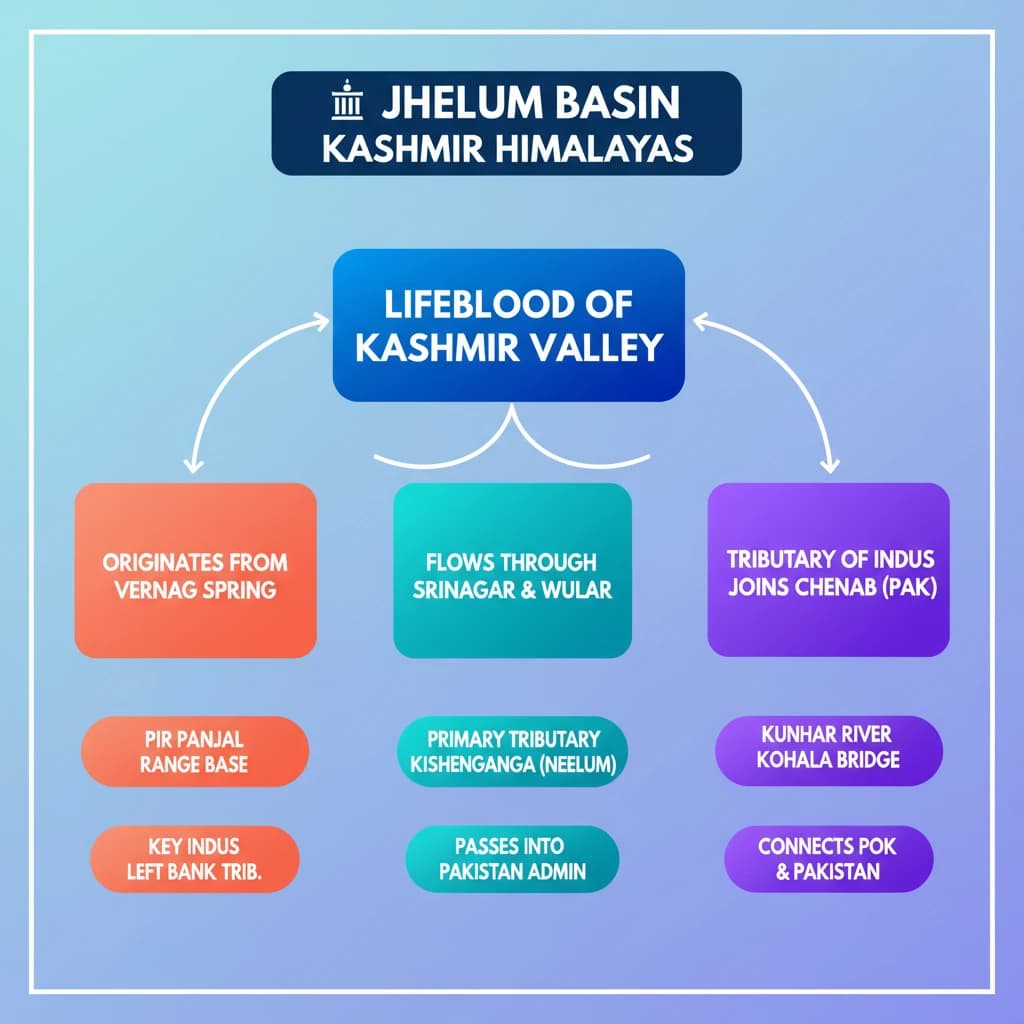
Jhelum Basin of the Kashmir Himalayas is a key topic under Geography for UPSC Civil Services Examination. Key points include: The Jhelum River originates from Vernag spring at the base of Pir Panjal range.. It flows through Srinagar and Wular Lake before entering Pakistan.. Jhelum is a key tributary of the Indus River, joining the Chenab in Pakistan.. Understanding this topic is essential for both UPSC Prelims and Mains preparation.

Why is Jhelum Basin of the Kashmir Himalayas important for UPSC exam?

Jhelum Basin of the Kashmir Himalayas is a Medium-level topic in UPSC Geography. It is tested in both Prelims (factual MCQs) and Mains (analytical answer writing). Previous year UPSC questions have frequently covered aspects of Jhelum Basin of the Kashmir Himalayas, making it essential for comprehensive IAS preparation.

How to prepare Jhelum Basin of the Kashmir Himalayas for UPSC?

To prepare Jhelum Basin of the Kashmir Himalayas for UPSC: (1) Study the comprehensive notes covering all key concepts on Vaidra. (2) Practice previous year questions on this topic. (3) Connect it with current affairs using daily updates. (4) Revise using key takeaways and mind maps available for Geography. (5) Write practice answers linking Jhelum Basin of the Kashmir Himalayas to related GS Paper topics.

Key takeaways of Jhelum Basin of the Kashmir Himalayas for UPSC

  • The Jhelum River originates from Vernag spring at the base of Pir Panjal range.
  • It flows through Srinagar and Wular Lake before entering Pakistan.
  • Jhelum is a key tributary of the Indus River, joining the Chenab in Pakistan.
  • Its primary tributary is the Kishenganga (Neelum) River.
  • The Kunhar River connects PoK and Pakistan via Kohala Bridge.
  • Historically known as Vitasta, it was the site of Alexander's Battle of Hydaspes.
  • The basin holds strategic, economic, and environmental significance for India and Pakistan.
Jhelum Basin of the Kashmir Himalayas

Jhelum Basin of the Kashmir Himalayas

Medium⏱️ 8 min read✓ 95% Verified
geography

📖 Introduction

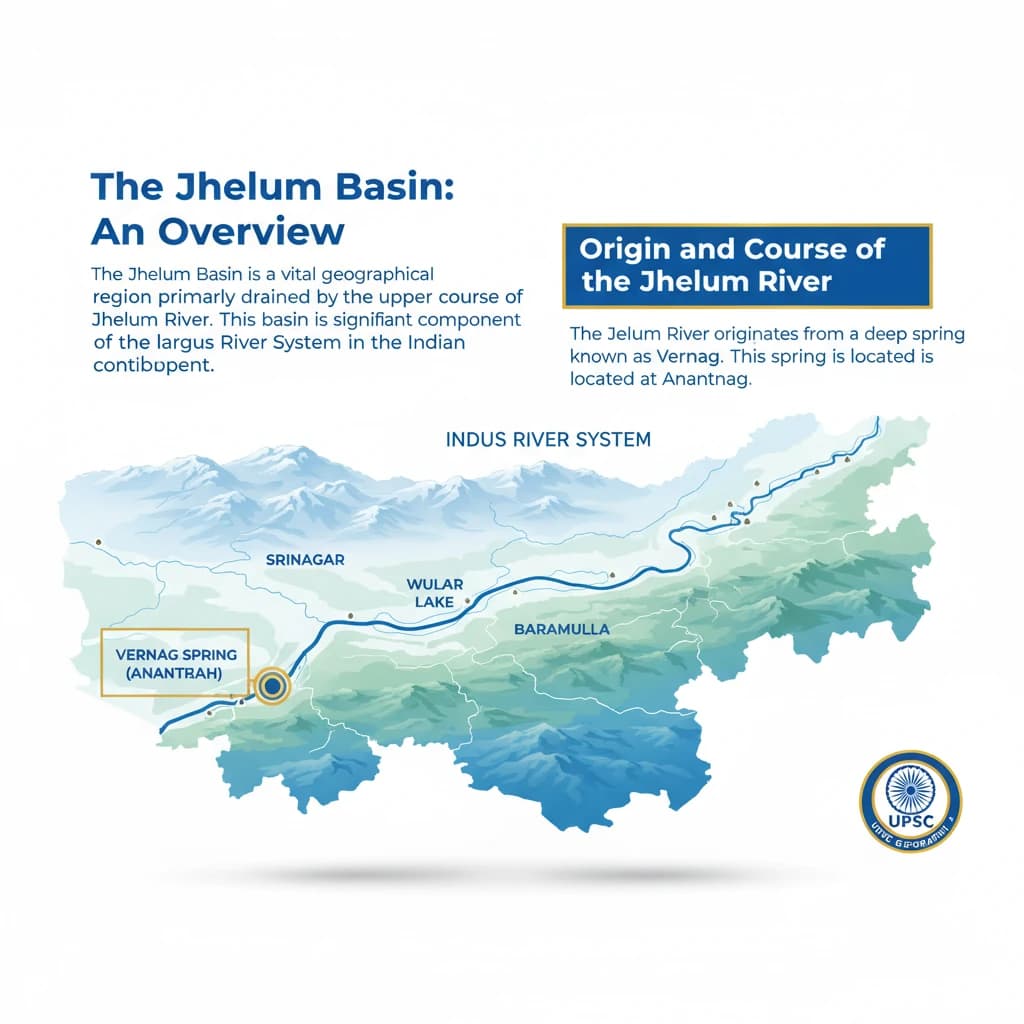
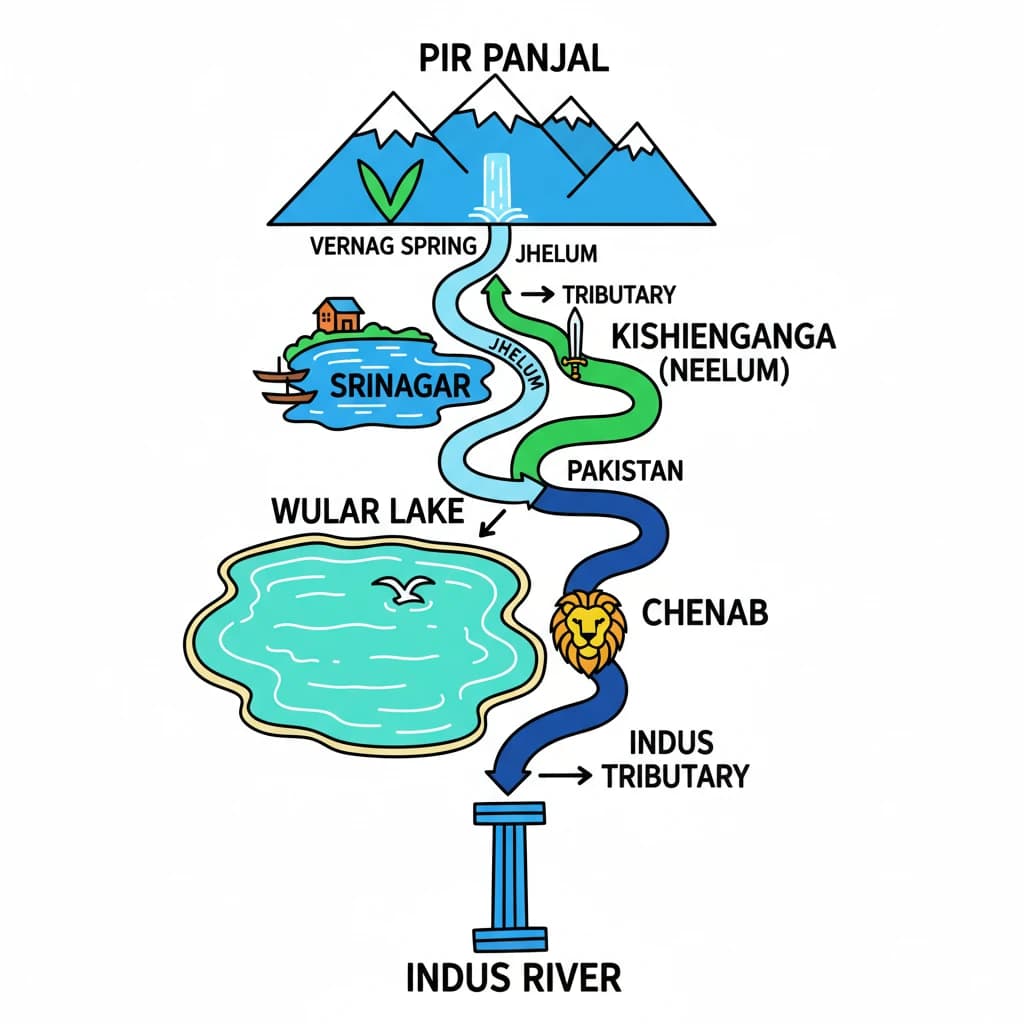
<h4>The Jhelum Basin: An Overview</h4><p>The <strong>Jhelum Basin</strong> is a vital geographical region primarily drained by the upper course of the <strong>Jhelum River</strong>. This basin is a significant component of the larger <strong>Indus River System</strong> in the Indian subcontinent.</p><h4>Origin and Course of the Jhelum River</h4><p>The <strong>Jhelum River</strong> originates from a deep spring known as <strong>Vernag</strong>. This spring is located at <strong>Anantnag</strong>, nestled at the base of the <strong>Pir Panjal range</strong> within the picturesque <strong>Kashmir Valley</strong>.</p><p>After its origin, the river flows through several key locations. It notably passes through the city of <strong>Srinagar</strong> and the vast <strong>Wular Lake</strong>, a prominent freshwater lake in India.</p><div class='info-box'><p><strong>Key Route:</strong> <strong>Vernag</strong> (Origin) ➡️ <strong>Anantnag</strong> ➡️ <strong>Srinagar</strong> ➡️ <strong>Wular Lake</strong> ➡️ Enters <strong>Pakistan</strong>.</p></div><h4>Jhelum's Role in the Indus River System</h4><p>The <strong>Jhelum River</strong> is an important <strong>tributary of the Indus River</strong>. Its waters contribute significantly to the overall volume and flow of the Indus, which is crucial for the regional hydrology.</p><p>The river traverses through <strong>Jammu and Kashmir</strong> in India before crossing into <strong>Pakistan</strong>. In Pakistan, it eventually converges with the <strong>Chenab River</strong>, another major tributary of the Indus.</p><div class='key-point-box'><p>The <strong>Jhelum</strong> is one of the "Western Rivers" allocated to Pakistan under the <strong>Indus Waters Treaty</strong>, though India has certain usage rights on its upper reaches.</p></div><h4>Key Tributaries of the Jhelum River</h4><p>The <strong>Jhelum River</strong> is fed by several tributaries that enhance its flow and extend its basin area. These tributaries are crucial for the ecological and hydrological balance of the region.</p><ul><li>The primary and most significant tributary is the <strong>Kishenganga River</strong>, also known as the <strong>Neelum River</strong>.</li><li>Another notable tributary is the <strong>Kunhar River</strong>. This river holds strategic importance as it connects <strong>Pakistan-occupied Kashmir (PoK)</strong> with mainland <strong>Pakistan</strong>.</li></ul><div class='info-box'><p>The <strong>Kunhar River</strong> facilitates this connection via the <strong>Kohala Bridge</strong>, situated in the <strong>Kandian subzone</strong>, highlighting its role in regional connectivity.</p></div><div class='exam-tip-box'><p>Understanding the origin, course, and tributaries of the <strong>Jhelum River</strong> is crucial for questions related to <strong>Indian Geography</strong>, especially regarding <strong>Himalayan River Systems</strong> and <strong>Jammu & Kashmir</strong>'s physical geography. Pay attention to the specific locations like <strong>Vernag</strong>, <strong>Srinagar</strong>, and <strong>Wular Lake</strong>.</p></div>
Concept Diagram

💡 Key Takeaways

  • •The Jhelum River originates from Vernag spring at the base of Pir Panjal range.
  • •It flows through Srinagar and Wular Lake before entering Pakistan.
  • •Jhelum is a key tributary of the Indus River, joining the Chenab in Pakistan.
  • •Its primary tributary is the Kishenganga (Neelum) River.
  • •The Kunhar River connects PoK and Pakistan via Kohala Bridge.
  • •Historically known as Vitasta, it was the site of Alexander's Battle of Hydaspes.
  • •The basin holds strategic, economic, and environmental significance for India and Pakistan.

🧠 Memory Techniques
Memory Aid
95% Verified Content

📚 Reference Sources

•NCERT Geography Textbooks (Class XI, XII)
•Official reports on Indus Waters Treaty
•Ramsar Sites information

Related Topics

Loading related topics...
Explore:Geography Topics·All Subjects·Daily Current Affairs·Editorial Analysis·Previous Year Questions·UPSC GPT
Back
All Subjects

Topics

0 topics • 0 completed

Loading topics...
Loading...
Loading...
Loading...
Loading...
Loading...
Overall Progress0%
Jhelum Basin of the Kashmir Himalayas - UPSC Geography