Loading page, please wait…
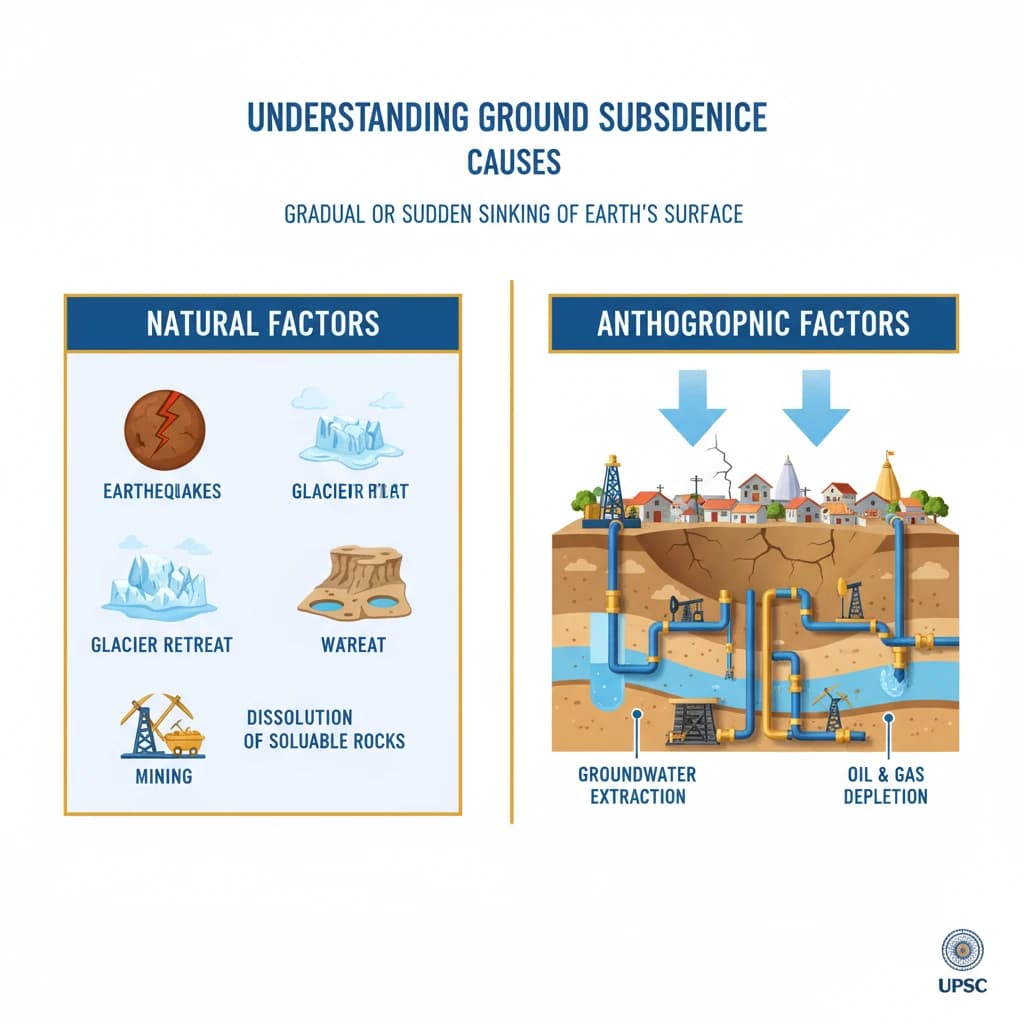
Ground Subsidence: Causes & Contributing Factors
Medium⏱️ 8 min read
geography
📖 Introduction
Understanding Ground Subsidence
Ground subsidence refers to the gradual or sudden sinking of the Earth's surface due to various natural and anthropogenic factors. It is a significant geological hazard with widespread environmental and economic impacts.
Overexploitation of Underground Resources
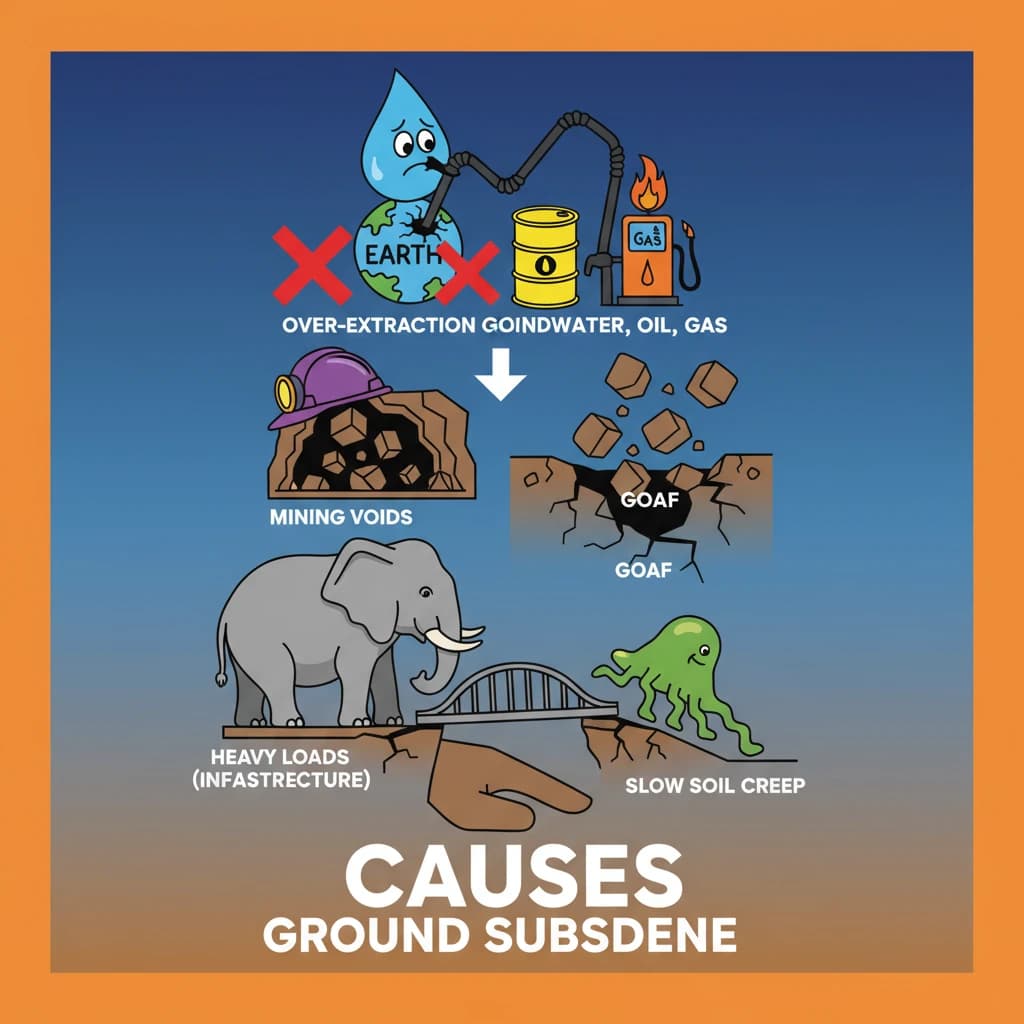
One of the primary drivers of ground subsidence is the excessive extraction of subsurface resources. This includes vital elements such as water, natural gas, and oil.
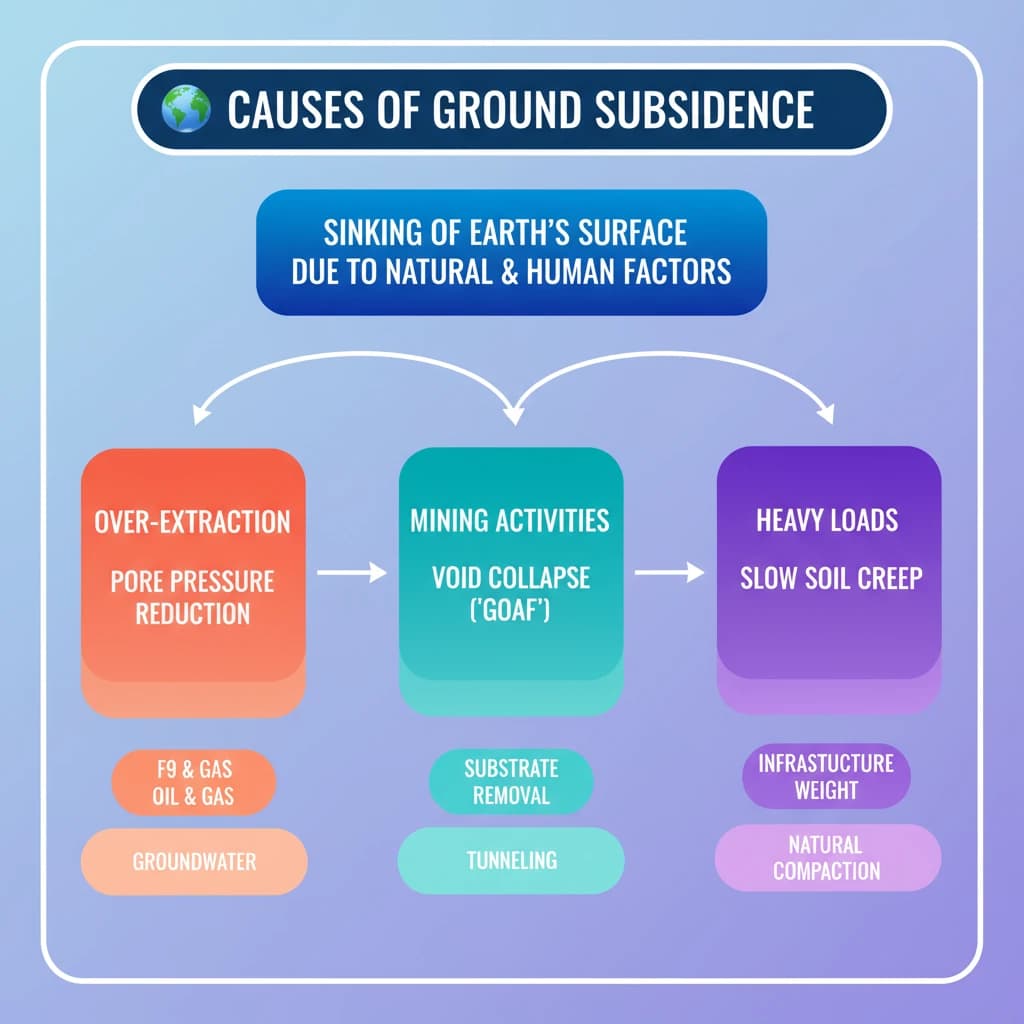
When these resources are removed, it leads to a decrease in pore pressure within the underlying rock and soil layers. This reduction in pressure, in turn, increases the effective stress on the soil particles, causing them to compact and the ground surface to settle.
Key Statistic: Over 80% of the world’s extracted water is utilized for irrigation and agricultural purposes. This extensive groundwater withdrawal is a major contributor to regional ground subsidence globally.
Extraction of Solid Minerals
The exploitation of underground solid mineral resources also significantly contributes to subsidence. Activities like mining create large empty spaces beneath the surface.
These excavated voids are often referred to as goaf areas. When the supporting structures or pillars within these goaf areas fail, or when the overlying strata cannot bear the load, the ground above can sink or subside.
Coal mining, in particular, is a common cause of such subsidence, as vast quantities of coal are extracted, leaving behind extensive goaf regions prone to collapse.
Load Exerted on Ground Surface
The sheer weight of human-made structures can also induce ground subsidence. The construction of tall buildings and other heavy infrastructure exerts substantial pressure on the underlying soil and geological formations.
Over extended periods, this continuous load can lead to the deformation of soil particles and gradual compaction, resulting in the sinking of the ground surface beneath these structures.
Role of Soil Creep
Soil creep is a slow but persistent geomorphological process that can contribute to ground subsidence, especially on slopes. It involves the gradual, downhill movement of soil and rock particles.
This phenomenon occurs due to the combined effects of gravity and continuous, low-level stresses on the soil. Over time, this slow deformation can compromise the stability of foundations and contribute to the overall subsidence of an area.
💡 Key Takeaways
- •Ground subsidence is the sinking of Earth's surface, driven by both natural and human factors.
- •Over-extraction of groundwater, oil, and gas reduces pore pressure, leading to soil compaction.
- •Mining activities create 'goaf' voids, which can collapse and cause surface sinking.
- •Heavy loads from infrastructure and slow soil creep also contribute to ground deformation.
- •Subsidence has significant impacts on infrastructure, urban areas, and coastal vulnerability, often exacerbated by climate change.
- •Sustainable resource management and careful urban planning are crucial for mitigation.
🧠 Memory Techniques
95% Verified Content
📚 Reference Sources
•National Water Policy (India)
•Geological Survey of India (GSI) reports on mining areas
•Academic articles on groundwater depletion and subsidence (general knowledge)