Loading page, please wait…
Gulf Stream and Climate Sensitivity - UPSC Geography
What is Gulf Stream and Climate Sensitivity in UPSC Geography?
Gulf Stream and Climate Sensitivity is a key topic under Geography for UPSC Civil Services Examination. Key points include: The Gulf Stream's strength is sensitive to wind patterns, as evidenced by its stronger flow during the Last Ice Age.. The Atlantic Meridional Overturning Circulation (AMOC) is a vital global ocean current system distributing heat and nutrients.. A weakened AMOC, driven by global warming and freshwater input from melting ice, could cause significant climate shifts, including colder Europe and altered monsoons.. Understanding this topic is essential for both UPSC Prelims and Mains preparation.
Why is Gulf Stream and Climate Sensitivity important for UPSC exam?
Gulf Stream and Climate Sensitivity is a Medium-level topic in UPSC Geography. It is tested in both Prelims (factual MCQs) and Mains (analytical answer writing). Previous year UPSC questions have frequently covered aspects of Gulf Stream and Climate Sensitivity, making it essential for comprehensive IAS preparation.
How to prepare Gulf Stream and Climate Sensitivity for UPSC?
To prepare Gulf Stream and Climate Sensitivity for UPSC: (1) Study the comprehensive notes covering all key concepts on Vaidra. (2) Practice previous year questions on this topic. (3) Connect it with current affairs using daily updates. (4) Revise using key takeaways and mind maps available for Geography. (5) Write practice answers linking Gulf Stream and Climate Sensitivity to related GS Paper topics.
Key takeaways of Gulf Stream and Climate Sensitivity for UPSC
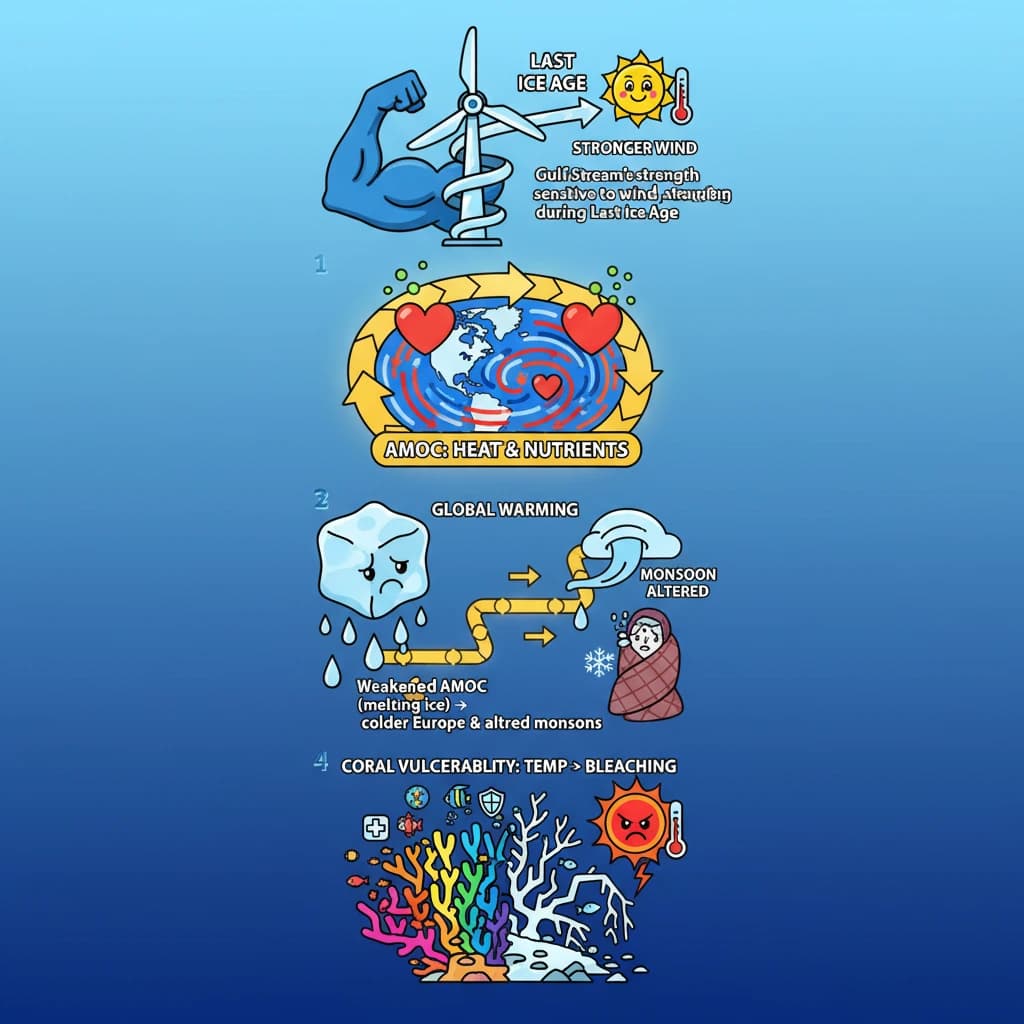
- The Gulf Stream's strength is sensitive to wind patterns, as evidenced by its stronger flow during the Last Ice Age.
- The Atlantic Meridional Overturning Circulation (AMOC) is a vital global ocean current system distributing heat and nutrients.
- A weakened AMOC, driven by global warming and freshwater input from melting ice, could cause significant climate shifts, including colder Europe and altered monsoons.
- Coral reefs are crucial marine ecosystems, providing habitat, medicinal resources, and shoreline protection, but are highly vulnerable to temperature-induced bleaching.
- Climate change poses a serious threat to the stability of major ocean currents and coral reef health, with far-reaching global consequences.
Gulf Stream and Climate Sensitivity
Medium⏱️ 8 min read
geography
📖 Introduction
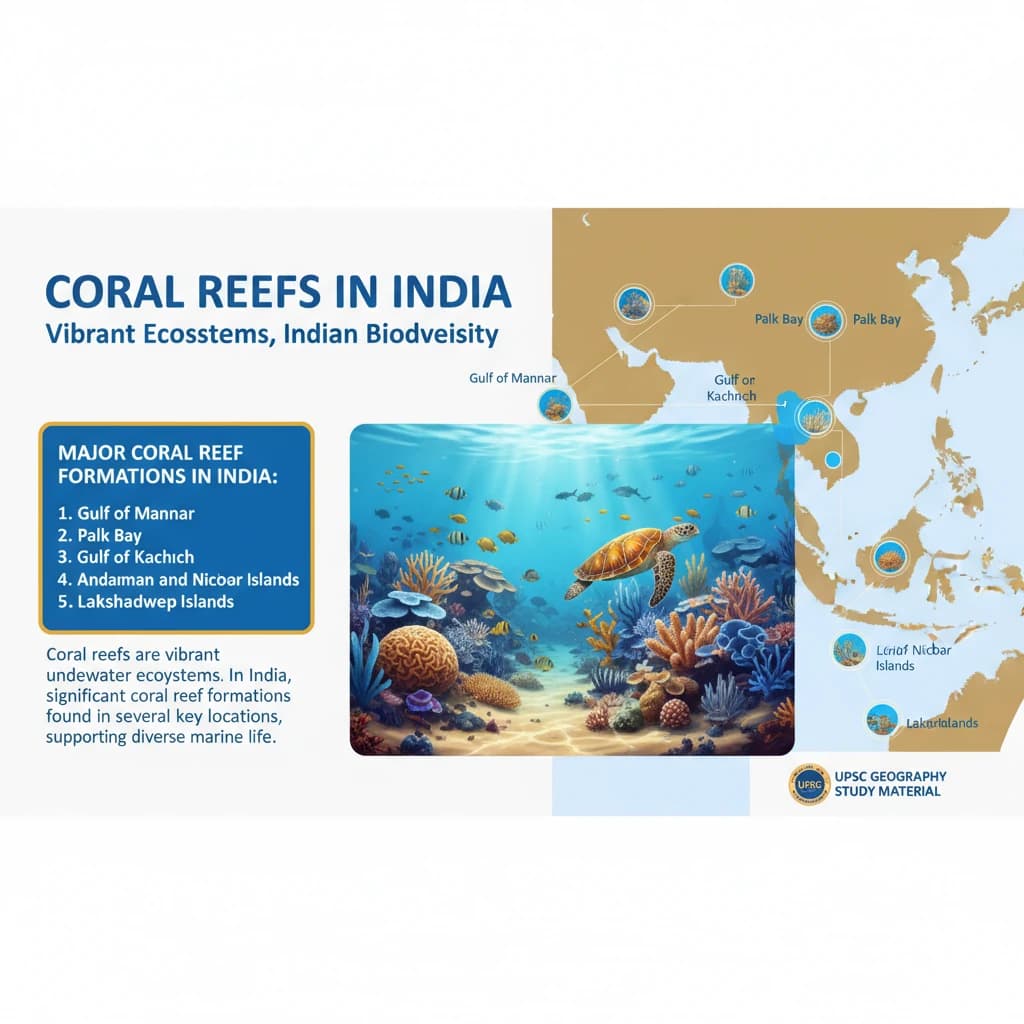
Coral Reefs in India
Coral reefs are vibrant underwater ecosystems. In India, significant coral reef formations are found in several key locations, supporting diverse marine life.
Major coral reef formations in India include:
- Gulf of Mannar
- Palk Bay
- Gulf of Kachchh
- Andaman and Nicobar Islands
- Lakshadweep Islands
Importance of Coral Reefs
Coral reefs are incredibly important for global marine biodiversity and human well-being. They play a critical role despite covering a small area of the oceans.
Ecological Significance:
- Cover only 1% of the world's oceans.
- Provide habitat for at least 25% of the world's marine species.
Medicinal Value: Many drugs are being developed from reef organisms to treat serious diseases like cancer, arthritis, and various infections.
Shoreline Protection: Coral reefs act as natural barriers, protecting shorelines by mitigating the impact of waves, storms, and floods. They also contribute to beach formation.
Ecosystem Services: They host important filter feeders, such as sponges, which cleanse oceans of toxins. They also support extensive plant life that absorbs carbon dioxide and releases oxygen.
Coral Bleaching Explained
Coral bleaching is a severe threat to coral reefs globally. It occurs when corals expel the symbiotic algae living in their tissues, leading to a loss of color and increased vulnerability.
Process of Coral Bleaching:
- Stress Factors: Corals become stressed due to factors like increased ocean temperature or pollution.
- Algae Expulsion: The symbiotic algae, known as zooxanthellae, leave the coral's tissue.
- Color Loss: Without the algae, corals lose their vibrant colors, turning white or very pale.
- Vulnerability: Bleached corals become more susceptible to disease and their food supply is disrupted, often leading to death if conditions do not improve.
Gulf Stream and Climate Sensitivity: Why in News?
A recent study has brought the Gulf Stream's dynamics and its sensitivity to climate change into focus. This research provides crucial insights into past and future climate patterns.
Recent Study Findings:
- A study published in Nature revealed the Gulf Stream was significantly stronger during the last ice age (approximately 20,000 years ago).
- This increased strength was attributed to more powerful winds across the subtropical North Atlantic.
UPSC Insight: This finding highlights the Gulf Stream’s sensitivity to changes in wind patterns. Any future weakening of these winds due to climate change could have significant impacts on global climate, a key topic for GS Paper I (Geography) and GS Paper III (Environment).
Understanding the Gulf Stream
The Gulf Stream is a vital component of the global ocean circulation system, playing a significant role in regional climate regulation.
The Gulf Stream is a powerful, warm ocean current originating in the Gulf of Mexico. It flows along the eastern coast of North America.
After flowing northwards, it extends across the Atlantic Ocean towards Western Europe. This current significantly influences the climate of Western Europe, making it much warmer than it would otherwise be at similar latitudes.
Atlantic Meridional Overturning Circulation (AMOC)
The Atlantic Meridional Overturning Circulation (AMOC) is a critical part of the global ocean conveyor belt, essential for distributing heat and nutrients across the planet.
What is AMOC?
The AMOC is a major system of ocean currents that forms part of the global ThermoHaline Circulation (THC). It is responsible for distributing heat and nutrients across the world's oceans.
The AMOC operates by transporting warm surface waters from the tropics to the Northern Hemisphere. As this water cools, it becomes denser and sinks.
It then returns as a bottom current through the South Atlantic, eventually spreading to all ocean basins via the Antarctic Circumpolar Current (ACC), which is the only current circulating the entire globe.
Implications of AMOC Decline
A weakening of the AMOC, including the Gulf Stream, could have profound and widespread consequences for global climate patterns and regional weather.
Potential Impacts of Weakened AMOC:
- Europe: Could experience significantly colder temperatures.
- Rainfall: Reduction in rainfall across various regions.
- El Niño: Potential influence on the El Niño Southern Oscillation (ENSO) phenomenon.
- Monsoons: Possible shifts in monsoon patterns in South America and Africa.
Causes of AMOC Decline
Scientists predict that global warming is a primary driver behind the potential weakening of major ocean systems like the AMOC.
- Melting Ice: Freshwater input from melting Greenland ice and the “Last Ice Area” reduces water salinity and density.
- Impeded Flow: This decrease in density impedes the normal sinking process and flow of the AMOC.
- Precipitation and Runoff: Increased precipitation and river runoff, particularly in the Indian Ocean, may also contribute to impacting the AMOC.
Crucial Role of AMOC
The AMOC is critically important for redistributing heat around the globe and effectively regulating global weather patterns, making its stability vital for climate stability.
💡 Key Takeaways
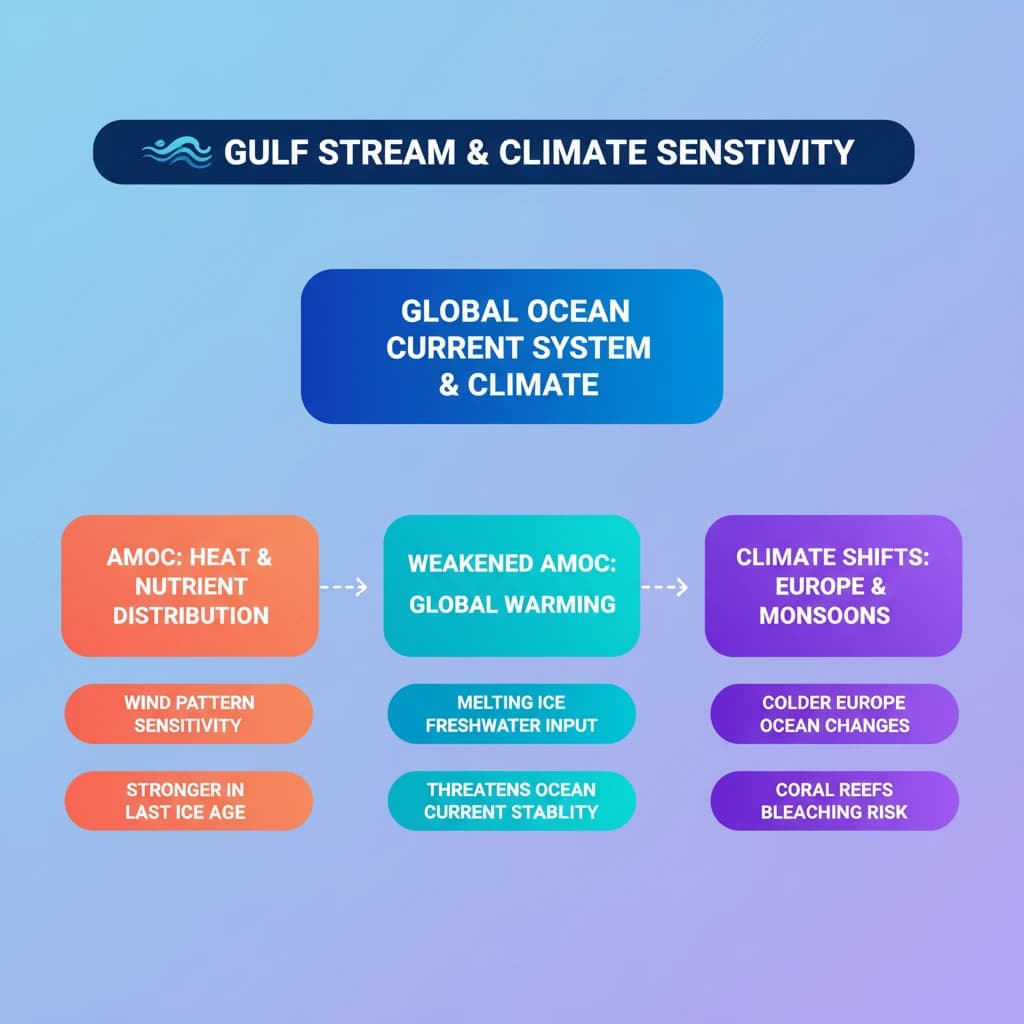
- •The Gulf Stream's strength is sensitive to wind patterns, as evidenced by its stronger flow during the Last Ice Age.
- •The Atlantic Meridional Overturning Circulation (AMOC) is a vital global ocean current system distributing heat and nutrients.
- •A weakened AMOC, driven by global warming and freshwater input from melting ice, could cause significant climate shifts, including colder Europe and altered monsoons.
- •Coral reefs are crucial marine ecosystems, providing habitat, medicinal resources, and shoreline protection, but are highly vulnerable to temperature-induced bleaching.
- •Climate change poses a serious threat to the stability of major ocean currents and coral reef health, with far-reaching global consequences.
🧠 Memory Techniques
95% Verified Content
📚 Reference Sources
•Nature (journal) - referenced study on Gulf Stream during last ice age