Loading page, please wait…
How are Mountains Formed? - UPSC Geography
What is How are Mountains Formed? in UPSC Geography?
How are Mountains Formed? is a key topic under Geography for UPSC Civil Services Examination. Key points include: Mountains are formed by the movement and collision of Earth's tectonic plates.. Plate interactions cause the crust to buckle, fold, or protrude upwards.. Key characteristics include high elevation, steep slopes, a summit/peak, and often occur in ranges.. Understanding this topic is essential for both UPSC Prelims and Mains preparation.
Why is How are Mountains Formed? important for UPSC exam?
How are Mountains Formed? is a Easy-level topic in UPSC Geography. It is tested in both Prelims (factual MCQs) and Mains (analytical answer writing). Previous year UPSC questions have frequently covered aspects of How are Mountains Formed?, making it essential for comprehensive IAS preparation.
How to prepare How are Mountains Formed? for UPSC?
To prepare How are Mountains Formed? for UPSC: (1) Study the comprehensive notes covering all key concepts on Vaidra. (2) Practice previous year questions on this topic. (3) Connect it with current affairs using daily updates. (4) Revise using key takeaways and mind maps available for Geography. (5) Write practice answers linking How are Mountains Formed? to related GS Paper topics.
Key takeaways of How are Mountains Formed? for UPSC
- Mountains are formed by the movement and collision of Earth's tectonic plates.
- Plate interactions cause the crust to buckle, fold, or protrude upwards.
- Key characteristics include high elevation, steep slopes, a summit/peak, and often occur in ranges.
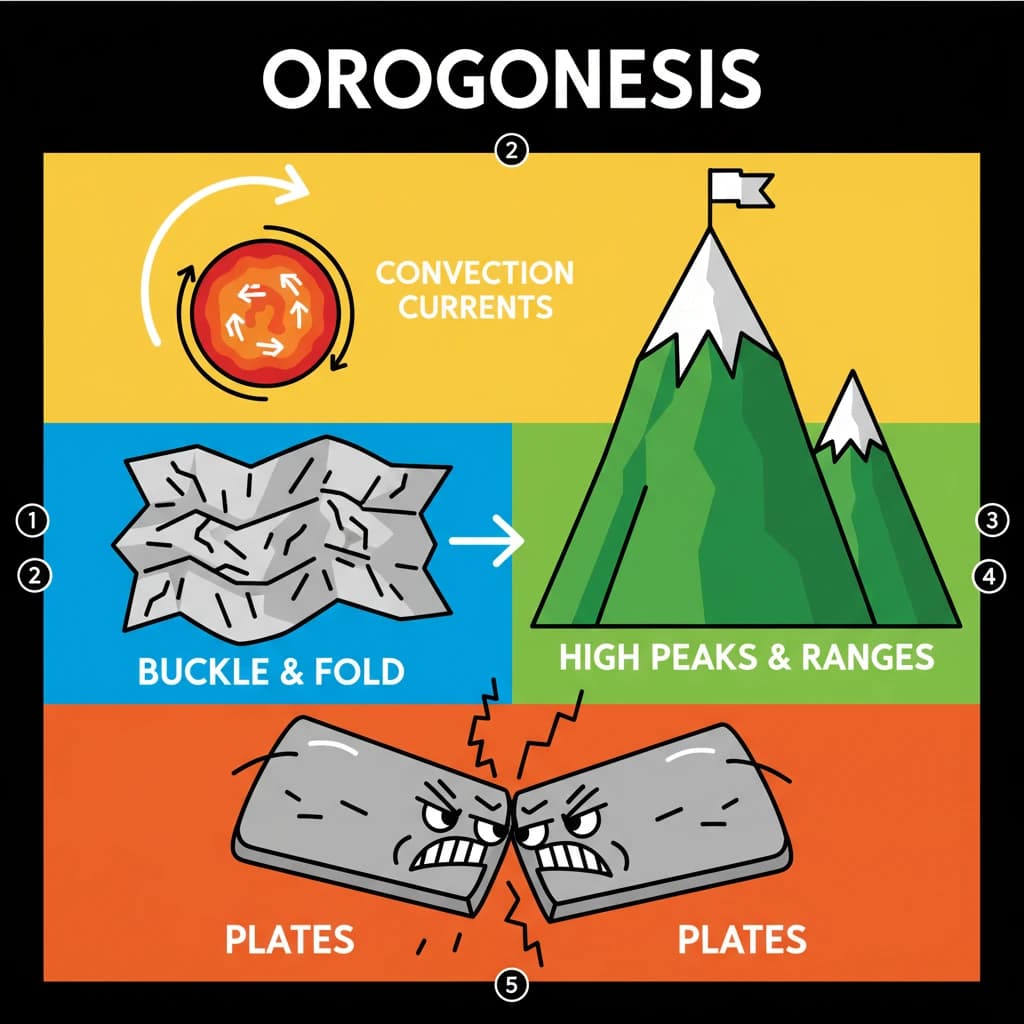
- The process is called orogenesis, driven by convection currents in the mantle.
- Understanding mountain formation is crucial for natural hazard assessment, resource location, and climate studies.
How are Mountains Formed?
Easy⏱️ 7 min read
geography
📖 Introduction
Introduction to Mountain Formation
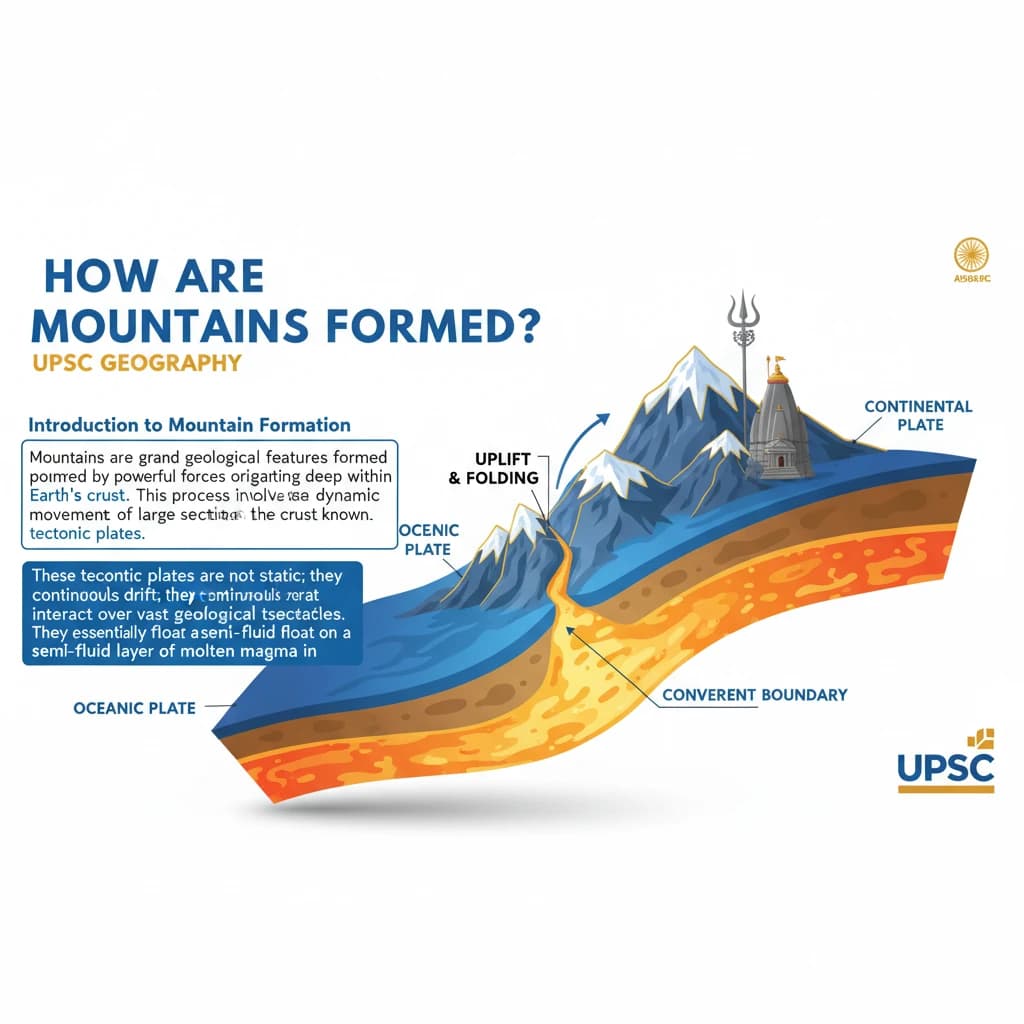
Mountains are grand geological features formed by powerful forces originating deep within the Earth’s crust. This process involves the dynamic movement of large sections of the crust known as tectonic plates.
These tectonic plates are not static; they continuously drift and interact over vast geological timescales. They essentially float on a semi-fluid layer of molten magma in the Earth's mantle.
The primary mechanism for mountain building occurs when these plates converge or collide. This intense pressure causes the Earth’s surface to either buckle, folding upwards, or protrude, being pushed upwards, ultimately creating mountains.
Key Process: Mountain formation is fundamentally linked to plate tectonics and the immense forces generated at plate boundaries.
Key Characteristics of Mountains
Mountains possess several defining characteristics that distinguish them from other landforms.
- Elevation: A crucial characteristic is their significant height. Mountains are generally much higher than the surrounding land, often exceeding an elevation of 600 meters above sea level.
- Steep Slopes: Most mountains are characterized by their steep slopes, which can vary in gradient. While many are sharply inclined, some mountain flanks can be more gradual.
- Summit/Peak: The uppermost point of a mountain is referred to as its summit or peak. This is typically the highest elevation point of the individual mountain structure.
- Mountain Range: When a series or group of mountains are geographically connected by high ground, they form a larger geological unit known as a mountain range. Examples include the Himalayas and the Andes.
Definition: An orogeny refers to the process of mountain formation, particularly by the folding and faulting of the Earth's crust.
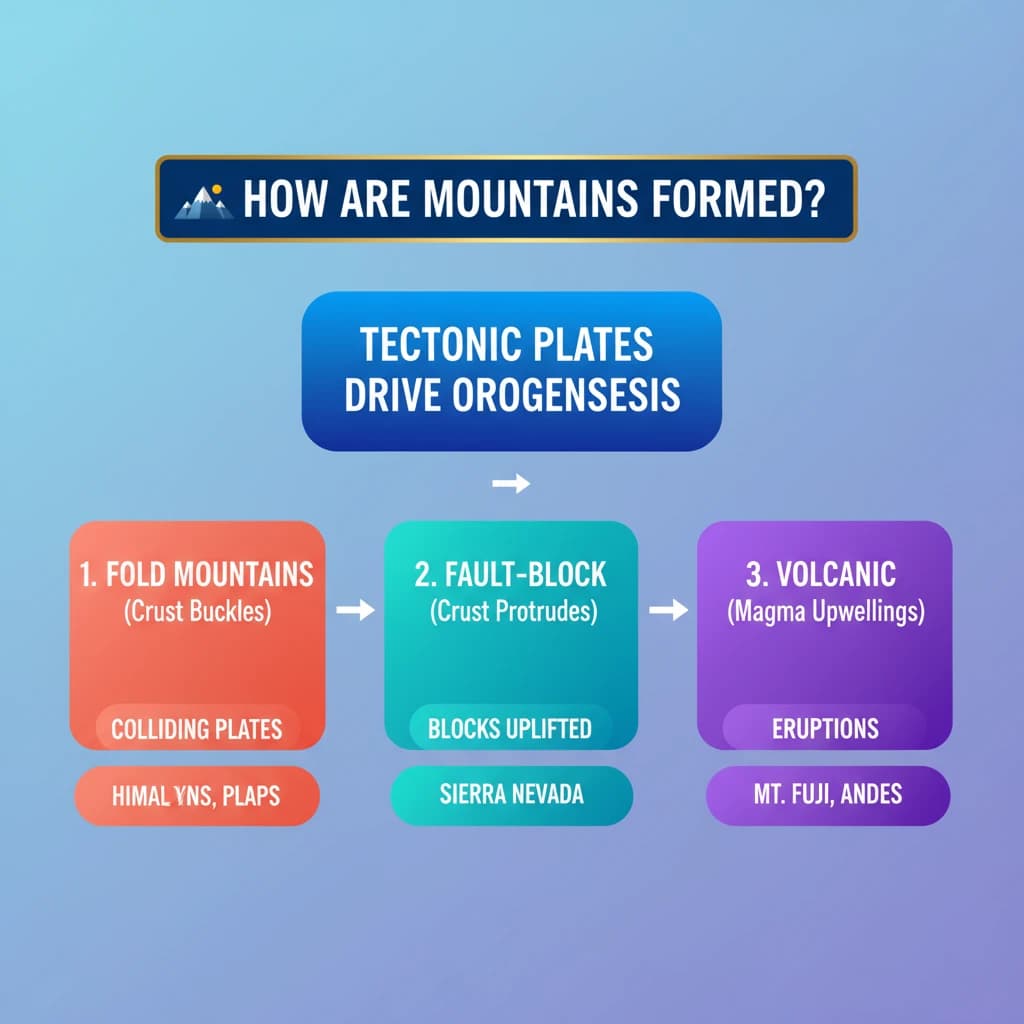
For UPSC, understanding mountain types (fold, block, volcanic, erosional) and their associated plate movements (convergent, divergent, transform) is crucial for both Prelims and Mains.
💡 Key Takeaways
- •Mountains are formed by the movement and collision of Earth's tectonic plates.
- •Plate interactions cause the crust to buckle, fold, or protrude upwards.
- •Key characteristics include high elevation, steep slopes, a summit/peak, and often occur in ranges.
- •The process is called orogenesis, driven by convection currents in the mantle.
- •Understanding mountain formation is crucial for natural hazard assessment, resource location, and climate studies.
🧠 Memory Techniques
98% Verified Content
📚 Reference Sources
•NCERT Geography Textbooks (Class XI - Fundamentals of Physical Geography)
•Physical Geography by Savindra Singh
•Online geological resources (e.g., USGS, National Geographic)