Loading page, please wait…
India’s Ancient Water Harvesting System - UPSC Geography
What is India’s Ancient Water Harvesting System in UPSC Geography?
India’s Ancient Water Harvesting System is a key topic under Geography for UPSC Civil Services Examination. Key points include: India possesses a rich legacy of diverse and effective ancient water harvesting systems.. The Cumbum tank in Andhra Pradesh, built by Vijayanagara Princess Varadharajamma, is a prime example of ancient engineering.. Systems like Baolis, Taankas, Ahar Pynes, and Johads demonstrate regional adaptations to water scarcity and flood management.. Understanding this topic is essential for both UPSC Prelims and Mains preparation.
Why is India’s Ancient Water Harvesting System important for UPSC exam?
India’s Ancient Water Harvesting System is a Medium-level topic in UPSC Geography. It is tested in both Prelims (factual MCQs) and Mains (analytical answer writing). Previous year UPSC questions have frequently covered aspects of India’s Ancient Water Harvesting System, making it essential for comprehensive IAS preparation.
How to prepare India’s Ancient Water Harvesting System for UPSC?
To prepare India’s Ancient Water Harvesting System for UPSC: (1) Study the comprehensive notes covering all key concepts on Vaidra. (2) Practice previous year questions on this topic. (3) Connect it with current affairs using daily updates. (4) Revise using key takeaways and mind maps available for Geography. (5) Write practice answers linking India’s Ancient Water Harvesting System to related GS Paper topics.
Key takeaways of India’s Ancient Water Harvesting System for UPSC
- India possesses a rich legacy of diverse and effective ancient water harvesting systems.
- The Cumbum tank in Andhra Pradesh, built by Vijayanagara Princess Varadharajamma, is a prime example of ancient engineering.
- Systems like Baolis, Taankas, Ahar Pynes, and Johads demonstrate regional adaptations to water scarcity and flood management.
- British engineer Sir Arthur Cotton noted the indigenous wisdom behind the durable earthen bunds and puddle tanks.
- These traditional methods offer valuable lessons for modern sustainable water management and climate change adaptation.
India’s Ancient Water Harvesting System
Medium⏱️ 10 min read
geography
📖 Introduction
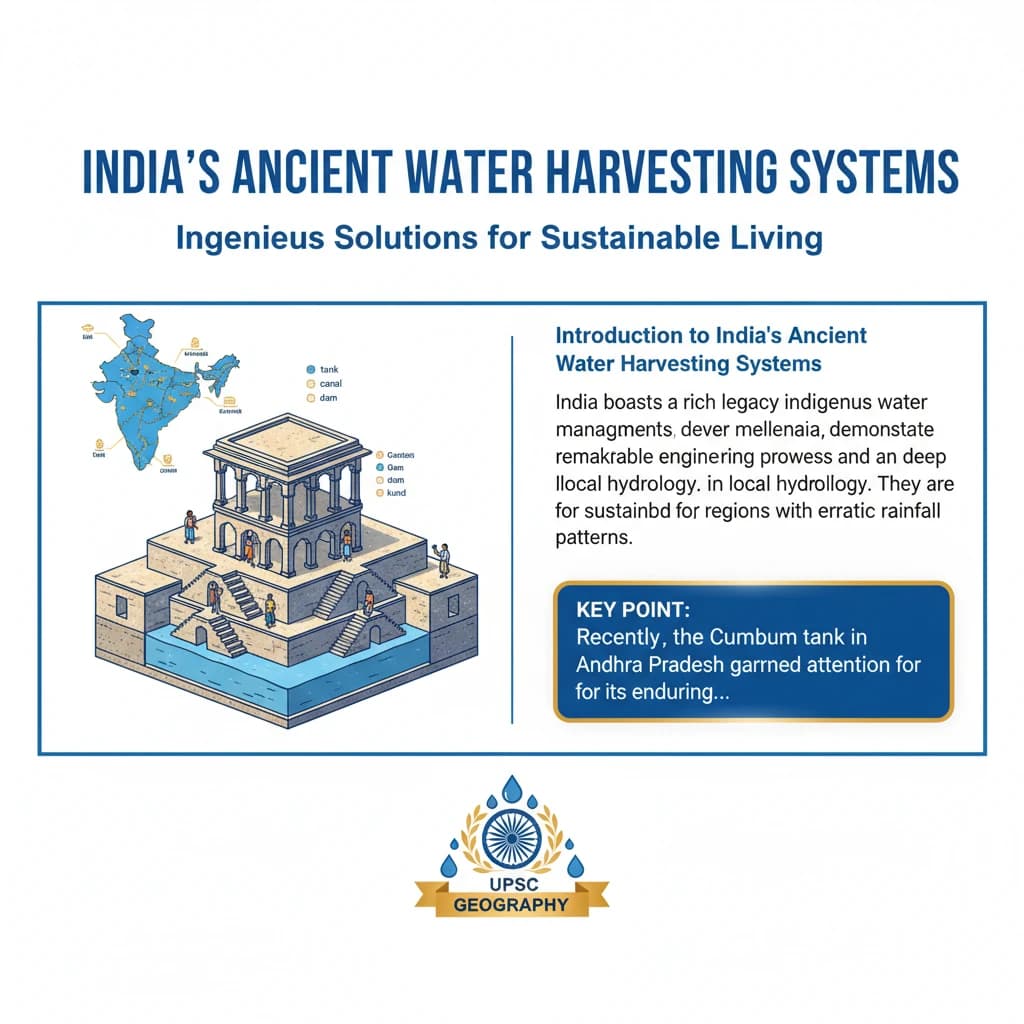
Introduction to India's Ancient Water Harvesting Systems
India boasts a rich legacy of indigenous water management. These systems, developed over millennia, demonstrate remarkable engineering prowess and an deep understanding of local hydrology. They are crucial for sustainable living, especially in regions with erratic rainfall patterns.
Recently, the Cumbum tank in Andhra Pradesh garnered attention for its enduring ancient water harvesting system, highlighting the relevance of traditional practices.
The Cumbum Tank: A Marvel of Ancient Engineering
The Cumbum tank is a significant medium irrigation project. Historically, it held the distinction of being the second largest man-made reservoir in Asia and the third largest in the world, showcasing its immense scale and importance.
Construction and Geographical Features
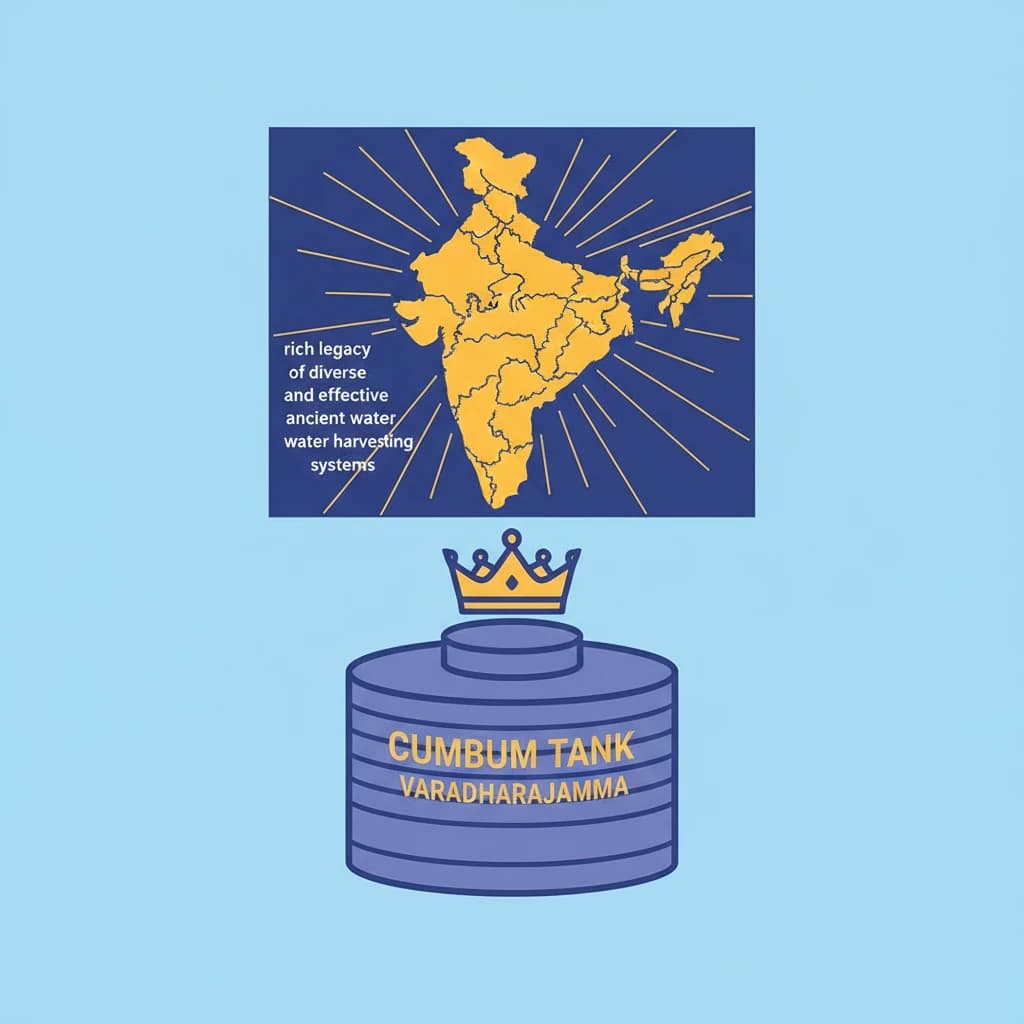
The construction of the Cumbum tank dates back to the period of 1522-1524 AD. It was commissioned by Vijayanagara Princess Varadharajamma, also known as Ruchidevi, who was the wife of Sri Krishna Devaraya.
The tank was ingeniously built by damming a natural gorge. This gorge served as the confluence point for the Gundlakamma and Jampaleru rivers, effectively harnessing their flow.
The Cumbum tank is primarily fed by the Nallamalavagu, a stream originating from the Nallamala hills, which are part of the Eastern Ghats. This stream is an integral component of the larger Gundlakamma river system.
Technological and Indigenous Wisdom
The construction of the Cumbum tank exemplifies advanced indigenous engineering. British engineer Sir Arthur Cotton, renowned as a pioneer of irrigation works in South India, extensively studied these ancient structures.
Sir Arthur Cotton particularly noted the effectiveness and longevity of the earthen bunds (embankments) used in such tanks. These bunds were built without reinforced or compacted banks, yet they have remarkably endured over centuries.
A key structural element observed in these systems is the puddle tank. This refers to a vertical wall of clay strategically placed between the original ground level and any newly added material above it, ensuring structural integrity and water retention.
Restoration Efforts
Recognizing the historical and practical value of the Cumbum tank, the Government of Andhra Pradesh has undertaken significant modernization efforts. These initiatives are supported by the Japanese International Cooperation Agency (JICA), ensuring the continued utility and preservation of this ancient marvel.
Diverse Ancient Water Harvesting Systems of India
Across India, various regions developed unique and highly effective water harvesting systems tailored to their specific geographical and climatic conditions. These structures reflect a deep understanding of sustainable resource management.
| Structure | Description | Region | Key Features |
|---|---|---|---|
| Baoli | Stepwell structures featuring arches, carved motifs, and rooms. Integral to urban water storage in low-rainfall areas. | Rajasthan, Delhi, Gujarat, Karnataka. E.g., Chand Baori, Rajasthan; Agrasen ki Baoli, Delhi. | Carvings, rooms, tiered steps, seasonal water collection. |
| Jhalara | Rectangular stepwells with tiered steps on three or four sides, designed to collect water from reservoirs or lakes. | Rajasthan | Tiered steps, rectangular shape. |
| Talab/Bandhi | Medium-sized reservoirs, either natural or human-made, primarily used for regulating water flow. | Various regions | Reservoirs, water flow regulation. |
| Taanka | Cylindrical underground pits, paved to collect rainwater from rooftops or designated catchment areas. | Thar Desert, Rajasthan | Underground, cylindrical, paved. |
| Ahar Pynes | Reservoirs characterized by embankments, specifically built at the end of diversion channels for effective floodwater harvesting. | South Bihar | Embankments, floodwater harvesting. |
| Johads | Earthen storage pits created by excavating three-sided elevated areas, with the excavated soil used to form the fourth side. | Various regions | Earthen pits, elevated area excavation. |
💡 Key Takeaways
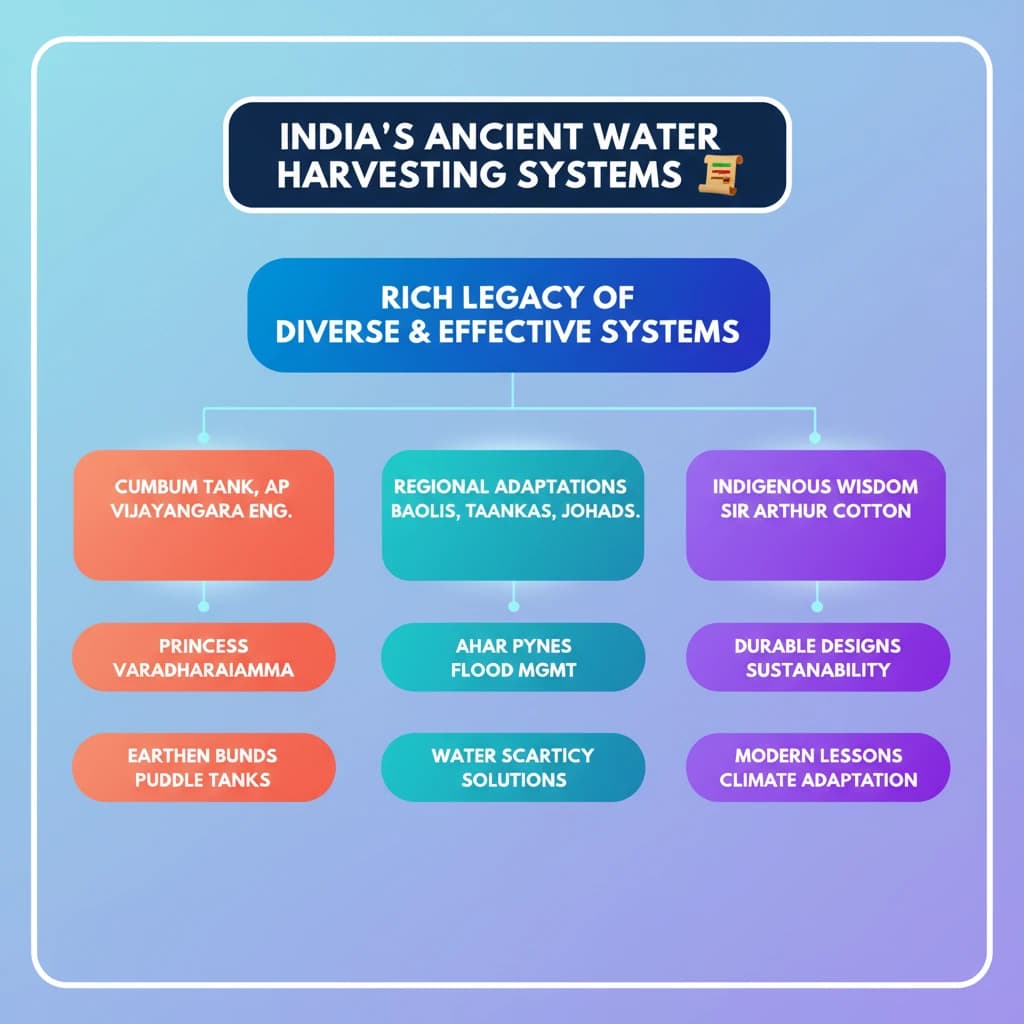
- •India possesses a rich legacy of diverse and effective ancient water harvesting systems.
- •The Cumbum tank in Andhra Pradesh, built by Vijayanagara Princess Varadharajamma, is a prime example of ancient engineering.
- •Systems like Baolis, Taankas, Ahar Pynes, and Johads demonstrate regional adaptations to water scarcity and flood management.
- •British engineer Sir Arthur Cotton noted the indigenous wisdom behind the durable earthen bunds and puddle tanks.
- •These traditional methods offer valuable lessons for modern sustainable water management and climate change adaptation.
🧠 Memory Techniques
95% Verified Content
📚 Reference Sources
•General knowledge of Indian history and geography
•Reports on traditional water management by government and non-governmental organizations