Loading page, please wait…
Indus River System: India-Pakistan Water Disputes & Tributaries - UPSC Geography
What is Indus River System: India-Pakistan Water Disputes & Tributaries in UPSC Geography?
Indus River System: India-Pakistan Water Disputes & Tributaries is a key topic under Geography for UPSC Civil Services Examination. Key points include: The Indus is a trans-boundary river originating in Western Tibet, flowing through Kashmir and Pakistan to the Arabian Sea.. The Sutlej is a major tributary of the Indus, originating at Rakas Lake (as per source), entering India via Shipki La Pass.. The Sutlej meets the Beas in Punjab, forms part of the India-Pakistan border, and then joins the Chenab to form the Panjnad, which empties into the Indus.. Understanding this topic is essential for both UPSC Prelims and Mains preparation.
Why is Indus River System: India-Pakistan Water Disputes & Tributaries important for UPSC exam?
Indus River System: India-Pakistan Water Disputes & Tributaries is a Medium-level topic in UPSC Geography. It is tested in both Prelims (factual MCQs) and Mains (analytical answer writing). Previous year UPSC questions have frequently covered aspects of Indus River System: India-Pakistan Water Disputes & Tributaries, making it essential for comprehensive IAS preparation.
How to prepare Indus River System: India-Pakistan Water Disputes & Tributaries for UPSC?
To prepare Indus River System: India-Pakistan Water Disputes & Tributaries for UPSC: (1) Study the comprehensive notes covering all key concepts on Vaidra. (2) Practice previous year questions on this topic. (3) Connect it with current affairs using daily updates. (4) Revise using key takeaways and mind maps available for Geography. (5) Write practice answers linking Indus River System: India-Pakistan Water Disputes & Tributaries to related GS Paper topics.
Key takeaways of Indus River System: India-Pakistan Water Disputes & Tributaries for UPSC
- The Indus is a trans-boundary river originating in Western Tibet, flowing through Kashmir and Pakistan to the Arabian Sea.
- The Sutlej is a major tributary of the Indus, originating at Rakas Lake (as per source), entering India via Shipki La Pass.
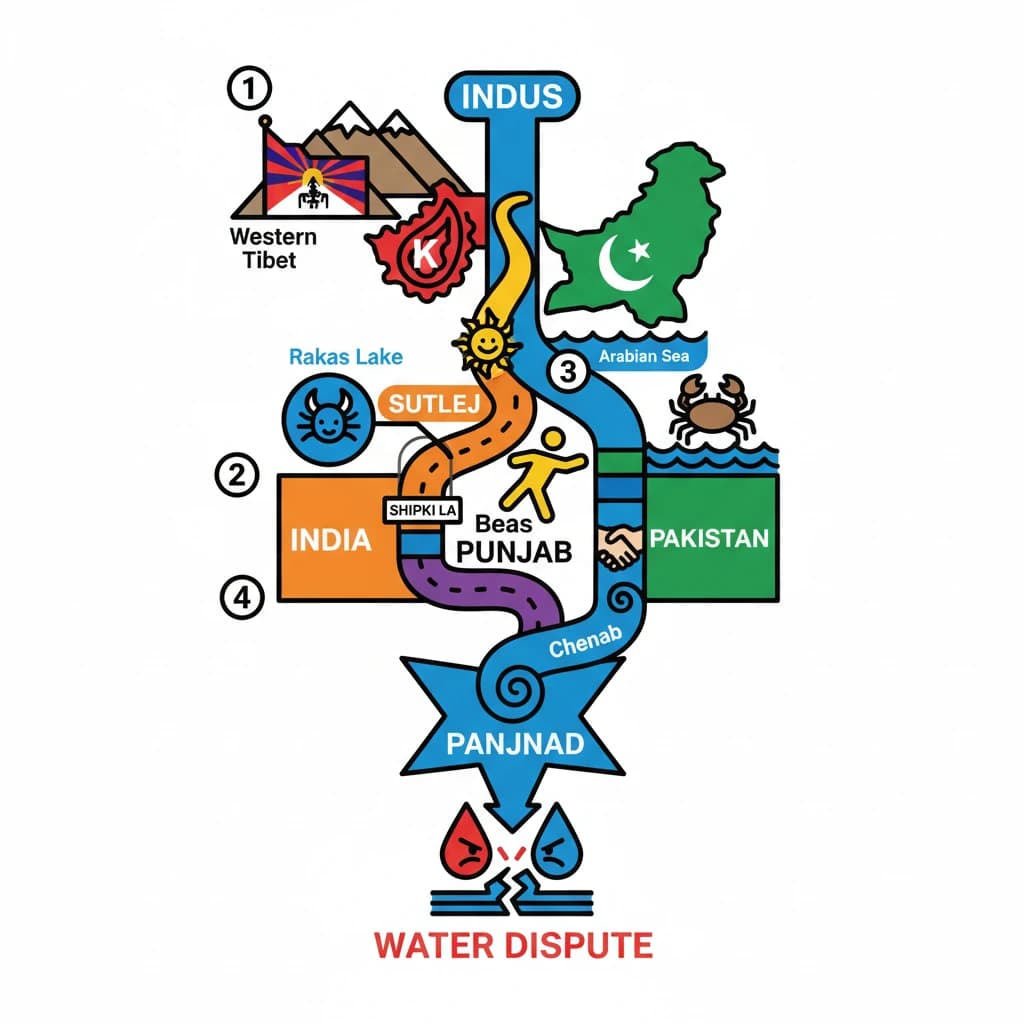
- The Sutlej meets the Beas in Punjab, forms part of the India-Pakistan border, and then joins the Chenab to form the Panjnad, which empties into the Indus.
- Water sharing from the Indus River System has been a contentious issue between India and Pakistan since independence.
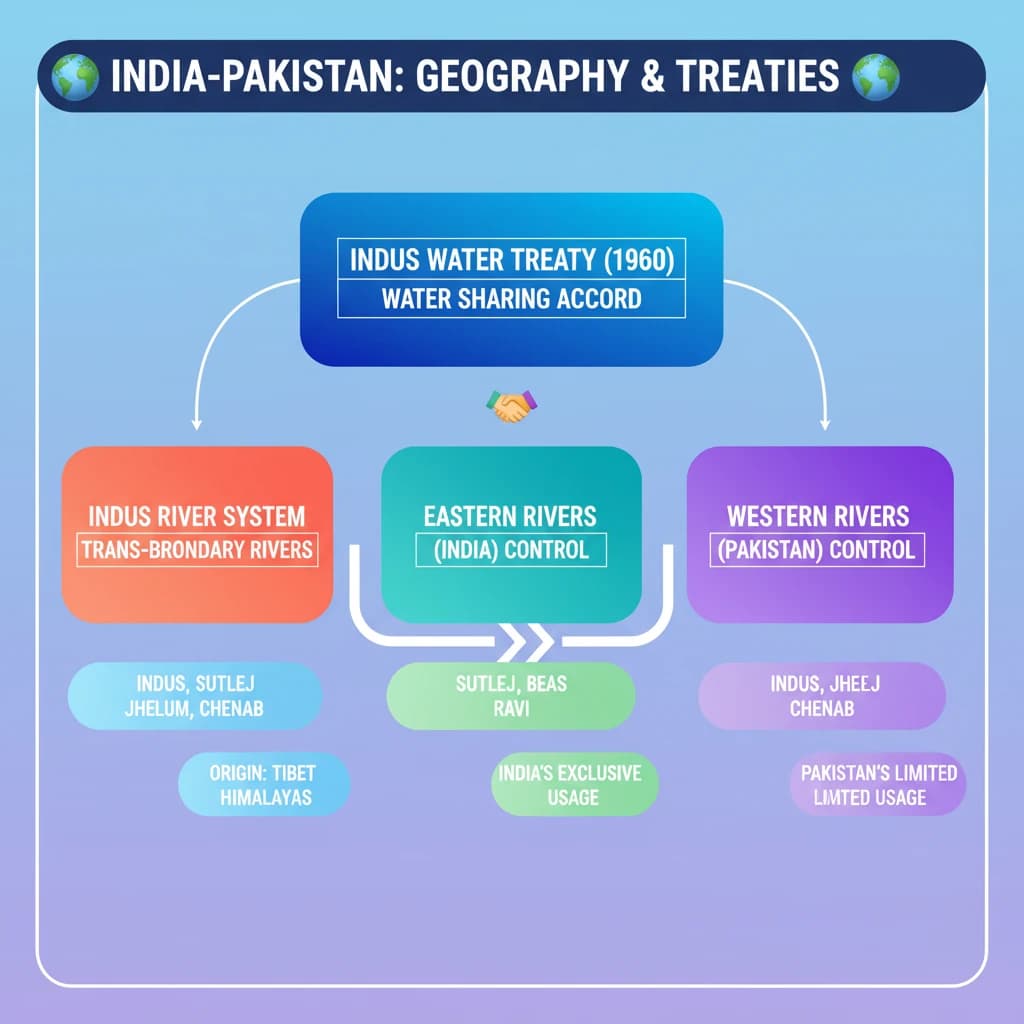
- The Indus Water Treaty (1960) governs water distribution, but contemporary challenges and disputes persist.
Indus River System: India-Pakistan Water Disputes & Tributaries
Medium⏱️ 6 min read
geography
📖 Introduction
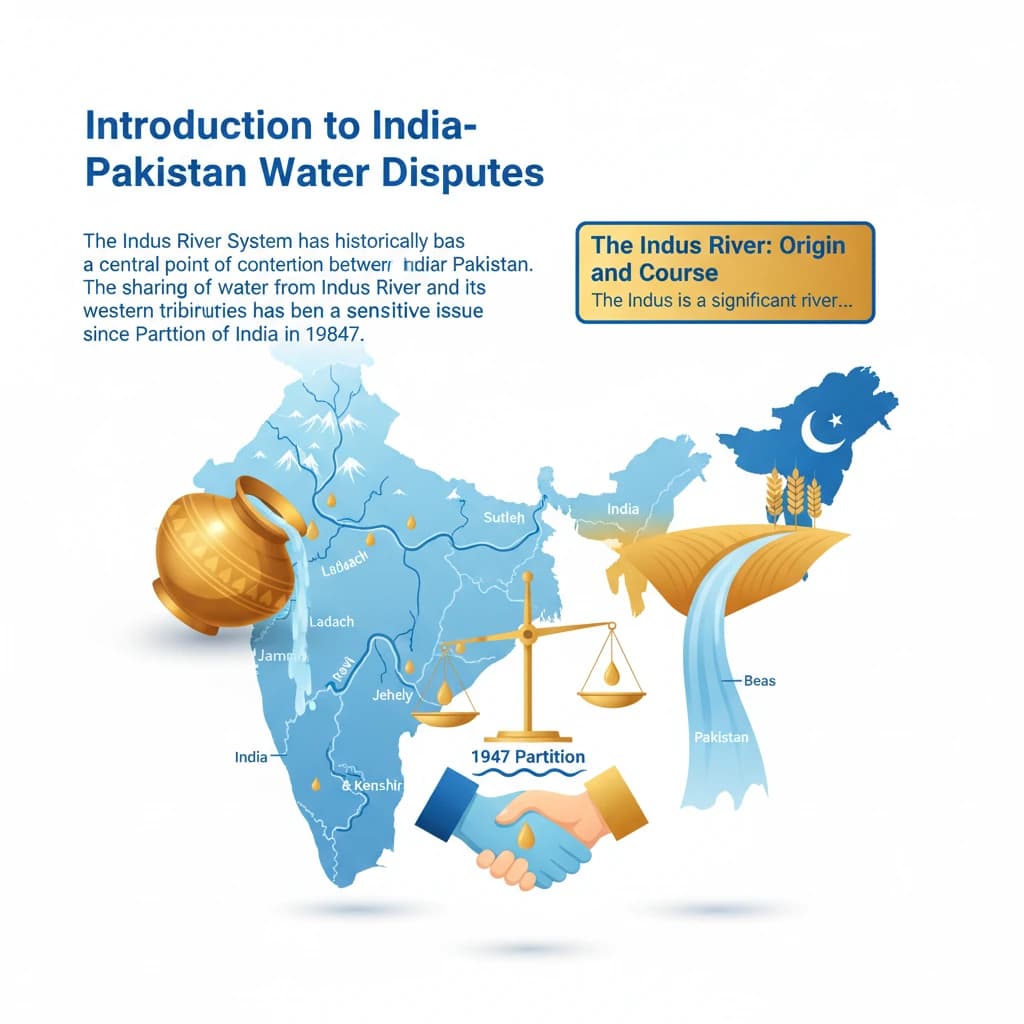
Introduction to India-Pakistan Water Disputes
The Indus River System has historically been a central point of contention between India and Pakistan.
The sharing of water from the Indus River and its western tributaries has been a sensitive issue since the Partition of India in 1947.
The Indus River: Origin and Course
The Indus is a significant trans-boundary river in Asia, crucial for the livelihoods of millions.
Origin: Western Tibet
Initial Flow: Northwest through Kashmir
Main Flow: South-by-southwest through Pakistan
Outflow: Empties into the Arabian Sea near Karachi
Sutlej River: A Key Tributary
The Sutlej River is a major tributary of the Indus River System, playing a vital role in the region's hydrology.
Origin: Rakas Lake in Pakistan (as per source material)
It flows parallel to the Indus River for approximately 400 kilometres before entering India.
Sutlej's Course Through India
The Sutlej makes its entry into India through Himachal Pradesh's Shipki La Pass.
Subsequently, it continues its journey through the plains of Punjab, a key agricultural region.
Confluence and Final Journey
In Punjab, the Sutlej River converges with the Beas River.
This confluence forms a section of the India-Pakistan border before the Sutlej eventually joins the Chenab River.
The combined flow of these rivers creates the Panjnad River, which then empties into the main Indus River.
Understanding the geography of these rivers, particularly their origins, courses, and confluences, is crucial for questions on Indo-Pak relations and physical geography in UPSC Prelims and Mains.
💡 Key Takeaways
- •The Indus is a trans-boundary river originating in Western Tibet, flowing through Kashmir and Pakistan to the Arabian Sea.
- •The Sutlej is a major tributary of the Indus, originating at Rakas Lake (as per source), entering India via Shipki La Pass.
- •The Sutlej meets the Beas in Punjab, forms part of the India-Pakistan border, and then joins the Chenab to form the Panjnad, which empties into the Indus.
- •Water sharing from the Indus River System has been a contentious issue between India and Pakistan since independence.
- •The Indus Water Treaty (1960) governs water distribution, but contemporary challenges and disputes persist.
🧠 Memory Techniques
90% Verified Content
📚 Reference Sources
•General knowledge of Indus Water Treaty and Indian Geography