Loading page, please wait…
Joshimath Land Subsidence - UPSC Geography
What is Joshimath Land Subsidence in UPSC Geography?
Joshimath Land Subsidence is a key topic under Geography for UPSC Civil Services Examination. Key points include: Joshimath land subsidence is a critical issue in Uttarakhand, involving the gradual sinking of land.. Causes are a mix of natural vulnerability (ancient landslide debris) and human activities.. Key anthropogenic factors include unregulated construction, high population density, disrupted natural water flow, and hydropower activities.. Understanding this topic is essential for both UPSC Prelims and Mains preparation.
Why is Joshimath Land Subsidence important for UPSC exam?
Joshimath Land Subsidence is a Medium-level topic in UPSC Geography. It is tested in both Prelims (factual MCQs) and Mains (analytical answer writing). Previous year UPSC questions have frequently covered aspects of Joshimath Land Subsidence, making it essential for comprehensive IAS preparation.
How to prepare Joshimath Land Subsidence for UPSC?
To prepare Joshimath Land Subsidence for UPSC: (1) Study the comprehensive notes covering all key concepts on Vaidra. (2) Practice previous year questions on this topic. (3) Connect it with current affairs using daily updates. (4) Revise using key takeaways and mind maps available for Geography. (5) Write practice answers linking Joshimath Land Subsidence to related GS Paper topics.
Key takeaways of Joshimath Land Subsidence for UPSC
- Joshimath land subsidence is a critical issue in Uttarakhand, involving the gradual sinking of land.
- Causes are a mix of natural vulnerability (ancient landslide debris) and human activities.
- Key anthropogenic factors include unregulated construction, high population density, disrupted natural water flow, and hydropower activities.
- Historical warnings, like the 1976 Mishra Committee Report, highlighted the area's fragility but were largely unheeded.
- The crisis underscores the urgent need for sustainable development practices and robust disaster management in the ecologically sensitive Himalayan region.
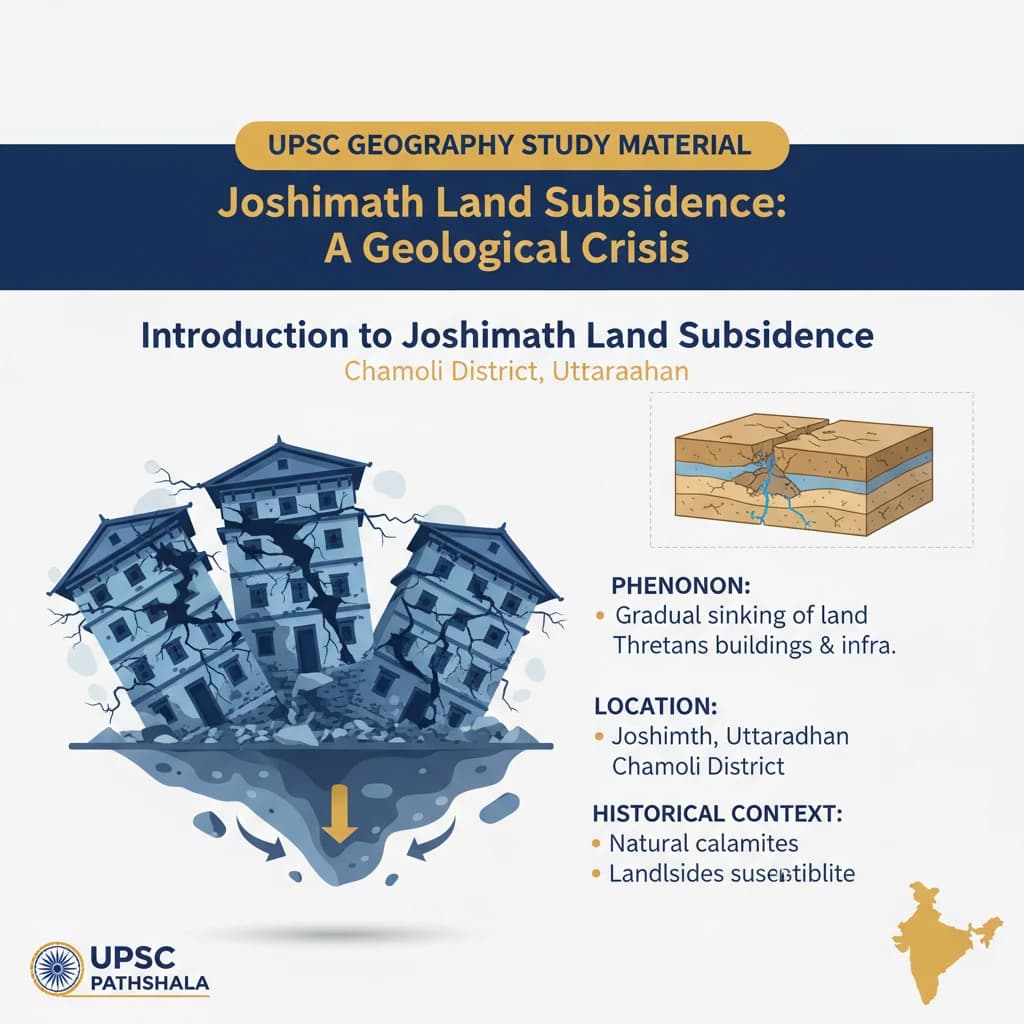
Joshimath Land Subsidence
Medium⏱️ 10 min read
geography
📖 Introduction
Introduction to Joshimath Land Subsidence
The town of Joshimath, located in the Chamoli district of Uttarakhand, has recently faced a severe crisis of land subsidence. This phenomenon involves the gradual sinking of land, threatening the structural integrity of buildings and infrastructure.
Historically, the region has been susceptible to natural calamities, including a series of landslides and floods. These past events underscore the inherent geological fragility of the area.
Understanding Land Subsidence
Land subsidence is defined as the gradual settling or sudden sinking of the Earth's surface due to subsurface movement. It can be triggered by both natural geological processes and human activities.
In Joshimath's context, the subsidence is a complex interplay of its unique geological setting and intensified anthropogenic pressures.
Key Causes of Joshimath Land Subsidence
Experts have identified a combination of human activities and natural causes contributing to the alarming rate of land subsidence in Joshimath.
- Unregulated Construction: Extensive and unplanned building activities, including multi-story structures, have significantly increased the load on the fragile slopes. This added weight destabilizes the already weak foundation.
- High Population Density: A rapidly growing population has led to increased demand for housing and infrastructure, further intensifying construction and land use pressures in a limited, vulnerable area.
- Disruption of Natural Water Flow: Alterations to the natural drainage patterns, often caused by construction and road-building, lead to unchecked water seepage into the ground. This water saturates and weakens the underlying soil and rock strata.
- Hydropower Activities: Projects such as the Tapovan-Vishnugad Hydropower Project involve extensive tunneling and blasting. These activities can disturb the geological structure, create new cracks, and alter groundwater aquifers, contributing to instability.
Joshimath is notably situated on the debris of an ancient landslide, making its foundation inherently unstable and highly susceptible to subsidence.
For UPSC, it is crucial to recognize that disasters in the Himalayan region often result from a synergistic effect of natural geological vulnerability and intensified anthropogenic pressures. This framework is vital for answering questions on disaster management and environmental issues.
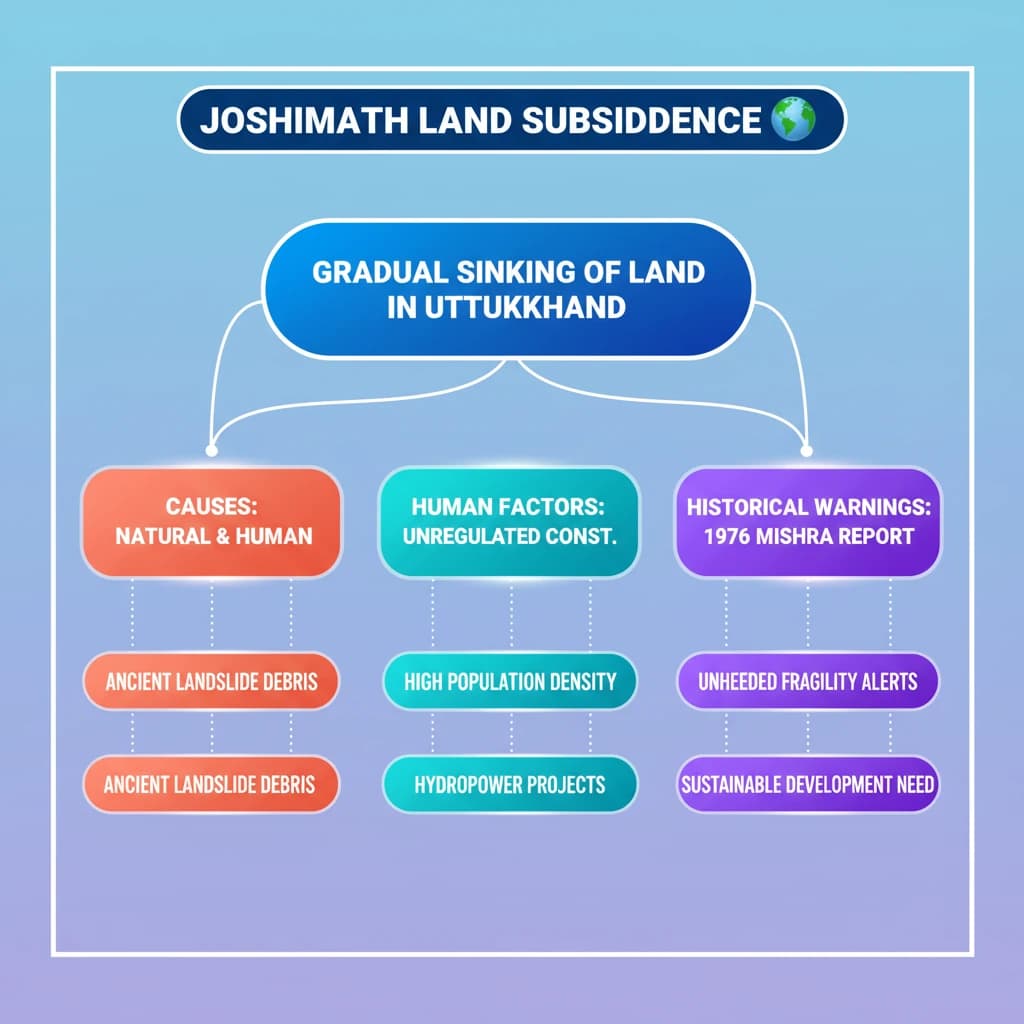
💡 Key Takeaways
- •Joshimath land subsidence is a critical issue in Uttarakhand, involving the gradual sinking of land.
- •Causes are a mix of natural vulnerability (ancient landslide debris) and human activities.
- •Key anthropogenic factors include unregulated construction, high population density, disrupted natural water flow, and hydropower activities.
- •Historical warnings, like the 1976 Mishra Committee Report, highlighted the area's fragility but were largely unheeded.
- •The crisis underscores the urgent need for sustainable development practices and robust disaster management in the ecologically sensitive Himalayan region.
🧠 Memory Techniques
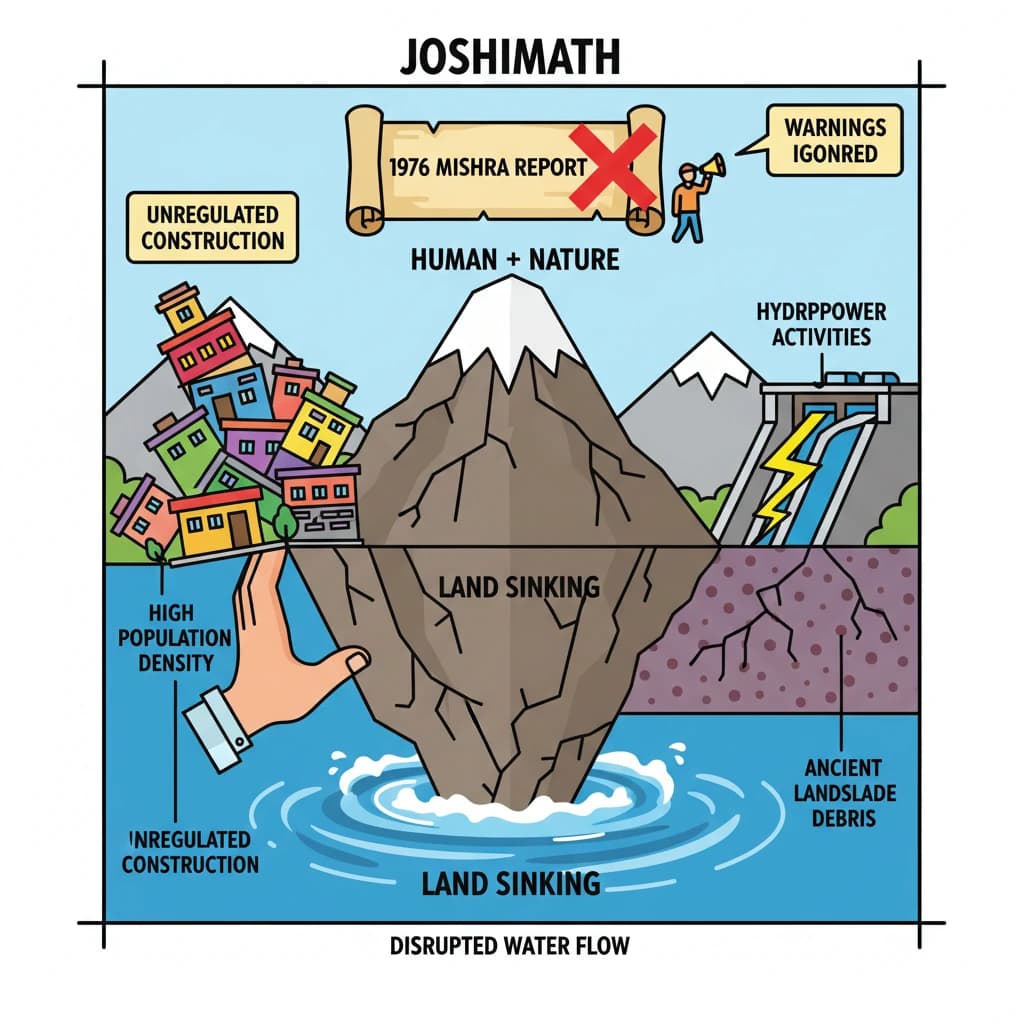
90% Verified Content
📚 Reference Sources
•Mishra Committee Report (1976)
•National Disaster Management Authority (NDMA) reports and guidelines (general knowledge)
•Geological Survey of India (GSI) findings and publications (general knowledge)
•Various news reports and expert analyses on Joshimath crisis (2022-2023)