Loading page, please wait…
Kosi-Mechi River Linking Project - UPSC Geography
What is Kosi-Mechi River Linking Project in UPSC Geography?
Kosi-Mechi River Linking Project is a key topic under Geography for UPSC Civil Services Examination. Key points include: Kosi-Mechi River Linking Project is part of India's National Perspective Plan (NPP) for river interlinking.. Aims to provide irrigation to 4.74 lakh hectares (2.14 lakh in Bihar) and 24 MCM water supply.. Involves linking Kosi River with Mechi River (Mahananda tributary), impacting Bihar and Nepal.. Understanding this topic is essential for both UPSC Prelims and Mains preparation.
Why is Kosi-Mechi River Linking Project important for UPSC exam?
Kosi-Mechi River Linking Project is a Medium-level topic in UPSC Geography. It is tested in both Prelims (factual MCQs) and Mains (analytical answer writing). Previous year UPSC questions have frequently covered aspects of Kosi-Mechi River Linking Project, making it essential for comprehensive IAS preparation.
How to prepare Kosi-Mechi River Linking Project for UPSC?
To prepare Kosi-Mechi River Linking Project for UPSC: (1) Study the comprehensive notes covering all key concepts on Vaidra. (2) Practice previous year questions on this topic. (3) Connect it with current affairs using daily updates. (4) Revise using key takeaways and mind maps available for Geography. (5) Write practice answers linking Kosi-Mechi River Linking Project to related GS Paper topics.
Key takeaways of Kosi-Mechi River Linking Project for UPSC
- Kosi-Mechi River Linking Project is part of India's National Perspective Plan (NPP) for river interlinking.
- Aims to provide irrigation to 4.74 lakh hectares (2.14 lakh in Bihar) and 24 MCM water supply.
- Involves linking Kosi River with Mechi River (Mahananda tributary), impacting Bihar and Nepal.
- Project is overseen by the National Water Development Agency (NWDA) under the Union Ministry of Jal Shakti.
- Major concern: Primarily designed for irrigation, it lacks a significant flood control component, leading to local protests in flood-prone Bihar.
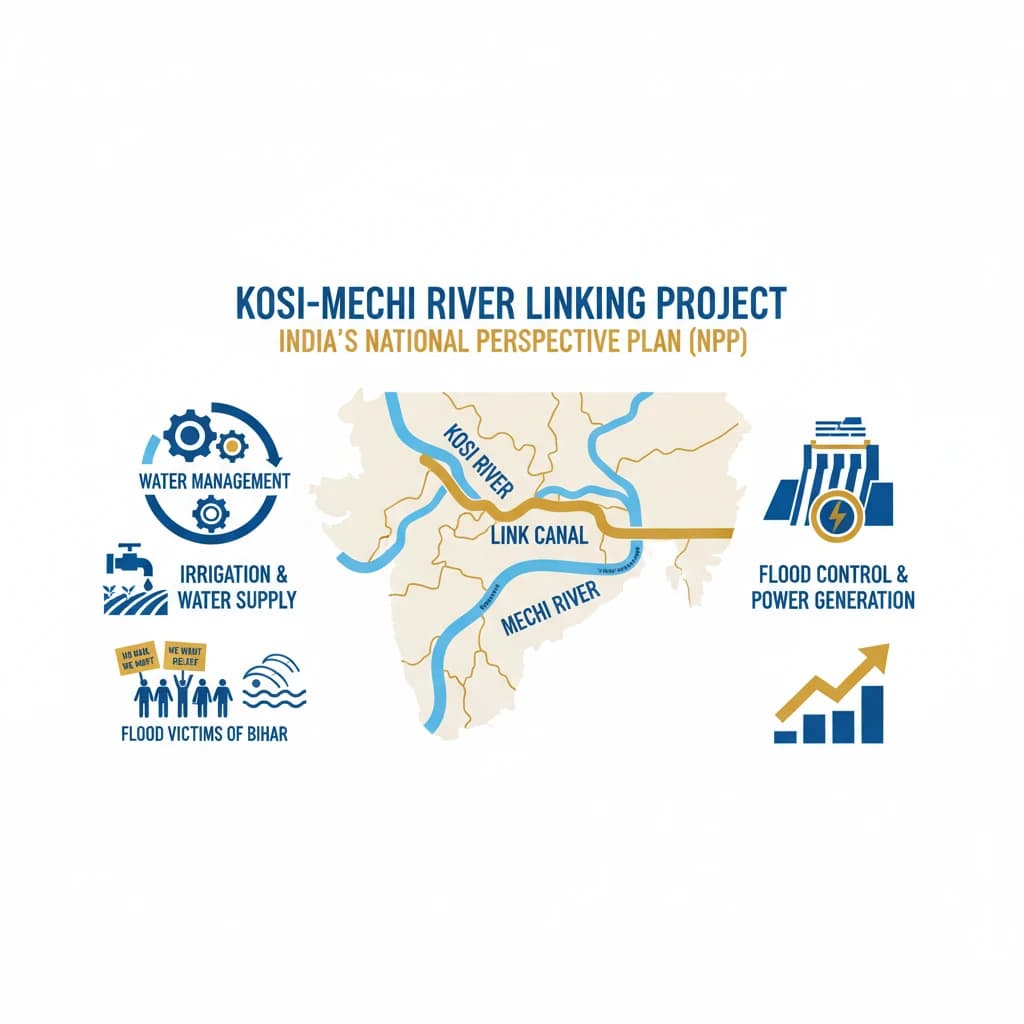
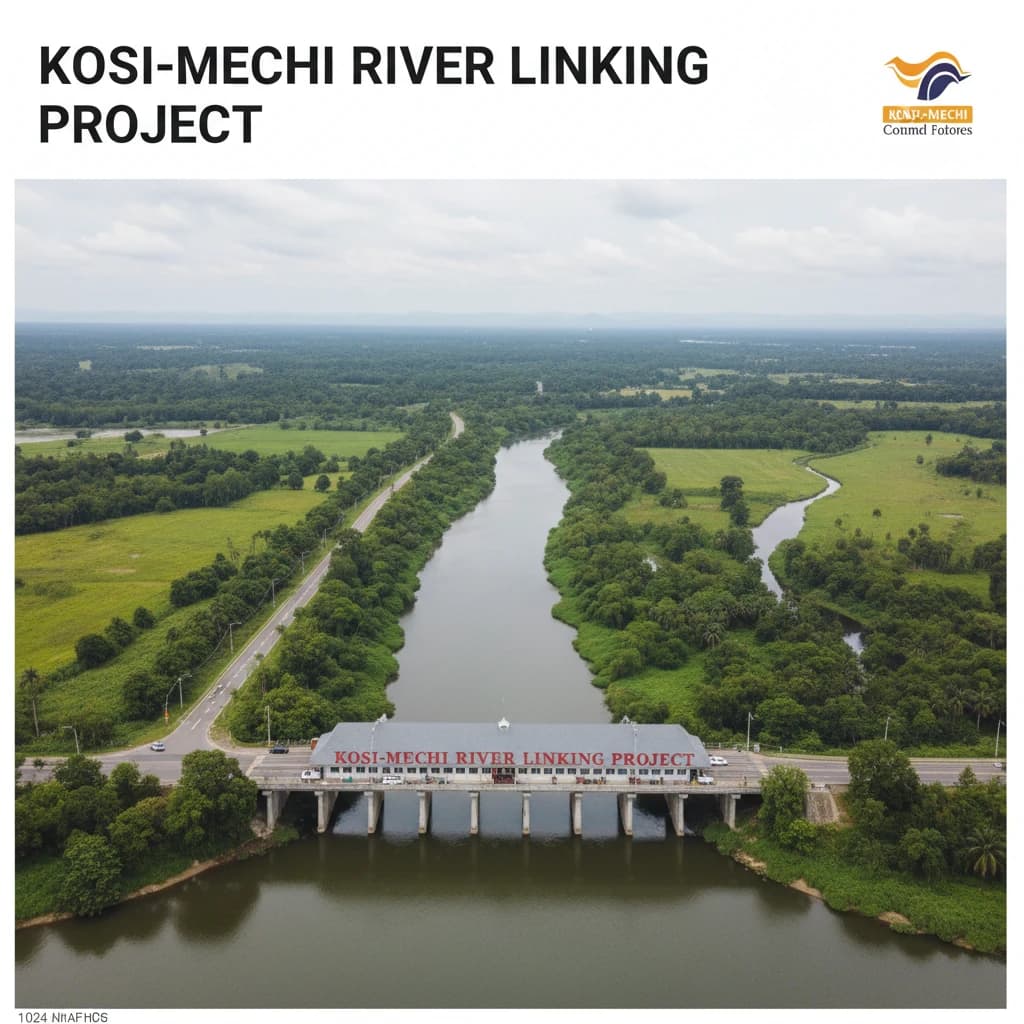
Kosi-Mechi River Linking Project
Medium⏱️ 8 min read
geography
📖 Introduction
Introduction to the Kosi-Mechi River Linking Project
The Kosi-Mechi River Linking Project is a significant component of India's ambitious National Perspective Plan (NPP) for interlinking rivers. This project aims to address regional water management challenges.
Recently, the project has faced considerable opposition, particularly from flood victims in Bihar, who have protested against its implementation. Their concerns highlight a critical debate surrounding large-scale infrastructure projects.
Project Objectives and Scope
The primary objective of the Kosi-Mechi River Linking Project is to enhance irrigation facilities in the region. It seeks to provide crucial water resources for agricultural development.
Project Aim: To provide annual irrigation to 4.74 lakh hectares, with 2.14 lakh hectares specifically benefiting in Bihar. It also aims to supply 24 million cubic meters (MCM) of water for domestic and industrial use.
Upon its completion, the project is designed to release an additional 5,247 cubic feet per second (cusecs) of water from the existing Kosi barrage, augmenting water availability downstream.
Geographical Impact and Oversight
The project involves the crucial task of linking the Kosi River with the Mechi River. The Mechi River is a significant tributary of the Mahananda River, and the interlinking will impact regions across Bihar and Nepal.
Key Rivers: Kosi River and Mechi River (a tributary of the Mahananda River).
Affected Regions: Parts of Bihar, India, and adjacent areas in Nepal.
The overall management and supervision of this project fall under the purview of the National Water Development Agency (NWDA). The NWDA operates under the aegis of the Union Ministry of Jal Shakti (Water Resources).
Major Concerns and Local Opposition
Despite the government's stated irrigation goals, a significant concern raised by locals and critics is the project's limited focus on flood control. The region is highly susceptible to annual flooding, a critical issue not adequately addressed by the current design.
Primary Concern: The project is primarily designed for irrigation purposes, aiming to support 215,000 hectares of agricultural land in the Mahananda river basin during the Kharif season. However, it lacks a significant component for flood mitigation.
Local communities, particularly flood victims in Bihar, argue that while irrigation is important, the perennial problem of devastating floods requires a more comprehensive solution that the current project design does not offer.
UPSC Insight: When analyzing river interlinking projects, always consider both their intended benefits (e.g., irrigation, water supply) and potential negative impacts or overlooked issues (e.g., flood control, displacement, environmental concerns). This allows for a balanced perspective in your answers for GS Paper I (Geography) and GS Paper III (Environment, Economy).
💡 Key Takeaways
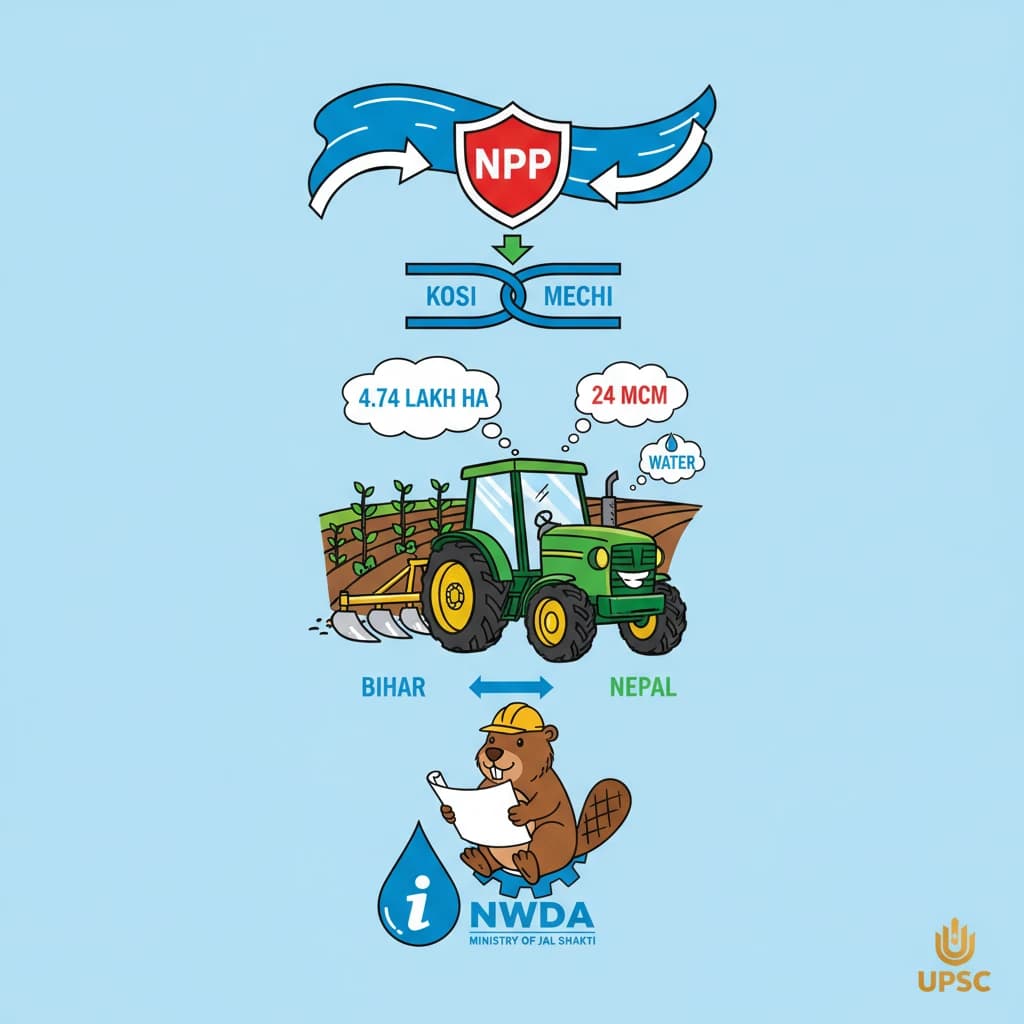
- •Kosi-Mechi River Linking Project is part of India's National Perspective Plan (NPP) for river interlinking.
- •Aims to provide irrigation to 4.74 lakh hectares (2.14 lakh in Bihar) and 24 MCM water supply.
- •Involves linking Kosi River with Mechi River (Mahananda tributary), impacting Bihar and Nepal.
- •Project is overseen by the National Water Development Agency (NWDA) under the Union Ministry of Jal Shakti.
- •Major concern: Primarily designed for irrigation, it lacks a significant flood control component, leading to local protests in flood-prone Bihar.
🧠 Memory Techniques
90% Verified Content
📚 Reference Sources
•National Water Development Agency (NWDA) official reports (general knowledge)
•Ministry of Jal Shakti publications (general knowledge)