Loading page, please wait…
Land Subsidence: Examples from Jakarta & Netherlands - UPSC Geography
What is Land Subsidence: Examples from Jakarta & Netherlands in UPSC Geography?
Land Subsidence: Examples from Jakarta & Netherlands is a key topic under Geography for UPSC Civil Services Examination. Key points include: Land subsidence is the sinking of Earth's surface, caused by natural and anthropogenic factors.. Excessive groundwater extraction is a major cause, exemplified by Jakarta (25 cm/year subsidence).. Extraction of natural gas also causes subsidence, as seen in the Netherlands.. Understanding this topic is essential for both UPSC Prelims and Mains preparation.
Why is Land Subsidence: Examples from Jakarta & Netherlands important for UPSC exam?
Land Subsidence: Examples from Jakarta & Netherlands is a Medium-level topic in UPSC Geography. It is tested in both Prelims (factual MCQs) and Mains (analytical answer writing). Previous year UPSC questions have frequently covered aspects of Land Subsidence: Examples from Jakarta & Netherlands, making it essential for comprehensive IAS preparation.
How to prepare Land Subsidence: Examples from Jakarta & Netherlands for UPSC?
To prepare Land Subsidence: Examples from Jakarta & Netherlands for UPSC: (1) Study the comprehensive notes covering all key concepts on Vaidra. (2) Practice previous year questions on this topic. (3) Connect it with current affairs using daily updates. (4) Revise using key takeaways and mind maps available for Geography. (5) Write practice answers linking Land Subsidence: Examples from Jakarta & Netherlands to related GS Paper topics.
Key takeaways of Land Subsidence: Examples from Jakarta & Netherlands for UPSC
- Land subsidence is the sinking of Earth's surface, caused by natural and anthropogenic factors.
- Excessive groundwater extraction is a major cause, exemplified by Jakarta (25 cm/year subsidence).
- Extraction of natural gas also causes subsidence, as seen in the Netherlands.
- Subsidence leads to increased flood risk, infrastructure damage, and challenges in water management.
- Sustainable urban planning and regulated resource extraction are crucial for mitigation.
Land Subsidence: Examples from Jakarta & Netherlands
Medium⏱️ 7 min read
geography
📖 Introduction
Understanding Land Subsidence
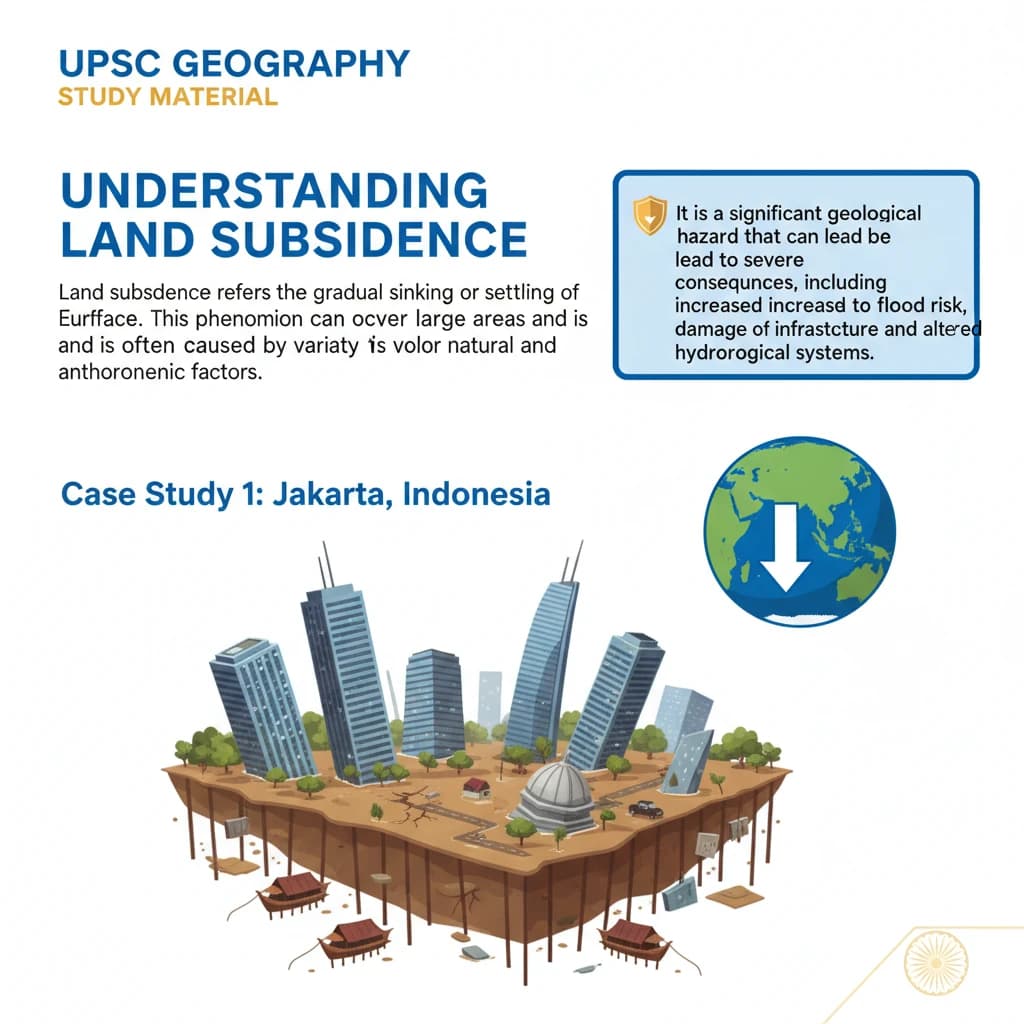
Land subsidence refers to the gradual sinking or settling of the Earth's surface. This phenomenon can occur over large areas and is often caused by a variety of natural and anthropogenic factors.
It is a significant geological hazard that can lead to severe consequences, including increased flood risk, damage to infrastructure, and altered hydrological systems.
Case Study 1: Jakarta, Indonesia
Jakarta, the capital city of Indonesia, is experiencing one of the most severe rates of land subsidence globally. This critical issue poses an existential threat to the sprawling metropolis.
Key Data: Jakarta's land is subsiding at an alarming rate of up to 25 cm per year in some areas. This makes it one of the fastest-sinking cities in the world.
The primary driver behind Jakarta's rapid subsidence is the excessive groundwater extraction. As the city's population and industrial activities grow, the demand for fresh water escalates, leading to unsustainable pumping from underground aquifers.
Case Study 2: The Netherlands
The Netherlands, much of which lies below sea level, has historically grappled with issues of land management and water control. Land subsidence has been a persistent and significant problem in various parts of the country.
In the Netherlands, a major cause of subsidence is the extraction of natural gas from underground reservoirs. The removal of these subsurface fluids reduces pore pressure, leading to the compaction of overlying sediment layers.
This anthropogenic subsidence, combined with natural processes like peat oxidation, exacerbates the challenges of maintaining flood defenses and protecting infrastructure in a low-lying nation.
UPSC Insight: Understanding specific examples like Jakarta and the Netherlands helps illustrate the diverse causes (groundwater extraction vs. natural gas extraction) and global prevalence of land subsidence, crucial for answers in Geography (GS Paper I) and Environment (GS Paper III).
💡 Key Takeaways
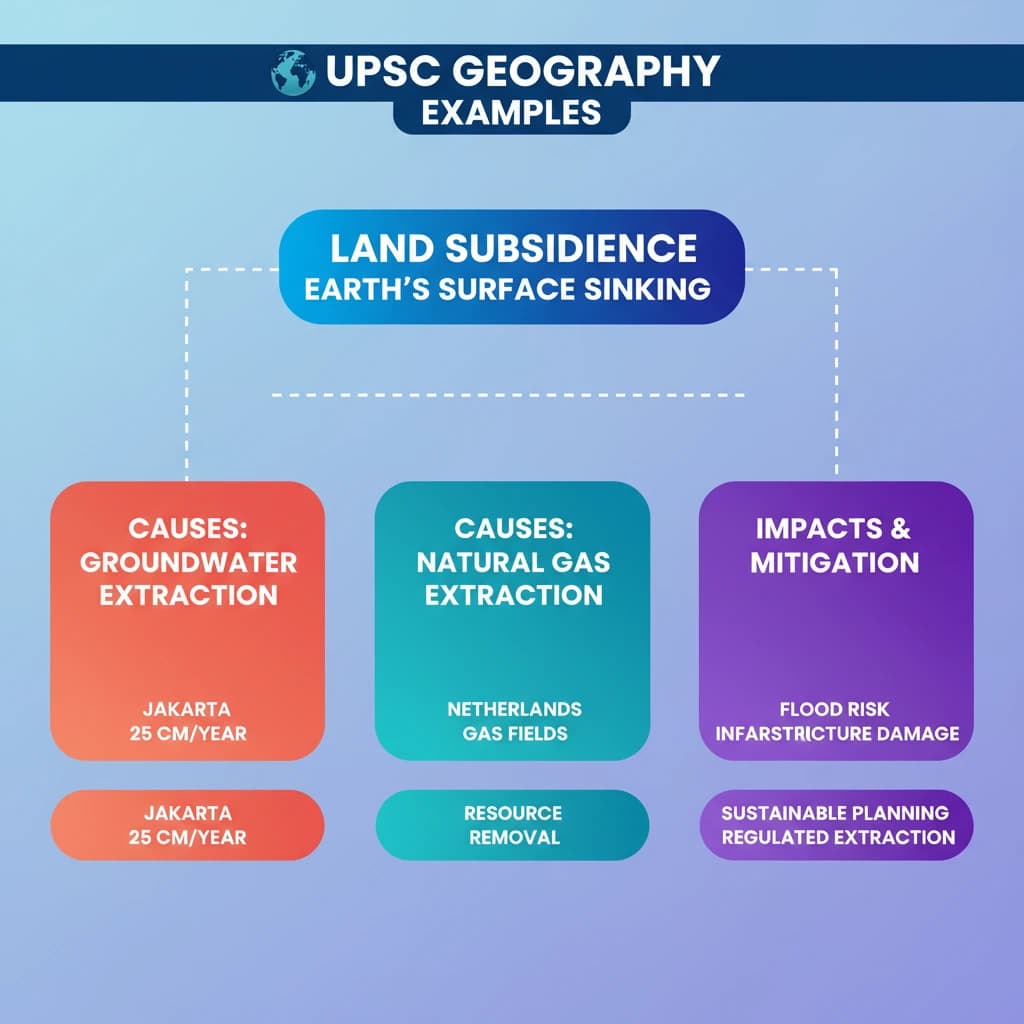
- •Land subsidence is the sinking of Earth's surface, caused by natural and anthropogenic factors.
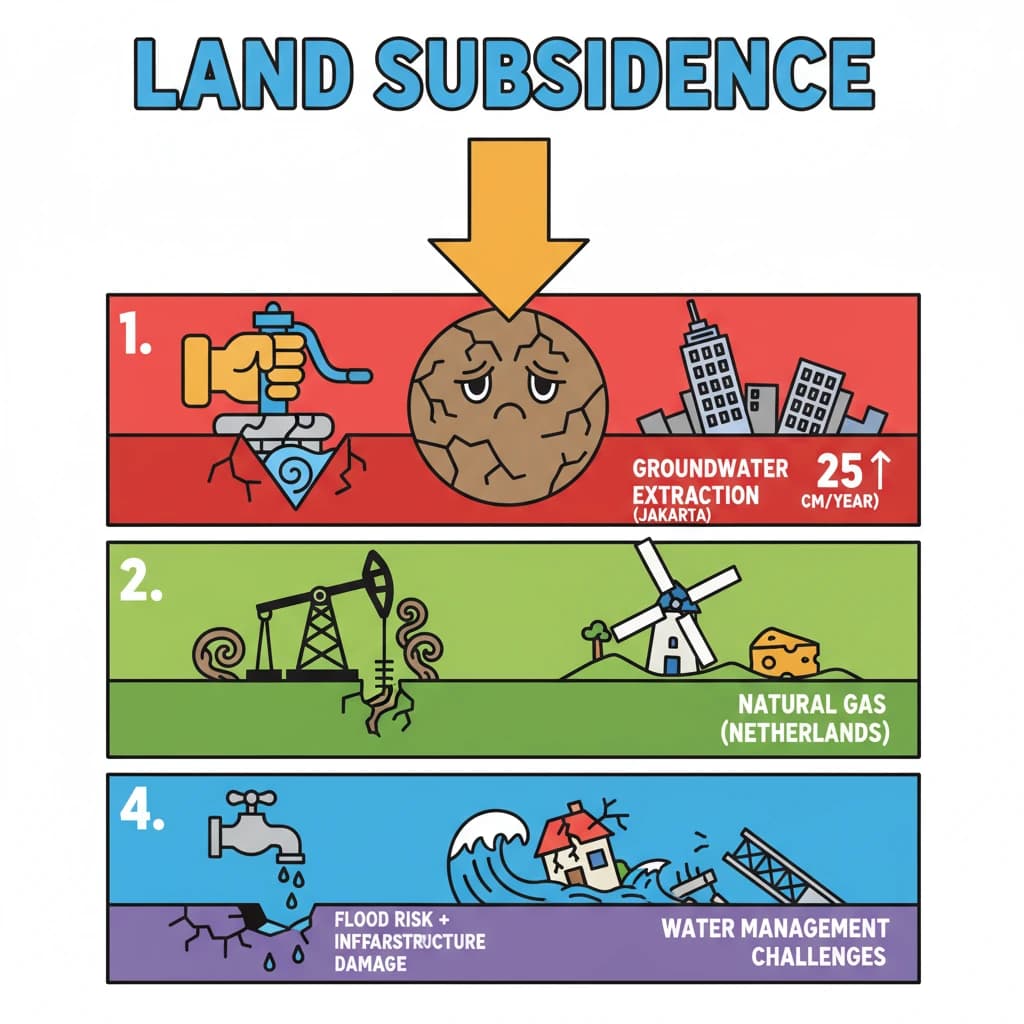
- •Excessive groundwater extraction is a major cause, exemplified by Jakarta (25 cm/year subsidence).
- •Extraction of natural gas also causes subsidence, as seen in the Netherlands.
- •Subsidence leads to increased flood risk, infrastructure damage, and challenges in water management.
- •Sustainable urban planning and regulated resource extraction are crucial for mitigation.
🧠 Memory Techniques
98% Verified Content
📚 Reference Sources
•United Nations Environment Programme (UNEP) reports on urban subsidence
•Scientific articles on land subsidence in Jakarta and the Netherlands
•Geological Survey of the Netherlands (TNO) publications