Loading page, please wait…
Other Geothermal Features Similar to Hydrothermal Vents - UPSC Geography
What is Other Geothermal Features Similar to Hydrothermal Vents in UPSC Geography?
Other Geothermal Features Similar to Hydrothermal Vents is a key topic under Geography for UPSC Civil Services Examination. Key points include: Hot springs are geothermally heated groundwater emerging on land, found in both volcanic and non-volcanic areas.. Geysers are periodic eruptions of hot water and steam, requiring volcanic heat and underground water reservoirs.. Fumaroles are vents releasing volcanic gases and steam, often containing hydrogen sulfide.. Understanding this topic is essential for both UPSC Prelims and Mains preparation.
Why is Other Geothermal Features Similar to Hydrothermal Vents important for UPSC exam?
Other Geothermal Features Similar to Hydrothermal Vents is a Easy-level topic in UPSC Geography. It is tested in both Prelims (factual MCQs) and Mains (analytical answer writing). Previous year UPSC questions have frequently covered aspects of Other Geothermal Features Similar to Hydrothermal Vents, making it essential for comprehensive IAS preparation.
How to prepare Other Geothermal Features Similar to Hydrothermal Vents for UPSC?
To prepare Other Geothermal Features Similar to Hydrothermal Vents for UPSC: (1) Study the comprehensive notes covering all key concepts on Vaidra. (2) Practice previous year questions on this topic. (3) Connect it with current affairs using daily updates. (4) Revise using key takeaways and mind maps available for Geography. (5) Write practice answers linking Other Geothermal Features Similar to Hydrothermal Vents to related GS Paper topics.
Key takeaways of Other Geothermal Features Similar to Hydrothermal Vents for UPSC
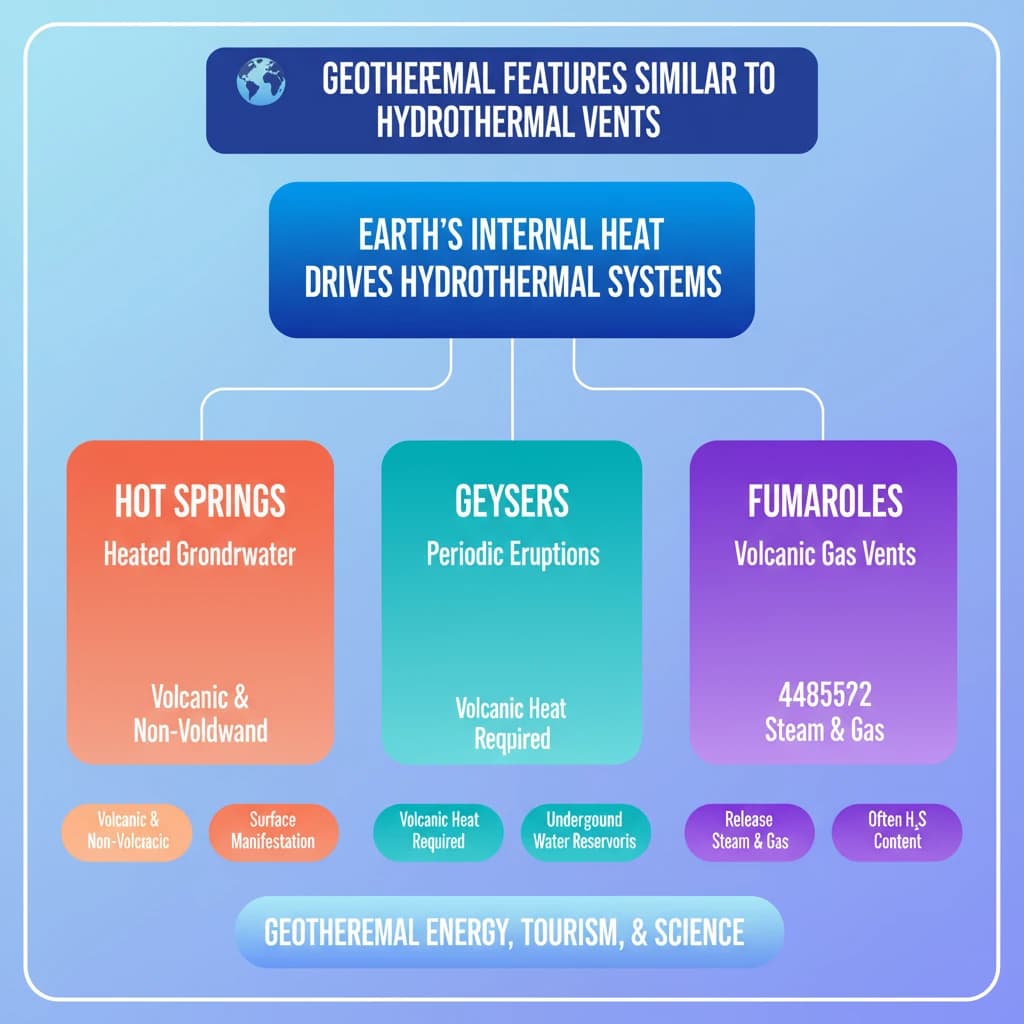
- Hot springs are geothermally heated groundwater emerging on land, found in both volcanic and non-volcanic areas.
- Geysers are periodic eruptions of hot water and steam, requiring volcanic heat and underground water reservoirs.
- Fumaroles are vents releasing volcanic gases and steam, often containing hydrogen sulfide.
- All these features are driven by Earth's internal geothermal heat, a manifestation of hydrothermal systems.
- They are important for geothermal energy, tourism, and scientific understanding of Earth's dynamics.
Other Geothermal Features Similar to Hydrothermal Vents
Easy⏱️ 7 min read
geography
📖 Introduction
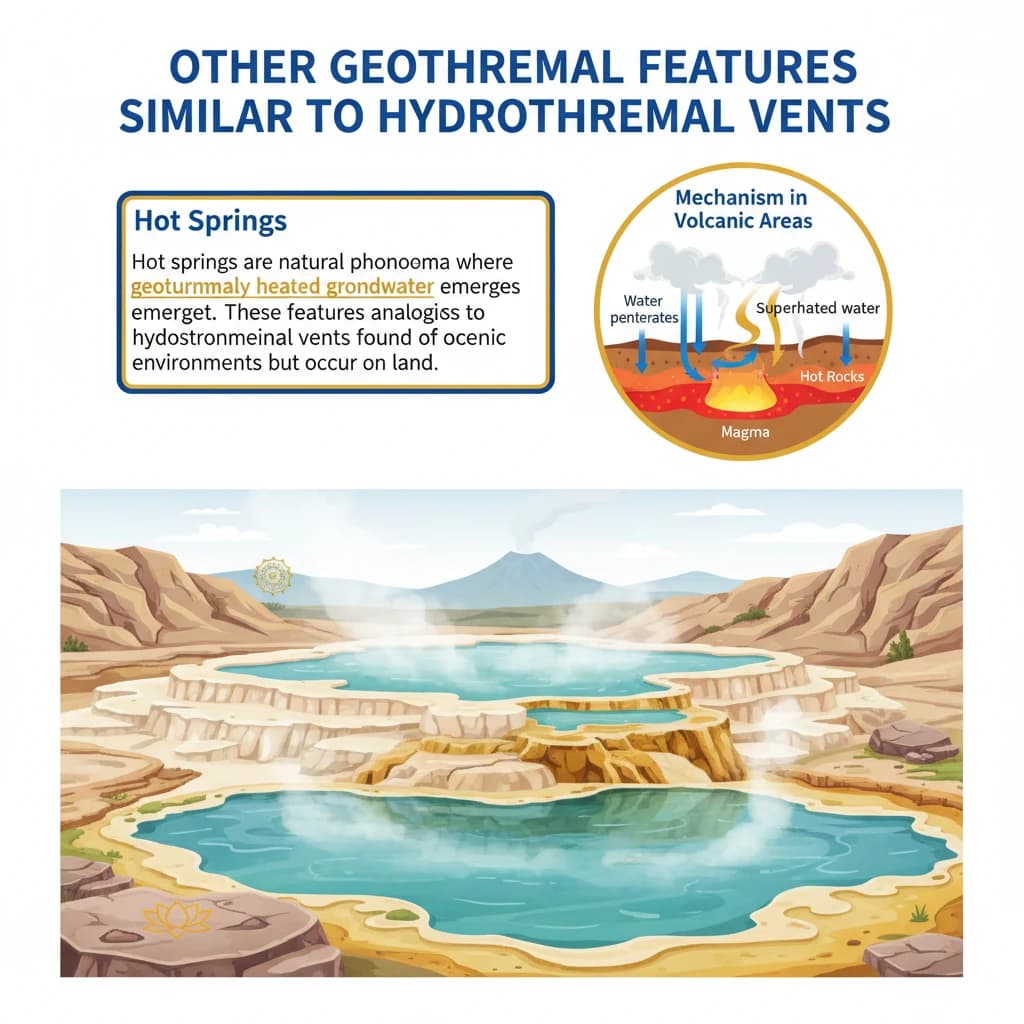
Hot Springs
Hot springs are natural phenomena where geothermally heated groundwater emerges from the Earth's crust. These features are analogous to hydrothermal vents found in oceanic environments but occur on land.
Mechanism in Volcanic Areas: Water penetrates the ground, comes into contact with hot rocks heated by nearby magma, and becomes superheated before rising to the surface.
Mechanism in Non-Volcanic Areas: The Earth's geothermal gradient causes rock temperature to increase with depth. Water percolates deep enough to be heated by these hot rocks and then circulates upwards.
Examples: Notable hot springs in India include Manikaran in Himachal Pradesh and Gaurikund in Uttarakhand.
Geysers
Geysers are a specific type of hot spring characterized by their periodic eruption of hot water and steam. They require unique geological conditions, primarily found in volcanic areas with substantial underground water reservoirs.
Formation Process: Underground cavities fill with groundwater. When this water is superheated by adjacent magma, it rapidly flashes into steam, creating pressure that forces an eruption.
Example: The most famous example globally is Yellowstone National Park in the United States, home to numerous active geysers.
Fumaroles
Fumaroles are openings in the Earth's crust that primarily release volcanic gases and steam. Unlike hot springs or geysers, the emphasis here is on the expulsion of gases rather than large volumes of water.
Mechanism: They form when magma passes through the water table. The heat from the magma converts the water into steam, which then rises, carrying various volcanic gases to the surface.
Key Gas: A common gas released from fumaroles is hydrogen sulfide (H2S), often identifiable by its distinctive rotten-egg smell.
💡 Key Takeaways
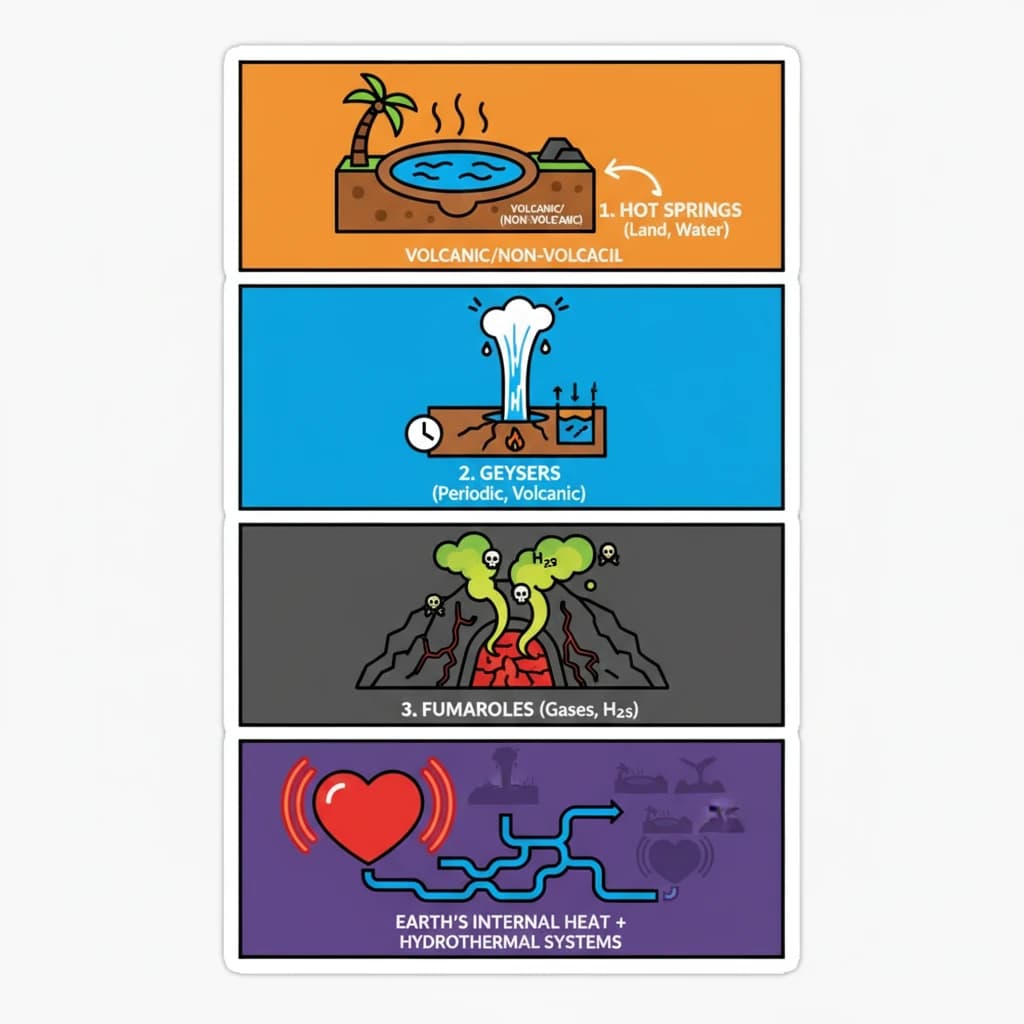
- •Hot springs are geothermally heated groundwater emerging on land, found in both volcanic and non-volcanic areas.
- •Geysers are periodic eruptions of hot water and steam, requiring volcanic heat and underground water reservoirs.
- •Fumaroles are vents releasing volcanic gases and steam, often containing hydrogen sulfide.
- •All these features are driven by Earth's internal geothermal heat, a manifestation of hydrothermal systems.
- •They are important for geothermal energy, tourism, and scientific understanding of Earth's dynamics.
🧠 Memory Techniques
95% Verified Content