Loading page, please wait…
Tectonic Events Changed the Course of Ganga - UPSC Geography
What is Tectonic Events Changed the Course of Ganga in UPSC Geography?
Tectonic Events Changed the Course of Ganga is a key topic under Geography for UPSC Civil Services Examination. Key points include: Ganga's course changed abruptly ~2,500 years ago due to an earthquake, evidenced by a paleochannel.. Researchers discovered this paleochannel in the Ganges delta in Bangladesh.. Tectonic events like earthquakes can cause rapid and significant alterations in river courses.. Understanding this topic is essential for both UPSC Prelims and Mains preparation.
Why is Tectonic Events Changed the Course of Ganga important for UPSC exam?
Tectonic Events Changed the Course of Ganga is a Medium-level topic in UPSC Geography. It is tested in both Prelims (factual MCQs) and Mains (analytical answer writing). Previous year UPSC questions have frequently covered aspects of Tectonic Events Changed the Course of Ganga, making it essential for comprehensive IAS preparation.
How to prepare Tectonic Events Changed the Course of Ganga for UPSC?
To prepare Tectonic Events Changed the Course of Ganga for UPSC: (1) Study the comprehensive notes covering all key concepts on Vaidra. (2) Practice previous year questions on this topic. (3) Connect it with current affairs using daily updates. (4) Revise using key takeaways and mind maps available for Geography. (5) Write practice answers linking Tectonic Events Changed the Course of Ganga to related GS Paper topics.
Key takeaways of Tectonic Events Changed the Course of Ganga for UPSC
- Ganga's course changed abruptly ~2,500 years ago due to an earthquake, evidenced by a paleochannel.
- Researchers discovered this paleochannel in the Ganges delta in Bangladesh.
- Tectonic events like earthquakes can cause rapid and significant alterations in river courses.
- Paleochannels are crucial for reconstructing past river systems and understanding geological history.
- River dynamics influenced by tectonics have major implications for human settlements, infrastructure, and disaster management.
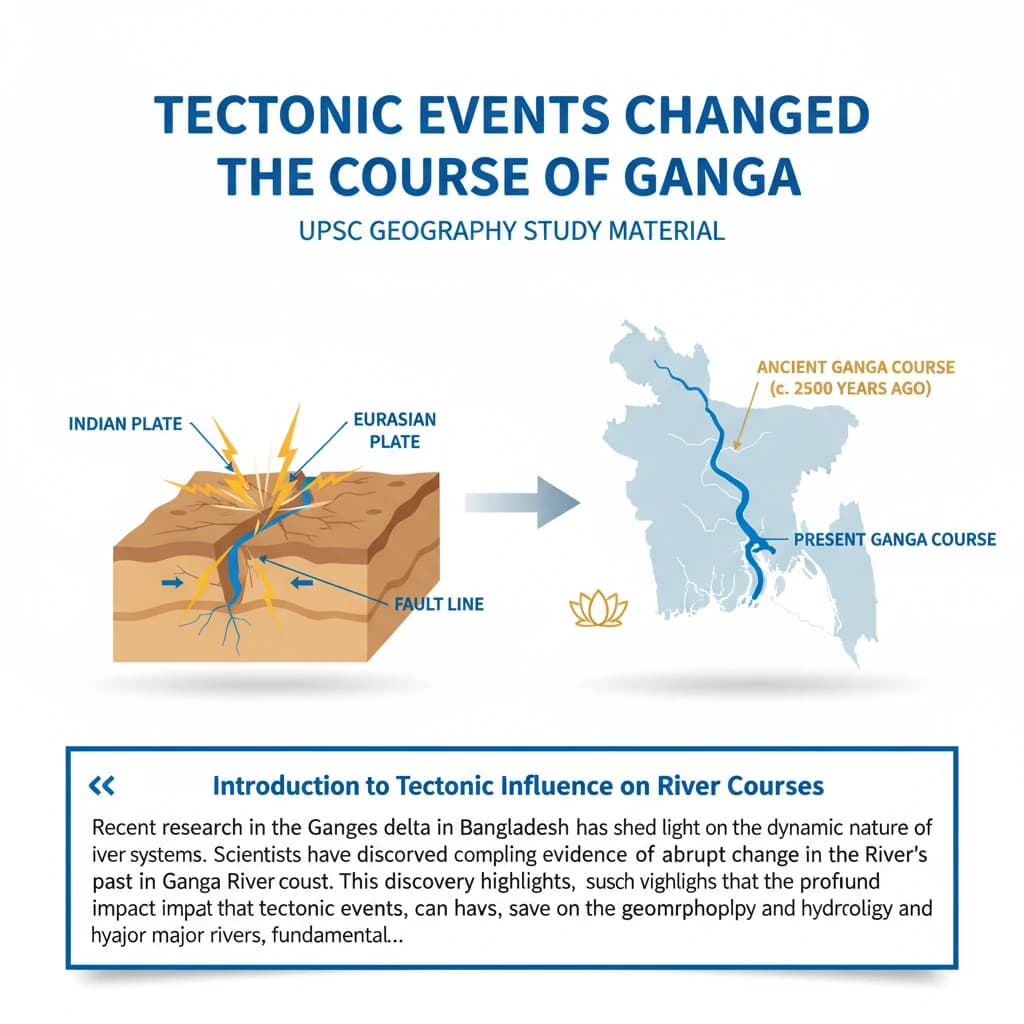
Tectonic Events Changed the Course of Ganga
Medium⏱️ 7 min read
geography
📖 Introduction
Introduction to Tectonic Influence on River Courses
Recent research in the Ganges delta in Bangladesh has shed light on the dynamic nature of large river systems. Scientists have discovered compelling evidence of an abrupt change in the Ganga River's course in the past.
This discovery highlights the profound impact that tectonic events, such as earthquakes, can have on the geomorphology and hydrology of major rivers, fundamentally altering their pathways over time.
The Discovery of the Paleochannel
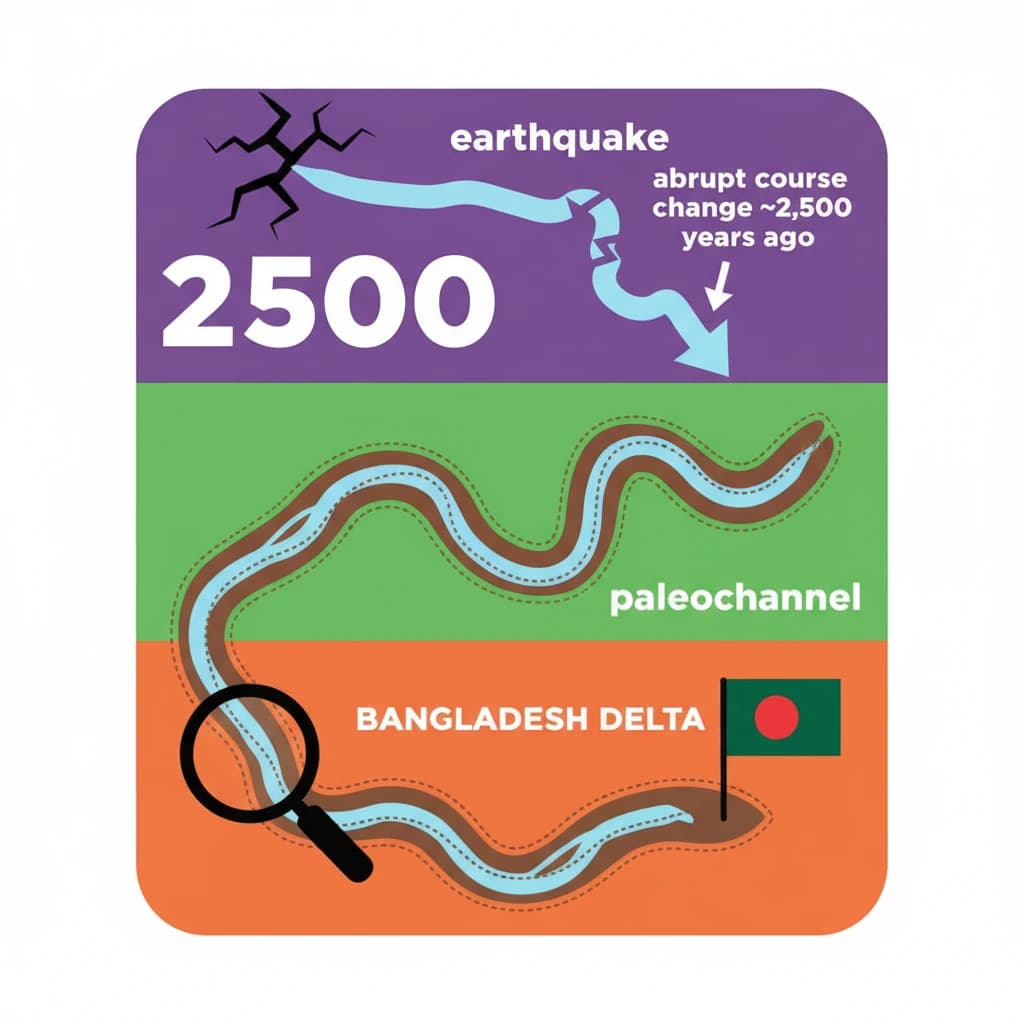
Researchers meticulously studied ancient river channels, known as paleochannels, within the Ganges delta. Their findings pointed to a significant geological event that drastically rerouted the Ganga.
A paleochannel is a remnant of an inactive river or stream channel that has been filled or buried by younger sediments. Its presence indicates the former path of a river.
The evidence suggests that the Ganga changed its course approximately 2,500 years ago. This dramatic shift is attributed primarily to a powerful earthquake, which caused significant land deformation.
Mechanism of Tectonic Influence
Tectonic events, particularly earthquakes, can induce rapid and substantial changes in river courses. These changes can occur through several mechanisms, including localized uplift or subsidence of landmasses.
Such geological shifts can alter the gradient of the riverbed, create new pathways, or block existing ones. This forces the river to seek a new, more energetically favorable course, often leading to abrupt diversions.
Implications for Geological and Hydrological Studies
Understanding the role of tectonic activity in shaping river systems is crucial for both geological and hydrological studies. It helps in reconstructing past landscapes and predicting future river behavior.
The study of paleochannels provides invaluable data for comprehending the long-term evolution of river basins. It also informs our understanding of the interplay between Earth's internal forces and surface processes.
This topic is highly relevant for UPSC GS Paper I (Geography), particularly under Physical Geography and Geomorphology. Questions can focus on river dynamics, tectonic geomorphology, and their impact on human settlements.
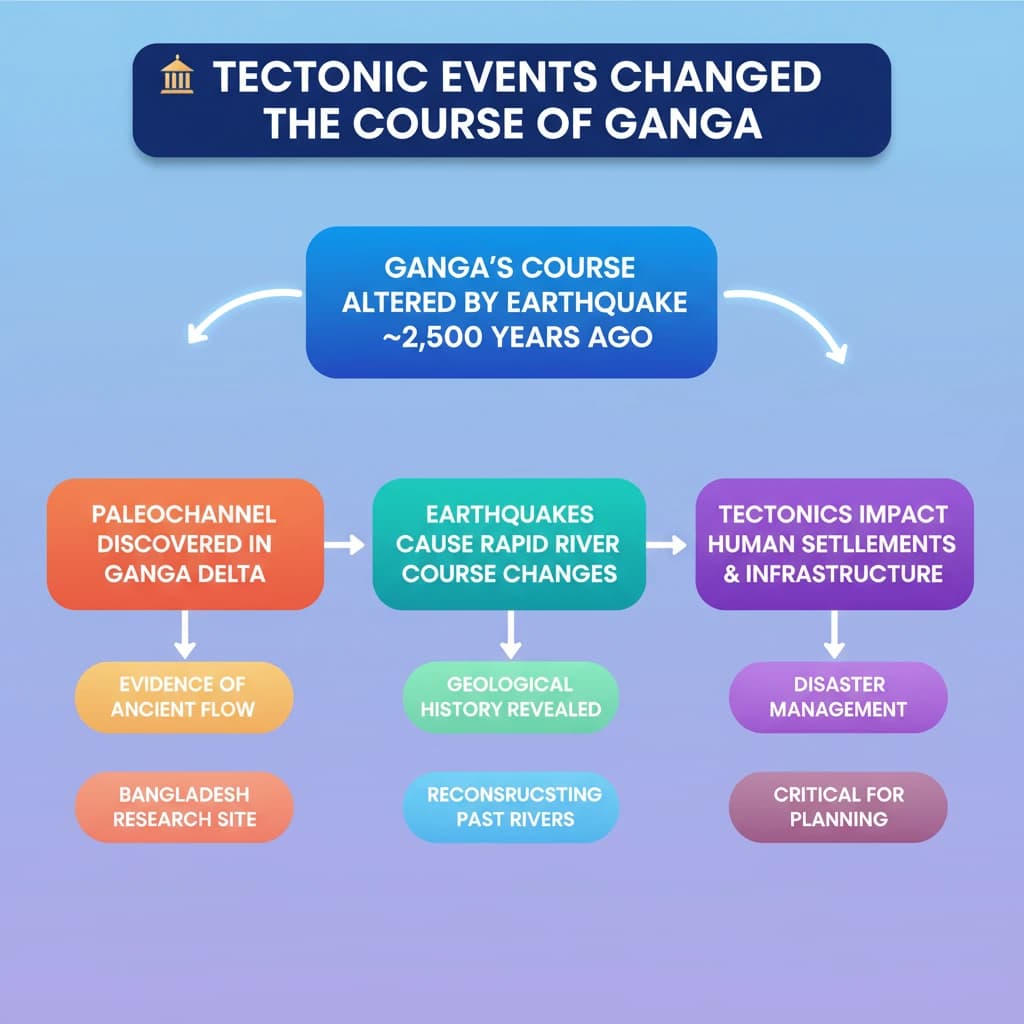
💡 Key Takeaways
- •Ganga's course changed abruptly ~2,500 years ago due to an earthquake, evidenced by a paleochannel.
- •Researchers discovered this paleochannel in the Ganges delta in Bangladesh.
- •Tectonic events like earthquakes can cause rapid and significant alterations in river courses.
- •Paleochannels are crucial for reconstructing past river systems and understanding geological history.
- •River dynamics influenced by tectonics have major implications for human settlements, infrastructure, and disaster management.
🧠 Memory Techniques
90% Verified Content
📚 Reference Sources
•NCERT Geography Textbooks (Class XI/XII - General Geomorphology and Indian Rivers)
•General geological and geomorphological principles (e.g., fluvial dynamics, plate tectonics)
•Publicly available research summaries on Ganges delta paleochannels (general reference)