Loading page, please wait…
What are Key Points About the Naming of Cyclones? - UPSC Geography
What is What are Key Points About the Naming of Cyclones? in UPSC Geography?
What are Key Points About the Naming of Cyclones? is a key topic under Geography for UPSC Civil Services Examination. Key points include: Cyclone naming originated in the Caribbean (late 1800s) using saint names.. Post WWII, female names were used; 1979 saw the inclusion of both male and female names due to gender bias criticism.. North Indian Ocean naming began in 2000, coordinated by WMO and TCRB.. Understanding this topic is essential for both UPSC Prelims and Mains preparation.
Why is What are Key Points About the Naming of Cyclones? important for UPSC exam?
What are Key Points About the Naming of Cyclones? is a Medium-level topic in UPSC Geography. It is tested in both Prelims (factual MCQs) and Mains (analytical answer writing). Previous year UPSC questions have frequently covered aspects of What are Key Points About the Naming of Cyclones?, making it essential for comprehensive IAS preparation.
How to prepare What are Key Points About the Naming of Cyclones? for UPSC?
To prepare What are Key Points About the Naming of Cyclones? for UPSC: (1) Study the comprehensive notes covering all key concepts on Vaidra. (2) Practice previous year questions on this topic. (3) Connect it with current affairs using daily updates. (4) Revise using key takeaways and mind maps available for Geography. (5) Write practice answers linking What are Key Points About the Naming of Cyclones? to related GS Paper topics.
Key takeaways of What are Key Points About the Naming of Cyclones? for UPSC
- Cyclone naming originated in the Caribbean (late 1800s) using saint names.
- Post WWII, female names were used; 1979 saw the inclusion of both male and female names due to gender bias criticism.
- North Indian Ocean naming began in 2000, coordinated by WMO and TCRB.
- Naming enhances communication, aids tracking, and improves disaster preparedness and response.
- IMD is responsible for naming cyclones in the North Indian Ocean region, using a collaborative list from 13 member countries.
What are Key Points About the Naming of Cyclones?
Medium⏱️ 7 min read
geography
📖 Introduction
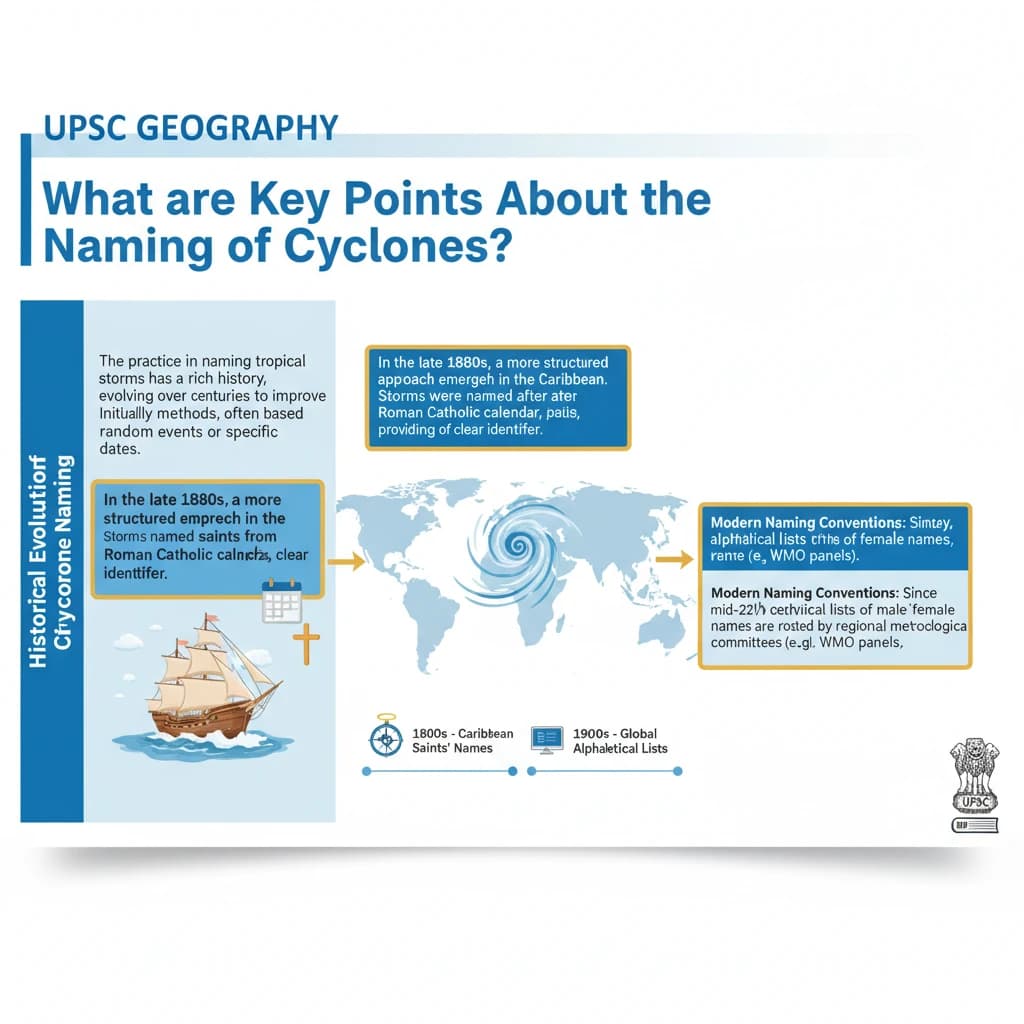
Historical Evolution of Cyclone Naming
The practice of naming tropical storms has a rich history, evolving over centuries to improve communication and tracking. Initially, informal methods were used, often based on random events or specific dates.
In the late 1800s, a more structured approach emerged in the Caribbean. Storms were named after saints from the Roman Catholic calendar, providing a simple yet effective identification system.
After World War II, the system underwent a significant change. The use of exclusively female names became common, primarily for better organization in tracking and communicating about storms across vast oceanic regions.
However, this practice faced criticism due to perceived gender bias. Consequently, the naming system was updated in 1979 to ensure inclusivity, incorporating both male and female names. These names are now alternated to maintain fairness.
Establishment of Naming System in North Indian Ocean
While other regions had established naming conventions earlier, the North Indian Ocean region adopted a formal system much later. This was a crucial step to standardize communication in a densely populated and cyclone-prone area.
The practice of naming cyclones in the North Indian Ocean region officially began in 2000. This initiative was spearheaded by the World Meteorological Organization (WMO), a specialized agency of the United Nations.
The WMO plays a vital role in coordinating meteorological activities globally, ensuring consistent practices for tracking and warning about severe weather events like cyclones.
Collaborative Naming Lists
To ensure regional cooperation and avoid confusion, the naming of cyclones is a collaborative effort among countries within a specific basin. This collective approach ensures that names are culturally appropriate and easily recognizable.
For the North Indian Ocean, a collaborative list of cyclone names was established by the Tropical Cyclone Regional Body (TCRB). This body comprises several member countries bordering the Arabian Sea and the Bay of Bengal.
Each member country contributes a set of names, which are then used sequentially. This system helps in pre-determining names for upcoming cyclones, streamlining disaster preparedness and response.
The primary purpose of naming cyclones is to help in quick identification, reduce confusion, and facilitate clear communication of warnings to the public and disaster management agencies.
💡 Key Takeaways
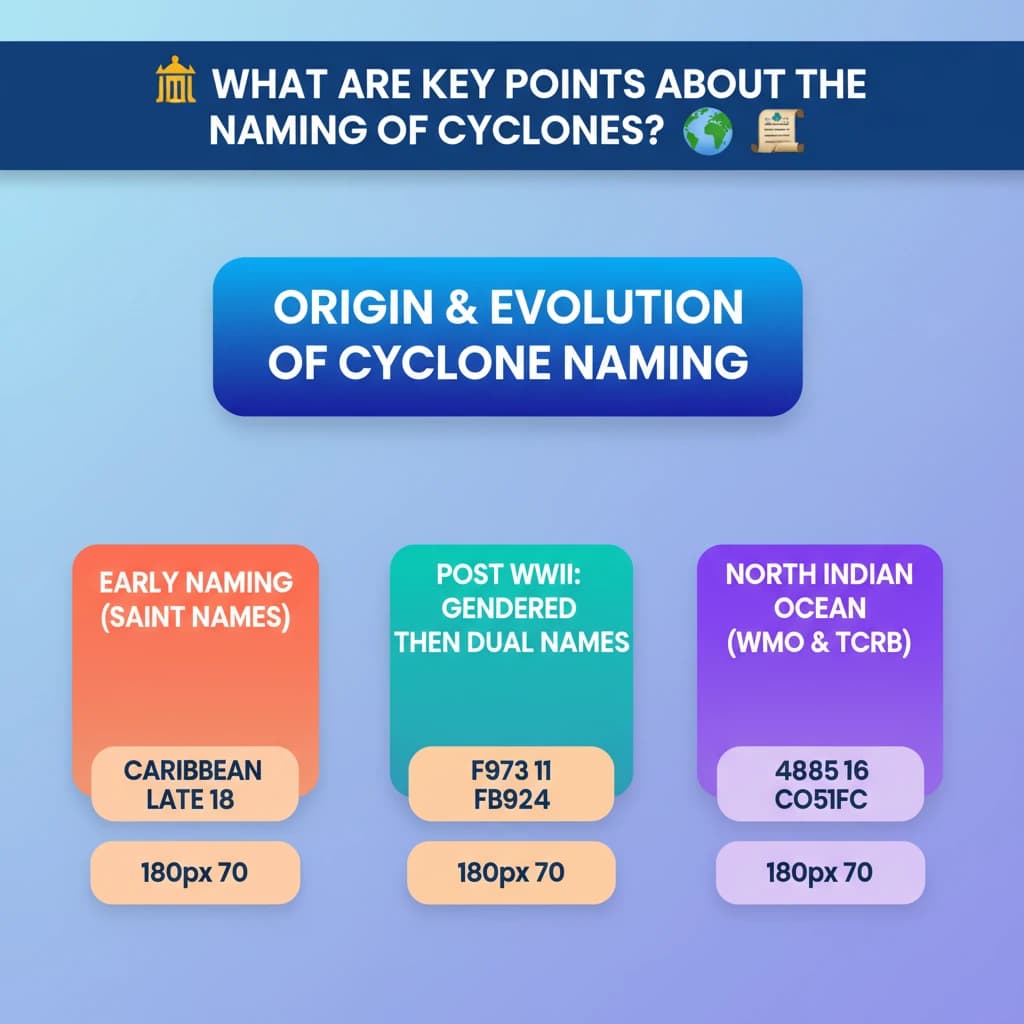
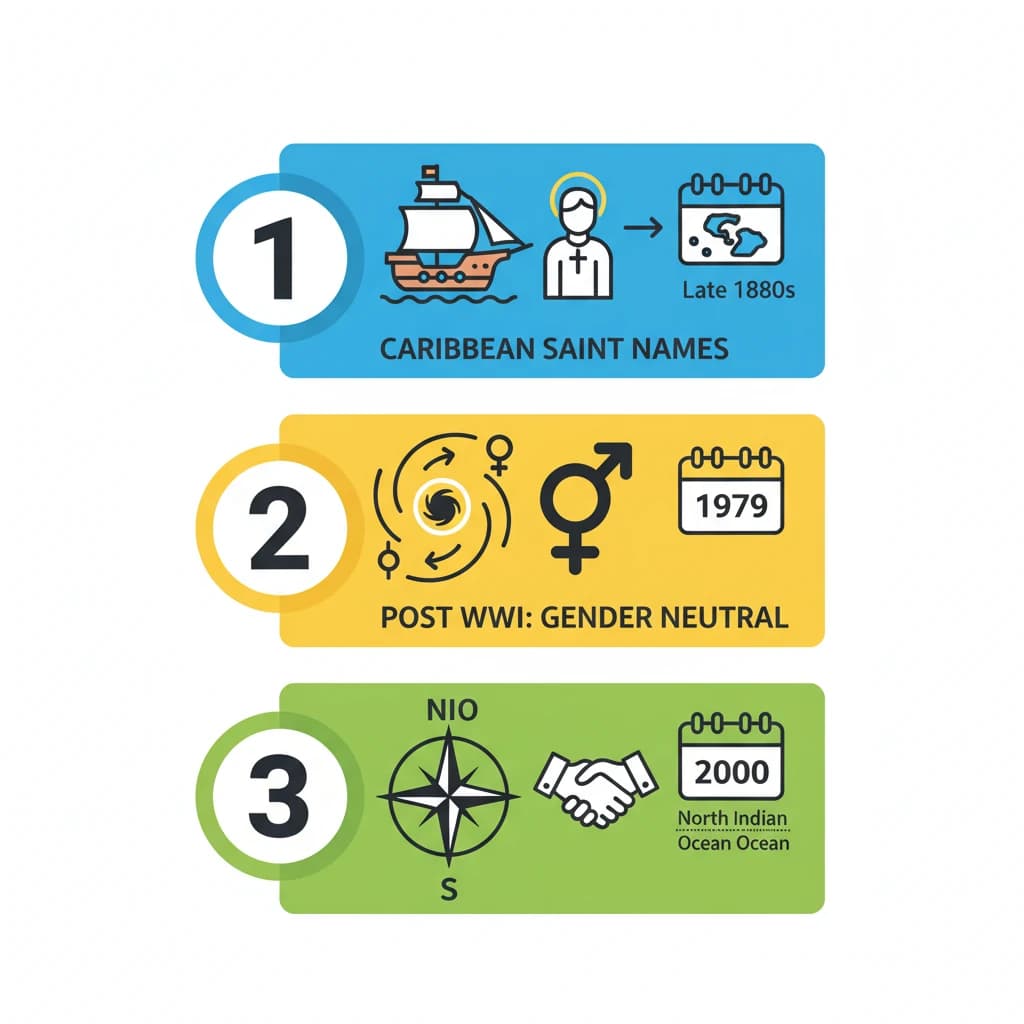
- •Cyclone naming originated in the Caribbean (late 1800s) using saint names.
- •Post WWII, female names were used; 1979 saw the inclusion of both male and female names due to gender bias criticism.
- •North Indian Ocean naming began in 2000, coordinated by WMO and TCRB.
- •Naming enhances communication, aids tracking, and improves disaster preparedness and response.
- •IMD is responsible for naming cyclones in the North Indian Ocean region, using a collaborative list from 13 member countries.
🧠 Memory Techniques
95% Verified Content
📚 Reference Sources
•World Meteorological Organization (WMO) official website
•India Meteorological Department (IMD) official website
•National Hurricane Center (NHC) archives