Loading page, please wait…
What are the Key Facts About Kosi River and Mechi River? - UPSC Geography
What is What are the Key Facts About Kosi River and Mechi River? in UPSC Geography?
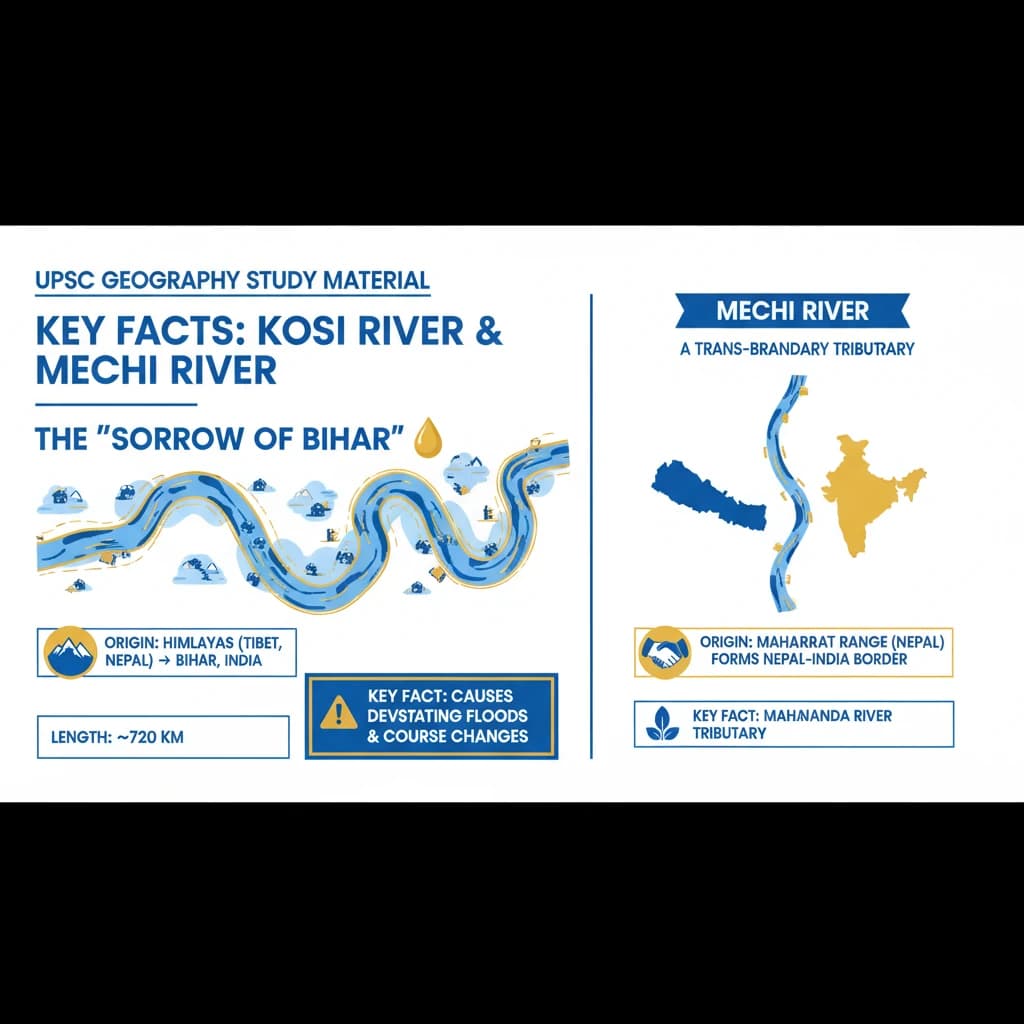
What are the Key Facts About Kosi River and Mechi River? is a key topic under Geography for UPSC Civil Services Examination. Key points include: Kosi River is known as the "Sorrow of Bihar" due to devastating floods.. Originates in the Himalayas near Mount Everest and Kanchenjunga, flows through China, Nepal, and India.. Formed by the confluence of Sun Kosi, Arun Kosi, and Tamur Kosi.. Understanding this topic is essential for both UPSC Prelims and Mains preparation.
Why is What are the Key Facts About Kosi River and Mechi River? important for UPSC exam?
What are the Key Facts About Kosi River and Mechi River? is a Medium-level topic in UPSC Geography. It is tested in both Prelims (factual MCQs) and Mains (analytical answer writing). Previous year UPSC questions have frequently covered aspects of What are the Key Facts About Kosi River and Mechi River?, making it essential for comprehensive IAS preparation.
How to prepare What are the Key Facts About Kosi River and Mechi River? for UPSC?
To prepare What are the Key Facts About Kosi River and Mechi River? for UPSC: (1) Study the comprehensive notes covering all key concepts on Vaidra. (2) Practice previous year questions on this topic. (3) Connect it with current affairs using daily updates. (4) Revise using key takeaways and mind maps available for Geography. (5) Write practice answers linking What are the Key Facts About Kosi River and Mechi River? to related GS Paper topics.
Key takeaways of What are the Key Facts About Kosi River and Mechi River? for UPSC
- Kosi River is known as the "Sorrow of Bihar" due to devastating floods.
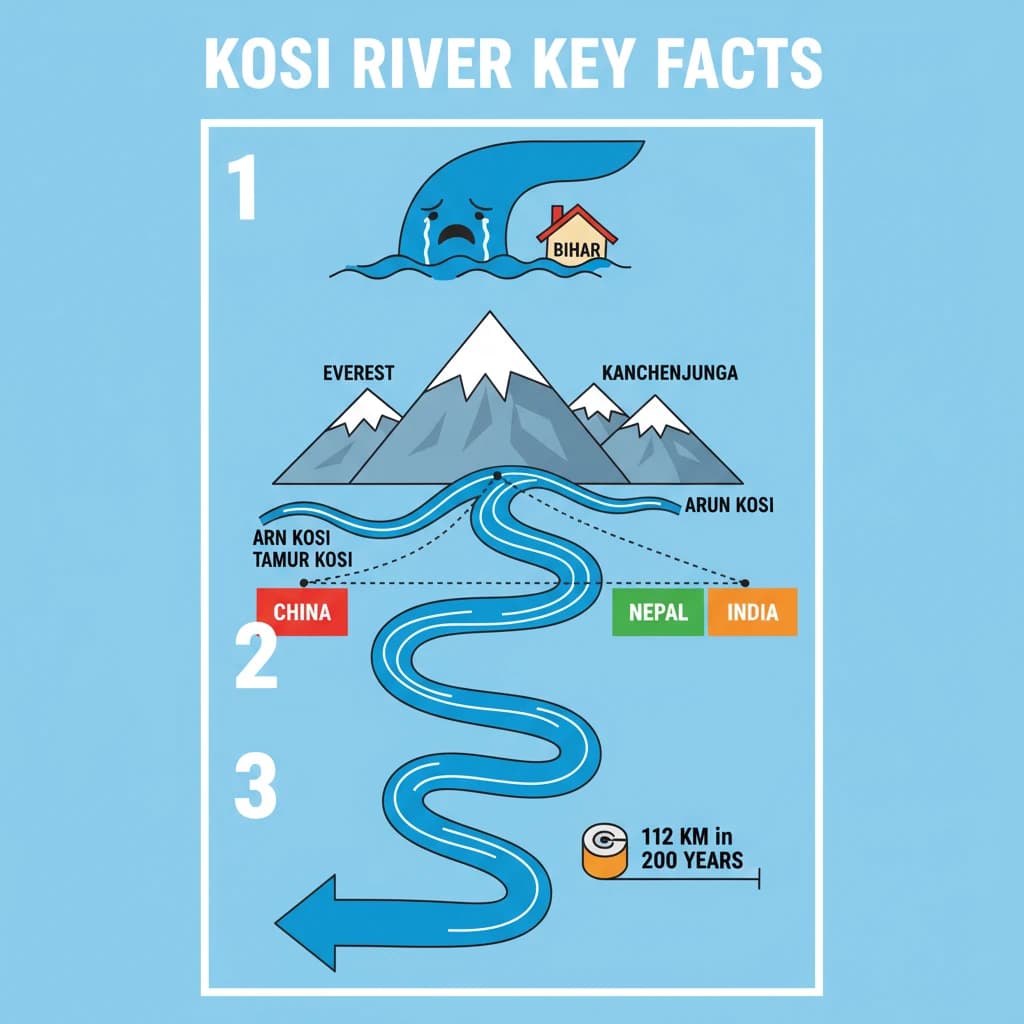
- Originates in the Himalayas near Mount Everest and Kanchenjunga, flows through China, Nepal, and India.
- Formed by the confluence of Sun Kosi, Arun Kosi, and Tamur Kosi.
- Notorious for shifting its course westward, moving 112 km in 200 years.
- Major tributaries include Trijuga, Bhutani Balan, Kamla Balan, and Bagmati.
- Its instability significantly impacts agriculture and livelihoods in Bihar.
What are the Key Facts About Kosi River and Mechi River?
Medium⏱️ 8 min read
geography
📖 Introduction
Introduction to Kosi River
The Kosi River is famously known as the “Sorrow of Bihar” due to its devastating floods and frequent course changes. It is a significant trans-boundary river in the Indian subcontinent.
Key Fact: The Kosi River is often referred to as the “Sorrow of Bihar”.
Origin and Course
The Kosi River originates in the majestic Himalayas, at an elevation exceeding 7,000 metres above sea level. Its catchment area lies within the vicinity of prominent peaks like Mount Everest and Kanchenjunga.
The river traverses through three countries: China, Nepal, and India. It makes its entry into India near Hanuman Nagar.
- Origin: Over 7,000 metres in the Himalayas.
- Catchment Area: Near Mount Everest and Kanchenjunga.
- Countries Flowing Through: China, Nepal, India.
- Entry into India: Near Hanuman Nagar.
Ultimately, the Kosi River merges with the mighty Ganga River near Kursela, located in the Katihar district of Bihar.
Formation and Main Streams
The Kosi River is not a single stream at its origin but is formed by the confluence of three primary tributaries. These streams unite to form the main river channel.
The Kosi River is formed by the confluence of:
- Sun Kosi
- Arun Kosi
- Tamur Kosi
Characteristic: Course Shifting
One of the most defining characteristics of the Kosi River is its notorious tendency to frequently shift its course. This phenomenon has significant geological and socio-economic impacts.
Over the past 200 years, the river has dramatically moved its course approximately 112 km towards the west. This westward migration has led to widespread devastation.
Impact: The river's course shifting has severely affected agricultural lands in districts such as Darbhanga, Saharsa, and Purnea in Bihar.
Major Tributaries
During its journey through the plains, the Kosi River is joined by several important tributaries. These rivers contribute significantly to its volume and discharge.
Key tributaries of the Kosi River include:
- Trijuga
- Bhutani Balan
- Kamla Balan
- Bagmati
Note on Mechi River
While the topic mentions the Mechi River, the provided source material primarily focuses on the Kosi River. Detailed facts about the Mechi River are not available in the given text.
For UPSC preparation, it is crucial to gather comprehensive information on all mentioned topics. If Mechi River facts are required, consult additional geographical sources.
💡 Key Takeaways
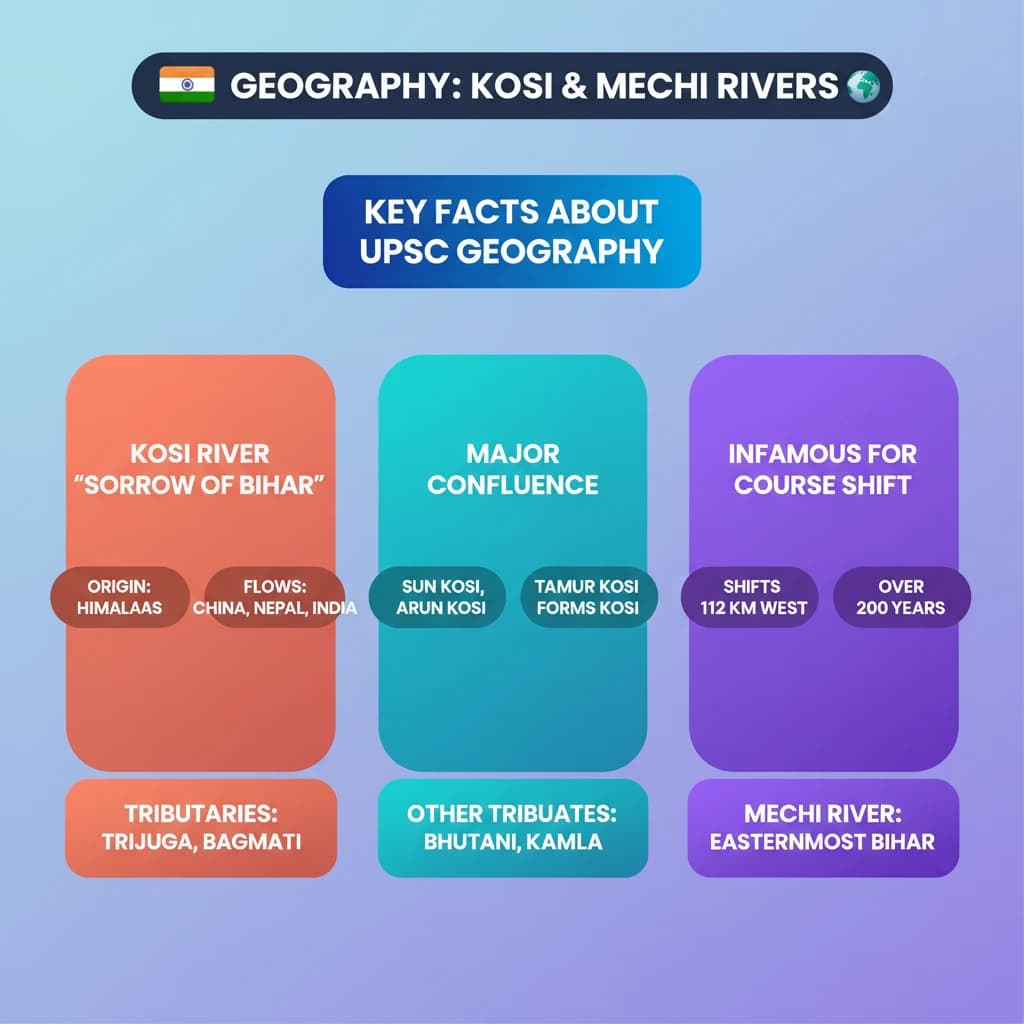
- •Kosi River is known as the "Sorrow of Bihar" due to devastating floods.
- •Originates in the Himalayas near Mount Everest and Kanchenjunga, flows through China, Nepal, and India.
- •Formed by the confluence of Sun Kosi, Arun Kosi, and Tamur Kosi.
- •Notorious for shifting its course westward, moving 112 km in 200 years.
- •Major tributaries include Trijuga, Bhutani Balan, Kamla Balan, and Bagmati.
- •Its instability significantly impacts agriculture and livelihoods in Bihar.
🧠 Memory Techniques
95% Verified Content