Loading page, please wait…
What are the Key Objectives of the Renovation? - UPSC Geography
What is What are the Key Objectives of the Renovation? in UPSC Geography?
What are the Key Objectives of the Renovation? is a key topic under Geography for UPSC Civil Services Examination. Key points include: Canal renovation addresses disrepair and water loss in earthen canals.. Key objective is converting earthen canals to concrete for efficiency.. Aims to improve water availability, especially in tail-end areas.. Understanding this topic is essential for both UPSC Prelims and Mains preparation.
Why is What are the Key Objectives of the Renovation? important for UPSC exam?
What are the Key Objectives of the Renovation? is a Easy-level topic in UPSC Geography. It is tested in both Prelims (factual MCQs) and Mains (analytical answer writing). Previous year UPSC questions have frequently covered aspects of What are the Key Objectives of the Renovation?, making it essential for comprehensive IAS preparation.
How to prepare What are the Key Objectives of the Renovation? for UPSC?
To prepare What are the Key Objectives of the Renovation? for UPSC: (1) Study the comprehensive notes covering all key concepts on Vaidra. (2) Practice previous year questions on this topic. (3) Connect it with current affairs using daily updates. (4) Revise using key takeaways and mind maps available for Geography. (5) Write practice answers linking What are the Key Objectives of the Renovation? to related GS Paper topics.
Key takeaways of What are the Key Objectives of the Renovation? for UPSC
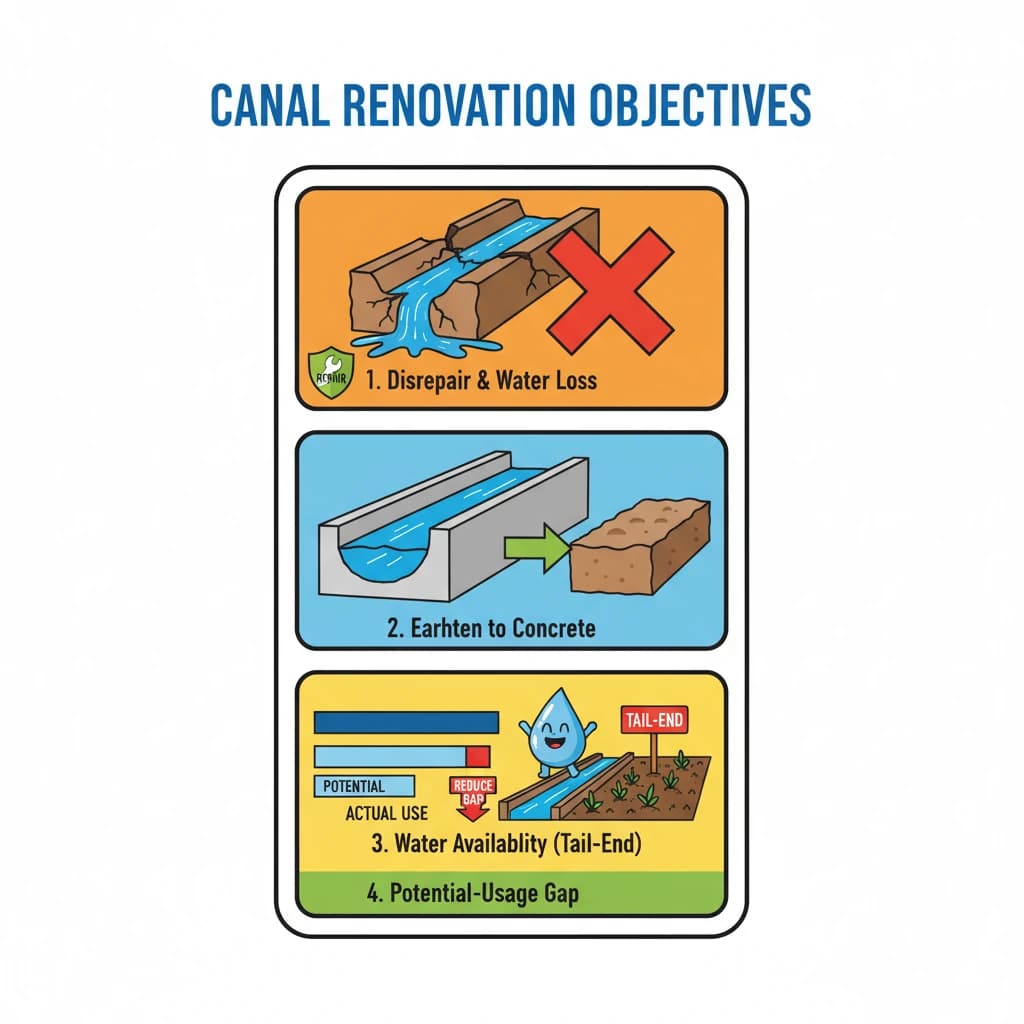
- Canal renovation addresses disrepair and water loss in earthen canals.
- Key objective is converting earthen canals to concrete for efficiency.
- Aims to improve water availability, especially in tail-end areas.
- Reduces the gap between irrigation potential and actual usage.
- Ultimately benefits farmers through increased crop yields and income.
What are the Key Objectives of the Renovation?
Easy⏱️ 6 min read
geography
📖 Introduction
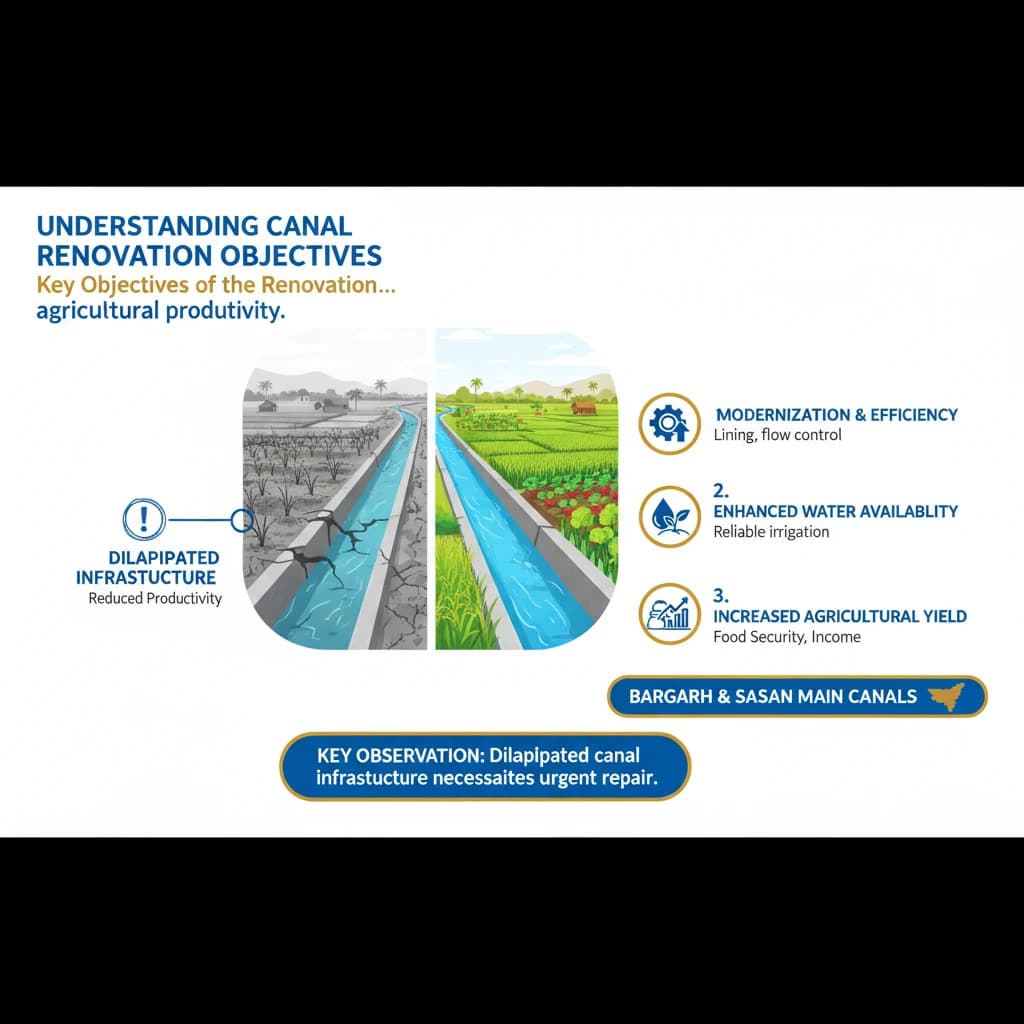
Understanding Canal Renovation Objectives
The renovation of canal infrastructure, such as the Bargarh and Sasan main canals, is a critical initiative. These vital irrigation channels have fallen into a state of disrepair, significantly impacting agricultural productivity.
Key Observation: Many existing canal infrastructures are in a dilapidated condition, necessitating urgent repair and modernization efforts.
Addressing Water Loss and Inefficiency
One of the primary drivers for renovation is the substantial water loss occurring in existing earthen canals. These traditional channels are prone to seepage, which severely reduces overall irrigation efficiency.
Problem Statement: Significant water loss from earthen canals directly diminishes the effectiveness of irrigation systems.
Mitigating Farmland Degradation
Excessive water seepage from damaged canals has a detrimental effect on surrounding agricultural land. It can render some farmland unsuitable for cultivation, creating significant challenges and economic hardship for local farmers.
Direct Impact: Water seepage reduces arable land, posing a direct threat to farmer livelihoods and food security.
Key Features of the Renovation Project
A central feature of the renovation project is the strategic conversion of all existing earthen water courses to modern concrete paths. This fundamental change is designed to drastically improve water distribution and overall management.
Core Solution: Transitioning from earthen to concrete canals for enhanced water delivery and reduced leakage.
Furthermore, the project is specifically engineered to enhance water availability, particularly in tail-end areas of the irrigation network. This ensures that farmers in all regions have equitable and improved access to water resources.
UPSC Insight: Projects focusing on "tail-end" water access are crucial for addressing regional disparities in agricultural development, often a topic in GS-III Agriculture.
Impact on Local Farmers and Agricultural Productivity
The renovation initiative directly aims to reduce the existing gap between irrigation potential and actual usage. By modernizing the infrastructure, the project seeks to maximize the utility of available water resources.
Ultimately, these enhanced irrigation capabilities are expected to bring substantial benefits to farmers. Improved water management will lead to increased crop yields and contribute to overall agricultural prosperity.
Farmer Benefits: Reduced irrigation potential-actual usage gap, higher crop yields, and improved farmer income.
💡 Key Takeaways
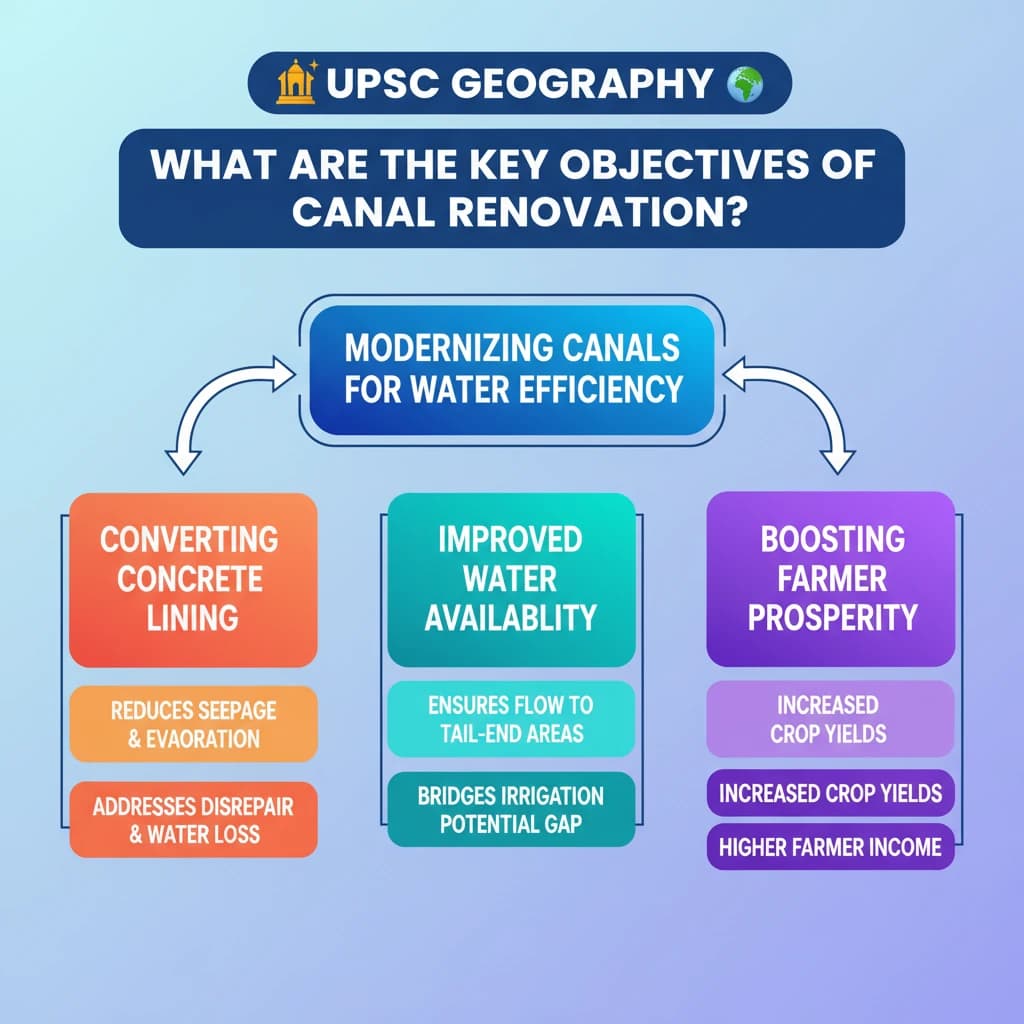
- •Canal renovation addresses disrepair and water loss in earthen canals.
- •Key objective is converting earthen canals to concrete for efficiency.
- •Aims to improve water availability, especially in tail-end areas.
- •Reduces the gap between irrigation potential and actual usage.
- •Ultimately benefits farmers through increased crop yields and income.
🧠 Memory Techniques
95% Verified Content