Loading page, please wait…
What are the Potential Regional Impacts of La Nina - UPSC Geography
What is What are the Potential Regional Impacts of La Nina in UPSC Geography?
What are the Potential Regional Impacts of La Nina is a key topic under Geography for UPSC Civil Services Examination. Key points include: La Niña typically brings above-average monsoon rainfall to India, potentially increasing rice but decreasing pulse production.. Southeast Asian nations (Indonesia, Malaysia, Philippines) experience increased rainfall and flooding, boosting rice and palm oil output.. Southern South America (Brazil, Uruguay, Argentina, Bolivia) faces droughts, impacting soybean and maize crops.. Understanding this topic is essential for both UPSC Prelims and Mains preparation.
Why is What are the Potential Regional Impacts of La Nina important for UPSC exam?
What are the Potential Regional Impacts of La Nina is a Medium-level topic in UPSC Geography. It is tested in both Prelims (factual MCQs) and Mains (analytical answer writing). Previous year UPSC questions have frequently covered aspects of What are the Potential Regional Impacts of La Nina, making it essential for comprehensive IAS preparation.
How to prepare What are the Potential Regional Impacts of La Nina for UPSC?
To prepare What are the Potential Regional Impacts of La Nina for UPSC: (1) Study the comprehensive notes covering all key concepts on Vaidra. (2) Practice previous year questions on this topic. (3) Connect it with current affairs using daily updates. (4) Revise using key takeaways and mind maps available for Geography. (5) Write practice answers linking What are the Potential Regional Impacts of La Nina to related GS Paper topics.
Key takeaways of What are the Potential Regional Impacts of La Nina for UPSC
- La Niña typically brings above-average monsoon rainfall to India, potentially increasing rice but decreasing pulse production.
- Southeast Asian nations (Indonesia, Malaysia, Philippines) experience increased rainfall and flooding, boosting rice and palm oil output.
- Southern South America (Brazil, Uruguay, Argentina, Bolivia) faces droughts, impacting soybean and maize crops.
- Northern South America (Brazil, Colombia, Venezuela, Ecuador, Peru) sees wetter conditions and increased flood risk.
- Understanding these regional impacts is vital for agricultural planning, disaster management, and economic stability globally.
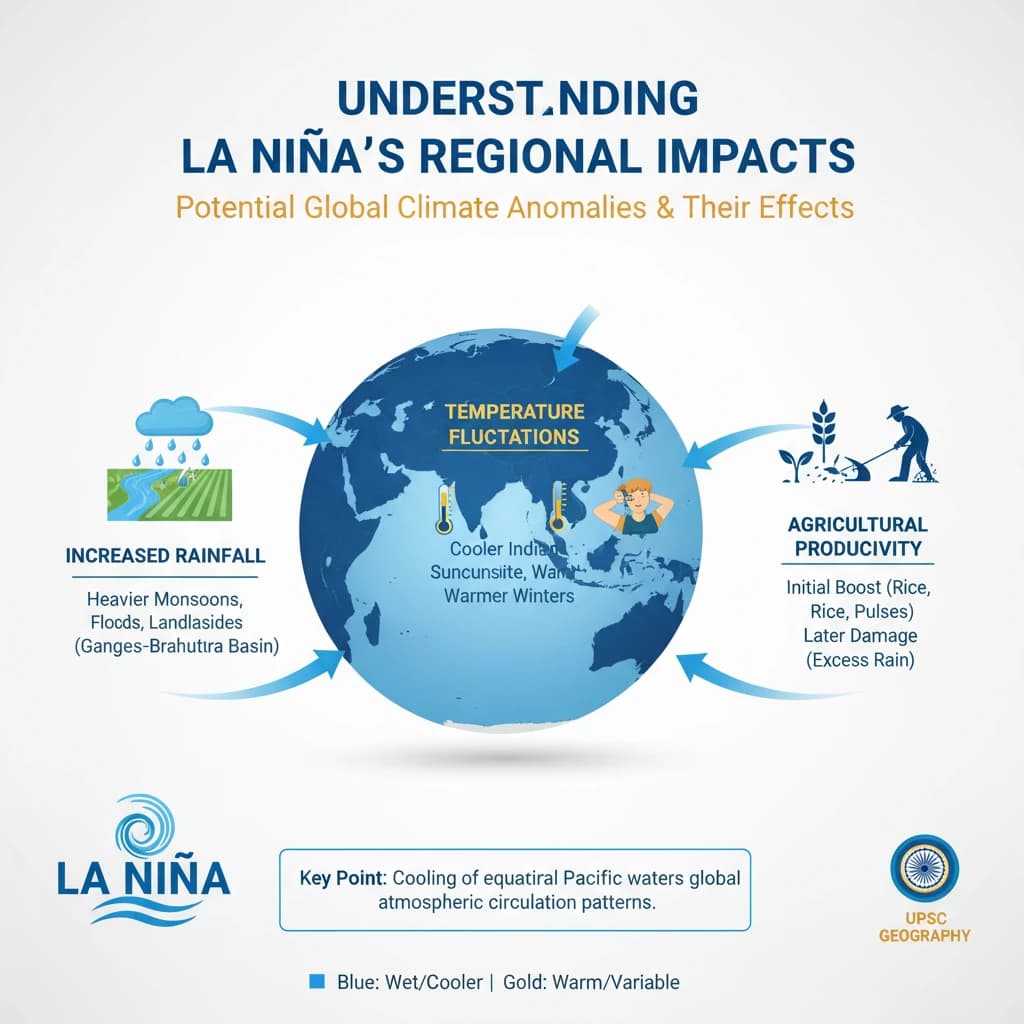
What are the Potential Regional Impacts of La Nina
Medium⏱️ 6 min read
geography
📖 Introduction
Understanding La Niña's Regional Impacts
La Niña is a complex climate pattern characterized by the cooling of sea surface temperatures in the central and eastern tropical Pacific Ocean. This phenomenon significantly alters global weather patterns, leading to varied regional impacts across continents.
Its influence is particularly pronounced in tropical and subtropical regions, affecting rainfall, temperature, and agricultural productivity.
Impacts in Asia: India
In India, La Niña is typically associated with an enhanced Southwest Monsoon. This often translates to above-average rainfall during the crucial July to September period.
Expected outcomes in India include:
- A potential decrease in the production of Pulses, especially in the Indo-Gangetic Plains.
- An anticipated increase in rice production, benefiting from abundant monsoon rains.
Understanding these specific agricultural impacts is crucial for questions on Indian agriculture and food security in UPSC GS-III Economy and GS-I Geography.
Impacts in Asia: Southeast Asia
The Southeast Asian region, encompassing countries like Indonesia, Malaysia, and the Philippines, experiences distinct impacts under La Niña conditions.
These nations typically receive above-average rainfall, which can lead to significant flooding events. Despite the challenges posed by floods, the increased moisture generally benefits key agricultural sectors.
Key agricultural outcomes in Southeast Asia include:
- A boost in rice production.
- An increase in palm oil production.
Impacts in South America: Southern Regions
In the southern parts of South America, La Niña often brings contrasting conditions compared to Asia. Regions such as Southern Brazil, Uruguay, Northern Argentina, and Southern Bolivia face drier weather.
This reduction in rainfall frequently results in prolonged droughts, severely impacting agricultural output in these vital farming areas.
Agricultural sectors significantly affected by droughts in these regions include:
- Soybeans production.
- Maize (corn) production.
Impacts in South America: Northern Regions
Conversely, the northern parts of South America experience different climatic shifts during La Niña. Countries like Northern Brazil, Colombia, Venezuela, and parts of Ecuador and Peru tend to receive increased rainfall.
These wetter conditions elevate the risk of potential flooding, posing challenges for infrastructure and communities in these areas.
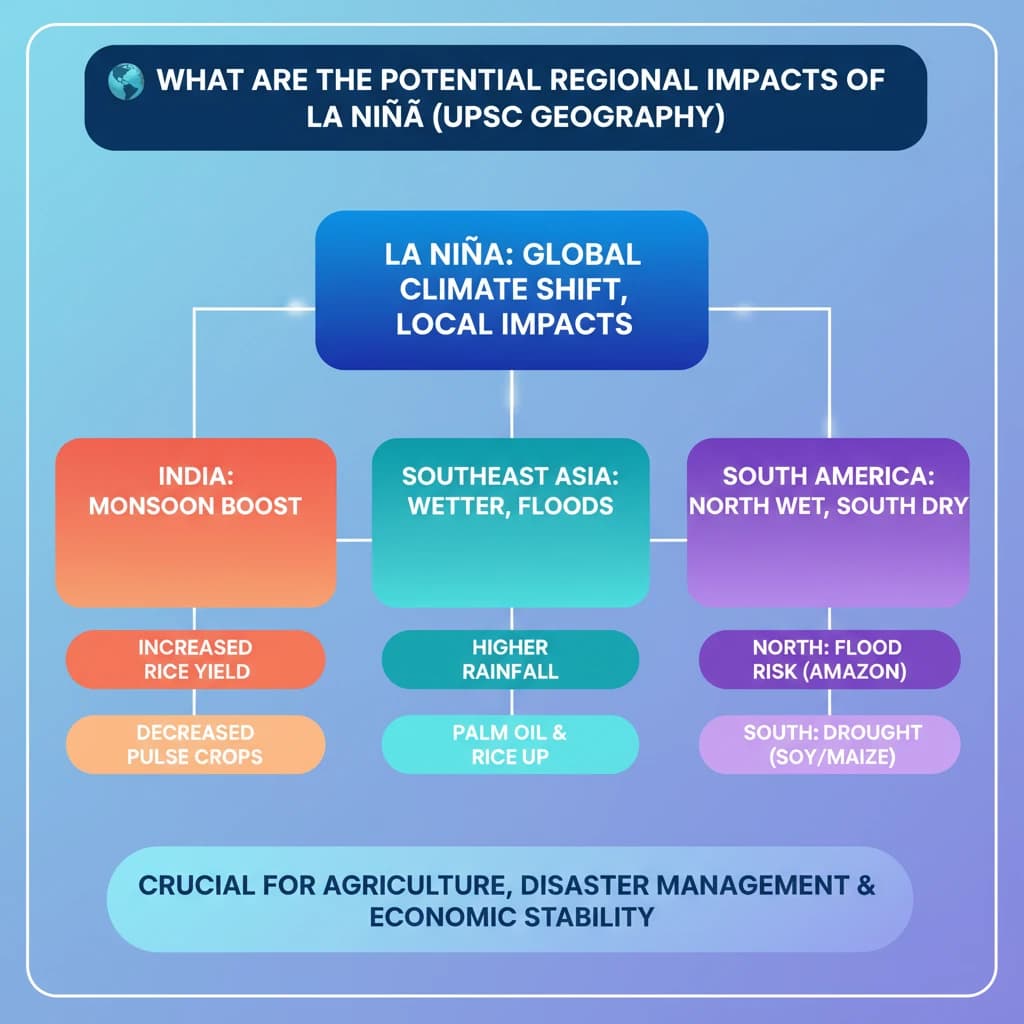
💡 Key Takeaways
- •La Niña typically brings above-average monsoon rainfall to India, potentially increasing rice but decreasing pulse production.
- •Southeast Asian nations (Indonesia, Malaysia, Philippines) experience increased rainfall and flooding, boosting rice and palm oil output.
- •Southern South America (Brazil, Uruguay, Argentina, Bolivia) faces droughts, impacting soybean and maize crops.
- •Northern South America (Brazil, Colombia, Venezuela, Ecuador, Peru) sees wetter conditions and increased flood risk.
- •Understanding these regional impacts is vital for agricultural planning, disaster management, and economic stability globally.
🧠 Memory Techniques
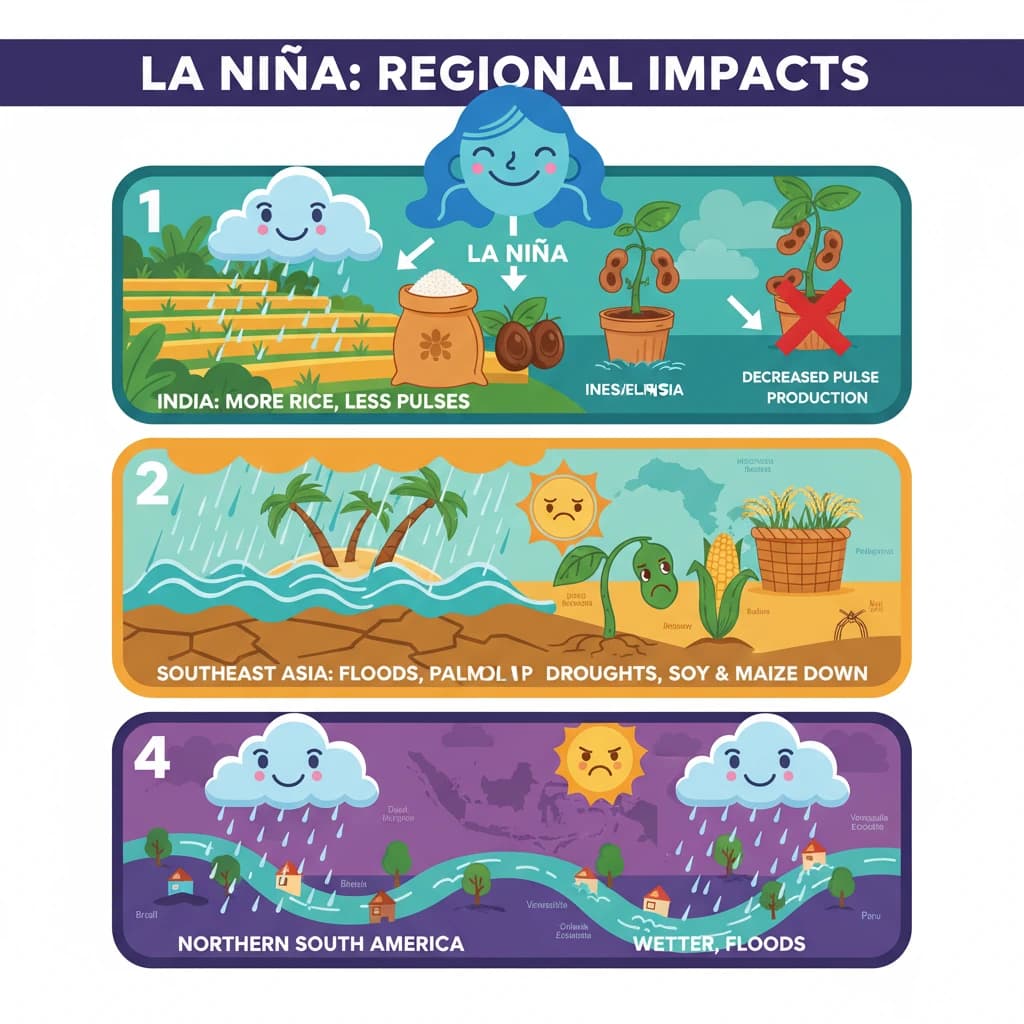
95% Verified Content
📚 Reference Sources
•National Oceanic and Atmospheric Administration (NOAA) – Climate Prediction Center
•India Meteorological Department (IMD)
•World Meteorological Organization (WMO)
•NASA Earth Observatory