Loading page, please wait…
What is a Tsunami? - UPSC Geography
What is What is a Tsunami? in UPSC Geography?
What is a Tsunami? is a key topic under Geography for UPSC Civil Services Examination. Key points include: Tsunamis are 'harbour waves', a series of powerful ocean waves (wave train), not a single wave.. Primarily caused by underwater earthquakes (80%), but also by volcanic eruptions, landslides, and meteorites.. They travel at high speeds (up to 800 km/h) with long wavelengths, losing minimal energy across oceans.. Understanding this topic is essential for both UPSC Prelims and Mains preparation.
Why is What is a Tsunami? important for UPSC exam?
What is a Tsunami? is a Medium-level topic in UPSC Geography. It is tested in both Prelims (factual MCQs) and Mains (analytical answer writing). Previous year UPSC questions have frequently covered aspects of What is a Tsunami?, making it essential for comprehensive IAS preparation.
How to prepare What is a Tsunami? for UPSC?
To prepare What is a Tsunami? for UPSC: (1) Study the comprehensive notes covering all key concepts on Vaidra. (2) Practice previous year questions on this topic. (3) Connect it with current affairs using daily updates. (4) Revise using key takeaways and mind maps available for Geography. (5) Write practice answers linking What is a Tsunami? to related GS Paper topics.
Key takeaways of What is a Tsunami? for UPSC
- Tsunamis are 'harbour waves', a series of powerful ocean waves (wave train), not a single wave.
- Primarily caused by underwater earthquakes (80%), but also by volcanic eruptions, landslides, and meteorites.
- They travel at high speeds (up to 800 km/h) with long wavelengths, losing minimal energy across oceans.
- The 'Pacific Ring of Fire' is a major hotspot for tsunami generation due to intense tectonic activity.
- November 5th is designated as World Tsunami Awareness Day by the UN General Assembly since 2015.
- Effective Early Warning Systems and community preparedness are crucial for mitigating tsunami impacts.
What is a Tsunami?
Medium⏱️ 10 min read
geography
📖 Introduction
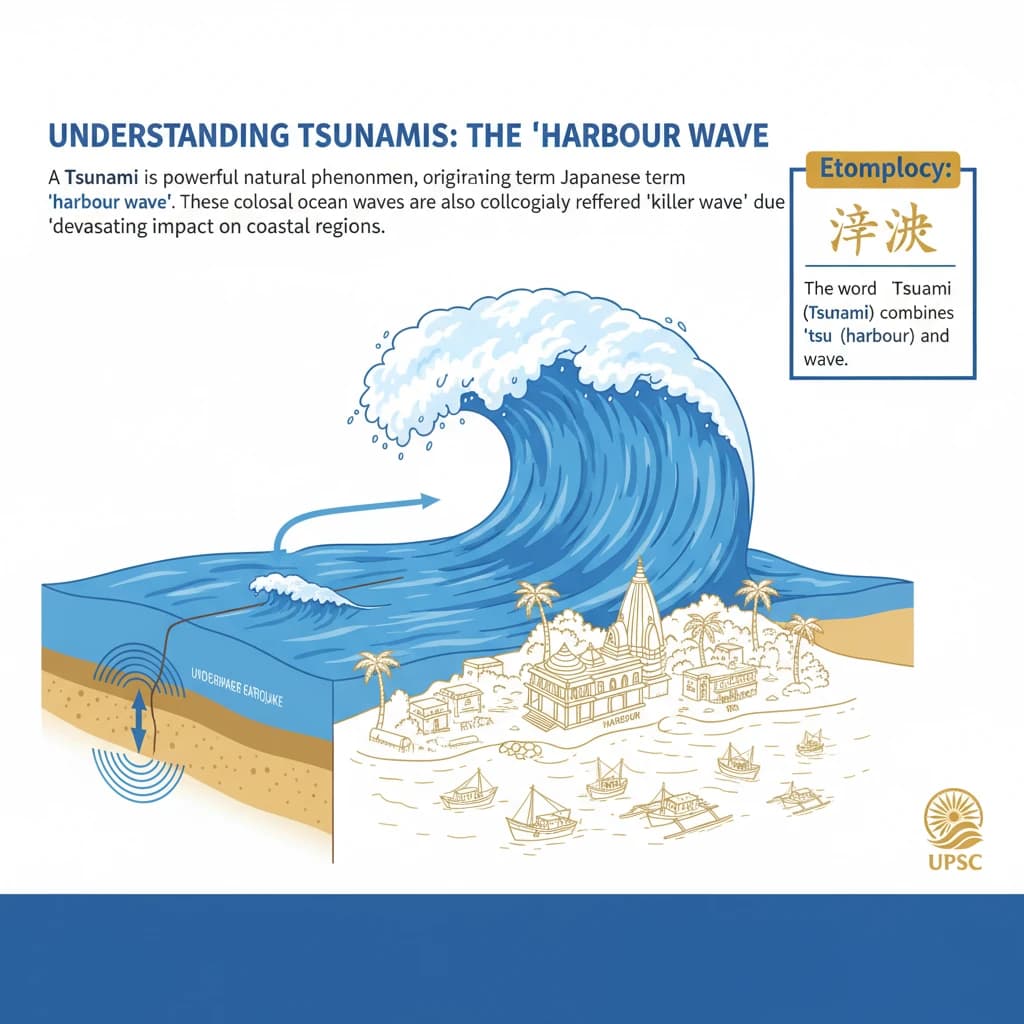
Understanding Tsunamis: The 'Harbour Wave'
A Tsunami is a powerful natural phenomenon, originating from the Japanese term 'harbour wave'. These colossal ocean waves are also colloquially referred to as 'killer waves' due to their devastating impact on coastal regions.
Etymology: The word Tsunami (津波) combines 'tsu' (harbour) and 'nami' (wave), reflecting their destructive power upon reaching coastal areas.
Nature of a Tsunami: A Series of Waves
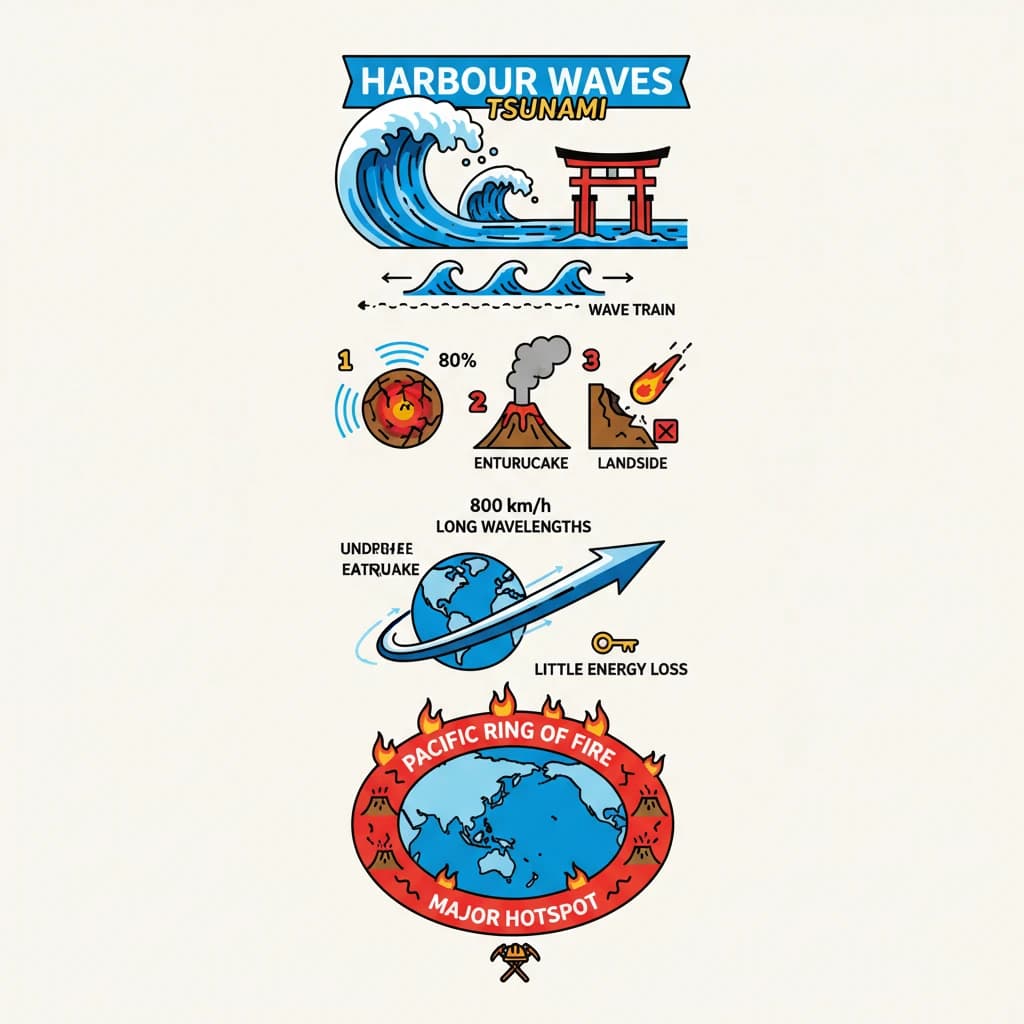
Contrary to popular belief, a Tsunami is not a single, isolated wave. Instead, it comprises a series of ocean waves, often described as a 'wave train'. These waves propagate across the ocean, carrying immense energy.
Key Concept: Wave Train
A Tsunami is characterized by multiple waves, with the first wave not always being the largest. Subsequent waves can often be more powerful.
Primary Causes of Tsunamis
The generation of a Tsunami requires a significant displacement of a large volume of water, typically in the ocean. This displacement is most commonly triggered by various underwater geological events.
- Underwater Earthquakes: Approximately 80% of tsunamis are caused by powerful subduction zone earthquakes, where one tectonic plate slides beneath another.
- Volcanic Eruptions: Although less frequent, large-scale underwater volcanic eruptions or the collapse of volcanic islands can generate tsunamis.
- Landslides: Massive underwater landslides or coastal landslides plunging into the sea can also displace enough water to form a tsunami.
- Meteorite Impacts: Extremely rare but potentially catastrophic meteorite impacts into the ocean could generate mega-tsunamis.
- Rapid Atmospheric Pressure Changes: While less common for major tsunamis, sudden and significant atmospheric pressure changes can sometimes induce smaller, localized tsunami-like waves (meteotsunamis).
Geographic Hotspots: The Pacific Ring of Fire
A vast majority of tsunamis, around 80%, occur within the geologically active region known as the Pacific Ocean's 'Ring of Fire'. This area is characterized by frequent tectonic shifts, leading to a high incidence of both volcanoes and earthquakes.
UPSC Insight: Understanding the Pacific Ring of Fire is crucial for Geography (GS-I) as it explains the distribution of many natural hazards, including tsunamis and earthquakes.
Characteristics of Tsunami Waves
Tsunami waves possess unique characteristics that distinguish them from regular ocean waves and contribute to their destructive power.
- High Speed: Tsunamis can travel at incredible speeds across the open ocean, reaching up to 800 kilometres an hour. At this pace, they can traverse the entire Pacific Ocean in less than a day.
- Long Wavelengths: They have extremely long wavelengths, often hundreds of kilometers, making them almost imperceptible in the open sea.
- Minimal Energy Loss: Due to their long wavelengths and the depth of the ocean, tsunamis lose very little energy as they travel across vast oceanic expanses. This allows them to maintain their destructive potential over long distances.
World Tsunami Awareness Day
Recognizing the global threat posed by tsunamis, the UN General Assembly, in December 2015, officially designated November 5th as World Tsunami Awareness Day. This day aims to promote awareness and share innovative approaches to risk reduction.
💡 Key Takeaways
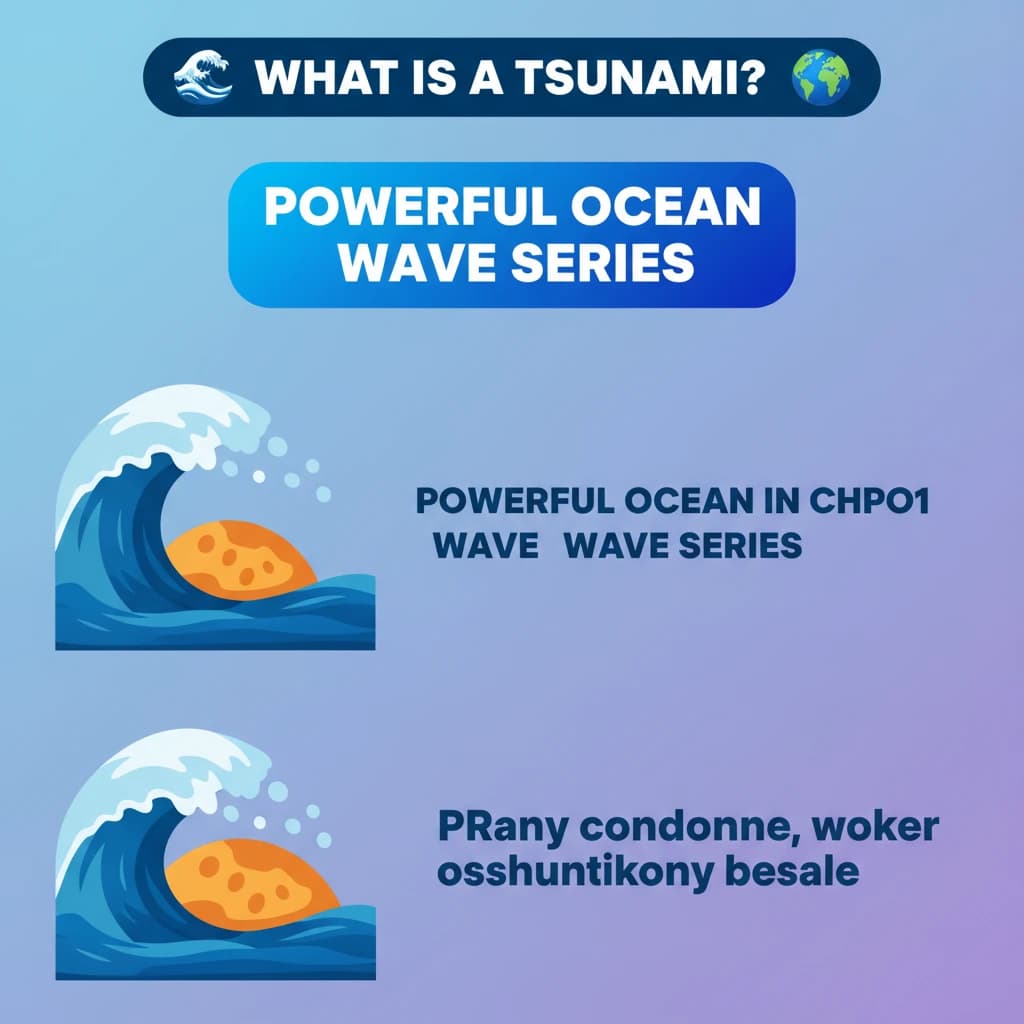
- •Tsunamis are 'harbour waves', a series of powerful ocean waves (wave train), not a single wave.
- •Primarily caused by underwater earthquakes (80%), but also by volcanic eruptions, landslides, and meteorites.
- •They travel at high speeds (up to 800 km/h) with long wavelengths, losing minimal energy across oceans.
- •The 'Pacific Ring of Fire' is a major hotspot for tsunami generation due to intense tectonic activity.
- •November 5th is designated as World Tsunami Awareness Day by the UN General Assembly since 2015.
- •Effective Early Warning Systems and community preparedness are crucial for mitigating tsunami impacts.
🧠 Memory Techniques
98% Verified Content
📚 Reference Sources
•National Oceanic and Atmospheric Administration (NOAA) - Tsunami Program
•United States Geological Survey (USGS) - Tsunami Information
•United Nations Office for Disaster Risk Reduction (UNDRR) - World Tsunami Awareness Day
•UNESCO Intergovernmental Oceanographic Commission (IOC) - Tsunami Programme