Loading page, please wait…
What is El Nino-Southern Oscillation? - UPSC Geography
What is What is El Nino-Southern Oscillation? in UPSC Geography?
What is El Nino-Southern Oscillation? is a key topic under Geography for UPSC Civil Services Examination. Key points include: ENSO is a recurring climate pattern in the central and eastern tropical Pacific Ocean.. It involves periodic changes in sea surface temperature and atmospheric pressure.. El Niño is the warm phase, La Niña is the cool phase, and Southern Oscillation is the atmospheric component.. Understanding this topic is essential for both UPSC Prelims and Mains preparation.
Why is What is El Nino-Southern Oscillation? important for UPSC exam?
What is El Nino-Southern Oscillation? is a Medium-level topic in UPSC Geography. It is tested in both Prelims (factual MCQs) and Mains (analytical answer writing). Previous year UPSC questions have frequently covered aspects of What is El Nino-Southern Oscillation?, making it essential for comprehensive IAS preparation.
How to prepare What is El Nino-Southern Oscillation? for UPSC?
To prepare What is El Nino-Southern Oscillation? for UPSC: (1) Study the comprehensive notes covering all key concepts on Vaidra. (2) Practice previous year questions on this topic. (3) Connect it with current affairs using daily updates. (4) Revise using key takeaways and mind maps available for Geography. (5) Write practice answers linking What is El Nino-Southern Oscillation? to related GS Paper topics.
Key takeaways of What is El Nino-Southern Oscillation? for UPSC
- ENSO is a recurring climate pattern in the central and eastern tropical Pacific Ocean.
- It involves periodic changes in sea surface temperature and atmospheric pressure.
- El Niño is the warm phase, La Niña is the cool phase, and Southern Oscillation is the atmospheric component.
- El Niño was first noted by South American fishermen; Southern Oscillation discovered by Sir Gilbert Walker.
- ENSO significantly impacts global weather, including India's monsoon, and has widespread socio-economic effects.
What is El Nino-Southern Oscillation?
Medium⏱️ 8 min read
geography
📖 Introduction
Understanding El Niño-Southern Oscillation (ENSO)
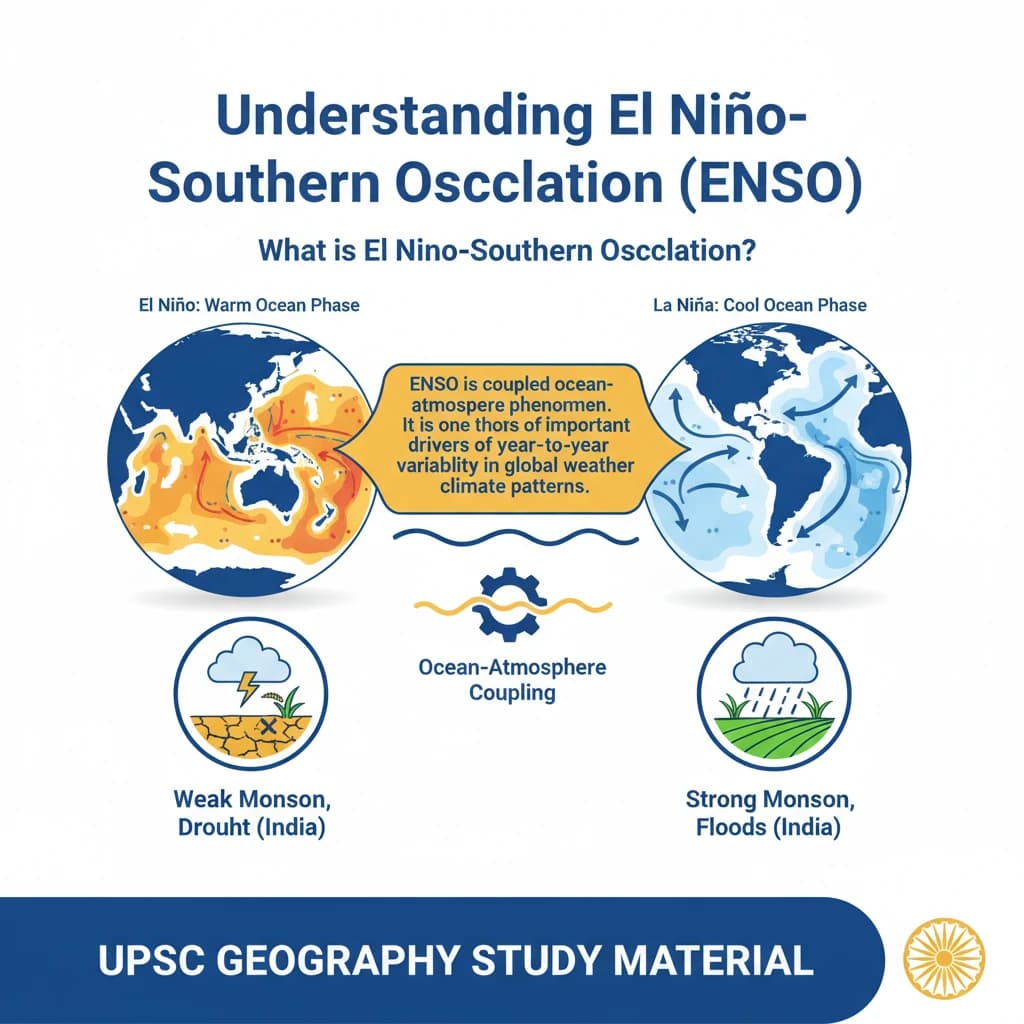
The El Niño-Southern Oscillation (ENSO) is a significant and recurring climate pattern. It involves periodic changes in the temperature of the waters in the central and eastern tropical Pacific Ocean.
ENSO is a coupled ocean-atmosphere phenomenon. It is one of the most important drivers of year-to-year variability in global weather and climate patterns.
The Core Concept of ENSO
ENSO is characterized by three phases: El Niño (warm phase), La Niña (cool phase), and Neutral. These phases significantly influence atmospheric circulation, rainfall, and temperature across the globe.
- El Niño: Refers to the warming of sea surface temperatures in the central and eastern tropical Pacific.
- La Niña: Characterized by the cooling of sea surface temperatures in the same region.
- Southern Oscillation: Describes the atmospheric pressure changes that accompany these ocean temperature shifts.
Historical Naming and Discovery
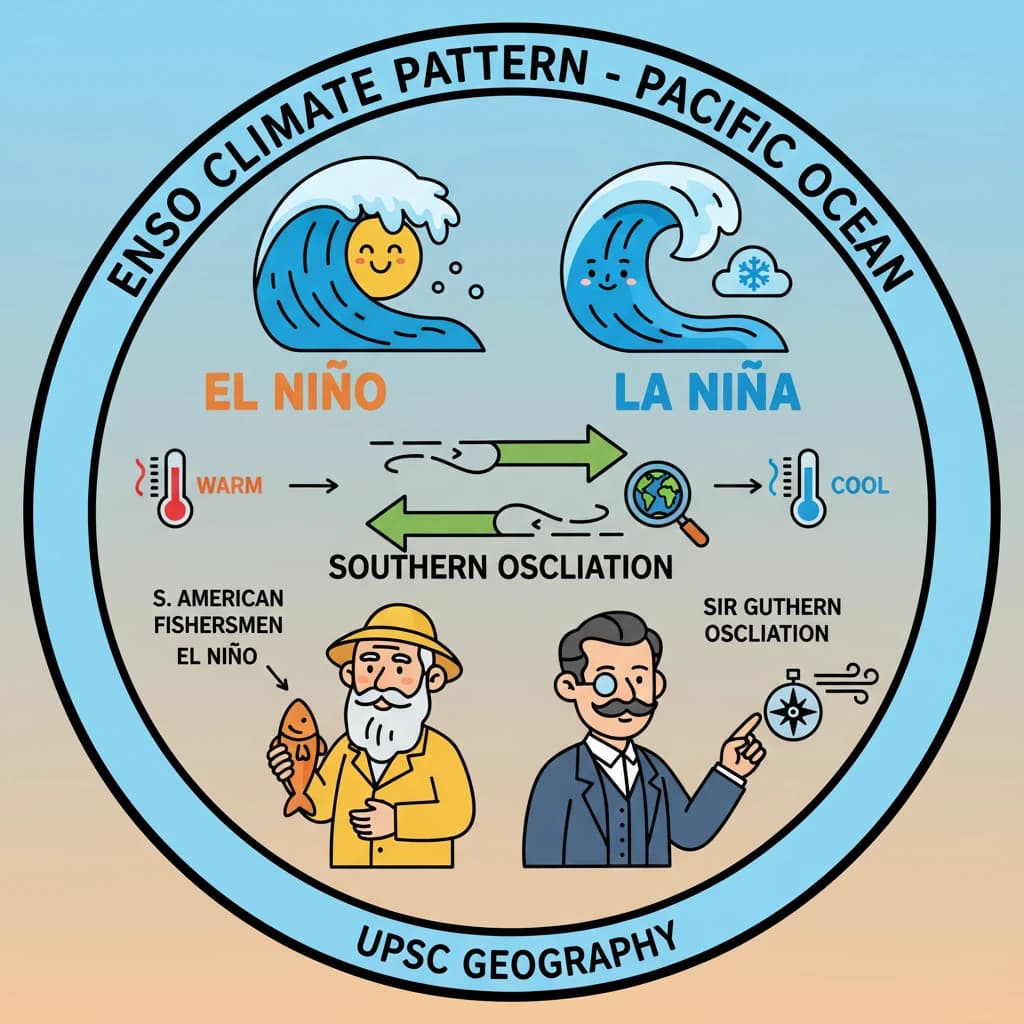
The term El Niño, meaning "The Little Boy" or "Christ Child," was historically used by South American fishermen. They observed the appearance of unusually warm waters off the coast of Peru and Ecuador around Christmas time.
This phenomenon disrupted their fishing activities, as the warm waters led to a decrease in fish populations.
Scientific Link: Southern Oscillation
The atmospheric component, known as the Southern Oscillation, was discovered by Sir Gilbert Walker in the 1960s. He identified a seesaw pattern of atmospheric pressure between the eastern and western tropical Pacific Ocean.
Sir Gilbert Walker linked these sea pressure changes to broader atmospheric conditions, recognizing a crucial connection between ocean temperatures and atmospheric circulation. This groundbreaking work eventually led to the combined term El Niño-Southern Oscillation (ENSO).
Evolution of Terminology
While El Niño was an older term, the concepts of La Niña (the cold phase) and the Neutral phase became widely recognized and used in scientific discourse primarily in the 1980s. This completed the understanding of the full ENSO cycle.
For UPSC, understanding the interconnectedness of ocean temperatures and atmospheric pressure is key. Focus on the mechanisms and global impacts of each ENSO phase.
💡 Key Takeaways
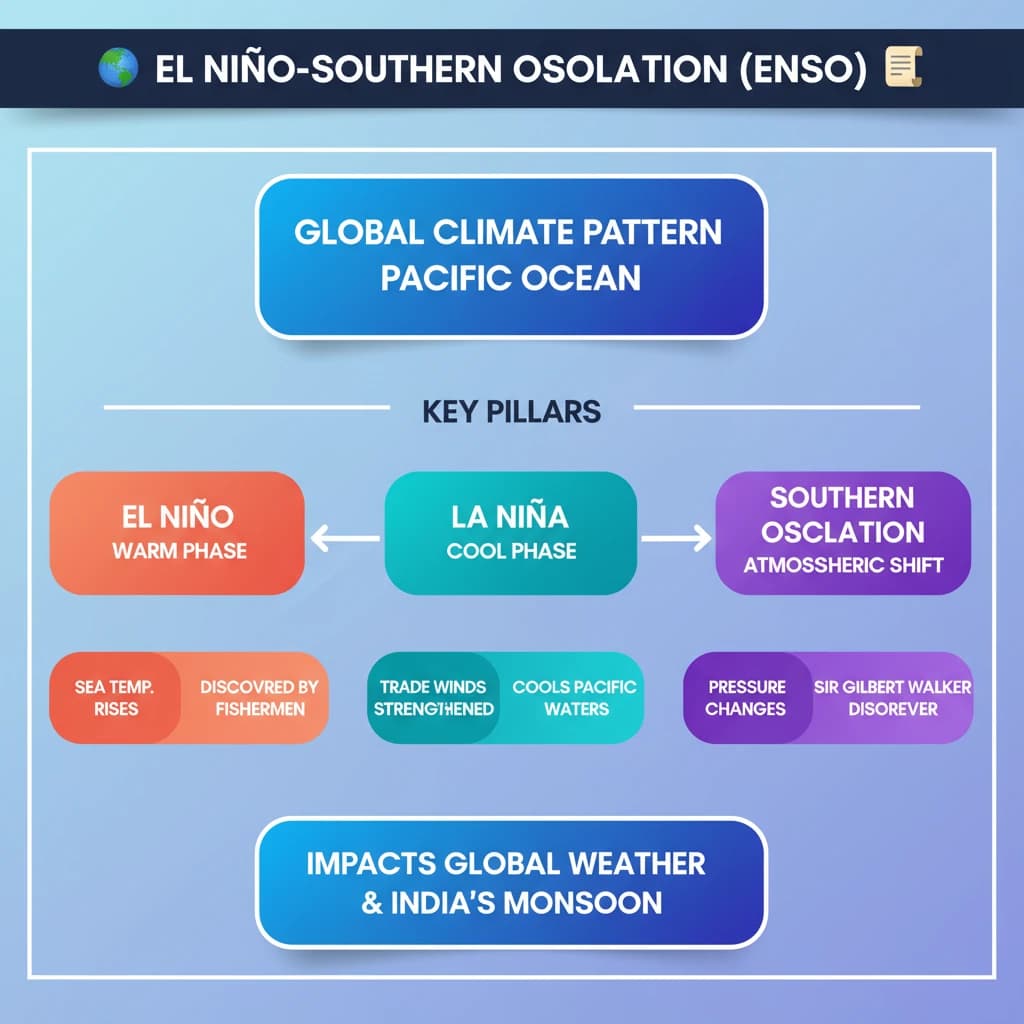
- •ENSO is a recurring climate pattern in the central and eastern tropical Pacific Ocean.
- •It involves periodic changes in sea surface temperature and atmospheric pressure.
- •El Niño is the warm phase, La Niña is the cool phase, and Southern Oscillation is the atmospheric component.
- •El Niño was first noted by South American fishermen; Southern Oscillation discovered by Sir Gilbert Walker.
- •ENSO significantly impacts global weather, including India's monsoon, and has widespread socio-economic effects.
🧠 Memory Techniques
95% Verified Content
📚 Reference Sources
•National Oceanic and Atmospheric Administration (NOAA) - ENSO Basics
•Bureau of Meteorology, Australia - About ENSO
•NCERT Geography Textbooks (Class XI & XII)