Loading page, please wait…
What is Kallakkadal? - UPSC Geography
What is What is Kallakkadal? in UPSC Geography?
What is Kallakkadal? is a key topic under Geography for UPSC Civil Services Examination. Key points include: Kallakkadal is coastal flooding caused by swell waves, primarily in April-May, along India's southwest coast.. The term is Malayalam for 'ocean that arrives as a thief', denoting its sudden, unexpected nature.. It originates from distant storms (hurricanes/gale winds) in the Southern Indian Ocean.. Understanding this topic is essential for both UPSC Prelims and Mains preparation.
Why is What is Kallakkadal? important for UPSC exam?
What is Kallakkadal? is a Medium-level topic in UPSC Geography. It is tested in both Prelims (factual MCQs) and Mains (analytical answer writing). Previous year UPSC questions have frequently covered aspects of What is Kallakkadal?, making it essential for comprehensive IAS preparation.
How to prepare What is Kallakkadal? for UPSC?
To prepare What is Kallakkadal? for UPSC: (1) Study the comprehensive notes covering all key concepts on Vaidra. (2) Practice previous year questions on this topic. (3) Connect it with current affairs using daily updates. (4) Revise using key takeaways and mind maps available for Geography. (5) Write practice answers linking What is Kallakkadal? to related GS Paper topics.
Key takeaways of What is Kallakkadal? for UPSC
- Kallakkadal is coastal flooding caused by swell waves, primarily in April-May, along India's southwest coast.
- The term is Malayalam for 'ocean that arrives as a thief', denoting its sudden, unexpected nature.
- It originates from distant storms (hurricanes/gale winds) in the Southern Indian Ocean.
- These storms transfer significant energy, forming high-energy waves that travel long distances.
- Early warning systems by INCOIS are crucial for mitigating its impact on vulnerable coastal communities.
What is Kallakkadal?
Medium⏱️ 8 min read
geography
📖 Introduction
What is Kallakkadal?
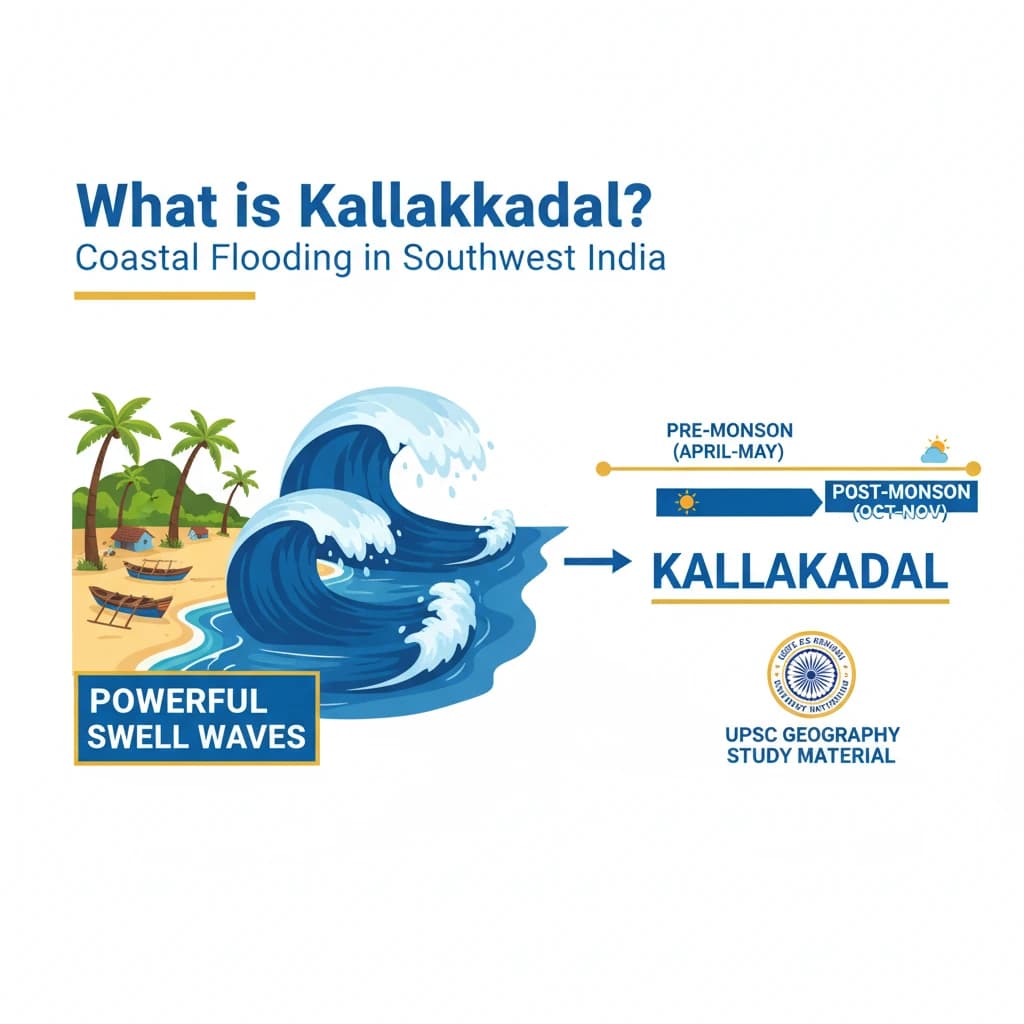
Kallakkadal refers to a specific type of coastal flooding phenomenon. It is primarily caused by the arrival of powerful swell waves along the southwest coast of India.
This event typically occurs during the pre-monsoon season, specifically in April-May. Occasionally, it can also manifest during the post-monsoon period, impacting the same coastal regions.
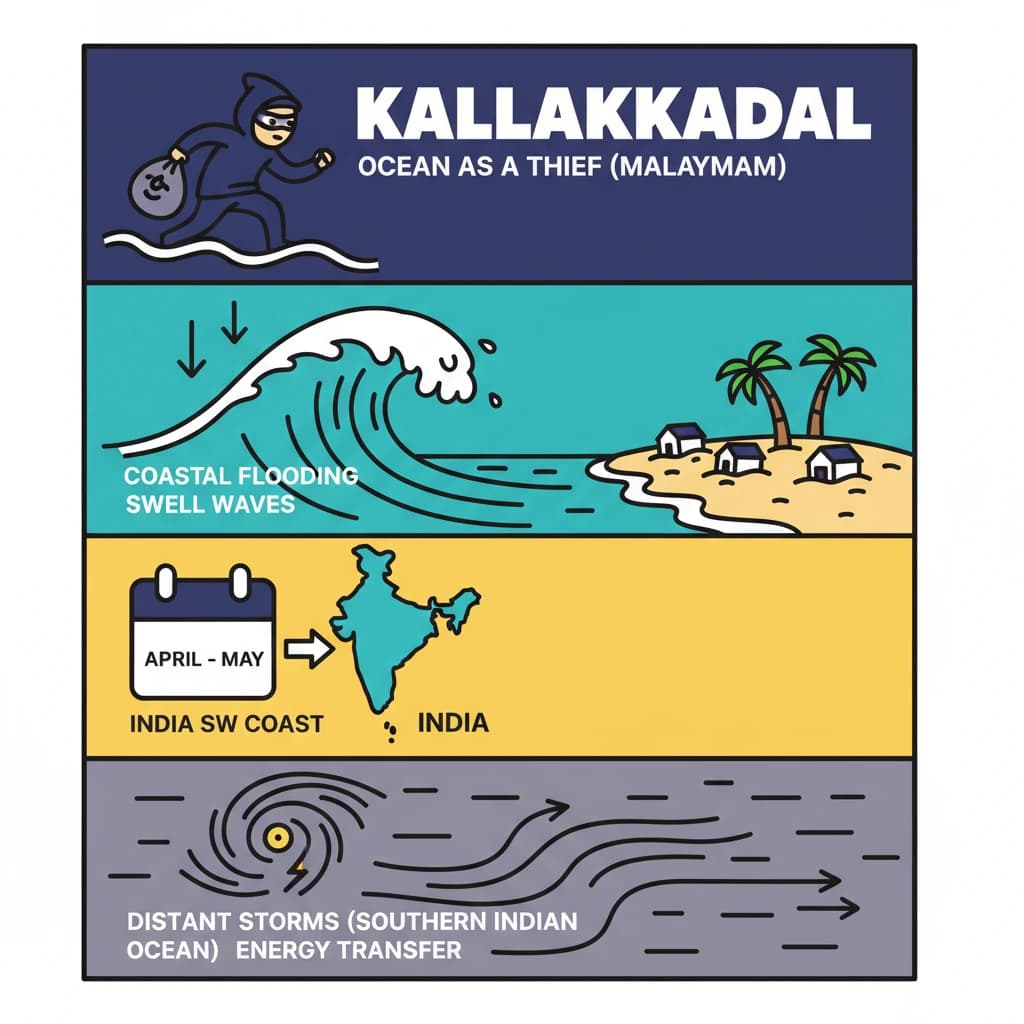
The term Kallakkadal is widely used by local fishermen. It is derived from two Malayalam words: Kallan, meaning 'thief', and Kadal, meaning 'sea'. Thus, it translates to 'ocean that arrives as a thief', aptly describing its sudden and unexpected nature.
Causes of Kallakkadal
The primary cause of Kallakkadal is the generation of ocean swells. These are not locally generated waves but rather waves that form and travel significant distances across the ocean.
These powerful swell waves originate from distant storms. Such storms can include intense weather systems like hurricanes or prolonged periods of severe gale winds.
These originating storms typically occur in the southern part of the Indian Ocean. They transfer substantial energy from the atmosphere into the water, leading to the formation of exceptionally high and energetic waves.
As these high-energy swell waves travel across the ocean, they maintain their intensity and can cause unexpected flooding when they reach distant coastlines, even in calm local weather conditions.
Understanding Kallakkadal is crucial for UPSC as it highlights the interplay of distant weather phenomena with local coastal dynamics, relevant for Geography (GS-I) and Disaster Management (GS-III).
💡 Key Takeaways
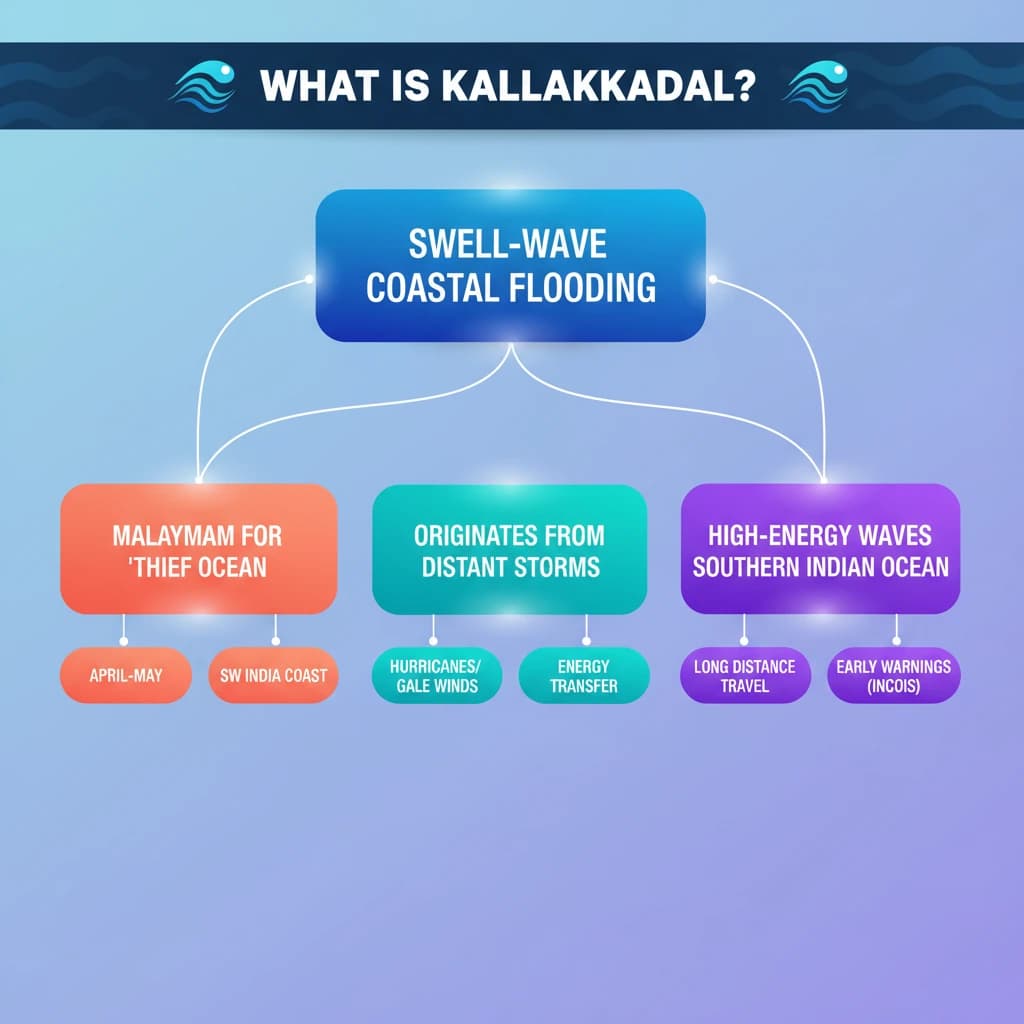
- •Kallakkadal is coastal flooding caused by swell waves, primarily in April-May, along India's southwest coast.
- •The term is Malayalam for 'ocean that arrives as a thief', denoting its sudden, unexpected nature.
- •It originates from distant storms (hurricanes/gale winds) in the Southern Indian Ocean.
- •These storms transfer significant energy, forming high-energy waves that travel long distances.
- •Early warning systems by INCOIS are crucial for mitigating its impact on vulnerable coastal communities.
🧠 Memory Techniques
98% Verified Content
📚 Reference Sources
•Indian National Centre for Ocean Information Services (INCOIS) publications on swell alerts
•National Disaster Management Authority (NDMA) guidelines on coastal hazards
•NCERT Geography textbooks (general oceanography concepts)